
 100% FREE ACCESS
8th Standard CBSE Syllabus & Materials
8th Standard CBSE
CBSE 8th Social Science Theme D - Factors of Production - New Model Questions Papers Study Material - QB365 Set A
NEW8th Standard CBSE
CBSE 8th Social Science Theme C - Universal Franchise and India's Electoral System - New Model Questions Papers Study Material - QB365 Set A
NEW8th Standard CBSE
CBSE 8th Social Science Theme B - The Rise of the Marathas - New Model Questions Papers Study Material - QB365 Set A
NEW8th Standard CBSE
CBSE 8th Social Science Theme B - Reshaping India's Political Map - New Model Questions Papers Study Material - QB365 Set A
NEW8th Standard CBSE
CBSE 8th Social Science Theme A - Natural Resources and Their Use - New Model Questions Papers Study Material - QB365 Set A
NEW8th Standard CBSE
CBSE 8th Science Keeping Time with Skies - New Model Questions Papers Study Material - QB365 Set A

Published on: 27/07/2018
In HISTORY- From Trade to Territory - Company Establishes Power contains important questions in CBSE 8th Standard Social Science. It also covered with the most important questions in From Trade to Territory - Company Establishes Power
Teachers please subscribe Now and Create Unlimited 8th Standard Social Science question papers with answer keys. For subscription, please Click Here.
Download CBSE Class 8th Standard CBSE Social Science question papers, sample papers, important questions, and previous year solved papers in PDF format. Get free study materials, NCERT solutions, and exam preparation resources for Class 8th Standard CBSE Social Science
Questions + Answers key
Take MCQ Social Science Test
1.
Why were the British furious with Tipu Sultan?
2.
What led to intense conflicts of the companies with local rulers?
3.
What were the actual nawabs forced to do after the Battle of Plassey?
4.
After the British conquest of Bengal, Calcutta grew from a small village to a big city. Find out about the culture, architecture and the life of Europeans and Indians of the city during the colonial period.
5.
Explain the system of 'subsidiary alliance'.
6.
How did the assumption of Diwani benefit the East India Company?
7.
Imagine that you are a nawab's nephew and have been brought up thinking that you will one-day be king. Now you find that this will not be allowed by the British because of the new Doctrine of Lapse. What will be your feelings? What will you plan to do so that you can inherit the crown?
8.
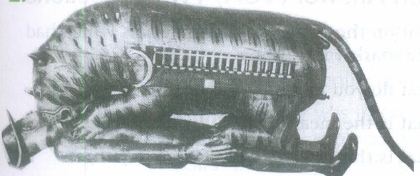
(iii) Where is the toy tiger now kept?
9.
Who introduced the policy of pramountcy? What did it mean? What sort of resistance did the Company face?
10.
Rani Channamma was the ruler of
Bengal
Kitoor
Agra
Delhi
11.
The Third Battle of Panipat was fought in the year
1743
1752
1767
1761
12.
Which of the following was not the Presidency?
Bengal
Madras
Pune
Bombay
13.
Name the ruler who gave permission to the East India Company to establish trade relations with the East.
Henry V
Henry VI
Queen Elizabeth II
Queen Elizabeth I
14.
What was the result of the Second Anglo-Maratha War?
15.
What was a musket?
16.
Which new power began emerging on the political scene after the fall of Mughals?
17.
Name the kingdoms which were annexed on the basis of 'Doctrine of Lapse?
18.
When did the Company appoint the Residents of states?
19.
Name the village which the Company got from the Mughal officials?
20.
Maratha kingdoms were located mainly in the_____________ part of India.
21.
The British conquest of Bengal began with the Battle of ______________
22.
When Alivardi Khan died in __________ Sirajuddaulah became the Nawab of Bengal.
23.
The Mughal empire became stronger in the 18th century.
24.
From 1775, a new system of justice was established.
1.
The British got furious with Tipu Sultan.
(i) Mysore controlled the profitable trade of the Malabar coast from where the Company purchased pepper and cardamom. In 1785, Tipu Sultan stopped the export of sandalwood, pepper, cardamom through the ports of his kingdom.
(ii) Tipu Sultan established a close relationship with the French in India and modernized his army with their help.
2.
The companies tried to fortify settlements, deprived the Bengal Government huge amounts of revenue and undermined the authority of the local rulers. The Company found it difficult to separate trade from politics.
3.
After the Battle of Plassey, the actual nawabs of Bengal were forced to give land and vast amounts of money as personal gifts to the Company officials. Company officials like, Robert Clive amassed £401,102 whenhe left India.
4.
Calcutta was a colonial city developed by the British East India Company and then by the British Empire. It was the capital of the British Indian Empire untill1911 when the capital was relocated to Delhi. It grew rapidly in the 19th century to become the second city of the British Empire. In 1772, Calcutta became the capital of British India. a decision made by Governor-General Warren Hastings. Calcutta underwent rapid industrial growth from the 1850s. Many architecturally famous buildings or movements were built by the British.
Calcutta became the 'Cultural Capital of India'. The contribution of Bengal Renaissance on the national movement of independence was immense. Surendranath Banerjee. Womesh Chunder Banerjee, Sri Aurobindo, Bipin Chandra Pal. Swami Vivekananda, Bankim Chandra Chattopadhyay. Rabindranath Tagore were some prominent figures of Bengal.
5.
As per this alliance, Indian rulers were not allowed to have their independent armed forces. They were to be protected by the Company. They had to pay for the subsidiary forces that the Company was supposed to maintain for the purpose of protection.If the Indian rulers failed to make the payment, then part of their territory was taken away as penalty. Some territories of Awadh and Hyderabad were taken as they failed to pay for the 'subsidiary forces'.
6.
In 1765, the Mughal emperor appointed the East India Company as the Diwan of Bengal. The Diwani allowed the Company to use the vast revenue resources of Bengal. This solved a major problem of the Company. From the early lSth century its trade with India had expanded. But it had to buy most of the goods in India with gold and silver imported from Britain. This was because at this time Britain had no goods to sell in India.
The outflow of gold from Britain slowed after the battle of Plassey and entirely stopped after the assumption ofDiwani. Now, revenues could be used to purchase cotton and silk textiles in India, maintain Company troops and meet the cost of building the Company fort and offices at Calcutta.
7.
My feelings would be of disappointment and anger.
I would train an army and fight with the British for my right. After defeating the British, I would capture the throne vacated by my uncle after his death. I would join with the other leaders who also opposed the Doctrine of Lapse.
8.
This toy tiger was taken by the British when Tipu Sultan died defending he capital Seringapatam in 1799. The toy was then kept in the Victoria and Albert Museum in London.
9.
Governor -General Lord Hastings (1813-1828) introduced a new policy of paramountcy' in India. It meant that the power of the Company was paramount or supreme, i.e. the power of the Company was greater than that of Indian states. In order to protect its business interest, the Company could annex or threaten to annex any Indian kingdom.
This policy of the British was followed by the later rulers. But this policy of the British did not go unchallenged. For example, when the British tried to capture the small state of Kitoor, Rani Channamma revolted against this annexation. As a result, she was arrested and later died in the prison in 1829. This resistance movement did not stop. It was carried on by Rayanna, a poor chowkidar of Sangoli in Kitoor.
He got support from the common people and destroyed many British camps and records.In 1830, he was caught and hanged by the British
10.
(b)
Kitoor
11.
(d)
1761
12.
(c)
Pune
13.
(d)
Queen Elizabeth I
14.
()
After the Second Anglo-Maratha War, the British gained Orissa (now Odisha) and the territories North of the Jamuna river including Agra and Delhi.
15.
()
Musket was a heavy gun used by infantry soldiers.
16.
()
After the fall of Mughals, a new power, British began emerging on the political scene in India.
17.
()
The kingdoms like Satara, Sambalpur, Udaipur, Nagpur and Jhansi were annexed on the basis of 'Doctrine of Lapse'.
18.
()
After the Battle of Buxar (1764), the Company appointed the Residents of states
19.
()
The Company got the village Kalikata, which later known as Calcutta and now known as Kolkata, from the Mughal empire.
20.
()
Northern
21.
()
Plassey
22.
()
1756
23.
(b)
24.
(b)

8th Standard CBSE Syllabus & Materials
8th Standard CBSE
CBSE 8th Science Particulate Nature of Matter - New Model Questions Papers Study Material - QB365 Set A
NEW8th Standard CBSE
CBSE 8th Science Pressure, Winds, Stroms and Cyclones - New Model Questions Papers Study Material - QB365 Set A
NEW8th Standard CBSE
CBSE 8th Mathematics Quadrilaterals - New Model Questions Papers Study Material - QB365 Set A
NEW8th Standard CBSE
CBSE 8th Mathematics A story of Numbers - New Model Questions Papers Study Material - QB365 Set A



CBSE 8th Standard CBSE Subjects
CBSE Standards




