
 100% FREE ACCESS
8th Standard CBSE Syllabus & Materials
8th Standard CBSE
CBSE 8th Social Science Theme D - Factors of Production - New Model Questions Papers Study Material - QB365 Set A
NEW8th Standard CBSE
CBSE 8th Social Science Theme C - Universal Franchise and India's Electoral System - New Model Questions Papers Study Material - QB365 Set A
NEW8th Standard CBSE
CBSE 8th Social Science Theme B - The Rise of the Marathas - New Model Questions Papers Study Material - QB365 Set A
NEW8th Standard CBSE
CBSE 8th Social Science Theme B - Reshaping India's Political Map - New Model Questions Papers Study Material - QB365 Set A
NEW8th Standard CBSE
CBSE 8th Social Science Theme A - Natural Resources and Their Use - New Model Questions Papers Study Material - QB365 Set A
NEW8th Standard CBSE
CBSE 8th Science Keeping Time with Skies - New Model Questions Papers Study Material - QB365 Set A

Published on: 22/09/2018
Revision Test I
Download CBSE Class 8th Standard CBSE Social Science question papers, sample papers, important questions, and previous year solved papers in PDF format. Get free study materials, NCERT solutions, and exam preparation resources for Class 8th Standard CBSE Social Science
Questions + Answers key
Take MCQ Social Science Test
1.
An advertisement for Lipton tea suggested that royalty all over the world was associated with this tea. When did the advertisement appear?
1920
1925
1922
1932
2.
When New Delhi was built, the National Museum and the National Archives were both located close to the
Supreme Court
Parliament House
Viceregal Palace
Red Fort
3.
Who was the last Viceroy of India?
Lord Ripon
Lord Mountbatten
Lord William Bentinck
Lord Wellesley
4.
The British thought surveys were important for
effective administration
effective judgement
writing history
None of the above
5.
James Rennel produced the first map of India in
1785
1782
1885
1830
6.
Usually, census operations in India are held
every five years
every seven years
every ten years
every twelve years
7.
The British preserve official documents because
the preserved documents reveal the progress made by the country in the past.
one can study the notes and reports which were prepared in the past.
their copies may be made and used in modern times.
All of the above
8.
The National Archives of India came up in the
1920s
1930s
1940s
1950s
9.
A History of British India was written by
Mahatma Gandhi
Lord Mountbatten
James Mill
Dadabhai Naoroji
10.
The first Governor-General of India was
Lord Dalhousie
Warren Hastings
Lord Canning
Lord William Bentinck
11.
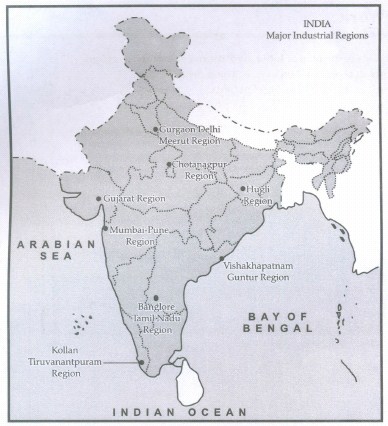
Mention the major industrial regions of India and show them on the outline map of India.
12.
Look at the Map along with a present-day political map, of India. In each of these maps try and identify the different parts of India that were under the British rule.
.JPG)
13.
Sipahi
14.
Rani Channamma
15.
Faujdari adalat
16.
'Tiger of Mysore'
17.
1819-26
18.
1770
19.
1793
20.
Why do we continue to associate History with a string of dates?
21.
What are the events covered in Modern History of India?
22.
Why do foreign companies come to India?
23.
| Law | Why is it Necessary? | Whose Interest does the law Protect? |
| Minimum Wages Act specifies that wages should not be below a specified minimum. | Many workers are denied fair wages by their employers. Because they badly need work, workers have no bargaining power and are paid low wages | This law is meant to protect the interests of all workers particularly, farm labourers, construction workers, factory workers, domestic workers etc |
| Law specifying that there be adequate safety measures in workplaces. For example, alarm system, emergency exits, properly - functioning machinery | - | - |
| Law requiring that the quality of goods meet certain prescribed standards. For example, electrical appliances have to meet safety standards | Consumers might be put to risk by the poor quality of products such as electrical appliances, food, medicines | - |
| Law requiring that the prices of essential goods are not high. For example, sugar kerosene, foodgrains | - | The interests of the poor who will otherwise be unable to afford these goods |
| Law requiring that factories do not pollute air or water | - | - |
| Laws against child labour in workplaces. | - | - |
| Law to form workers unions/associations. | By organising themselves into unions, workers can use their combined power to demand fair wages and better working conditions. |
- |
24.
Write three methods of water conservation.
25.
What do you think the artist is trying to convey through the image of Parliament on the previous page?
26.
What is sustainable development?
27.
Write a note on the following:
(i) Charter Act (ii) Dual government
28.
Are official records the best sources of information?
29.
What, according to you, is the reason behind use of dates in history?
30.
Who were 'Calligraphists'?
31.
According to historians what is the meaning of the term 'Colonial'?
32.
Can you point to a few other situations where laws (or rules) exist but people do not follow them because of poor enforcement?
(For example, over-speeding by motorists). What are the problems in enforcement? Can you suggest some ways in which enforcement can be improved?
33.
Why do you think enforcement of safety laws is important in any factory?
34.
Answer the following questions related to picture given below:
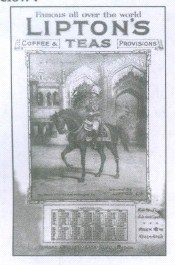
(i) What is depicted in this picture?
(ii) Why are old advertisements important to us?
(iii) What does this advertisement suggest?
35.
What are the other literary sources, except official records?
36.
What points should be kept in mind while dividing (classifying) history?
37.
How would you protect yourself and your family in the case of a nuclear disaster?
38.
How do man-made disasters affect us?
39.
Richard Wellesley was the Governor General of India from 1798 to 1805
40.
Battle of Buxar was fought in the year 1764.
41.
Vasco da Gama was a French explorer
42.
Printing began to spread by the middle of the 20th century
43.
The British were very particular about preserving official documents
44.
Read the following passage and answer the questions given below:
Here is an excerpt from the memoirs of Sitaram Pandey, "From Sepoy to Subedar" :
It is my humble opinion that this seizing of Oudh filled the minds of the sepoys with distrust and led them to plot against the Government. Agents of the Nawab of Oudh and also of the King of Delhi were sent all over India to discover the temper of the army. They worked upon the feelings of sepoys, telling them how treacherously the foreigners had behaved towards their king. They invented ten thousand lies and promises to persuade the soldiers to mutiny and turn against their masters, the English, with the object of restoring the Emperor of Delhi to the throne. They maintained that this was wholly within the army's powers if the soldiers would only act together and do as they were advised.
(i) Who was Sitaram Pandey?
(ii) Who persuaded him to write his memoirs?
(iii) How did the agents persuade the sepoys to rebel against the British?
45.
This is a picture of Santhal girl carrying firewood. On the basis of the given picture, answer the following questions:
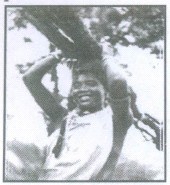
(i) What is the occupation of the Santhals?
(ii) Why were the Santhai unhappy under the British Raj?
1.
(c)
1922
2.
(c)
Viceregal Palace
3.
(b)
Lord Mountbatten
4.
(a)
effective administration
5.
(b)
1782
6.
(c)
every ten years
7.
(d)
All of the above
8.
(a)
1920s
9.
(c)
James Mill
10.
(b)
Warren Hastings
11.
India has eight industrial regions and they are:
(i) Mumbai-Pune Region: It extends from Thane to Pune and the adjoining districts of Nasik and Sholapur.
(ii) Hugli Region: It extends from Bansbaria in the north to Birlanagar in the south.
(iii) Bangalore- Tamil Nadu Region: It extends from Banglore to all parts of Tamil Nadu except Villupuram.
(iv) Gujarat Region: It lies between Ahmedabad and Vadodara in the south to Jamnagar in the west.
(v) Chhotanagpur Region: It extends over Jharkhand, northern Odisha and western West Bengal.
(vi) Vishakhapatnam-Guntur Region: It extends from Vishakhapatnam district to Kurnool and Prakasam district in the south.
(vii) Gurgaon-Delhi-Merrut Region: It includes Gurgaon, Delhi, Shahadara, Faridabad, Ghaziabad, Meerut, Modinagar, Ambala, Agra and Mathura.
(viii) Kollam- Thiruvananthapuram Region: It is spread over Thiruvananthapuram, Kollam, Alwaye, Ernakulam, and Alappuzha districts.
12.
In the above map, the areas which are under the British rule are-some parts of Himachal Pradesh, Punjab, Rajasthan, Gujarat, Madhya Pradesh, Orissa, etc.
13.
()
Sepoy
14.
()
Led an anti-British movement in Kitoor
15.
()
Criminal court
16.
()
Tipu Sultan
17.
()
Period of Thomas Munro
18.
()
A terrible famine in Bengal
19.
()
Permanent Settlement
20.
(i) History is a record of significant events that have occurred over a period of time or on a particular day in the past.
(ii) History is a subject which deals with past events, such as when a battle was fought, period of dynasties, when a king was crowned, birth of any religion and various other changes, etc.
(iii) History is also important to know the exact date and year of any particular event.
(iv) Hence, we continue to associate history with a string of dates, since details of any such events which have occurred in the past cannot be determined without referring to the specific dates. So, in other words, we can say that history is synonymous with dates.
21.
The events covered in the Modern History of India are:
(i) Establishment of company rule.
(ii) The set up of British administration system i.e. land revenue, economic policies, etc.
(iii) The first War of India's Independence-The Revolt of 1857.
(iv) End of Mughal Empire.
(v) Direct control over India by British Government.
(vi) The new socio-economic reform movement began in India.
(vii) The role of National leaders or era of rise of Nationalism.
(viii) Freedom Movement and Independence.
22.
Privately-owned companies are always aiming for profit maximization. Foreign companies also come to India with the same motive. Availability of cheap labour is the prime attraction. Wages that the companies have to pay to workers, say in the USA, are far higher than what they pay to workers in poorer countries like India. Companies can get longer hours of work for lower pay.
Additional expenses like housing for workers are also fewer. Cost cutting can also be done by other more dangerous means because of lax safety rules in India. Due to high population and rampant unemployment, employers exploit workers because of their vulnerable positions and there is always the option to replace one employee with another.
23.
| Law | Why is it Necessary? | Whose Interest does the law Protect? |
| Minimum Wages Act specifies that wages should not be below a specified minimum. | Many workers are denied fair wages by their employers. Because they badly need work, workers have no bargaining power and are paid low wages | This law is meant to protect the interests of all workers particularly, farm labourers, construction workers, factory workers, domestic workers etc |
| Law specifying that there be adequate safety measures in workplaces. For example, alarm system, emergency exits, properly - functioning machinery | Workplaces have lower safety measures because companies want to cut costs and increase profits | This law is meant for the health, welfare and safety of workers |
| Law requiring that the quality of goods meet certain prescribed standards. For example, electrical appliances have to meet safety standards | Consumers might be put to risk by the poor quality of products such as electrical appliances, food, medicines | To protect and secure the lives of the general public against accidents. |
| Law requiring that the prices of essential goods are not high. For example, sugar kerosene, foodgrains | To keep prices of essential items stable and prevent middle-men from making profits. | The interests of the poor who will otherwise be unable to afford these goods |
| Law requiring that factories do not pollute air or water | To keep the environment, including air and water clean |
The law protects the interests of the public. Clean air and water is necessary for healthy living. |
| Laws against child labour in workplaces. | Children might be exploited and forced to work in dangerous conditions which would harm their life | The law protects the interest of children. |
| Law to form workers unions/associations. | By organising themselves into unions, workers can use their combined power to demand fair wages and better working conditions. |
The law protects the interests of workers and prevents their exploitation. |
24.
Three important methods of water conservation are:
(i) To slow down the rate of surface run-off, we must grow plants and vegetation.
(ii) We must promote rainwater harvesting technique to collect the rain water.
(iii) In agriculture, sprinkle or drip irrigation methods must be used.
25.
The artist is trying to convey that the Parliament enables citizens of India to participate in decision making process and controlling the government.
26.
Careful utilization of resources, so that, besides meeting the requirements of the present, they are also conserved for use by the future generation is called sustainable development.
27.
(i) Charter Act : Charter Act 1813 or East India Company Act 1813 was passed by the British Parliament to renew the charter of British East India Company and continue the rule of the same in India.
(ii) Dual Government : Dual Government meant double government under which the executive powers and responsibility for collection of revenue were shared by two different authorities.
28.
(i) No, because they provide the views of people who are in power.
(ii) They are usually biased and provide only an official view of an incident, which cannot be deemed to be right source of information with common man's point of view.
29.
Use of dates in history is a must as dates provide a framework to present a historical event in sequence. Dates help in forming a sequential pattern of an incident under an appropriate timeline of events.
30.
Calligraphists were experts in the art of beautiful handwriting. In the early years of the 19th century, important documents were carefully copied and beautifully written by the Calligraphists.
31.
During the British rule in India, people never enjoyed equality, freedom or liberty. During this period, Indian economy was exploited and channelized for the development of British economy. In history, this period of British rule has been termed as 'Colonial' by many historians.
32.
Yes, some situations where laws (or rules) exist but people do not follow are the following
1. Zebra crossing for road crossing
2. Giving and taking of dowry
3. Employing children under 14 years' age
The problems in enforcement are:
1. Lack of adequate staff
2. Untrained staff
3. Irresponsible citizens
Some ways in which enforcement can be improved:
1. Strict punishments for breaking laws
2. Deployment of adequate number of staff for enforcing the laws.
33.
Enforcement of safety laws is important in any factory for the security of its workers and people living near the factory. It is important for preventing serious disasters like Bhopal gas tragedy from happening
34.
(i) The third son of Queen Victoria of Britain, Prince Arthur-the Duke of Connaught, seated on horseback, is depicted in this picture.
(ii) Old advertisements are important because they help us to understand how markets were created for new products at that time, and secondly, how new tastes were popularized among the people.
(iii) The advertisement of Lipton tea created in 1922 suggested that royalty all over the world consumed this tea.
35.
Other than official records, biographies, memoirs, newspapers, autobiographies of prominent persons and records of travelers and pilgrims are other literary sources to know about the past events and history of a society.
36.
Following are the points that should be kept in view or in mind while classifying history into three parts:
(i)There is no fixed date or proof as when the first period ended and the other period began.
(ii) Each period evolved gradually from the previous one.
(iii) In different continents, modern period began at different time. For example, modern period in Europe began in 15th century, while in India, it began in 18th century.
37.
One can recognise nuclear attack or accident through common symptoms of radioactivity which are nausea, dizziness, vomiting, and disorientation, with no odor but a wave of heat.
A nuclear explosion is followed by a 'blast' with thick gaseous cloud cover and can cause instant blindness if viewed.
So, if a nuclear accident or attack occurs do not panic just close all doors and windows at times of explosions, do not go outside but stay indoors till further communication from the government comes.
It is noteworthy that radioactivity does not penetrate solid structure, but fire can cause damage to buildings and human life.
38.
Man-made disasters are considered more devastating than natural disasters, A vast level of human suffering, loss of life and long-term damage to a nation's economy and productive capacity are the cost of man-made disasters. There are various examples of this devastation such as:
• The Bhopal gas Tragedy, on 3rd December 1984, in Madhya Pradesh was an industrial accident in which 2500 people died and about 300,000 suffered from agonizing injuries from the disastrous effects of the massive poisoning.
• Another example of man-made disaster is a nuclear attack on two cities in Japan, Hiroshima and Nagasaki, on 6th August 1945 and 9th August 1945 respectively. In Hiroshima, 66,000 people were killed and 69,000 injured and in Nagasaki, 39,000 persons were killed and 25,000 injured.
39.
(a)
40.
(a)
41.
(b)
42.
(b)
43.
(a)
44.
(i) Sitaram Pandey was a sepoy in the Bengal Native Army. He served the English for 48 years and retired in 1860.
(ii) He was persuaded by his Commanding Officer, Norgate, to write his memoirs.
(iii) The agents emphasised the treacherous behaviour of the foreigners against the Kings. Moreover, a number of lies and promises were invented to persuade the soldiers to rebel against the English in order to restore the Emperor of Delhi to the throne.
45.
(i) The primary occupation of the Santhals is agriculture, though food gathering and hunting are their important subsidiary occupations. They also engage in fishing and making musical instruments, mats, and baskets from plants.
(ii) The Santhals were unhappy due to the following reasons:
(a) Under the British rule, the familiar ways of life of the Santhals seemed to be disappearing. There was greater mobility of the non-tribals in the tribal community.
(b) Under British rule, a number of Anglican and Catholic missions appeared, which were considered as a threat to their religion.
(c) The moneylenders and the zamindars that first appeared to them as mere businessmen gave them loans, cheated them and turned them into slaves; thus, they threatened their livelihoods

8th Standard CBSE Syllabus & Materials
8th Standard CBSE
CBSE 8th Science Particulate Nature of Matter - New Model Questions Papers Study Material - QB365 Set A
NEW8th Standard CBSE
CBSE 8th Science Pressure, Winds, Stroms and Cyclones - New Model Questions Papers Study Material - QB365 Set A
NEW8th Standard CBSE
CBSE 8th Mathematics Quadrilaterals - New Model Questions Papers Study Material - QB365 Set A
NEW8th Standard CBSE
CBSE 8th Mathematics A story of Numbers - New Model Questions Papers Study Material - QB365 Set A



CBSE 8th Standard CBSE Subjects
CBSE Standards




