
 100% FREE ACCESS
8th Standard CBSE Syllabus & Materials
8th Standard CBSE
CBSE 8th Social Science Theme D - Factors of Production - New Model Questions Papers Study Material - QB365 Set A
NEW8th Standard CBSE
CBSE 8th Social Science Theme C - Universal Franchise and India's Electoral System - New Model Questions Papers Study Material - QB365 Set A
NEW8th Standard CBSE
CBSE 8th Social Science Theme B - The Rise of the Marathas - New Model Questions Papers Study Material - QB365 Set A
NEW8th Standard CBSE
CBSE 8th Social Science Theme B - Reshaping India's Political Map - New Model Questions Papers Study Material - QB365 Set A
NEW8th Standard CBSE
CBSE 8th Social Science Theme A - Natural Resources and Their Use - New Model Questions Papers Study Material - QB365 Set A
NEW8th Standard CBSE
CBSE 8th Science Keeping Time with Skies - New Model Questions Papers Study Material - QB365 Set A

Published on: 22/09/2018
Revision Test II
Download CBSE Class 8th Standard CBSE Social Science question papers, sample papers, important questions, and previous year solved papers in PDF format. Get free study materials, NCERT solutions, and exam preparation resources for Class 8th Standard CBSE Social Science
Questions + Answers key
Take MCQ Social Science Test
1.
Historians at present do not write about:
How people earned their livelihood
What was produced
How markets came up
Kings and battles
2.
Autobiographies are account of people written by:
Historians
Calligraphists
By other people
Themselves
3.
Colonisation means:
Conquest of one country by another.
Subjugation of one country by another country.
Subjugation of one country by another, leading to political, social and economic changes.
Economic exploitation of one country by another
4.
Some historians have divided Indian history into:
Medieval, Modern, Colonial
Ancient, Medieval, Colonial
Ancient, Medieval, Modern
Ancient, Modern, Colonial
5.
Who was asked by Robert Clive to produce maps of Hindustan?
Danulle
James Rennet
James Mill
William Durant
6.
The British thought surveys were important for
effective administration
effective judgement
writing history
None of the above
7.
The British preserve official documents because
the preserved documents reveal the progress made by the country in the past.
one can study the notes and reports which were prepared in the past.
their copies may be made and used in modern times.
All of the above
8.
The National Archives of India came up in the
1920s
1930s
1940s
1950s
9.
A History of British India was written by
Mahatma Gandhi
Lord Mountbatten
James Mill
Dadabhai Naoroji
10.
The first Governor-General of India was
Lord Dalhousie
Warren Hastings
Lord Canning
Lord William Bentinck
11.
Answer the following questions related to picture given below:
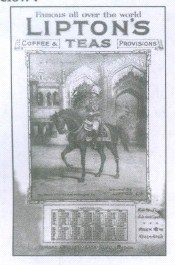
(i) What is depicted in this picture?
(ii) Why are old advertisements important to us?
(iii) What does this advertisement suggest?
12.
How did the advent of printing press help in spreading news and information in a more effective way?
13.
What are the other literary sources, except official records?
14.
Why did James Rennel produce the first map of India?
15.
Why and how do we periodise a time in history?
16.
Look at the Map along with a present-day political map, of India. In each of these maps try and identify the different parts of India that were under the British rule.
.JPG)
17.
Read the source given and answer the questions that follow:
Newspapers provide an account of the movements in different parts of the country. Here is a report of a police strike in 1946. More than 2000 policemen in Delhi refused to take their food on Thursday morning as a protest against their low salaries and the bad quality of food supplied to them from the Police Lines kitchen. As the news spread to the other police stations, the men there also refused to take food. One of the strikers said: "The food supplied to us from the Police Lines kitchen is not fit for human consumption. Even cattle would not eat the chapattis and dal which we have to eat."
(i) Do you remember the source of this literary evidence?
(ii) To which event the above source is related?
(iii) What was the grievance of the policemen?
(iv) What is the importance of these types of literary sources?
18.
Describe the way in which the Britishers started the very important procedure of writing the history.
19.
"James Rennel was a supporter of British rule in India". Justify this statement.
20.
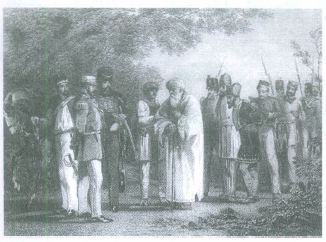
Why was he forced to leave the kingdom?
21.
Sipahi
22.
Rani Channamma
23.
Faujdari adalat
24.
'Tiger of Mysore'
25.
1793
26.
Write three methods of water conservation.
27.
What do you think the artist is trying to convey through the image of Parliament on the previous page?
28.
What is sustainable development?
29.
Write a note on the following:
(i) Charter Act (ii) Dual government
30.
Are official records the best sources of information?
31.
What, according to you, is the reason behind use of dates in history?
32.
Who were 'Calligraphists'?
33.
According to historians what is the meaning of the term 'Colonial'?
34.
What is the meaning of 'Colonization' in History?
35.
Can you point to a few other situations where laws (or rules) exist but people do not follow them because of poor enforcement?
(For example, over-speeding by motorists). What are the problems in enforcement? Can you suggest some ways in which enforcement can be improved?
36.
Why do you think enforcement of safety laws is important in any factory?
37.
Faujdari adalat refers to civil court
38.
The French began cultivating indigo in Brazil and Jamaica.
39.
Mahatma Gandhi visited Champaran in 1917.
40.
Gomasthas were the agents appointed by planters.
41.
Industrialization was not the cause of growing demand of indigo in the end of the eighteenth century
42.
This is a picture of Santhal girl carrying firewood. On the basis of the given picture, answer the following questions:
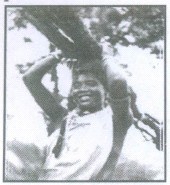
(i) What is the occupation of the Santhals?
(ii) Why were the Santhai unhappy under the British Raj?
43.
Read the given source and answer the questions:
In the 1930s, Verrier Elwin visited the land of the Baigas, a tribal group in central India. He wanted to know about them, their customs and practices, their art and folklore. He recorded many songs that lamented the hard time the Baigas were having under British rule.
In this land of the English how hard it is to live How hard it is to live. In the village sits the landlord. In the gate sits the Kotwar. In the garden sits the Patwari. In the field sits the Government.
In this land of the English how hard it is to live. To pay cattle tax we have to sell cow. To pay forest tax we have to sell buffalo. To pay land tax we have to sell bullock.
How are we to get our food?
In this land of the English
(i) Who were Baigas? Why did they find it difficult to live under the English?
(ii) What was the main occupation of the Baigas?
1.
(c)
How markets came up
2.
(d)
Themselves
3.
(c)
Subjugation of one country by another, leading to political, social and economic changes.
4.
(c)
Ancient, Medieval, Modern
5.
(b)
James Rennet
6.
(a)
effective administration
7.
(d)
All of the above
8.
(a)
1920s
9.
(c)
James Mill
10.
(b)
Warren Hastings
11.
(i) The third son of Queen Victoria of Britain, Prince Arthur-the Duke of Connaught, seated on horseback, is depicted in this picture.
(ii) Old advertisements are important because they help us to understand how markets were created for new products at that time, and secondly, how new tastes were popularized among the people.
(iii) The advertisement of Lipton tea created in 1922 suggested that royalty all over the world consumed this tea.
12.
(i) Before the advent of printing press, documents were written by hand, this was time consuming and when the printing press arrived, the speed of work improved.
(ii) Newspapers were published and the issues in them were debated upon by the common people.
(iii) The reformers and leaders were able to convey their ideas to masses in short time.
(iv) Poets and novelists were also able to express their thoughts. Thus, printing presses helped in spreading news and information in a more effective way.
13.
Other than official records, biographies, memoirs, newspapers, autobiographies of prominent persons and records of travelers and pilgrims are other literary sources to know about the past events and history of a society.
14.
James Rennel was asked by Robert Clive to produce maps of Hindustan. Rennel was an enthusiastic supporter of British colonialism. He saw the preparation of maps as essential to the process of domination. Thus, he produced the first map of India in 1782.
15.
We periodise a time in order to characterize it into different periods on the basis of some significant events that have happened during those days. These demarcations of time into different periods in the past is known as 'periodization', which become important for history as they help to reflect our ideas quickly about the happenings and changes from one period to the next.
16.
In the above map, the areas which are under the British rule are-some parts of East UP, Bihar, Bengal, Coastal Andhra Pradesh, Madras city, some parts of Tamil Nadu and Kerala.
17.
(i) The report was published in 'The Hindustan Times' of 22 March, 1946.
(ii) This report was about a strike by policemen against the unhealthy food provided by the government.
(iii) The grievance of policemen was that the government did not treat them well and provided unhealthy and inedible food.
(iv)These type of literary sources provide the information about those events and activities that do not find mention in official records. These types of sources inform us about condition of contemporary society and events.
18.
(i) Literary sources prove to be most important in gaining knowledge about past events.
(ii) The Britishers laid the foundation of keeping records of each and every plan, policy, decision, instruction, agreement, and treaty, etc.
(iii) They started preserving important written documents such as letters, memos, etc.
(iv) Record rooms were established across all the important offices in rural as well as urban areas.
(v) Later, archives and museums were established to protect these records and documents so that they could be accessed in the future.
19.
(i) Robert Clive, the General who stood victorious in the Battle of Plassey, had asked James Rennel to produce maps of India.
(ii) James Rennel was a passionate supporter of British rule in India.
(iii) He knew that maps were important for the Britishers to conquer other parts of India and extend their dominion.
(iv) Therefore, he produced several maps for the Britishers, and as a staunch supporter of the British.
(v) He even produced a picture depicting Brahmins offering their sacred texts to Britannia which further proves that he was a supporter of British rule in India.
20.
In the First War of Independence of 1857, Bahadur Shah Zafar was seen as the natural leader. Once the revolt was put down by the British Company, Bahadur Shah Jafar was forced to leave the kingdom and his sons were shot in cold blood.
21.
()
Sepoy
22.
()
Led an anti-British movement in Kitoor
23.
()
Criminal court
24.
()
Tipu Sultan
25.
()
Permanent Settlement
26.
Three important methods of water conservation are:
(i) To slow down the rate of surface run-off, we must grow plants and vegetation.
(ii) We must promote rainwater harvesting technique to collect the rain water.
(iii) In agriculture, sprinkle or drip irrigation methods must be used.
27.
The artist is trying to convey that the Parliament enables citizens of India to participate in decision making process and controlling the government.
28.
Careful utilization of resources, so that, besides meeting the requirements of the present, they are also conserved for use by the future generation is called sustainable development.
29.
(i) Charter Act : Charter Act 1813 or East India Company Act 1813 was passed by the British Parliament to renew the charter of British East India Company and continue the rule of the same in India.
(ii) Dual Government : Dual Government meant double government under which the executive powers and responsibility for collection of revenue were shared by two different authorities.
30.
(i) No, because they provide the views of people who are in power.
(ii) They are usually biased and provide only an official view of an incident, which cannot be deemed to be right source of information with common man's point of view.
31.
Use of dates in history is a must as dates provide a framework to present a historical event in sequence. Dates help in forming a sequential pattern of an incident under an appropriate timeline of events.
32.
Calligraphists were experts in the art of beautiful handwriting. In the early years of the 19th century, important documents were carefully copied and beautifully written by the Calligraphists.
33.
During the British rule in India, people never enjoyed equality, freedom or liberty. During this period, Indian economy was exploited and channelized for the development of British economy. In history, this period of British rule has been termed as 'Colonial' by many historians.
34.
(i) In history we can find that whenever one country invaded or conquered another, it brought about some changes in the society in terms of values, customs, and practices.
(ii) These kind of political, economic, social and cultural changes as a result of subjugation of one country by another are termed as 'Colonization' in history.
35.
Yes, some situations where laws (or rules) exist but people do not follow are the following
1. Zebra crossing for road crossing
2. Giving and taking of dowry
3. Employing children under 14 years' age
The problems in enforcement are:
1. Lack of adequate staff
2. Untrained staff
3. Irresponsible citizens
Some ways in which enforcement can be improved:
1. Strict punishments for breaking laws
2. Deployment of adequate number of staff for enforcing the laws.
36.
Enforcement of safety laws is important in any factory for the security of its workers and people living near the factory. It is important for preventing serious disasters like Bhopal gas tragedy from happening
37.
(b)
38.
(b)
39.
(a)
40.
(a)
41.
(b)
42.
(i) The primary occupation of the Santhals is agriculture, though food gathering and hunting are their important subsidiary occupations. They also engage in fishing and making musical instruments, mats, and baskets from plants.
(ii) The Santhals were unhappy due to the following reasons:
(a) Under the British rule, the familiar ways of life of the Santhals seemed to be disappearing. There was greater mobility of the non-tribals in the tribal community.
(b) Under British rule, a number of Anglican and Catholic missions appeared, which were considered as a threat to their religion.
(c) The moneylenders and the zamindars that first appeared to them as mere businessmen gave them loans, cheated them and turned them into slaves; thus, they threatened their livelihoods
43.
(i) Baigas are one of the tribes found in Madhya Pradesh, Chhattisgarh and Jharkhand states of India. The Baigas had to pay numerous taxes such as cattle tax, forest tax and land tax, for which they had to sell their cattle. They were not able to fulfil their daily needs. Thus, they found it difficult to live under the English.
(ii) They formerly practised only shifting agriculture in forest areas. Majority of them have now become regular cultivators. They make bamboo mats and baskets which they sell in the weekly markets in villages. They also collect and sell honey and other forest products. They are experts at all such work that can be done with an axe.

8th Standard CBSE Syllabus & Materials
8th Standard CBSE
CBSE 8th Science Particulate Nature of Matter - New Model Questions Papers Study Material - QB365 Set A
NEW8th Standard CBSE
CBSE 8th Science Pressure, Winds, Stroms and Cyclones - New Model Questions Papers Study Material - QB365 Set A
NEW8th Standard CBSE
CBSE 8th Mathematics Quadrilaterals - New Model Questions Papers Study Material - QB365 Set A
NEW8th Standard CBSE
CBSE 8th Mathematics A story of Numbers - New Model Questions Papers Study Material - QB365 Set A



CBSE 8th Standard CBSE Subjects
CBSE Standards




