
 100% FREE ACCESS
8th Standard Syllabus & Materials
8th Standard
TN 8th Tamil இயல் 3 - கல்வி கரையில - வினைமுற்று Important Questions And Answers Study Material - QB365 Set A
NEW8th Standard
TN 8th Tamil இயல் 2 - ஈடில்லா இயற்கை - மயங்கொலிகள் Important Questions And Answers Study Material - QB365 Set A
NEW8th Standard
TN 8th Tamil இயல் 2 - ஈடில்லா இயற்கை -பட்டமரம் Important Questions And Answers Study Material - QB365 Set A
NEW8th Standard
TN 8th Tamil இயல் 2 - ஈடில்லா இயற்கை - இயற்கையை போற்றுவோம் Important Questions And Answers Study Material - QB365 Set A
NEW8th Standard
TN 8th Tamil இயல் 1 - தமிழ் இன்பம் - ஆழிக்கு இணை Important Questions And Answers Study Material - QB365 Set A
NEW8th Standard
TN 8th Tamil இயல் 2-ஈடில்லா இயற்கை - திருக்குறள் Important Questions And Answers Study Material - QB365 Set A

Published on: 10/12/2019
Rock and Soil
Download Tamil Nadu 8th Standard Social Science question papers, model tests, one-mark questions, important questions, and public exam papers in PDF format. Free study materials and answer keys for TN State Board students.
Questions + Answers key
Take MCQ Social Science Test
1.
Oldest sedimentary rocks of the world has been identified in ________
Greenland
Newzeland
England
Ireland
2.
________ part is composed of organic matter mixed with mineral matter.
Organic material
Sub soil
Top soil
Humus
3.
To become a well matures soil, it takes ______ years.
200
2000
3000
400
4.
This soil is not suitable for agriculture
Alluial Soil
Desert Soil
Black Soil
Laterite Soil
5.
The major component of soil is
Rocks
Minerals
Water
All the above
6.
State the types of soils.
7.
Describe about the composition of soil.
8.
Difference between M-Sand and River Sand.
9.
Write the useful making of Rocks.
10.
Classify and explain the soil?
11.
Explain the process of soil formation.
12.
What are the characteristics of sedmimentary Rocks?
13.
Define Petrology.
14.
Uses of soils (any two).
1.
(a)
Greenland
2.
(c)
Top soil
3.
(c)
3000
4.
(b)
Desert Soil
5.
(d)
All the above
6.
Soils are classified on the basis of their formation colour, physical and chemical properties. Soil is classified into six major types. They are
1. Alluvial soil
2. Black soil
3. Red soil
4. Laterite soil
5. Mountain soil
6. Desert soil
7.
1. The basic components of soil are mineral, organic matter, water and air.
2. It consists of about 45% mineral, 5% organic matter, 25% of water and 25% of air.
3. It is only a generalized fact.
4. The composition of soil varies from place to place and time time.
8.
| M-Sand | River | |
| 1. | Manufactured is a factory | Naturally available on river Banks. |
| 2. | Angular and has a rougher texture | Smoother texture with better shape. |
| 3. | Angular aggregates demand more water. | Demands less water |
| 4. | Less (or) No moisture content | More moiisture content. |
| 5. | Less damage to the environment | Harmful to the environment. |
9.
Rocks are useful for making:
(1) Cement
(2) Writing chalk
(3) Fire
(4) Building materials
(5) Bath scrub
(6) Kerb stone
(7) Ornament
(8) Roofing material
(9) Decorative materials
(10) These are valuable source of minerals such as gold, diamond, sapphire etc.
10.
Classification of soils:
Soils are classified on the basis of their formation; colour, physical and chemical properties. Soil is classified into six types.
1. Alluvial soil:
(i) These soils are found in the regions of river valleys, food plains and coastal regions.
(ii) It is the most productive of all the soils. Suitable for cultivation of sugarcane, jute, rice, wheat and other food crops.
2. Black soils:
Formed by withering of igneous rocks: Black soil is clay in nature. it is retentive of moisture. It is ideal for growing cotton .
3. Red soils:
(i) Formed by weathering of metamorphic and crystalline rocks.
(ii) The presence of iron oxide makes this soil brown to red in colour.
(iii) Found in semi-arid regions. It is. not a fertile soil. It is suitable for millet cultivation.
4. Mountain soils:
(i) Found over the slopes of mountains.
(ii) Soils in these regions are thin and acidic.
(iii) However characteristic of soil differs from region to region based on the altitude.
5. Desert soils:
These are sandy soil found in the hot desert regions.
(i) These soils are porous and saline.
(ii) Since it is infertile, agriculture in these soils is not so successful.
11.
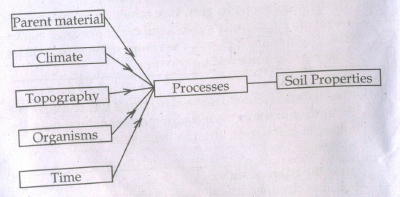
(i) Soil is a mixture of organic matter, mineral, gases, liquids and organisms that together support life. Soil minerals form the basis of soil. It forms on surface of the earth. It is known as skin of earth.
(ii) Soils are produced form rocks through the processes of weathering and soil erosion.
(iii) Water, wind, temperature change, gravity, chemical interaction, living organisms and pressure differences all help break down parent material.
(iv) It leads to the formation of loose material
(v) In course of time they further break down into fine particles.
(vi) This process release the minerals locked in the rock fragments.
(vii) Later on the vegetative cover which develops in that region forms humus content in the soil. This way the soil gets matured gradually.
12.
(1) They have layers.
(2) They are non-crystalline rocks.
(3) They contain fossils
(4) They are soft and get eroded easily.
13.
(1) Petrology is a branch of geology which deals with the study of rocks.
(2) Petrology is derived from the Greek word petrus refers to rock an "Losos" refer to study.
14.
(1) The minerals present in the soil enhance and nourishes the crops and plants.
(2) It is used making of ceramics or pottery.

8th Standard Syllabus & Materials
8th Standard
TN 8th Tamil இயல் 3 - கல்வி கரையில - பாடறிந்து ஒழுகுதல் Important Questions And Answers Study Material - QB365 Set A
NEW8th Standard
TN 8th Tamil இயல் 3-கல்வி கரையில - பல்துறைக் கல்வி Important Questions And Answers Study Material - QB365 Set A
NEW8th Standard
TN 8th Tamil இயல் 3-கல்வி கரையில - புத்தியைத் தீட்டு Important Questions And Answers Study Material - QB365 Set A
NEW8th Standard
TN 8th Tamil இயல் 2 - ஈடில்லா இயற்கை - தமிழர் மருத்துவம் ( நேர்காணல்) Important Questions And Answers Study Material - QB365 Set A



Tamilnadu Stateboard 8th Standard Subjects
Tamilnadu Stateboard Standards



