
 100% FREE ACCESS
8th Standard CBSE Syllabus & Materials
8th Standard CBSE
CBSE 8th Social Science Theme D - Factors of Production - New Model Questions Papers Study Material - QB365 Set A
NEW8th Standard CBSE
CBSE 8th Social Science Theme C - Universal Franchise and India's Electoral System - New Model Questions Papers Study Material - QB365 Set A
NEW8th Standard CBSE
CBSE 8th Social Science Theme B - The Rise of the Marathas - New Model Questions Papers Study Material - QB365 Set A
NEW8th Standard CBSE
CBSE 8th Social Science Theme B - Reshaping India's Political Map - New Model Questions Papers Study Material - QB365 Set A
NEW8th Standard CBSE
CBSE 8th Social Science Theme A - Natural Resources and Their Use - New Model Questions Papers Study Material - QB365 Set A
NEW8th Standard CBSE
CBSE 8th Science Keeping Time with Skies - New Model Questions Papers Study Material - QB365 Set A

Published on: 05/03/2020
8th Standard CBSE Science Annual Exam Model Question 2020
Download CBSE Class 8th Standard CBSE Science question papers, sample papers, important questions, and previous year solved papers in PDF format. Get free study materials, NCERT solutions, and exam preparation resources for Class 8th Standard CBSE Science
Questions + Answers key
Take MCQ Science Test
1.
An object is vibrating at 50 hertz. What is its time period?
0.02s
2 s
0.2 s
20.0s
2.
The table given below has certain terms and four blank spaces named A, B, C and D
| Cell | Feature/Part | Function |
| Amoeba | A | Movement |
| Plant Cell | Plastid | B |
| C | Spindle Shaped | Contraction |
| Nerve Cell | D | Stimuli and reponse |
From the options given below choose the correct combination of terms
A-Pseudopodia; B-Respiration; C-Muscle Cell; D-Branched
A-Pseudopodia; B-Photosynthesis; C-Muscle Cell; D-Branched
A-Contractile vacuole; B-Photosynthesis; C-Blood Cell; D-Spindle Shaped
A-Pseudopodia; B-Photosynthesis; C-Check Cell; D-Spindle Shaped
3.
Which of these can cause acid rain ?
Carbon monoxide
Carbon dioxide
Sulphur dioxide
Nitrogen
4.
Which one of the following solutions will not conduct electricity
Lemon juice
Vinegar
Tap water
Vegetable oil
5.
If we apply oil on door hinges, the friction will
increase
decrease
disappear altogether
will remain unchanged
6.
As the angle between two plane mirrors is decreasing gradually, the number of images of an object placed between them
first increases then decreases
first decreases then increases
increases
decreases
7.
Which star is nearest to the Earth?
Pole star
Cassiopeia
Orion
Sun
8.
Which endocrine gland is called 'Master gland'?
Adrenal
Pancreas
Pituitary
Thyroid
9.
Some mustard oil is kept in the beaker. It will exert pressure
upward
downward
sideways
in all the directions
10.
Which of the following is not a viviparous animal?
Rat
Lizard
Rabbit
Cat
11.
An electroscope is a device which is used to find if an object is
charged
magnetic
free of cracks
hot
12.
Which statement is incorrect about endangered species?
Their number has decreased drastically
They might become extinct in the near future
They pose a danger to other animals
Their natural habitat needs to be protected
13.
Materials which can be drawn into wires are called ductile. Which of the following is not a ductile material?
Silver
Copper
Sulphur
Aluminium
14.
Shyam was cooking potato curry on a chulha. To his surprise. he observed that the copper vessel was getting blackened from outside. It may be due to
proper combustion of fuel
improper cooking of potato curry
improper combustion of the fuel
burning of copper vessel
15.
When coal burns in air
carbon monoxide is formed
sulphur dioxide is formed
oxygen is formed
carbon dioxide is formed
16.
The material similar to silk in appearance is
nylon
rayon
polyester
terylene
17.
Which of the following is not true for fertilisers?
They increase the yield
Their excessive use disturbs the balance of nutrients in soil
They are generally used in small quantity
They are environment friendly
18.
The process of conversion of sugar into alcohol is called
nitrogen fixation
moulding
fermentation
infection
19.
Sound needs a medium for propagation. Explain it with an experiment
20.
What will you do on being struck by lightning?
21.
Which animals are known as endangered animals?
22.
What are the characteristics of an ideal fuel?
23.
How do micro-organisms survive under adverse conditions?
24.
What is plastic?
25.
Microorganisms such as bacteria are also pollutants of water. In which category of pollutants, are they placed?
26.
During the electrolysis of water, at which electrode, hydrogen gas is evolved?
27.
Explain fluid friction in brief.
28.
Do we see all objects due to reflected light?
29.
Give the name of the planet which is known to have largest number of natural satellites.
30.
While sieving grains, small pieces fall down. Which force pulls them down?
31.
Roshni (11yrs Old) was worried about the changes in her body. How long do you think this period marked by Changes in the body will last?
32.
The change from tadpole to frog is given a particular term. What is it?
33.
Have you heard of a cell that behaves like a complete organism? Give its name
34.
How can you say that metals have a property of sonorousness?
35.
You must have seen the farmer plough seedlings of paddy into the field from a nursery. Give the name of this process
36.
What is waxing and vanning of moon?
37.
Sumitra saw a bird protecting her eggs in a nest in the balcony of her house. After few days, she saw the little birds coming out of the eggs. She wondered if humans are also born this way. Her mother explained the difference.
(i) Is there a difference between birth of a baby, in case of a bird and a human?
(ii) Name few animals who lay eggs like the bird.
(iii) Identify the values displayed by Sumitra.
38.
Identify the part which vibrates to produce sound in the following instruments:
(i) Dholak
(ii) Sitar
(iii) Flute
39.
How does a match stick burn? Explain its process.
40.
Write any three positive characteristics of plastic.
41.
Name any two sources which cause air pollution due to Suspended Particulate Matter (SPM).
42.
The bulb glows when the electric current passes through it. Explain why.
43.
Give examples to show that friction is both a friend and a foe.
44.
Differentiate between regular and diffused reflection. Does diffused reflection mean the failure of the laws of reflection?
45.
In an electroscope, if a negatively charged body is brought in contact with the metal clip, the strips of the electroscope diverge. If now another charged object carrying equal amount of positive charge is brought in contact with the clip, what will happen?
46.
Briefly explain how do we experience force in our daily life.
47.
The number of cells are related to the size of animals. Explain how
48.
Define adolescence.
49.
What will happen, if we go on cutting trees?
50.
What happens when samples of metals and non-metals react with acids?
51.
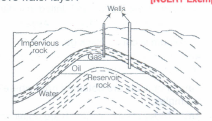
Look at the figure where petroleum and natural gas deposits are shown. Why do we find oil layer above water layer?
52.
Microorganisms survive under adverse conditions. How?
53.
Give an appropriate term for each of the following.
(a) Chemical substance rich in particular nutrient.
(b) Plants of same kind grown in a field on large scale.
(c) Process of loosening and turning the soil.
(d) Rearing of fishes for its various products
54.
How does air get polluted? Explain.
55.
What are contact and non-contact forces? Explain briefly with suitable examples.
56.
What is a gene? What are its functions?
57.
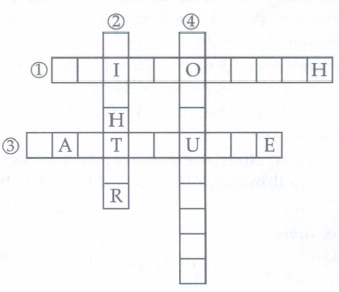
Across:
1. The graph used to record seismic waves.
2. The scale used to measure the magnitude of earthquake.
3. Sudden movement in the Earth plates.
4. A method of charging a neutral material.
58.
What is poaching? How does poaching affect environment and humans?
59.
Corrosion is a serious problem. Every year anenormous amount of money is spent to replace damaged iron. What steps can be taken to prevent this damage?
60.
Discuss various systems of irrigation.
61.
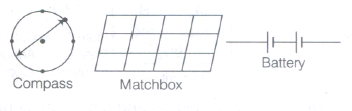
You are provided with a magnetic compass, an empty matchbox, a battery of two cells and connecting wires. Using these objects, how will you make a tester for testing an electric circuit? Draw the necessary circuit diagram and explain.
62.
In physics classroom a teacher told to his students that when a cricket player want to catch a ball then first he rub the hands. Thus, there is less chance of slipping the ball from hands.
(a) Explain the reason of not slipping of ball from hand
(b) If the player makes his hands oily instead of rubbing them. Would he be able to catch the ball?
(c) Mention the type of teaching skills of teacher is being represented here?
63.
There is a mistake in each of the following ray diagrams given as figure (a), (b), and (c). Make the necessary correction(s).
.jpg)
64.
Observe the chart and graph given in figure carefully and answer the following questions.
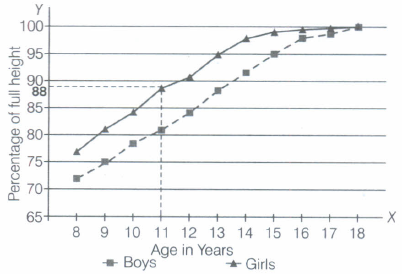
| Age in years | % of full height | |
|---|---|---|
| Boy | Girl | |
| 8 | 72% | 77% |
| 9 | 75% | 81% |
| 10 | 78% | 84% |
| 11 | 81% | 88% |
| 12 | 84% | 91% |
| 13 | 88% | 95% |
| 14 | 92% | 98% |
| 15 | 95% | 99% |
| 16 | 98% | 99.5% |
| 17 | 99% | 100% |
| 18 | 100% | 100% |
(a) Which of the line represents the height of boys?
(b) Which line represents the height of girls?
(c) What is the difference between the pattern of increase in the height of boys and girls?
(d) Is this pattern true for each individual?
65.
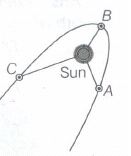
Figure shows comets without their tail. Show the tails of the comets at positions A, B, and C. In which position will the tail be longest?
66.
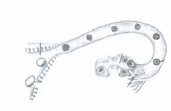
After observing figure above, answer the following.
(a) Read the following statements and label them in the figure.
(i) The part which produces female gametes.
(ii) The part where development of the baby takes place.
(iii) The part through which the developing embryo passes to reach the uterus.
(b) Explain the future development of the embryo that would take place after it gets embedded in the uterus.
67.
How is sound produced and how is it transmitted and heard by us?
68.
Forest fire produces a lot of air pollution. Write in brief about the reasons of forest fires.
69.
Why petrol is exhaustible natural resource whereas sunlight is not? Explain.
70.
Karan, a student of class VIII carelessly throw polybags here and there. Sometimes he throw the wrappers of chips, biscuits and other eatables on the road or in park or in his house. Karan's mother was very upset she told him not to throw things carelessly. She advised him to keep your home, school and public places clean. So, your younger brother will also learn the same thing. Karan followed her mother advice.
Read the following passage and answer the following questions.
(a) What is the harmful effects of throwing polybags or wrappers of food on public places.
(b) What are 4 R principle that are should follow to keep their environment clean?
(c) What values are shown by Karan?
71.
During biology class, teacher was telling about microbes and how they are useful to humans. Hearing this, Jasmine got confused as she knew the TB caused to her uncle is due to a microbe. She asked his teacher about it. The teacher appreciated her for question and explained the whole class.
(a) What are microbes?
(b) How are microbes helpful to humans?
(c) Name one microbe
(i) used in household products.
(ii) used in antibiotics.
(d) Mention two diseases other than TB caused by microbes.
(e) Identify the values shown by Jasmine.
1.
2.
(b)
A-Pseudopodia; B-Photosynthesis; C-Muscle Cell; D-Branched
3.
(c)
Sulphur dioxide
4.
(d)
Vegetable oil
5.
(b)
decrease
6.
(c)
increases
7.
(d)
Sun
8.
(c)
Pituitary
9.
(d)
in all the directions
10.
(b)
Lizard
11.
(a)
charged
12.
(c)
They pose a danger to other animals
13.
(c)
Sulphur
14.
(c)
improper combustion of the fuel
15.
(d)
carbon dioxide is formed
16.
(b)
rayon
17.
(d)
They are environment friendly
18.
(c)
fermentation
19.
Sound needs a medium for propagation. Take a metal or glass tumbler. Place a cellphone in it. Ask your friend to give a ring on this cellphone. Listen to the ring carefully. Now surround the rim of the tumbler with your hands. Suck all the air of the tumbler. Once again make a ring in cellphone. Sound will completely stop because air has been removed completely from the vessel and forms vacuum. Hence sound needs a medium for propagation.
20.
On being struck by lightning, victim carries no electrical charge. The death by lightning occurs due to cardiac arrest and stopped breathing. We can give first aid by performing CPR and mouth to mouth breathing.
21.
Animals whose numbers are diminishing to level that they might face extinction are known as the endangered animals e.g., Dinosaurs became extinct a long time ago.
22.
Characteristics of an ideal fuel:
(i) It is readily available, cheap and can easily be transported.
(ii) It burns easily, has higher calorific value and does not leave behind any undesirable substances.
23.
Under unfavourable conditions of temperature and water, they generally form a hard and tough covering called cyst. This protects them. When favourable conditions come, they emerge from their shell, multiply and go through their life cycle.
24.
Plastic is a polymer like the synthetic fibre.
25.
Microorganisms (pathogens) such as viruses are included in biological water pollutants.
26.
During the electrolysis of water, hydrogen gas is evolved at the cathode.
27.
When an object moves in a fluid, then the resistance to the movement of object exerted by fluid is called fluid friction.
28.
Yes, nearly everything we see around us due to reflected light, e.q. moon receives light from the sun and reflects it.
29.
The planet which is known to have a largest number of satellites is Jupiter.
30.
It is the force of gravity which is responsible for the grains to fall down.
31.
This period of Changes, i.e adolescence begins around the age of 11 and lasts upto 18 or 19 years.
32.
Metamorphosis is the term used for the change from tadpole to frog.
33.
Amoeba is a cell that behaves like a complete organism.
34.
Metals produce ringing sound, so they are called sonorous.
35.
The process of transferring the seedings from the nursery to the main field by hand or manually is called seed transplantation.
36.
Different phases of moon are visible from the Earth. This change in shapes occurs due to variation in sunlight reflected by moon from its surface. At certain times, it appears to be bright whereas at others it appears to be dark. When brightness of moon is increasing, it is called waxing, when brightness of moon is decreasing, it is called vanning.
37.
(i) Yes, there is a difference because bird lays eggs from which its young ones hatch out whereas human gives birth to a baby directly.
(ii) Hen, frog, snake and lizards are few animals that lay eggs.
(iii) Sumitra is observant, intelligent and curious.
38.
| Instrument | Vibrating part producing sound |
|---|---|
| (i) Dholak | Stretched membrane |
| (ii) Sitar | Stretched string |
| (iii) Flute | Air column |
39.
These days the head of the match sticks contains only antimony trisulphide and potassium chlorate. The rubbing surface has powdered glass and a little red phosphorus. When the match stick is struck against the rubbing surface i.e., some red phosphorus, this immediately reacts with potassium chlorate on the match stick head to produce enough heat to ignite antimony trisulphide and start combustion.
40.
Plastic is very strong, light and durable. It can be moulded into different shapes and sizes. It is used for various purposes. Plastics are generally cheaper than metals. They are widely used in industry and for household articles.
41.
Two sources which cause air pollution due to SPM are as follows :
(i) Automobiles which burn diesel and petrol, produce SPMthat remain suspended in air and reduce visibility. When inhaled, they cause diseases.
(ii) Industrial activities like manufacturing of steel and mining give out SPM which also pollute the atmosphere.
42.
Due to the heating effect of current, the filament of the bulb gets heated to a high temperature and it starts glowing. However, if the current through a circuit is too weak, the filament does not get heated sufficiently and it does not glow.
43.
Friction as a friend
(i) It allows us to walk comfortably.
(ii) It allows us to minimise the speed or to stop the moving objects.
(iii) It allows us to write on a board with chalk.
Friction as a foe
(i) It causes wear and tear in objects.
(ii) It causes damage to the parts of machines.
(iii) It does not allow the free movement of objects.
44.
Differences between regular and diffused reflection are
| Regular reflection | Diffused reflection |
|---|---|
| i) It is caused by the reflection from smooth and shiny surfaces | It is caused by reflection from unpolished and rough surfaces |
| ii) Reflected rays are parallel to each other | Reflected rays are not parallel to each other |
No, the diffused reflection does not mean the failure of the laws of reflection.
45.
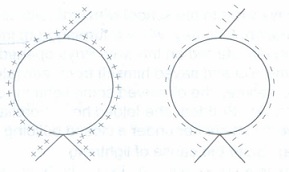
As, it is clear from the diagram whether we bring a positive or negative rod, the strips will repel always because equal amount of charges are transferred to the strips and like charges always repel each other.
46.
Since, there are many actions which give us the feeling of force like we hit or catch many objects in our regular routine. Most of the times, we see that the moving ball stops after sometime and it changes the direction of motion when it is hit by a bat also, when we compress a spring, its shape and size changes.
47.
The cell number in an organism varies with the size of organism. Thus, smaller organisms have limited number of cells. while the larger ones (such as elephant, whale or banyan tree) have a countless number of cells. In man, the number of cells is estimated to be about 100 trillion (1014).
48.
Adolescence is the period of life, in which organisms become reproductively active. In other words, it is the period of attaining reproductive maturity in boys and girls, which starts from 11-13 years and lasts upto 18-19 years in humans.
49.
If we go on cutting trees, then
(i) many animals will loose their shelters.
(ii) there would be scarcity of materials like fruits, paper, which we get from forests.
(iii) flood and drought will become more frequent.
(iv) earth will loose its most fertile layer and transform into desert.
50.
Metals react with acids to produce salt and hydrogen gas which burns with a 'pop' sound. Non-metals do not react with acids. Copper does not react with dilute hydrochloric acid and dilute sulphuric acid but it reacts with hot and concentrated sulphuric acid, but no hydrogen gas is produced.
51.
Oil is lighter than water, hence floats over it.
52.
Microorganisms survive under adverse conditions by forming a hard and protective covering called cyst around them. On return of favourable conditions, the cyst wall breaks and microorganisms resume their life cycles.
53.
(a) Fertiliser
(b) Crop
(c) Ploughing or Tilling
(d) Pisciculture
54.
Air gets polluted by many reasons. Few of them are as follow:
(i) Vehicles produce high level of pollutants like carbon monoxide, carbon dioxide, nitrogen oxide, smoke etc. These are very poisonous gases. Burning of fuel from vehicles also produces pollution.
(ii) Many industries are also responsible for causing air pollution. Petroleum refineries release polluted gases such as sulphur dioxide, nitrogen dioxide etc. They cause respiratory problems, including lung damage.
(iii)Other kinds of pollutants are CFCs which are largely used in refrigerators, air conditioners and aerosol sprays. Those protect us from ultraviolet rays of the Sun.
(iv) Some human activities like forest fire, burning of fire wood, cow dung cakes, burning of chaff etc. cause air pollution.
(v) Some natural phenomenon like fast dust storms, volcanic eruption produce smoke and dust particles
55.
Forces can be of two types:
(i) Contact forces.
(ii) Non-contact forces.
(i) Contact forces : The forces that come into play when two objects come in contact with each other.
(a) Muscular force: The force which is exerted due to action of muscles is known as the muscular force. e.g., running, bending, walking etc.
(b) Frictional Force: The force responsible for changing the state of motion of an object. Equal and opposite forces are being exerted on an object when its surface comes in contact with other surface. e.g., a car or scooter comes to rest.
(ii) Non-contact forces: The forces that can be exerted from a distance without establishing a contact are called the non-contact forces.
(a) Magnetic forces : Force exerted by a magnet on another magnet or magnetic substances like iron is called magnetic force. e.g., Car sticking to an electromagnet.
(b) Electrostatic force : Force exerted by a charged body on another charged body or uncharged body is called electrostatic force. e.g., If we rub a comb with hair and bring it near some small bits of paper it attracts the bits of paper towards itself. This is electrostatic force.
(c) Force of gravity : The earth pulls every object towards its centre. The force exerted by the earth is called the force of gravity.
56.
Gene is a unit of inheritance in living organism. It controls the transfer of hereditary characteristics from parents to offsprings.
This means that your parents pass some of their characteristics to you. If your father has brown eyes, you may have brown eyes. However, the different combination of genes from parents results in different characteristics.
57.
1. Seismograph,
2. Richter,
3. Earthquake,
4. Conduction.
58.
When an animal is killed illegally, it is called poaching. It usually occurs when an animal possesses something that is considered valuable.
Effect of Poaching on environment : The whole ecosystem is affected due to harm caused on animal population. Everything from the animals to the plants and even the people in a specific place is negatively affected. We need various species of flora and fauna in our environmental ecosystem so that it is balanced and healthy. Our own survival depends on it.
Effect of Poaching on humans : Two serious problems are faced by humans, first is spread of food-borne illnesses e.g., Ebola and anthrax and second major affect is depletion of natural resources.
59.
The wasting of iron objects due to rusting causes a big loss to the country's economy, so it must be prevent by following methods:
(i) By painting : Paint is applied to the surface of an iron object, then air and moisture cannot come in contact of iron and hence no rusting occurs.
(ii) By applying grease or oil : Tools and machine parts made of iron and steel are smeared with grease or oil to prevent their rusting.
(iii) By galvanization : Galvanization is done by dipping an iron object in molten zinc metal. This thin layer of zinc metal on the surface of iron objects protects them from rusting.
(iv) By tin plating and chromium-plating : When a thin layer of tin metal is deposited on iron and steel objects by electroplating then the iron and steel objects are protected from rusting.
(v) By alloying it to make stainless steel: When iron is alloyed with chromium and nickel, stainless steel is obtained, which does not rust at all
60.
The supply of water to crops at different intervals is called irrigation. Various systems of irrigation are:
(i) Traditional methods: The water available in wells, lakes and canals is lifted up by
(a) Moat (Pulley system);
(b) Chain pump
(c) Dhekli and;
(d) Rahat (Lever system)
Pumps are commonly used for lifting water.
(ii) Modern methods:
(a) Sprinkler system: This system is more useful on uneven land. The perpendicular pipes, having rotating nozzles on top, are jointed to the main pipeline at regular intervals. When water flows through main pipes, it gets sprinkled on the crop as if it is raining.
(b) Drip system: In this system water falls drop by drop just at the position of the roots. It is the best technique for watering fruit plants, garden and trees
61.
Take the tray from the inside of a discarded matchbox. Wrap an electric wire a few times around the tray. Place a small compass needle inside it. Now connect one free end of the wire to the one terminal of a battery. Leave the other end free.
Take another piece of wire and connect it to the other terminal of the battery. Join the free ends of two wires momentarily. The compass needle should show deflection. Your tester with two free ends of the wire is ready.
62.
(a) Since, the player rub his hand due to which the palms become warm which absorb the moisture from the surface and make the surface rough. So, due to roughness of hands, the ball may get a better grip between the hands and does not slip.
(b) Since, the player makes the palm surface oily. So, the number of irregularities decreases and the surface becomes smooth. So, the ball slips off easily from the hand.
(c) As, teacher wants to teach the students through easy example. So, this act of teacher shows the experience and ideality of teacher.
63.
The correct diagrams are as below:
.jpg)
64.
(a) The dotted line represents the height of boys.
(b) The solid line represents the height of girls.
(c) At the on-set of puberty, girls grow faster in height than the boys and by the age of 18 years, approximately both reach their maximum height.
(d) No, the rate of growth in height varies among individuals. Some may grow in height suddenly at puberty and then slow down, while others may grow gradually.
65.
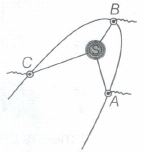
The tail of the comet is always directed away from the Sun. The tail will be longest in the position B because the tail is visible only when the comet passes through the inner solar system and B is nearest.
66.
(a) The parts in the figure are labelled below:
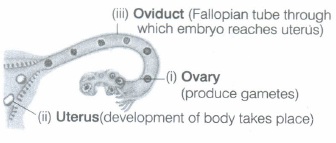
(b) The embryo continues to develop after it gets embedded in the uterus. It divides and differentiates into three germ layers which give rise to different body parts such as hands, legs, head, eyes, ears, etc. This stage where all the body parts are distinct and easily identified in developing embryo is called foetus. After completion of development of foetus, mother gives birth to baby.
67.
Sound is produced when any object starts vibrating by any means. These vibrations travel from the source all around the environment through the particles of the environment, thus, it reaches to its destination, i.e. our ear. Now, it enters our ear and travels down a canal at the end of which a thin membrane is stretched tightly known as eardrum. The eardrum sends vibrations to inner part of the ear and finally reaches to the brain and we hear the sounds.
68.
Reasons of forest fires are
(i) At high temperature, sometimes dry grass catches fire which spreads throughout the forest.
(ii) Campfire may also be a reason.
(iii) Lightning.
(iv) The use of fires by villagers to ward off wild animals.
(v) Fire lit intentionally by people living around forests for recreation.
(vi) Fires started accidentally by careless visitors to forests how discard cigarette butts.
(vii) The friction of bamboos due to high wind velocity and rolling stones.
69.
The natural resources which are present in a limited quantity in nature and can be exhausted (used up) by human activities are called exhaustible natural resources, e.g. coal, petroleum, natural gas, minerals, forests, wildlife, etc.
It requires millions of years for the conversion of the dead organisms into petroleum, from which petrol is separated. So, once the present stock of it gets exhausted, no new supplies of it will be available to us in the near future, whereas sunlight is present in an unlimited quantity in nature, so it is inexhaustible natural resource. It is not likely to be exhausted by human activities.
70.
(a) Sometimes, the animals (like cow) eat up the polythene bags and wrappers of food along with the left-over food thrown on garbage dumps.
(b) To deelop habits which are environment friendly one should follow 4 R principle which stands for reduce, reuse, recycle and recover.
(c) Karan followed his mother's advice, it shows that he is an intelligent, obedient caring and responsible boy
71.
(a) Organisms that cannot be seen with eyes alone are called microbes.
(b) Microbes are useful to humans in many ways. They help in the production of curd, cheese, in cleaning the environment, etc.
(c) (i) Lactobacillus bacteria.
(ii) Penicillium
(d) Diseases caused by microbes are polio, malaria, etc.
(e) Jasmine is attentive, intelligent and curious.

8th Standard CBSE Syllabus & Materials
8th Standard CBSE
CBSE 8th Science Particulate Nature of Matter - New Model Questions Papers Study Material - QB365 Set A
NEW8th Standard CBSE
CBSE 8th Science Pressure, Winds, Stroms and Cyclones - New Model Questions Papers Study Material - QB365 Set A
NEW8th Standard CBSE
CBSE 8th Mathematics Quadrilaterals - New Model Questions Papers Study Material - QB365 Set A
NEW8th Standard CBSE
CBSE 8th Mathematics A story of Numbers - New Model Questions Papers Study Material - QB365 Set A



CBSE 8th Standard CBSE Subjects
CBSE Standards




