
 100% FREE ACCESS
8th Standard CBSE Syllabus & Materials
8th Standard CBSE
CBSE 8th Social Science Theme D - Factors of Production - New Model Questions Papers Study Material - QB365 Set A
NEW8th Standard CBSE
CBSE 8th Social Science Theme C - Universal Franchise and India's Electoral System - New Model Questions Papers Study Material - QB365 Set A
NEW8th Standard CBSE
CBSE 8th Social Science Theme B - The Rise of the Marathas - New Model Questions Papers Study Material - QB365 Set A
NEW8th Standard CBSE
CBSE 8th Social Science Theme B - Reshaping India's Political Map - New Model Questions Papers Study Material - QB365 Set A
NEW8th Standard CBSE
CBSE 8th Social Science Theme A - Natural Resources and Their Use - New Model Questions Papers Study Material - QB365 Set A
NEW8th Standard CBSE
CBSE 8th Science Keeping Time with Skies - New Model Questions Papers Study Material - QB365 Set A

Published on: 16/09/2019
Cell - Structure and Functions
Download CBSE Class 8th Standard CBSE Science question papers, sample papers, important questions, and previous year solved papers in PDF format. Get free study materials, NCERT solutions, and exam preparation resources for Class 8th Standard CBSE Science
Questions + Answers key
Take MCQ Science Test
1.
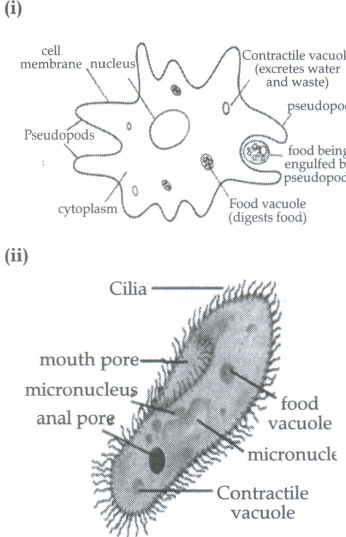
Draw a diagram of
(i) Amoeba
(ii) Paramecium. Name the locomotory organs in both of them.
2.
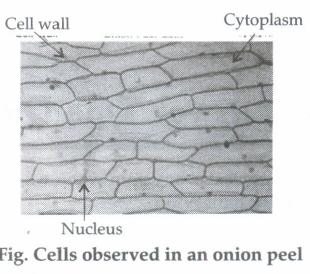
Draw a diagram of Onion peel and label
(i) Cell membrane
(ii) Nucleus and
(iii) Cytoplasm on it.
3.
What is plasma membrane? What are its characteristics?
4.
Describe the structure of hen's egg
5.
How does an organism begins its life?
6.
Paheli read somewhere that hen's egg is a single cell. She is wondering how can it be seen easily.
7.
Pseudopodia in Amoeba are every important for its functioning. What functions do they perform?
8.
Study the following structure.
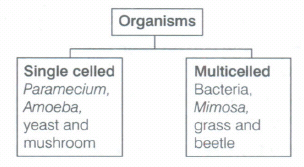
Which of the organisms have been classified wrongly?
9.
Scientists observe and study the living cells. How is it done?
10.
Tomatoes are red in colour, what causes the red colour in them?
11.
What are the functions of cell wall in plant cells?
12.
Have you heard of a cell that behaves like a complete organism? Give its name
13.
Certain kind of cells do not have a cell wall around them. What are they called as?
14.
Is there anything common among a bacteria and an elephant? If yes, what is it?
15.
Amoeba keeps changing its shape. Is there any advantage of doing so by it?
1.
2.
3.
The cytoplasm and nucleus are enclosed within the cell membrane, also called plasma membrane. The membrane separates cells from one another and also cells from the surrounding medium.
It is porous and allows the movement of substances or materials both inwards and outwards.
4.
In hen's egg a white material surrounds the yellow part. White material is albumin and yellow part is yolk. They are part of a single cell.
5.
An organism with billions of cells begins life as a single cell which is the fertilized egg. This fertilized egg cell multiplies and the number of cells increases as development proceeds.
6.
Yes, egg of hen represents a single cell and is big enough to be seen by the unaided eye.
7.
Pseudopodia (pseudo-false; podia-feet) are finger-like projections of varying length protruding out of the body of Amoeba. These can appear or disappear as Amoeba moves or feeds. It helps in movement and in capturing food.
8.
In the given structure mushroom and beetle have been classified wrongly because mushroom is a multicelled organism and beetle is a Single celled organism.
9.
Scientists observe and study the living cells by using highly magnifying microscopes.
10.
Plastids (i.e. chromoplasts) causes the red colour in tomatoes.
11.
Cell wall is an additional layer surrounding the plasma membrane that protects cells against variations in temperature, moisture and high wind speed. It also provides shape and rigidity to cells.
12.
Amoeba is a cell that behaves like a complete organism.
13.
Animal cells do not have a cell wall around them.
14.
Yes, both are living organisms, made up of cell.
15.
The change in shape of Amoeba is due to formation of finger-like cytoplasmic projections thatare called pseudopodia. Amoeba captures foodand moves by changing its shape.

8th Standard CBSE Syllabus & Materials
8th Standard CBSE
CBSE 8th Science Particulate Nature of Matter - New Model Questions Papers Study Material - QB365 Set A
NEW8th Standard CBSE
CBSE 8th Science Pressure, Winds, Stroms and Cyclones - New Model Questions Papers Study Material - QB365 Set A
NEW8th Standard CBSE
CBSE 8th Mathematics Quadrilaterals - New Model Questions Papers Study Material - QB365 Set A
NEW8th Standard CBSE
CBSE 8th Mathematics A story of Numbers - New Model Questions Papers Study Material - QB365 Set A



CBSE 8th Standard CBSE Subjects
CBSE Standards




