
 100% FREE ACCESS
8th Standard CBSE Syllabus & Materials
8th Standard CBSE
CBSE 8th Social Science Theme D - Factors of Production - New Model Questions Papers Study Material - QB365 Set A
NEW8th Standard CBSE
CBSE 8th Social Science Theme C - Universal Franchise and India's Electoral System - New Model Questions Papers Study Material - QB365 Set A
NEW8th Standard CBSE
CBSE 8th Social Science Theme B - The Rise of the Marathas - New Model Questions Papers Study Material - QB365 Set A
NEW8th Standard CBSE
CBSE 8th Social Science Theme B - Reshaping India's Political Map - New Model Questions Papers Study Material - QB365 Set A
NEW8th Standard CBSE
CBSE 8th Social Science Theme A - Natural Resources and Their Use - New Model Questions Papers Study Material - QB365 Set A
NEW8th Standard CBSE
CBSE 8th Science Keeping Time with Skies - New Model Questions Papers Study Material - QB365 Set A

Published on: 24/09/2019
Reproduction in Animals
Download CBSE Class 8th Standard CBSE Science question papers, sample papers, important questions, and previous year solved papers in PDF format. Get free study materials, NCERT solutions, and exam preparation resources for Class 8th Standard CBSE Science
Questions + Answers key
Take MCQ Science Test
1.
How does external fertilization take place? Explain with an example
2.
Why does the new individual inherit some characteristics from the mother and some from the father?
3.
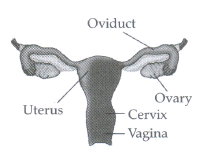
Draw a labelled diagram of female reproductive organs.
4.
A single cell becomes such a big individual How?
5.
Mother gives birth to a baby but the baby has characters of both parents. How is this possible?
6.
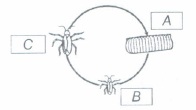
Name the different stages of the cockroach.
7.
Can a woman with a blocked Fallopian tube give birth to a baby? How?
8.
Although two cells called gametes fuse, the product formed is a single cell called zygote, Justify.
9.
It is necessary to produce large number of eggs and sperms by the animals which reproduce by external fertilisation. Why?
10.
What is metamorphosis? Give examples.
11.
In which female reproductive organ does the embryo get embedded?
12.
Choose the most appropriate answer.
The number of nuclei present in a zygote is
(i) none
(ii) one
(iii) two
(iv) four
13.
Give two differences between a zygote and a foetus.
14.
Describe the process of fertilisation in human beings.
15.
Explain the importance of reproduction in organisms.
1.
Fertilization in which the fusion of a male and a female gamete takes place outside the body of a female is called external fertilization. It is very common in aquatic animals. During spring or rainy season, frogs and toads move to ponds and slow flowing streams. When the male and female come together in water, the female lays hundreds of eggs. Alayer of jelly holds the eggs together and provides protection to the eggs. The male deposits sperms over them. The sperms come in contact with the eggs. This results in fertilization.
2.
The process of fertilization is the meeting of an egg cell from the mother and a sperm cell from the father. So the new individual inherits some characteristics from the mother and some from the father.
3.
4.
The zygote becomes ball of cells after cell division and forms embryo. The embryo gets embedded in the wall of uterus and start developing till it grows into fully developed baby inside the female body and becomes an individual.
5.
Although mother gives birth to a baby but the baby is formed from the fertilisation of male and female gametes involving two parents. The nuclei of both the parent gametes fuse, thus passing their characters to the offspring and this results in the formation of new character combinations. Therefore, the zygote formed from fertilisation have characters of both the parents. This zygote develops inside the female body (uterus) and finally takes birth as baby.
6.
In the given figure,
A- Egg case B - Nymph C - Adult cockroach
7.
A woman with a blocked Fallopian tube cannot produce babies in normal way because the eggs released by their ovary cannot meet the sperms and get fertilised in the oviducts.
But such women can have babies by using 'in vitro fertilisation' technique.
8.
During fertilisation, only the nuclei of male and female gametes fuse, in a way that the sperm reaches to egg and its nucleus enters the egg cell to form a single celled structure which is called zygote. The cell formed consists of only one nucleus but is diploid in nature.
9.
It is necessary to produce large number of eggs and sperms by the animals which reproduce by external fertilisation to enhance the chances of fertilisation.
As the gametes are released in water, many of them may be carried away by movement of water wind, etc or may be eaten by other aquatic animals, so a large number is released to compensate for the loss.
10.
The process of transformation of larva into an adult through drastic changes is called metamorphosis, e.g. development of caterpillar or pupa into silkworm and development of tadpole into frog.
11.
Embryo gets embedded in the uterus of female for further development.
12.
In zygote, only one nuclei is present formed by the fusion of two nuclei, one from each parent.
13.
Difference between a zygote and a foetus is
| Zygote | Foetus |
| It is formed by the fusion of male and female gamete. | It is formed by the developing embryo. |
| It is made up of single cell. | It is made up of many cells, in which all the body parts can be identified. |
14.
In human beings, fertilisation takes place inside the female body.
It is the fusion of male and female gamete, i.e. sperm and an ovum. It is the first stage in the process of reproduction. During fertilisation, the nuclei of egg and sperm fuse together to form a single nucleus. This results in the formation of fertilised egg or zygote.
15.
Reproduction is important for continuation of species, generations after generations. It also helps in production of new individuals of same kind and transmission of certain characters from parents to off springs.

8th Standard CBSE Syllabus & Materials
8th Standard CBSE
CBSE 8th Science Particulate Nature of Matter - New Model Questions Papers Study Material - QB365 Set A
NEW8th Standard CBSE
CBSE 8th Science Pressure, Winds, Stroms and Cyclones - New Model Questions Papers Study Material - QB365 Set A
NEW8th Standard CBSE
CBSE 8th Mathematics Quadrilaterals - New Model Questions Papers Study Material - QB365 Set A
NEW8th Standard CBSE
CBSE 8th Mathematics A story of Numbers - New Model Questions Papers Study Material - QB365 Set A



CBSE 8th Standard CBSE Subjects
CBSE Standards




