
 100% FREE ACCESS
8th Standard CBSE Syllabus & Materials
8th Standard CBSE
CBSE 8th Social Science Theme D - Factors of Production - New Model Questions Papers Study Material - QB365 Set A
NEW8th Standard CBSE
CBSE 8th Social Science Theme C - Universal Franchise and India's Electoral System - New Model Questions Papers Study Material - QB365 Set A
NEW8th Standard CBSE
CBSE 8th Social Science Theme B - The Rise of the Marathas - New Model Questions Papers Study Material - QB365 Set A
NEW8th Standard CBSE
CBSE 8th Social Science Theme B - Reshaping India's Political Map - New Model Questions Papers Study Material - QB365 Set A
NEW8th Standard CBSE
CBSE 8th Social Science Theme A - Natural Resources and Their Use - New Model Questions Papers Study Material - QB365 Set A
NEW8th Standard CBSE
CBSE 8th Science Keeping Time with Skies - New Model Questions Papers Study Material - QB365 Set A

Published on: 16/09/2019
Reproduction in Animals
Download CBSE Class 8th Standard CBSE Science question papers, sample papers, important questions, and previous year solved papers in PDF format. Get free study materials, NCERT solutions, and exam preparation resources for Class 8th Standard CBSE Science
Questions + Answers key
Take MCQ Science Test
1.
'Sperms need to have mobility'. Give reason
2.
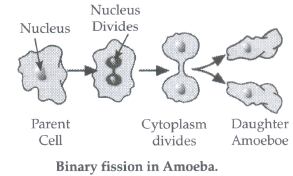
Explain the asexual reproduction in amoeba
3.
Write difference between internal fertilization and external fertilization.
4.
How is egg formed in the hen?
5.
Amoeba reproduces by which process? Explain in brief.
6.
Name some organisms which are reproduced by parthenogenesis.
7.
A fertilisation that takes place outside the body. What is it called as?
8.
Do humans also undergo metamorphosis?
9.
Name the male sex hormone.
10.
A term is used for the 'bulges' observed on the sides of the body of Hydra. What is it?
11.
X is the reproductive cell produced in a woman's Y while Z is the reproductive cell that is produced in the testes of a man. What can X, Y and Z be?
12.
An organism has both male and female reproductive organs. Is it possible? If yes, name such organism.
13.
Does the tail in a sperm serve a specific purpose? If yes, what is it?
1.
Sperms have to enter the female reproductive passage, and fertilise the ovum by travelling through the vagina and uterus to reach the fallopian tube. This is the reason why sperms need to have mobility.
2.
The reproduction in amoeba takes place by binary fission. In this process amoeba reproduces by dividing into two individuals. The nucleus of amoeba cell is divided into two. This is followed by division of its body into two, each part receiving a nucleus. Finally two amoebae are produced from one parent amoeba.
3.
| Internal fertilization | External fertiIization |
|---|---|
| Fertilization that takes place inside the female body is called internal fertilization e.g Humans, Cats Dogs, | Fertilization in which the fusion of a male and a female gamete takes place outside the body of the female is called external fertilization e.g., fish, starfish, etc. |
4.
After fertilization, the zygote divides repeatedly and travels down the oviduct. As it travels down, many protective layers are formed around it. The hard shell is formed around the developing embryo. The hen finally lays the egg
5.
Amoeba reproduces by asexual reproduction, binary fission. It begins the process of reproduction by the division of its nucleus into two nuclei. This is followed by division of its body into two, where each part receives a nucleus. Finally two amoebae are produced from one parent amoeba.
6.
Organisms like honeybees, birds (turkey) and some lizards are reproduce by parthenogenesis.
7.
The process of fertilisation that takes place outside the body of the female is called external fertilisation.
8.
No, humans do not undergo metamorphosis.
9.
The male sex hormone is testosterone.
10.
Bud is the term used for the bulges observed on the sides of the body of Hydra.
11.
Egg is the reproductive cell produced in a woman's ovary while sperm is the reproductive cell that is produced in the testes of a man.
12.
Yes, there are organisms that have both male and female reproductive organs in the same body, e.g. earthworm, leech.
13.
Yes, it has a specific function. The tail in sperm provides motility to it and helps it to reach female gemetes for fusion.

8th Standard CBSE Syllabus & Materials
8th Standard CBSE
CBSE 8th Science Particulate Nature of Matter - New Model Questions Papers Study Material - QB365 Set A
NEW8th Standard CBSE
CBSE 8th Science Pressure, Winds, Stroms and Cyclones - New Model Questions Papers Study Material - QB365 Set A
NEW8th Standard CBSE
CBSE 8th Mathematics Quadrilaterals - New Model Questions Papers Study Material - QB365 Set A
NEW8th Standard CBSE
CBSE 8th Mathematics A story of Numbers - New Model Questions Papers Study Material - QB365 Set A



CBSE 8th Standard CBSE Subjects
CBSE Standards




