
 100% FREE ACCESS
8th Standard CBSE Syllabus & Materials
8th Standard CBSE
CBSE 8th Social Science Theme D - Factors of Production - New Model Questions Papers Study Material - QB365 Set A
NEW8th Standard CBSE
CBSE 8th Social Science Theme C - Universal Franchise and India's Electoral System - New Model Questions Papers Study Material - QB365 Set A
NEW8th Standard CBSE
CBSE 8th Social Science Theme B - The Rise of the Marathas - New Model Questions Papers Study Material - QB365 Set A
NEW8th Standard CBSE
CBSE 8th Social Science Theme B - Reshaping India's Political Map - New Model Questions Papers Study Material - QB365 Set A
NEW8th Standard CBSE
CBSE 8th Social Science Theme A - Natural Resources and Their Use - New Model Questions Papers Study Material - QB365 Set A
NEW8th Standard CBSE
CBSE 8th Science Keeping Time with Skies - New Model Questions Papers Study Material - QB365 Set A

Published on: 31/07/2019
Coal and Petroleum
Download CBSE Class 8th Standard CBSE Science question papers, sample papers, important questions, and previous year solved papers in PDF format. Get free study materials, NCERT solutions, and exam preparation resources for Class 8th Standard CBSE Science
Questions + Answers key
Take MCQ Science Test
1.
What is natural gas? What are the advantages of using CNG?
2.
What is refining of petroleum? Give different constituents of petroleum.
3.
List various constituents of petroleum and their uses.
4.
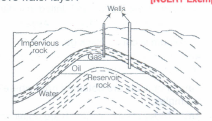
Look at the figure where petroleum and natural gas deposits are shown. Why do we find oil layer above water layer?
5.
What are the advantages of using CNG and LPG as fuels?
6.
Kerosene is not a fossil fuel.
7.
Coal tar is a mixture of various substances.
8.
Coke is almost pure form of carbon
9.
CNG is more polluting fuel than petrol.
10.
Fossil fuels can be made in the laboratory.
11.
Which petroleum product is commonly used for electric generators?
12.
What do you mean by carbonisation?
13.
Coal, petroleum and natural gas are called fossil fuels. Why?
14.
Petrochemicals are obtained from where? Give examples
15.
What do you understand by the statement that "the known reserves of these will last only few hundred years"?
16.
The material X is a fossil fuel. It is formed from the buried large land plants (vegetation) by a very slow process Y. When X is heated in the absence of air, i. e. in the process called Z, it gives three products A, B and C. A is used as a reducing agent in the extraction of metals, B is used as an industrial fuel, whereas the product C has been traditionally used for metalling the roads. It is now replaced by a petroleum product, bitumen. Now give the answer of the following questions.
(a) What is the material X?
(b) What is the physical state and colour of X?
(c) Name the processes Y and Z.
(d) What are the products A, B and C?
17.
Coal-tar contains about _______ substances:
400
300
100
200
18.
It was used for street lighting for the first time in London.
Coke
Coal-tar
Coal gas
Petrol
19.
The World's first oil well was drilled in :
USSR
USA
India
UK
20.
Which of the following is a pair of exhaustible natural resources?
Coal and soil
Air and sunlight
Water and petroleum
Wildlife and minerals
21.
Various materials which are obtained from nature are called natural resources. Which of the following is not a natural resource?
Minerals
Water
Soil
Plastic
22.
Coal and petroleum are formed from the dead remains of organisms and are known as_________.
23.
The slow process of conversion of dead vegetation into coal is called__________.
24.
The substances formed from natural gas and petroleum are called_____________
25.
Petroleum is very important so, it is called______________________
26.
Sunlight is an ______________natural resource.
27.
Petrol and diesel
28.
LPG
29.
Good fuels
30.
Oil refinery
31.
Coal
32.
What are the uses of diesel?
33.
Where is oil found in India?
34.
When was coal gas first used for street lighting in London?
35.
Write one use of coal.
36.
Name some useful products obtained from coal when it is processed in industry.
1.
Natural gas is a very important fossil fuel. It is stored under high pressure as compressed natural gas (CNG).
Advantage of CNG :
(i) It is easy to transport.
(ii) It does not produce any pollution.
(iii) No residue is left after burning of CNG.
(iv) It burns completely in the air.
2.
Refining of Petroleum: Petroleum is a dark oily liquid. It has an unpleasant odour. It is a mixture of various constituents such as petroleum gas, petrol, diesel, lubricating oil, paraffin wax etc. The process of separating the various constituents of petroleum is known as refining. Different constituents of petroleum are LPG, petrol, kerosene, diesel, lubricating oil, paraffin wax, bitumen etc.
3.
Various constituents of petroleum and their uses:
(i) LPG: Fuel for home and industry.
(ii) Petrol: Motor fuel, aviation fuel, solvent for dry cleaning.
(iii) Kerosene: Fuel for stoves, lamps and for jet aircraft.
(iv) Diesel: Fuel for heavy motor vehicles and electric generators.
(v) Lubricating Oil: Lubrication
(vi) Paraffin wax: Ointments, candles, Vaseline etc.
(vii) Bitumen: Paints and road surfacing.
4.
Oil is lighter than water, hence floats over it.
5.
The advantages of using CNG and LPG as fuels are as follows :
(i) CNG and LPG are clean fuels.
(ii) They do not produce pollution.
(iii) They are easily available.
(iv) They can be used directly for burning.
(v) They are easy to transport.
(vi) Their cost is low.
6.
(b)
7.
(a)
8.
(a)
9.
(b)
10.
(b)
11.
Diesel is used to run electric generators.
12.
The slow process of conversion of dead vegetation into coal is called carbonisation.
13.
Coal, petroleum and natural gas are called fossil fuels because they are formed by the decomposition of the remains of pre-historic plants and animals (fossils) buried under the earth long ago.
14.
Those chemicals which are obtained from petroleum and natural gas are called petrochemicals. Some examples of petrochemicals are methyl alcohol, ethyl alcohol, acetone, benzene, hydrogen, etc.
15.
The known reserves of these will last only a few hundred years is true, as we know that coal and petroleum are fossil fuels. It requires the dead organisms millions of years to get converted into these fuels. Excessive and injudicious use of these fuels leads to shortage of these fuels and their use is also linked to global warming. It is therefore necessary that we use these fuels only when absolutely necessary.
16.
(a) Coal.
(b) It is solid and black coloured.
(c) Y is carbonisation and Z is destructive distillation.
(d) A is coke, B is coal gas while C is coal tar.
17.
(d)
200
18.
(c)
Coal gas
19.
(b)
USA
20.
(d)
Wildlife and minerals
21.
(d)
Plastic
22.
()
fossil fuels
23.
()
carbonization
24.
()
petrochemicals
25.
()
black gold
26.
()
inexhaustible
27.
()
Fractions of petroleum
28.
()
Fuel for home
29.
()
Produce-more energy
30.
()
Barauni
31.
()
Purest form of carbon
32.
()
Diesel is used as fuel for heavy motor vehicles, electric generators etc.
33.
()
Oil is found in India in Assam, Gujarat, and Mumbai High and in the river basin of Godavari and Krishna.
34.
()
Coal gas was used for street lightning for the first time in London in 1810 and in New York around 1820.
35.
()
Coal is used in thermal power plants to produce electricity.
36.
()
Coal is processed in industry to get some useful products such as coke, coal-tar and coal gas.

8th Standard CBSE Syllabus & Materials
8th Standard CBSE
CBSE 8th Science Particulate Nature of Matter - New Model Questions Papers Study Material - QB365 Set A
NEW8th Standard CBSE
CBSE 8th Science Pressure, Winds, Stroms and Cyclones - New Model Questions Papers Study Material - QB365 Set A
NEW8th Standard CBSE
CBSE 8th Mathematics Quadrilaterals - New Model Questions Papers Study Material - QB365 Set A
NEW8th Standard CBSE
CBSE 8th Mathematics A story of Numbers - New Model Questions Papers Study Material - QB365 Set A



CBSE 8th Standard CBSE Subjects
CBSE Standards




