
 100% FREE ACCESS
8th Standard CBSE Syllabus & Materials
8th Standard CBSE
CBSE 8th Social Science Theme D - Factors of Production - New Model Questions Papers Study Material - QB365 Set A
NEW8th Standard CBSE
CBSE 8th Social Science Theme C - Universal Franchise and India's Electoral System - New Model Questions Papers Study Material - QB365 Set A
NEW8th Standard CBSE
CBSE 8th Social Science Theme B - The Rise of the Marathas - New Model Questions Papers Study Material - QB365 Set A
NEW8th Standard CBSE
CBSE 8th Social Science Theme B - Reshaping India's Political Map - New Model Questions Papers Study Material - QB365 Set A
NEW8th Standard CBSE
CBSE 8th Social Science Theme A - Natural Resources and Their Use - New Model Questions Papers Study Material - QB365 Set A
NEW8th Standard CBSE
CBSE 8th Science Keeping Time with Skies - New Model Questions Papers Study Material - QB365 Set A

Published on: 26/09/2019
HIS - Colonialism and the City - Story of An Imperial Capital
Download CBSE Class 8th Standard CBSE Social Science question papers, sample papers, important questions, and previous year solved papers in PDF format. Get free study materials, NCERT solutions, and exam preparation resources for Class 8th Standard CBSE Social Science
Questions + Answers key
Take MCQ Social Science Test
1.
How were urban centres administrated?
2.
Make a list of at least ten occupations in the city, town or village to which you belong and find out how long they have existed. What does this tell you about the changes within this area?
3.
Find out the history of the town you live in or any town near by. Check when and how it grew and how it has changed over the years. You could look at the history of the bazaars, the buildings, cultural institutions and settlements.
4.
Imagine that you are a young man living in Shahjahanabad in 1700. Based on the description of the area in this chapter, write an account of your activities during one day of your life.
5.
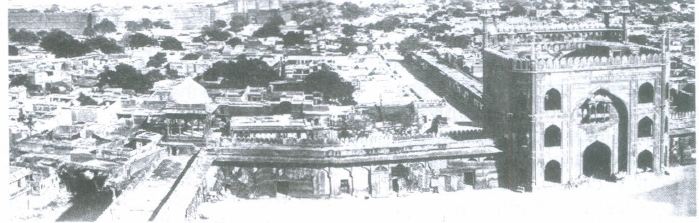
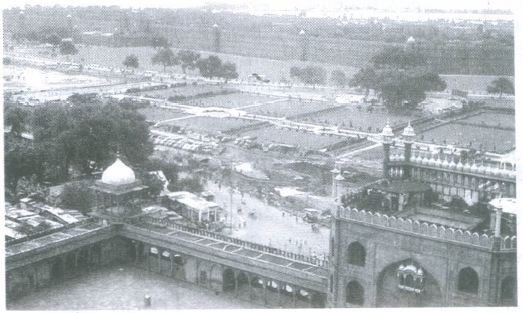
Compare the view in fig b with that in fig a. Write a paragraph on what the changes depicted in the pictures might have meant to people living in the area.
(a)
(b)
6.
Briefly describe the events occurring in Delhi immediately after partition and how they changed Delhi's social environment.
7.
Why is the period from 1830 to 1857 known as the period of Delhi renaissance?
8.
Discuss briefly the different causes of decline of the small cities during the British rule.
1.
(i) In urban areas, municipalities looked after the civil administration and civic problems such as maintenance of roads, sanitation, health and education, etc.
(ii) District Magistrate used to be the chairman of the municipality and he was assisted by other officers.
(iii) Lord Cornwallis had established a regular police force to maintain law and order and IPA-1861 was an important step for ensuring uniform and effective police administration in India.
(iv) IPC was drawn up in 1860 under Macaulay and charted out various categories of criminals.
(v)A jail code was also prepared to administer jail and police and that jail system is same even today.
2.
(i) Animal Rearing: Previously, people had not much interest in dairy farms. But now, many people have opened small dairy farms which earn good profit.
(ii) Horticulture: People used to grow vegetables according to their needs. Now, they produce vegetables to sell them in the local market.
(iii) Rice Catenation: Earlier people grew rice in most part of their field. Now they grow cash crops. (iv) Hair Cutting Saloons: People used to have their own hazaam. Slowly, this tradition ended. Now, people in the villages go to the saloons for getting haircut.
(v) Transport: People in my village visited local markets on their feet. But now may persons have purchased vehicles.
(vi) Shops: Previously, people had to go to the local market to purchase cloth. Now there are many cloth shops in my village.
(vii) Schools: Some people are running private schools in my village. Earlier, there was a single Government School. Many people from my village teach in these schools.
(viii) Labourers: There were plenty of labourers in the village during cropping season. But now most of them migrate. So, many people have now opened medicine shops and do other odd jobs.
(ix) Fisheries: Earlier, people in my village did not grow fishes in the ponds for business purposes. But, in the modern times, people have started this as an occupation.
(x) Floriculture: For many past years, some people supplied flowers and for that they were paid in kind like rice, wheat, etc. But now flowers are sold for cash. This has become a good occupation.
3.
Delhi is mentioned in the Hindu epic Mahabharata as Indraprastha, the capital of Pandavas. Delhi emerged into prominence after thousands of years when the famous Chauhan ruler Prithviraj II made it his capital in the 12th century. After his decline, Delhi fell into the hands of Muslim rulers.
According to some historians, Delhi was built and ruined many times; up to 16th century the city was built seven times. Delhi passed to the British control in 1857. The last Mughal Emperor was exiled. In 1911, it was made the capital of British India. With the passing of time, Delhi saw construction of many architectural marvels like Qutab Minar, Red fort, Humayan Tomb, Old Fort, Lal Qila, Jama Masjid, etc. In the twentieth century, Rashtrapati Bhawan was built by Edwin Lutyens. Basically, it was the residence of the Viceroy of India, and comprised of the famous Mughal Garden. Parliament House was designed by famous. Herbert Baker. It was inaugurated for the first time in 1921. Connaught place was built in about 1931. It is the biggest commercial area and shopping hub of New Delhi. Birla Mandir was built in 1938 and inaugurated by Mahatma Gandhi. Delhi was given a specific identity by which it is known today.
4.
I am Khalid. I live in Shahjahanabad along with my parents. My father is an artisan. Tomorrow is Eid. My parents have decided to go to the [ama Masjid this year for Namaz. Today, all of us woke up early in the morning and after taking bath we got ready to go to the Jama Masjid. From a distance, I saw the grand mosque. My father told me that it was among the largest and grandest mosques in India. When we reached near the mosque, I saw densely packed mohallas and several dozen bazaars near the mosque. After entering the mosque, I saw several thousand of people there who had came to offer Namaz. After participating in the Namaz, we went to the Faiz Bazaar. The roads here were very broad. Again my father told me that the royal processions pass through this road. From Faiz Bazaar, we purchased few dresses, toys and many other things. It was almost afternoon, so my parents decided to take rest in a nearby Khandquah. When we reached there, I saw many saints were present. The travellers were taking the blessings of the saints. On one side of the Khanquah, some saints were singing Sufi music. After taking rest, we went to Chandni Chowk. There I saw a canal running down the street. From there, may parents took us to a nearby Dargah. There we enjoyed Quawwali for more than an hour after enjoying the whole day, we returned back to our home in night.
5.
British wanted Delhi people to forget its Mughal past. So, the area around Jama Masjid was completely cleared of gardens, pavilions and mosques. They wanted a clear ground for security reasons.
The pavilions and mosques demolished were used for cultural and religious activities in earlier times. The gardens were meant for people to move out from their homes for enjoying a breath of fresh air. By demolishing these structures, the British affected the daily lives of the people of Delhi living nearby. In addition, the occupations of the religious functionaries of the mosques and the people managing the pavilions would have been adversely affected and they would have been displaced if they had been living in these buildings. Thus, this demolition significantly affected the lives of the people living in the area. The view of Jama Masjid in the second picture represents quite a different view after the demolition work done by the British surrounding the historical mosque.
6.
(i) The Partition of India in 1947 led to a massive transfer of population on both sides of the new border. As a result, the population of Delhi more than doubled through refugees from Pakistan.
(ii) Thousands in Delhi were killed due to rioting and their homes were looted and burned.
(iii) Refugees roamed the streets of Shahjahanabad, searching for empty homes to occupy, forcing Muslims to leave or sell their properties.
(iv) The refugees had to take up new occupations ironsmiths, replacing the earlier Muslims.
7.
The word 'renaissance' literally means rebirth of art and learning or a time of great creative activity. Before 1857, Delhi developed differently from the Presidency cities of Madras, Bombay or Calcutta, because of the living areas of Indians and the British were not sharply separated. The British lived along with the wealthier Indians in the walled city and learned to enjoy Urdu / Persian culture and poetry; they participated in local festivals. Further, the establishment of the Delhi College had led to a great intellectual flowering in the sciences as well as humanities, largely in the Urdu language, making people term it as the period of Delhi renaissance.
8.
Though the presidencies Bombay, Calcutta, Madras 1became the centres of the British power in the different regions of India, at the same time, a host of smaller cities declined:
(i) Many towns manufacturing specialized goods declined due to a drop in the demand for what they produced.
(ii) Old training centres and ports could not survive when the flow of trade moved to new centres.
(iii) Earlier centres of regional power collapsed and local rulers were defeated by the British and new centres of administration emerged. This process is often described as de-urbanization.
(iv) By the early 20thcentury, only 11percent of Indians were living in cities.

8th Standard CBSE Syllabus & Materials
8th Standard CBSE
CBSE 8th Science Particulate Nature of Matter - New Model Questions Papers Study Material - QB365 Set A
NEW8th Standard CBSE
CBSE 8th Science Pressure, Winds, Stroms and Cyclones - New Model Questions Papers Study Material - QB365 Set A
NEW8th Standard CBSE
CBSE 8th Mathematics Quadrilaterals - New Model Questions Papers Study Material - QB365 Set A
NEW8th Standard CBSE
CBSE 8th Mathematics A story of Numbers - New Model Questions Papers Study Material - QB365 Set A



CBSE 8th Standard CBSE Subjects
CBSE Standards




