
 100% FREE ACCESS
8th Standard CBSE Syllabus & Materials
8th Standard CBSE
CBSE 8th Social Science Theme D - Factors of Production - New Model Questions Papers Study Material - QB365 Set A
NEW8th Standard CBSE
CBSE 8th Social Science Theme C - Universal Franchise and India's Electoral System - New Model Questions Papers Study Material - QB365 Set A
NEW8th Standard CBSE
CBSE 8th Social Science Theme B - The Rise of the Marathas - New Model Questions Papers Study Material - QB365 Set A
NEW8th Standard CBSE
CBSE 8th Social Science Theme B - Reshaping India's Political Map - New Model Questions Papers Study Material - QB365 Set A
NEW8th Standard CBSE
CBSE 8th Social Science Theme A - Natural Resources and Their Use - New Model Questions Papers Study Material - QB365 Set A
NEW8th Standard CBSE
CBSE 8th Science Keeping Time with Skies - New Model Questions Papers Study Material - QB365 Set A

Published on: 10/10/2019
The Changing World of Visual Arts
Download CBSE Class 8th Standard CBSE Social Science question papers, sample papers, important questions, and previous year solved papers in PDF format. Get free study materials, NCERT solutions, and exam preparation resources for Class 8th Standard CBSE Social Science
Questions + Answers key
Take MCQ Social Science Test
1.
Describe in your own words one painting from this chapter which suggests that the British were more powerful than Indians. How does the artist depict this?
2.
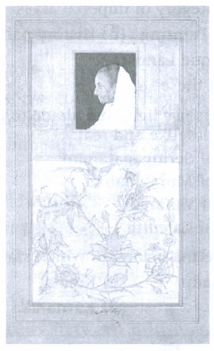
Look at the given figure along with the images of Indian miniatures you saw in the History book of Class VII. Can you identify some of the elements of similarity between them? Look for differences too.
3.
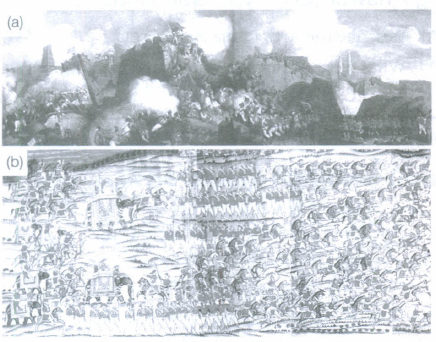
(i) What similarities and difference do you see in the themes of the paintings?
(ii) If you were a nawab fighting the British, which battle scenes would you ask the artists to paint the ones you lost or the ones you won?
(iii) Do you think that the mural in Figure (b) is realistic?
4.
Look at the given picture.
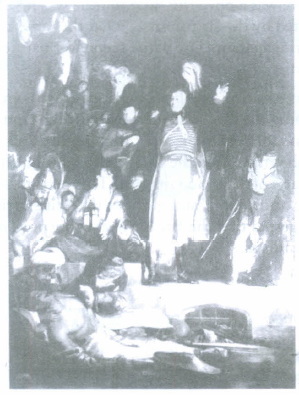
David Wilkie was commissioned by David Baird's wife to paint this picture. Why do you think she wanted such a picture painted?
5.
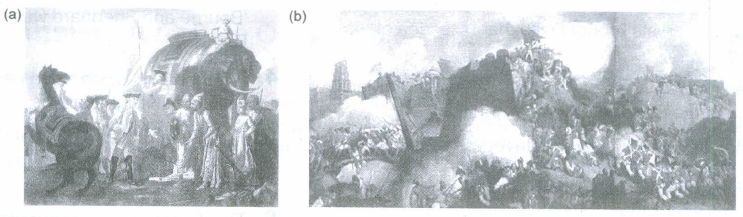
Look carefully at figures (a) and (b).
(i) How is Clive portrayed in figure (a)?
(ii) What are the ways in which the artist has depicted the victory of the British?
(iii) Notice the position of the British flag (the Union Jack) in figures (a) and (b). Why is it placed there?
6.
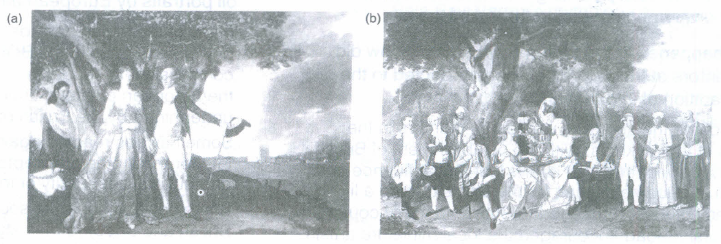
Look carefully at figures (a) and (b)
(i) In what ways are the Indians depicted as inferior?
(ii) Notice the clothes the British are wearing. What do they convey to you?
7.
What was the reason behind the Indian nawabs began commissioning imposing oil portraits by European painters?
8.
What happened to the Indian court artists? How did the painters at Indian princely courts reacted to the new tradition of imperial art?
9.
What were the 'New forms of Imperial Art' brought by European Artists?
10.
Write about the patuas of Bengal
1.
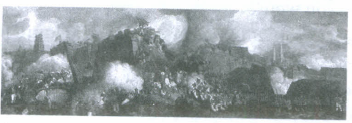
The painting given above is painted by Rober Kerr Porter in 1800. In this painting, the painter has drawn the storming of Seringapatam, the capital of Tipu Sultan by the British troops. Tipu Sultan of Mysore was a powerful king, but he was finally defeated by the British in 1799 at the famous Battle of Seringapatam. The battle scene was painted by the artist.
In this painting, the British troops are shown storming the fort from all sides, cutting Tipu Sultan's soldiers to pieces. Climbing the wall, the British army raised the British flag aloft on the ramparts of Tipu Sultan's fort. This picture depicts action and energy, and glorifies the British triumph. It suggested that the British were more powerful than Indians.
2.
Miniature paintings are small-sized paintings, generally done by water colour on cloth or paper. The most notable traditions of miniature painting in India are the Mughal, Rajasthani, Pahari and Deccani courts. In these paintings, there are very few human characters seen with front face. Most of the human characters are seen with side profile. Big eyes, pointed nose and slim waist are the features of these paintings. Human characters have worn traditional Indian dresses and jewellery.
3.
Both these paintings depict battle scenes.
(i) The painting in figure (a) shows the victory of the British in the Battle ofSeringapatam where Tipu Sultan was finally defeated. But the painting in figure (b) shows the defeat of the British in the Battle ofPolilur of 1780, in which Tipu and Haidar Ali defeated the English troops.
(ii) If I were a Nawab fighting the British, I would ask the artist to paint the scene of the war which I already won.
(iii) I think the mural in figure (b) is not realistic.
4.
David Wilkie was commissioned by General Baird's wife to paint the triumph at Seringapatam, where Tipu Sultan was finally defeated by the British troops. In this painting General Baird is standing triumphantly in the middle. Tipu lies dead in semi-darkness.
His army was defeated, his royal clothes torn and stripped off. Mrs Baird exactly wanted this to show that the kings who opposed the British Shall meet the same fate like Tipu Sultan.
5.
(i) Clive is portrayed as being welcomed by Mir Jafar and his troops after the Battle of Plassey (1757).
(ii) The British had defeated Sirajuddaulah in the Battle of Plassey and installed Mir Jafar as the Nawab of Murshidabad. Their victory was a result of conspiracy and the traitor Mir Jafar who betrayed Nawab was awarded the title of
Nawab. But in this picture, the act of aggression and conquest was not depicted. Here the artists depicted a warm reception of lord Clive by Mir Jafar.
(iii) The British flag is placed there to show the victory and supremacy of British power over Bengal and Mysore.
6.
(i) In these two pictures. Indians are depicted as inferior and submissive. In both these paintings. Indians are shown as maid and servants who work for their white masters.
(ii) The Britishers are flaunting their costly and regal dresses. By wearing expensive dresses, they want to convey their supremacy, aristocracy to us.
7.
Many of the Indian nawabs who lost their power and status to the British began commissioning imposing oil portraits by the European painters. Their power was undermined by the British officials.
Some nawabs reacted against this interference, others accepted the political and cultural superiority of the British.
Some nawabs hoped to socialise with the British and adopted their styles and tastes. Some nawabs like Muhammad Ali Khan of Arcot even gifted portraits to the King of England and the Directors of the East India Company.
8.
Many of the Indian artists worked as painters in the courts of Indian kings. With the establishment of British power, many of the local courts lost their influence and wealth. It became difficult for the artists to earn a living. So many of them turned to the British. In many courts like Murshidabad encouraged the local miniature artists to absorb the tastes and artistic styles of the British.
The local painters started to produce a vast number of images of local plants, animals, historical buildings and monuments, festivals and processions, trades and crafts, caste and communities.
9.
From the 18th century, many European artists came to India along with British traders and rulers. They brought with them new styles and new conventions of painting.
They produced picture which were already popular in Europe and this helped shape western perceptions of India. European artists introduced the idea of realism i.e. look real and lifelike presentation. They brought the technique of oil painting which enabled the artists to produce images that looked real.
The major trends of imperial art brought by them to India were picturesque landscape painting, portrait painting and history painting. All these new forms became very popular during the colonial era.
10.
The patuas or scroll painters are an artisan community found in the state of West Bengal. The village patuas worked on mythological themes and produced images of gods and goddesses.
When they shifted to Kalighat in Calcutta, they continued to paint these religious images. Traditionally, the figures in scroll paintings looked flat, not rounded. Later the Kalighat painters began to use shading to give them a rounded form and looked three-dimensional.
After the 1840s, a new trend developed within the Kalighat artists. Values, tastes, social norms and customs were undergoing rapid changes at that time. This influenced the works of the Kalighat painters. They began to draw on modern topics of social changes and politics.

8th Standard CBSE Syllabus & Materials
8th Standard CBSE
CBSE 8th Science Particulate Nature of Matter - New Model Questions Papers Study Material - QB365 Set A
NEW8th Standard CBSE
CBSE 8th Science Pressure, Winds, Stroms and Cyclones - New Model Questions Papers Study Material - QB365 Set A
NEW8th Standard CBSE
CBSE 8th Mathematics Quadrilaterals - New Model Questions Papers Study Material - QB365 Set A
NEW8th Standard CBSE
CBSE 8th Mathematics A story of Numbers - New Model Questions Papers Study Material - QB365 Set A



CBSE 8th Standard CBSE Subjects
CBSE Standards




