
 100% FREE ACCESS
8th Standard CBSE Syllabus & Materials
8th Standard CBSE
CBSE 8th Social Science Theme D - Factors of Production - New Model Questions Papers Study Material - QB365 Set A
NEW8th Standard CBSE
CBSE 8th Social Science Theme C - Universal Franchise and India's Electoral System - New Model Questions Papers Study Material - QB365 Set A
NEW8th Standard CBSE
CBSE 8th Social Science Theme B - The Rise of the Marathas - New Model Questions Papers Study Material - QB365 Set A
NEW8th Standard CBSE
CBSE 8th Social Science Theme B - Reshaping India's Political Map - New Model Questions Papers Study Material - QB365 Set A
NEW8th Standard CBSE
CBSE 8th Social Science Theme A - Natural Resources and Their Use - New Model Questions Papers Study Material - QB365 Set A
NEW8th Standard CBSE
CBSE 8th Science Keeping Time with Skies - New Model Questions Papers Study Material - QB365 Set A

Published on: 17/08/2019
The Making of the National Movements - 1870s- 1947
Download CBSE Class 8th Standard CBSE Social Science question papers, sample papers, important questions, and previous year solved papers in PDF format. Get free study materials, NCERT solutions, and exam preparation resources for Class 8th Standard CBSE Social Science
Questions + Answers key
Take MCQ Social Science Test
1.
Write a short note about the foundation of the Indian National Congress.
2.
Write a short note on Maulana Azad.
3.
Explain the consequence of the partition of Bengal.
4.
What economic impact did the First World War have on India?
5.
Find out about the Jallianwala Bagh Massacre.
What is Jallianwala Bagh?
6.
In 1905, Bengal was partitioned by Viceroy:
Lord Lytton
Lord Dufferin
Lord Curzon
Lord Repon
7.
Kesari, a Marathi newspaper was edited by
Bepin Chandra Pal
Dadabhai Naoroji
Bal Gangadhar Tilak
Sardar Vallabhbhai Pate
8.
Second World War ended in
1910
1941
1942
1945
9.
Who was the first Indian Governor-General of free India?
Jawaharlal Nehru
Dr. Rajendra Prasad
C. Raja Gopalachari
Sardar Vallabhbhai Patel
10.
Lala Lajpat Rai was a nationalist from
Bengal
Punjab
Bihar
Uttar Pradesh
11.
Look at the given picture and answer the following questions.
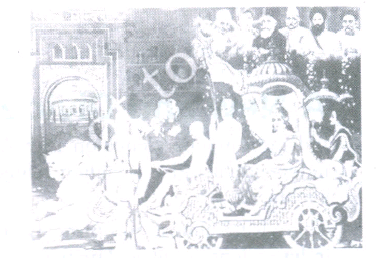
(i) Name the personality who is driving the Krishna's chariot.
(ii) Name the personality who is holding the flag.
12.
Describe Gandhi's march to Dandi. Why Salt March was an effective symbol of resistance against colonialism?
13.
In 1905----------partitioned Bengal
14.
----------was one of the leaders of Moderates.
15.
Indians were --------with British rule.
16.
The Jallianwala Bagh atrocities, inflicted by _________ in Amritsar on Baisakhi Day, 1919.
17.
The literal meaning of ________ is 'of or for all the people.'
18.
People believed that Gandhiji was in disfavour of the zamindars.
19.
The Arms Act was passed in 1818
20.
Subhas Chandra Bose was a moderate nationalist.
21.
WC Bonnerji was a moderate Congress leader.
22.
People were satisfied with the British rule in the 1870s and 1880s.
23.
Vernacular
24.
Second World War
25.
Repeal
26.
Quit India
27.
Picket
28.
What was the slogan of 'Quit India Movement'?
29.
Who was Ambabai?
30.
What does RSS stand for?
31.
What was the Rowlatt Act?
32.
Mention the initial leaders of Indian National Congress?
1.
The Indian National Congress was established when 72 delegates form all over India met at Bombay in December 1885. The Congress was created to form a platform for civic and political dialogue of educated Indians with the British Raj. A retired British official A.O Hume played a significant role in bringing Indians from the various regions together. During its first several decades, the Congress passed fairly moderate reform resolutions. Some of important leaders of early period were Dadabhai Naoroji,Pherozeshah Mehta, Badruddin Tyabji,WC Bonnerji, Surendranath Banerji, Romesh Chandra Dutt, S. Subramania Iyer etc.
2.
Maulana Azad was a great leader of the Indian National Movement. He was born in Mecca to a Bengali father and an arab mother. He was well versed in many languages.
He was a scholar of Islam and an exponent of the notion of Wahadat-i-deen, the essential oneness of all religions. He was an active participant in the movements launched by Mahatma Gandhi. He was a great advocate ot Hindu-Muslim unity and never approved Jinnah's two-nation theory.
3.
The consequence of the partition of Bengal were:
(i) The partition of Bengal made people angry allover India.
(ii) All sections of the Congress including moderates and radicals opposed it.
(iii) Large public meeting, demonstrations were organised and new methods of mass protest took place.
(iv) The Swadeshi Movement started which opposed British rule, encouraged the ideas of self-help, Swadeshi enterprise, national education and use of Indian languages.
4.
The First World war changed, the economic and political situation in India as:
(i) There was a huge rise in the defence expenditure of the Government ofIndia.
(ii) The government increased tax on individual incomes and business profits.
(iii) There was a great demand for industrial goods due to the war and this resulted in the decline of European goods being imported into India. This in turn gave the Indian Industrialists a chance to expand their production.
5.
Jallianwala Bagh is a garden near the Harmandir Sahib in Amritsar
6.
(c)
Lord Curzon
7.
(c)
Bal Gangadhar Tilak
8.
(d)
1945
9.
(c)
C. Raja Gopalachari
10.
(b)
Punjab
11.
(i) Mahatma Gandhi is driving the Krishna's chariot.
(ii) Jawahar Lal Nehru is holding the flag.
12.
Mahatma Gandhi and other prominent leaders of the Freedom Movement thought that it was sinful to tax salt because it is an essential item of our food. In 1930, Gandhiji decided to break this law. Gandhiji felt that his Salt March would become popular and would represent the general desire of freedom from a specific injustice. Gandhiji and his followers marched for over 240 miles from Sabarmati to the coastal town of Dandi where they broke the law by making salt from sea water. Salt March was an effective symbol of resistance against colonialism because:
(i) All classes could identify with salt as it was an essential food item.
(ii) Monopoly over manufacturing and selling salt was a sign of oppression of the British.
(iii) Breaking the law would affect British economy.
13.
()
Viceroy Curzon,
14.
()
Dadabhai Naoroji,
15.
()
discontended
16.
()
General Dyer
17.
()
Sarvajanik
18.
(a)
19.
(a)
20.
(b)
21.
(a)
22.
(b)
23.
()
1878
24.
()
1939
25.
()
To undo law
26.
()
Do or die
27.
()
People Protesting outside a building or shop to prevent others from entering.
28.
()
The slogan of 'Quit India Movement was "Do or Die".
29.
()
Ambabai was a widow of Karnataka who took part in freedom struggle. She was arrested and sentenced for her activity.
30.
()
RSS stands for Rashtriya Swayamsevak Sangh.
31.
The Rowlatt Act was introduced by the British in 1919.
(i) According to this act, any Indian could be arrested without trial in the court of law.
(ii) The act curbed fundamental rights such as the freedom of expression and strengthened police powers.
32.
The initial leaders of INC were: Dadabhai Naoroji, Ferozshah Mehta, Badruddhin Tyabji, W.e. Bannerji, Surendranath Bannerji, Romesh Chandra Dutt, S. Subramania Iyer.

8th Standard CBSE Syllabus & Materials
8th Standard CBSE
CBSE 8th Science Particulate Nature of Matter - New Model Questions Papers Study Material - QB365 Set A
NEW8th Standard CBSE
CBSE 8th Science Pressure, Winds, Stroms and Cyclones - New Model Questions Papers Study Material - QB365 Set A
NEW8th Standard CBSE
CBSE 8th Mathematics Quadrilaterals - New Model Questions Papers Study Material - QB365 Set A
NEW8th Standard CBSE
CBSE 8th Mathematics A story of Numbers - New Model Questions Papers Study Material - QB365 Set A



CBSE 8th Standard CBSE Subjects
CBSE Standards




