
 100% FREE ACCESS
8th Standard CBSE Syllabus & Materials
8th Standard CBSE
CBSE 8th Social Science Theme D - Factors of Production - New Model Questions Papers Study Material - QB365 Set A
NEW8th Standard CBSE
CBSE 8th Social Science Theme C - Universal Franchise and India's Electoral System - New Model Questions Papers Study Material - QB365 Set A
NEW8th Standard CBSE
CBSE 8th Social Science Theme B - The Rise of the Marathas - New Model Questions Papers Study Material - QB365 Set A
NEW8th Standard CBSE
CBSE 8th Social Science Theme B - Reshaping India's Political Map - New Model Questions Papers Study Material - QB365 Set A
NEW8th Standard CBSE
CBSE 8th Social Science Theme A - Natural Resources and Their Use - New Model Questions Papers Study Material - QB365 Set A
NEW8th Standard CBSE
CBSE 8th Science Keeping Time with Skies - New Model Questions Papers Study Material - QB365 Set A

Published on: 20/09/2019
How, When and Where
Download CBSE Class 8th Standard CBSE Social Science question papers, sample papers, important questions, and previous year solved papers in PDF format. Get free study materials, NCERT solutions, and exam preparation resources for Class 8th Standard CBSE Social Science
Questions + Answers key
Take MCQ Social Science Test
1.
Answer the following questions related to picture given below:
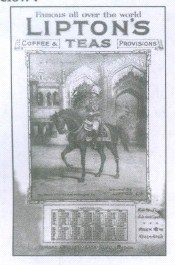
(i) What is depicted in this picture?
(ii) Why are old advertisements important to us?
(iii) What does this advertisement suggest?
2.
How did the advent of printing press help in spreading news and information in a more effective way?
3.
What are the other literary sources, except official records?
4.
What was the importance of survey during British Rule?
5.
What points should be kept in mind while dividing (classifying) history?
6.
What was the effect of colonisation on India?
7.
What is census? When was it conducted for the first time in India?
8.
How did James Mill view India?
9.
Why did James Rennel produce the first map of India?
10.
Why and how do we periodise a time in history?
11.
Imagine that you are a historian wanting to find out about how agriculture changed in a remote tribal area after independence. List the different ways in which you would find information on this.
12.
Can you think of examples of surveys in your world today? Think about how toy companies get information about what young people enjoy playing with or how the government finds out about the number of young people in school. What can a historian derive from such surveys?
13.
How will the information historians get from old newspapers be different from that found in police reports?
14.
Why did the British preserve official documents?
15.
What is the problem with the periodisation of Indian history that James Mill offers?
1.
(i) The third son of Queen Victoria of Britain, Prince Arthur-the Duke of Connaught, seated on horseback, is depicted in this picture.
(ii) Old advertisements are important because they help us to understand how markets were created for new products at that time, and secondly, how new tastes were popularized among the people.
(iii) The advertisement of Lipton tea created in 1922 suggested that royalty all over the world consumed this tea.
2.
(i) Before the advent of printing press, documents were written by hand, this was time consuming and when the printing press arrived, the speed of work improved.
(ii) Newspapers were published and the issues in them were debated upon by the common people.
(iii) The reformers and leaders were able to convey their ideas to masses in short time.
(iv) Poets and novelists were also able to express their thoughts. Thus, printing presses helped in spreading news and information in a more effective way.
3.
Other than official records, biographies, memoirs, newspapers, autobiographies of prominent persons and records of travelers and pilgrims are other literary sources to know about the past events and history of a society.
4.
(i) The practice of surveying became important during colonial administration because the Britishers believed that a country had to be properly known before it was effectively administrated.
(ii) In the early 19th century, detailed surveys were being carried out to map the entire city to know the facts about religion.
(iii) By the end of the 19th century, detailed survey of census were carried out. It gave information about number of people in all provinces of India in detail.
5.
Following are the points that should be kept in view or in mind while classifying history into three parts:
(i)There is no fixed date or proof as when the first period ended and the other period began.
(ii) Each period evolved gradually from the previous one.
(iii) In different continents, modern period began at different time. For example, modern period in Europe began in 15th century, while in India, it began in 18th century.
6.
The effect of colonisation on India are as follows:
(i) The British came to our country and established their rule, subjugating local nawabs and rajas.
(ii) The British established control over the economy and society, collected revenue to meet all their expenses, bought the goods they wanted at low prices, produced crops they needed for export.
(iii) The British rule brought about the changes in values and tastes, customer and practices. It brought about the changes in the political, economic, social and cultural sphere.
7.
A census is a procedure of systematically acquiring and recording information about the members of a given population. It is a regularly occurring and official count of a particular population. History of Census conducted in India is as follows:
The oldest recorded census in India is thought to have occurred around 300 BCE during the reign of the emperor Chandragupta Maurya under the leadership of Kautilya or Chanakya. The census of India has been conducted 15 times as of 2011. It has been conducted every ten years. The proper national census started in 1871.
8.
James Mill in his book 'A History of British India', divided Indian history into three periods, viz., Hindu, Muslim and British. Mill thought that all Asian societies, including India, had lower level of civilization than Europe. According to him, before British came to India, Hindu and Muslim rulers controlled India. Society was then dominated by religious intolerance, caste taboos, and superstitious practices. Mill suggested that the British should conquer all the territories of India and it was necessary to introduce European manners, arts, institutions and laws for the enlightenment and happiness of the Indians.
9.
James Rennel was asked by Robert Clive to produce maps of Hindustan. Rennel was an enthusiastic supporter of British colonialism. He saw the preparation of maps as essential to the process of domination. Thus, he produced the first map of India in 1782.
10.
We periodise a time in order to characterize it into different periods on the basis of some significant events that have happened during those days. These demarcations of time into different periods in the past is known as 'periodization', which become important for history as they help to reflect our ideas quickly about the happenings and changes from one period to the next.
11.
Manuscripts documents and letters survey record official documents and letters, memos. National Archives.
12.
Today, different types of surveys are done by government and private companies. Surveys can be done on the basis of demographic changes, incomes, employment, and interests, etc. Surveys can be done by questionnaire method or interview method. Governments find out about the information of young people in the school by the records and the records of school authorities.
13.
The information in police reports tells us only about what officials thought, what they were interested in and what they wished to preserve for future generation. These records do not always help the historians understand what other people in the country felt and what lay behind their actions. However, the information from old newspapers tells us about the feelings and actions of common people of the country. This information may be affected by the personal views of the news editor, but from these, the historians can infer what common men thought about the incident.
14.
The British believed that all important documents and letters needed to be carefully preserved. They wanted to preserve permanent records of every instruction, plan, policy, decision, agreement, and investigations. Thus, all these documents were carefully written and preserved. These documents helped them to reuse any previous information or decision when necessity arose. These documents were regarded as permanent records for the region, they administered. The British thought that to preserve important documents, it is very necessary to govern a country successfully.
15.
James Mill divided Indian history into three periods-Hindu, Muslim and British. But this periodisation is not proper.
There were some problems with this periodisation as follows:
(i) It is improper to refer any period of history as 'Muslim' or 'Hindu' because a variety of faiths existed Simultaneously.
(ii) It is also not justified to characterise an age through the religion of the rulers of the time. During ancient period, all the rulers did not share the same faith.
(iii) Mill, through his periodisation suggested that only British rule could civilize India. He suggested that the British should conquer all the territories in India to ensure the enlightenment as if India was not capable of progress without British help.

8th Standard CBSE Syllabus & Materials
8th Standard CBSE
CBSE 8th Science Particulate Nature of Matter - New Model Questions Papers Study Material - QB365 Set A
NEW8th Standard CBSE
CBSE 8th Science Pressure, Winds, Stroms and Cyclones - New Model Questions Papers Study Material - QB365 Set A
NEW8th Standard CBSE
CBSE 8th Mathematics Quadrilaterals - New Model Questions Papers Study Material - QB365 Set A
NEW8th Standard CBSE
CBSE 8th Mathematics A story of Numbers - New Model Questions Papers Study Material - QB365 Set A



CBSE 8th Standard CBSE Subjects
CBSE Standards




