
 100% FREE ACCESS
8th Standard CBSE Syllabus & Materials
8th Standard CBSE
CBSE 8th Social Science Theme D - Factors of Production - New Model Questions Papers Study Material - QB365 Set A
NEW8th Standard CBSE
CBSE 8th Social Science Theme C - Universal Franchise and India's Electoral System - New Model Questions Papers Study Material - QB365 Set A
NEW8th Standard CBSE
CBSE 8th Social Science Theme B - The Rise of the Marathas - New Model Questions Papers Study Material - QB365 Set A
NEW8th Standard CBSE
CBSE 8th Social Science Theme B - Reshaping India's Political Map - New Model Questions Papers Study Material - QB365 Set A
NEW8th Standard CBSE
CBSE 8th Social Science Theme A - Natural Resources and Their Use - New Model Questions Papers Study Material - QB365 Set A
NEW8th Standard CBSE
CBSE 8th Science Keeping Time with Skies - New Model Questions Papers Study Material - QB365 Set A

Published on: 03/09/2019
Ruling the Countryside
Download CBSE Class 8th Standard CBSE Social Science question papers, sample papers, important questions, and previous year solved papers in PDF format. Get free study materials, NCERT solutions, and exam preparation resources for Class 8th Standard CBSE Social Science
Questions + Answers key
Take MCQ Social Science Test
1.
What do you mean by Mahal in British revenue records?
Farmer and fields
A village or a group of villages
Seeds and crops
Local name of land revenue
2.
In which of the following states about ten million people were killed in the terrible femine of 1770?
Bengal
Punjab
Bihar
Odisha
3.
The East India Company was appointed as the Diwan of Bengal in
1760
1762
1764
1765
4.
The conditions of under-tenants in Bengal was described by H.T. Colebrook in 1806.
5.
Permanent Settlement recognised the rajas and taluqdars as zamindars.
6.
Colebrook on Bengal ryots
7.
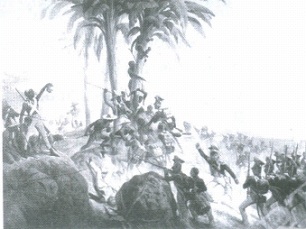
(i) What is shown in the picture?
(ii) Where did French planters produce indigo?
(iii) What did the African slaves do when they rose in rebellion in 1791?
(iv) What is the other name of this rebellion?
(v) When did France abolish slavery? What was its consequences?
8.
Look into the history of either tea or coffee plantation in India. See how the life of workers in these plantations was similar to or different from that of workers in indigo plantations.
9.
Give two problems which arose with the new Munro system of fixing revenue.
10.
Why do you think Colebrook is concerned with the conditions of the under-ryots in Bengal? Read the preceding pages and suggest possible reasons.
11.
The international demand for indigo was affected by the discovery of .................
12.
The demand for indigo increased in late 18th century Britain because of ...............
13.
Growers of woad in Europe saw ..................... as a crop which would provide competition to their earnings.
14.
Why did cloth dyers prefer indigo to woad as dye?
15.
What did the Permanent Settlement actually mean?
16.
When and who appointed the Company as the Diwan of Bengal?
1.
(b)
A village or a group of villages
2.
(a)
Bengal
3.
(d)
1765
4.
(b)
5.
(b)
6.
powerful ryots did not cultivate, but instead gave out their lands to others (the under-tenants), taking from them very high rents.
In 1806, HT Colebrook described the conditions of these under-tenants in Bengal: The under-tenants, depressed by an excessive rent in kind, and by usurious returns for the cattle, seed, and subsistence, advanced to them, can never extricate themselves from debt.
In so abject a state, they cannot labour in spirit, while they earn a scanty subsistence without hope of bettering their situation.
Srikalahasti style and Machilipatnam style. 'Kalam' or pen is used for drawing of the subject in this art form.
7.
(i) The Slave Revolt in St Domingue in August 1791 is shown in the above picture.
(ii) In the 18th century, French planters produced indigo and sugar in the French colony of St Domingue in the Caribbean islands.
(iii) The African slaves who worked on the plantations rose in rebellion in 1791. They killed 4000 Whites and burned and destroyed 180 sugar plantations and hundreds of coffee and indigo plantations.
(iv) The other name of the Slave Revolt is Haitian Revolt.
(v) In 1792, France abolished slavery in the French colonies.
These events led to the collapse of the indigo plantations on the Caribbean islands. By 1792, slave rebels controlled one-third of the island. The success of this slave rebellion caused the newly elected Legislative Assembly in France to grant civil and political rights to free men in the colonies.
8.
Life in Tea plantations of Assam:
Estate owners and Workers
(a) Wages
(b) Habitation
(c) Facilities Problems
9.
The two problems with the new Munro system of.fixing revenue, are as follows:
(i) Driven by the desire to increase the income from land, revenue officials fixed a very high revenue demand which peasants were unable to pay.
(ii) It was believed that the new system would transform the peasants into rich farmers, but it failed to happen.
10.
Colebrook is concerned with the conditions of the under-ryots or under-tenants in Bengal. These depressing conditions are due to some social economic reasons which are as follows:
In 1765, the British East India Company got the Diwani of Bengal.
The Company was only interested to collect a large amount of revenue with which it could purchase fine cotton and silk from India.
Artisans were paid very low prices, so they fled from villages.
Agricultural production collapsed, the under-ryots could not pay the high rate of revenues.
About one-third population of Bengal was wiped out in famine of 1770.
The Permanent Settlement (1793) fixed a high rate of revenue which was not changeable in any condition.
Zamindars had no interest in improving the conditions of land .
11.
()
synthetic dyes
12.
()
industrialisation
13.
()
indigo
14.
()
Cloth dyers preferred indigo as a dye, as it produced a rich blue colour, whereas the dye from woad was pale and dull.
15.
()
By the terms of the Permanent Settlement, the amount of revenue the peasants were expected to pay was fixed permanently, it was not to be increased in future.
16.
()
On 12th August, 1765, the Mughal emperor Shah Alam II appointed the East India Company as the Diwan of Bengal.

8th Standard CBSE Syllabus & Materials
8th Standard CBSE
CBSE 8th Science Particulate Nature of Matter - New Model Questions Papers Study Material - QB365 Set A
NEW8th Standard CBSE
CBSE 8th Science Pressure, Winds, Stroms and Cyclones - New Model Questions Papers Study Material - QB365 Set A
NEW8th Standard CBSE
CBSE 8th Mathematics Quadrilaterals - New Model Questions Papers Study Material - QB365 Set A
NEW8th Standard CBSE
CBSE 8th Mathematics A story of Numbers - New Model Questions Papers Study Material - QB365 Set A



CBSE 8th Standard CBSE Subjects
CBSE Standards




