
 100% FREE ACCESS
8th Standard CBSE Syllabus & Materials
8th Standard CBSE
CBSE 8th Social Science Theme D - Factors of Production - New Model Questions Papers Study Material - QB365 Set A
NEW8th Standard CBSE
CBSE 8th Social Science Theme C - Universal Franchise and India's Electoral System - New Model Questions Papers Study Material - QB365 Set A
NEW8th Standard CBSE
CBSE 8th Social Science Theme B - The Rise of the Marathas - New Model Questions Papers Study Material - QB365 Set A
NEW8th Standard CBSE
CBSE 8th Social Science Theme B - Reshaping India's Political Map - New Model Questions Papers Study Material - QB365 Set A
NEW8th Standard CBSE
CBSE 8th Social Science Theme A - Natural Resources and Their Use - New Model Questions Papers Study Material - QB365 Set A
NEW8th Standard CBSE
CBSE 8th Science Keeping Time with Skies - New Model Questions Papers Study Material - QB365 Set A

Published on: 12/08/2019
Civilising the 'Native' - Educating the Nation
Download CBSE Class 8th Standard CBSE Social Science question papers, sample papers, important questions, and previous year solved papers in PDF format. Get free study materials, NCERT solutions, and exam preparation resources for Class 8th Standard CBSE Social Science
Questions + Answers key
Take MCQ Social Science Test
1.
Give the three remarks given by Adam in his report on vernacular education in India.
2.
What were Tagore's experiences as a student?
3.
Why did Mahatma Gandhi want to teach children handicrafts?
4.
Why did William Jones feel the need to study Indian history, philosophy, and law?
5.
Madrasa
6.
William Jones
7.
Pathshalas
8.
Mahatma Gandhi
9.
William Jones
10.
Orientalists were those gifted with a scholary knowledge of the language and culture of Asia.
11.
Mulla is a person who can read, write and teach in Persian language.
12.
'A single shelf of a good European library was worth the whole native literature of India and Arabia', here the speaker is James Mill.
13.
In pathshalas, classes were not held during harvest time.
14.
James Mill was a severe critic of the Orientalists.
15.
Rabindranath Tagore started the Shantiniketan in :
1899
1900
1901
1902
16.
William Adam toured the districts of
Bihar and Orissa
Bihar and Bengal
Bengal and Rajasthan
Orissa and Madhya Pradesh
17.
The English Education Act was introduced in the year
1825
1835
1845
1855
18.
The ideas of William Jones were supported by
Henry Thomas Colebrooke
James Mill
Thomas Macaulay
Charles Wood
19.
Who attacked the Orientalists?
Thomas Macaulay
James Mill
William Adam
Both 'a' and 'b'
20.
Describe the differences of opinion between the Orientalists and the Anglicists.
21.
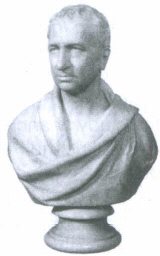
(i) Identify the personality.
(ii) What do you know about him?
22.
What were differences between the Orientalists and the Anglicists?
23.
"_________ in itself is not education."
24.
William Jones was a _____
25.
There was no system of annual examinations in ___________
26.
Charles Wood emphasised the practical benefits of a system of _________ learning.
27.
The Journal Asiatick Researches was started by ___________
28.
Who is a linguist?
29.
Who were the Orientalists?
30.
Who helped William Jones to establish Asiatic Society of Bengal?
31.
Who was William Jones?
32.
Why did the British decide to educate the Indians?
1.
The three remarks given by Adam in his report on Vernacular education in India were:
(i) There was flexibility in the approach and conditions of the educational institutions. There were no fixed fee, no printed books, no separate school building, no annual examinations and no regular time table.
(ii) Classes were held under a banyan tree, or at a corner of a village shop or temple, or at the guru's place. During the harvest time, classes were not held.
(iii) Fee of the students was entirely dependent on the income of the parents. Rich students had to pay more fees than the poor ones.
2.
Rabindranath Tagore's experiences as a student were not pleasing. As a child, he hated going to school. He found the atmosphere in school was suffocating and oppressive. The school appeared to him like a prison, where he could not do what he felt like doing. His mind wandered away while other students listened to the teacher.
3.
Mahatma Gandhi wanted to teach children handicrafts for the following reasons:
(i) Education ought to develop a person's mind and soul. Simple learning to read and write by itself did not count as education.
(ii) If children are allowed to work with hands, learn a craft and know how different things are operated, this would help their mind and their capacity to understand.
4.
William Jones felt the need to study Indian history, philosophy, and law due to the following reasons:
(i) William Jones had a deep respect for ancient cultures, both of India and the West. (ii) He thought that Indian civilians at ion had attained its glory in the ancient past, but had subsequently declined.
(iii) He believed that in order to understand India, it was necessary to discover the sacred and legal texts of ancient periods.
5.
()
1781
6.
()
Linguist
7.
()
gurus
8.
()
the critic of English education
9.
()
respect for ancient cultures
10.
(a)
11.
(b)
12.
(b)
13.
(a)
14.
(a)
15.
(c)
1901
16.
(b)
Bihar and Bengal
17.
(b)
1835
18.
(a)
Henry Thomas Colebrooke
19.
(d)
Both 'a' and 'b'
20.
Orientalists :
(i) Orientalists thought that in order to understand India, it was necessary to discover the sacred and legal texts that were produced in the ancient period.
(ii) They thought that Eastern education would help Indians rediscover their own heritage and understand the lost glories of their past as well as, it would help the British to become the guardians of Indian culture and masters.
(iii) They also believed for the British, in order to win a place in the hearts of the "natives", Indians ought to be taught what they were already familiar with once what they valued, and not subjects that were alien to them.
Anglicists:
(i) Anglicists said that knowledge of the East was full of errors and unscientific thought. Eastern literature was no-serious and light-hearted.
(ii) Anglicist thought the aim of the education ought to be to teach what was useful and practical. So Indians should be made familiar with the scientific and technical advances that Europe had made.
(iii) They felt that knowledge of English would make the Indians aware of the developments in Western science and philosophy. Teaching of English could thus be a way of civilizing people, changing their tastes, values and culture.
21.
(i) He is Henry Thomas Colebrooke.
(ii) Henry Thomas Colebrooke was an English Orientalist. He had a deep respect for ancient cultures both of India and the West. He was a scholar of Sanskrit and ancient sacred writings of Hinduism. With William Jones, he went about discovering ancient texts and interpreting these.
22.
These points show the differences between the Orientalists and the Anglicists:
(i) The Orientalists had a deep knowledge of the languages and culture of Asia. They favoured the development of Sanskrit and Persian language in India. But their critics, viz. Anglicists preferred English language and urged that English should be the medium of instruction in the educational institutions.
(ii) The Orientalists tried to set-up such institutions that encouraged the study of ancient Indian texts. But Anglicists like TB Macaulay urged that the British Government in India stop promoting Oriental institutions.
(iii) The Orientalists translated many Sanskrit and Persian texts into English, set-up the Asiatic Society and started a journal called Asiatick Researches. But Macaulay emphasised that teaching of English could be a way of civilising people, changing their tastes, values, and culture.
23.
()
Literacy
24.
()
linguist
25.
()
pathshalas
26.
()
European
27.
()
Jones
28.
()
A linguist is someone who knows and studies several languages.
29.
()
Orientalists were the scholars who had a scholarly knowledge of the language and culture of Asia.
30.
()
Colebrook and Nathaniel Halhed helped Sir William Jones in establishing the Asiatic Society of Bengal.
31.
()
William Jones was the junior judge in the Supreme Court established in India by the Britishers.
32.
()
The British in India wanted not only territorial conquest and control over revenues, but they also felt that they had a cultural mission. They had to, civilize the natives', and change their customs and values.

8th Standard CBSE Syllabus & Materials
8th Standard CBSE
CBSE 8th Science Particulate Nature of Matter - New Model Questions Papers Study Material - QB365 Set A
NEW8th Standard CBSE
CBSE 8th Science Pressure, Winds, Stroms and Cyclones - New Model Questions Papers Study Material - QB365 Set A
NEW8th Standard CBSE
CBSE 8th Mathematics Quadrilaterals - New Model Questions Papers Study Material - QB365 Set A
NEW8th Standard CBSE
CBSE 8th Mathematics A story of Numbers - New Model Questions Papers Study Material - QB365 Set A



CBSE 8th Standard CBSE Subjects
CBSE Standards




