
 100% FREE ACCESS
8th Standard CBSE Syllabus & Materials
8th Standard CBSE
CBSE 8th Social Science Theme D - Factors of Production - New Model Questions Papers Study Material - QB365 Set A
NEW8th Standard CBSE
CBSE 8th Social Science Theme C - Universal Franchise and India's Electoral System - New Model Questions Papers Study Material - QB365 Set A
NEW8th Standard CBSE
CBSE 8th Social Science Theme B - The Rise of the Marathas - New Model Questions Papers Study Material - QB365 Set A
NEW8th Standard CBSE
CBSE 8th Social Science Theme B - Reshaping India's Political Map - New Model Questions Papers Study Material - QB365 Set A
NEW8th Standard CBSE
CBSE 8th Social Science Theme A - Natural Resources and Their Use - New Model Questions Papers Study Material - QB365 Set A
NEW8th Standard CBSE
CBSE 8th Science Keeping Time with Skies - New Model Questions Papers Study Material - QB365 Set A

Published on: 10/10/2019
Women, Caste and Reform
Download CBSE Class 8th Standard CBSE Social Science question papers, sample papers, important questions, and previous year solved papers in PDF format. Get free study materials, NCERT solutions, and exam preparation resources for Class 8th Standard CBSE Social Science
Questions + Answers key
Take MCQ Social Science Test
1.
Discuss few examples of educated women and the impact they had on society.
2.
What was the condition of women in the earlier days?
3.
How did reformers like Jyotirao justify their criticism of caste inequality in society ?
4.
How did new opportunities open up for the people of the lower castes under the British?
5.
Look at the given picture and answer the following questions.
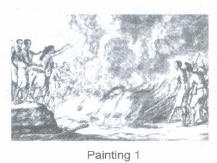
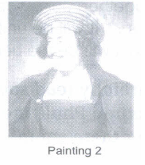
(i) Name the artist of painting 1 and 2.
(ii) In Which year these paintings were made.
6.
Mention two important factors which contributed to the rise of the social reforms movements in India.
7.
What is meant by Aligarh Movement? What was its contribution?
8.
Discuss the work and contribution of Ishwarchandra Vidyasagar for the upliftment of women.
9.
How did the Aligarh Movement influence the field of education?
10.
What was the main principle of Ramakrishna Mission?
1.
(i) Muslim women such as the Begums of Bhopal played a notable role in promoting education among women. They founded a primary school for girls at Aligarh.
(ii) Another remarkable woman, Begum Rokeya Sakhawat Hossain, started schools for Muslim girls in Patna and Calcutta. She was a fearless critic of conservative ideas, arguing that religious leaders of every faith accorded an inferior place to women.
(iii) By the 1880s, Indian women began to enter universities. Some of them trained to be doctors, while some became teachers. Many women began to write and publish their critical views on the condition of women in society.
(iv) Tarabia Shinde : She was the woman who was educated at home at Poona, and she published a book, Stripurushtulna, criticizing the social differences between men and women.
(v) Pandita Ramabai : She was a great scholar of Sanskrit. She felt that Hinduism was oppressive towards women, and wrote a book about the miserable life of upper-caste Hindu women. She founded a widows' home at Pune to provide shelter to widows who had been treated badly by their husband's relatives. Here, women were trained so that they could support themselves economically.
2.
(i) Women were married at an early age.
(ii) Women were forced to burn themselves on the funeral pyre of their husbands. Woman who died in this manner, whether willing or otherwise, were called Sati which meant virtuous women.
(iii) Women's right to property were also restricted.
(iv) Women had virtually no access to education. In many parts of the country, people believed that if a woman was educated, she would become a widow.
3.
(i) Jyotiba Phule argued that the Aryans were foreigners, who came from outside the subcontinent and defeated and subjugated the true children of the country, those who had lived here from before the coming of the Aryans.
(ii) As the Aryans established their dominance, they began looking at the defeated population as inferior, as low-caste people. According to Phule, the upper caste had no right to their land and power. In reality, the land belonged to indigenous people, and so-called low castes.
(iii) Phule claimed that before Aryan rule, there existed a golden age, when warriors and peasants tilled the land and ruled the Maratha countryside in just and fair ways.
4.
(i) During the course of the 19th century, Christian missionaries began setting up schools for tribal groups and lower-caste children. These children were equipped with some resources to make their way into a changing world.
(ii) At the same time, the poor began leaving their villages to look for jobs that were opening up in the cities. There was work in the factories that were coming up and jobs in municipalities.
(iii) There were new demands of labour as drains had to be dug, roads had to be laid, buildings were to be constructed, and cities needed to be cleaned.
(iv) This required coolies, diggers, carriers, bricklayers, sewage cleaners, sweepers, palanquin bearers, rickshaws pullers. The poor from the villages and small towns, among which many were from low castes, began moving to the cities where there was new demand for labour. Some of them also went to work in plantations in Assam, Mauritius, Trinidad and Indonesia.
(v) The army, too, offered opportunities. A number of Mahar people, who were regarded as untouchable, found jobs in the Mahar Regiment.
5.
(i) Balthazar Solvyn is the artist of painting 1 and Rembrandt Peale is the artist of painting 2.
(ii) Painting 1 was made in 1813.
Painting 2 was made in 1833.
6.
From the early 19th century, there were debates and discussions about social customs and practices.
The two important factors which contributed to the rise of the social reforms movements in India are as follows:
(i) The conditions of women in our society was miserable. Social evils like sati system, purdah system, child marriage, illiteracy, strict rules for widows were present at that time.
(ii) Caste prejudice and injustice due to casteism were prevalent among people in the society. The people of high castes exploited the people of low castes.
The upper castes treated many of the lower castes as untouchables. Non-Brahman castes began organising movements against caste discrimination and demanded social equality and justice.
7.
Sir Sayyid Ahmed Khan founded the Mohammedan Anglo-Oriental College at Aligarh in 1875 which later became Aligarh Muslim University. It was because of this, the movement started by Sayyid Ahmed Khan is known as Aligarh Movement. He started this movement in order to give respectable position to Muslims in society as they had in the past.
The contribution of the Aligarh Movement was:
(i) The Aligarh Movement emerged as a liberal, modern trend among the Muslim intelligentsia based on Mohammedan Anglo-Oriental College, Aligarh.
(ii) It awakened the Muslims and soon Aligarh became the centre for religious and cultural revival place for them.
(iii) It spread modern education among Muslims without weakening their allegiance to Islam.
(iv) Sir Sayyid condemned purdah system, polygamy, divorce system of Muslims and advocated for women's education, widow remarriage etc.
8.
Ishwarchandra Vidyasagar was a social reformer, philosopher, academician, philanthropist and a key figure of the Bengal Renaissance. His works and contribution for the upliftment of women are as follows:
(i) He did a lot for the education of women, as he believed that it was our primary duty to educate a woman because she was the real teacher of her child. He opened and ran many schools for girls at his own expense.
(ii) Vidyasagar strongly protested against polygamy and child marriage.
(iii) It was due to his effort, the Hindu Widow Remarriage Act 1856 was passed which allowed the widows to remarriage. He had also opposed the sati system.
Ishwarchandra worked endlessly to provide equal education to all men and women irrespective of their caste, religion and gender. He believed that the status of women and all kinds of injustice and inequalities that they face could be changed only through education.
9.
The Aligarh Muslim University was founded by Sayyid Ahmed Khan in 1875 at Aligarh. The institution offered modern education, including western science,to Muslims.It also had an enormous impact in the area of educational reform.
10.
Named after Ramakrishna Paramhansa, Swami Vivekananda's guru, Ramakrishna Mission stressed the ideal of solution through social service and selfless action.

8th Standard CBSE Syllabus & Materials
8th Standard CBSE
CBSE 8th Science Particulate Nature of Matter - New Model Questions Papers Study Material - QB365 Set A
NEW8th Standard CBSE
CBSE 8th Science Pressure, Winds, Stroms and Cyclones - New Model Questions Papers Study Material - QB365 Set A
NEW8th Standard CBSE
CBSE 8th Mathematics Quadrilaterals - New Model Questions Papers Study Material - QB365 Set A
NEW8th Standard CBSE
CBSE 8th Mathematics A story of Numbers - New Model Questions Papers Study Material - QB365 Set A



CBSE 8th Standard CBSE Subjects
CBSE Standards




