
 100% FREE ACCESS
8th Standard Syllabus & Materials
8th Standard
TN 8th Tamil இயல் 3 - கல்வி கரையில - வினைமுற்று Important Questions And Answers Study Material - QB365 Set A
NEW8th Standard
TN 8th Tamil இயல் 2 - ஈடில்லா இயற்கை - மயங்கொலிகள் Important Questions And Answers Study Material - QB365 Set A
NEW8th Standard
TN 8th Tamil இயல் 2 - ஈடில்லா இயற்கை -பட்டமரம் Important Questions And Answers Study Material - QB365 Set A
NEW8th Standard
TN 8th Tamil இயல் 2 - ஈடில்லா இயற்கை - இயற்கையை போற்றுவோம் Important Questions And Answers Study Material - QB365 Set A
NEW8th Standard
TN 8th Tamil இயல் 1 - தமிழ் இன்பம் - ஆழிக்கு இணை Important Questions And Answers Study Material - QB365 Set A
NEW8th Standard
TN 8th Tamil இயல் 2-ஈடில்லா இயற்கை - திருக்குறள் Important Questions And Answers Study Material - QB365 Set A

Published on: 13/05/2022
QB365 provides detailed and simple solution for every book back questions in class 8 Maths subject.It will helps to get more idea about question pattern in every book back questions with solution.
latest Book back QuestionsDownload Tamil Nadu 8th Standard Maths question papers, model tests, one-mark questions, important questions, and public exam papers in PDF format. Free study materials and answer keys for TN State Board students.
Questions + Answers key
Take MCQ Maths Test1.
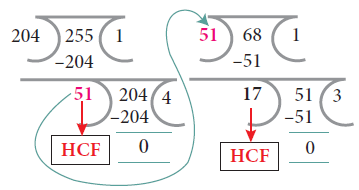
Do the given repeated division problem in repeated subtraction method and verify the HCF of 255, 204 and 68.
2.
There are 270 ginger chocolates, 384 milk chocolates and 588 coconut chocolates. What is the largest number of containers possible so that each container contains the same number of chocolates of each kind?
3.
The sum of the digits of a two-digit number is 8. If 18 is added to the value of the number, its digits get reversed. Find the number.
4.
mother is five times as old as her daughter. After 2 years, the mother will be four times as old as her daughter. What are their present ages?
5.
The length of a rectangular field exceeds its breadth by 9 metres. If the perimeter of the field is 154m, find the length and breadth of the field.
6.
The sum of two numbers is 36 and one number exceeds another by 8. Find the numbers.
7.
Construct a trapezium DESK in which \(\overset { \_ \_ }{ DE } \) is parallel to \(\overset { \_ \_ }{ KS } \), DE = 8 cm, ES = 5.5 cm, KS = 5 cm and KD = 6 cm. Find also its area.
8.
Construct a trapezium DEAN in which \(\overset { \_ \_ }{ DE } \) is parallel to \(\overset { \_ \_ }{ NA } \), DE = 7 cm, EA = 6.5 cm ㄥEDN = 1000 and ㄥDEA = 700. Also find its area.
9.
Construct a trapezium CARD in which \(\overset { \_ }{ CA } \) is parallel to \(\overset { \_ }{ DR} \), CA = 9 cm, ㄥCAR = 70, AR = 6 cm and CD = 7 cm. Also find its area.
10.
Construct a trapezium BOAT in which \(\overset { - }{ BO } \) is parallel to \(\overset { - }{ TA } \), BO = 7 cm, OA = 6 cm, BA = 10 cm and TA = 6 cm. Also find its area.
11.
A water heater is sold by a trader for Rs. 10502 including GST at 18% . Find the marked price of the water heater and GST.
12.
Find the single discount which is equivalent to two successive discounts of 25% and 20% given on an article.
13.
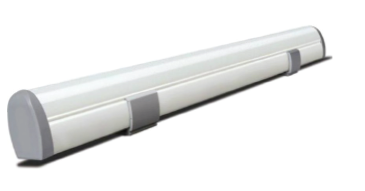
The marked price of an LED tube light is Rs. 550 and the shopkeeper offers a discount of 8% on it. Find the selling price of the LED tube light.
14.
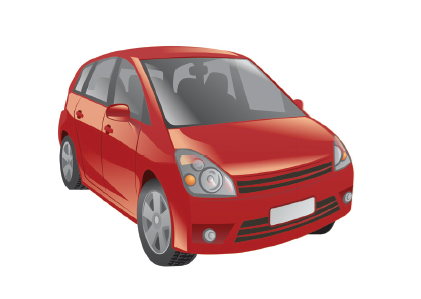
A pre-owned car was bought for Rs. 240000. On repairs Rs.15000 was spent, Rs. 8500 was paid for its insurance. Then, it was sold for Rs. 258230. What is the gain or loss percentage?
15.
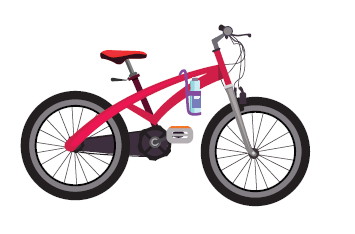
By selling a bicycle for Rs. 4275, a shopkeeper loses 5%. For how much should he sell it to have a profit of 5%?
1.
STEP 1: Here, let p = 255, q = 204 and r = 68 Check whether p = q or p > q or p < q. Here p > q.
STEP 2: Let us find the HCF of 255 and 204 first. Now, subtract smaller number from larger number till p = q.
| First | 255 – 204 = 51 | Repeat | 204 – 51 = 153 | Repeat | 153 – 51 = 102 |
| Repeat | 102 – 51 = 51 | Repeat | 51 – 51 = 0 |
Now p = q, Hence, we conclude that the HCF of 255 and 204 is 51.
STEP 3: Now repeated same procedure for r – HCF (p, q) Now, subtract smaller number from larger number till HCF (p, q) = r.
| First | 68 – 51 = 17 | Repeat | 51 – 17 = 34 |
| Repeat | 34 – 17 = 17 | Repeat | 17 – 17 = 0 |
Now HCF (p, q) = r, Hence, we conclude that the HCF of 255, 204 and 68 is 17. Comparing both the repeated division and repeated subtraction methods, in finding the HCF, we can conclude that the repeated subtraction, in one way is easier and gives the HCF faster that the repeated division and one would want to easely do subtraction rather than division. Isn’t it?
2.
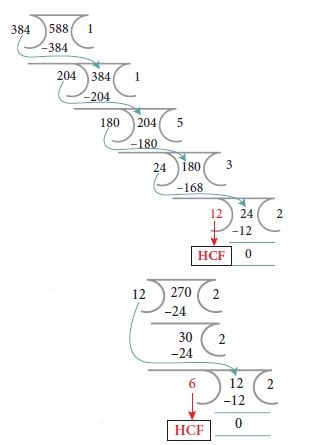
Here, we have to find HCF of 270, 384 and 588
STEP 1: First find the HCF of any two of the given numbers (follow the same step 1, 2 and 3 of the above example). Here, find HCF of (384, 588) first.
STEP 2: The HCF of the first two numbers which is 12 becomes the divisor and the third number 270 becomes the dividend.
STEP 3: Repeat this division process till the remainder becomes zero. The last divisor is the HCF. Here, 6 is the last divisor.
Hence, HCF of 270, 384 and 588 is 6. Therefore, we needs 6 containers so that each of them contains (270 ÷ 6 = 45) 45 ginger chocolates, (384 ÷ 6 = 64) 64 milk chocolates and (588 ÷ 6 = 98) 98 coconut chocolates.
3.
Let the two digit number be xy (i.e., ten’s digit is x, ones digit is y)
Its value can be expressed as 10 x + y.
Given, x + y = 8 which gives y = 8 − x
Therefore its value is 10 x + y
= 10x + 8 − x
= 9x + 8.
The new number is yx with value is 10y + x
= 10(8 − x) + x
= 80 – 9x
Given, when 18 is added to the given number (xy) gives new number (yx)
(9x + 8) + 18 = 80 – 9x
This simplifies to 9x + 9x = 80 – 8 – 18
18x = 54
x = 3 ⇒ y = 8 – 3 = 5
The two digit number is xy = 35
4.
| Age/Person | Now | After 2 years |
| Daughter | x | x +2 |
| Mother | 5x | 5 x +2 |
Given condition: After two years, Mother’s age = 4 times of Daughter's age
5 x +2 = 4 ( x +2)
5 x +2 = 4 x +8
5 x − 4x = 8 − 2
x = 6
Hence daughter’s present age = 6 years;
and mother’s present age = 5 x = 5 × 6 = 30 years
5.
Let the breadth of the field be ‘ x ’ metres; then its length (x + 9) metres.
Perimeter of the P = 2(length + breadth) = 2(x + 9 + x) = 2(2x + 9)
Given that, 2(2x + 9) = 154.
4x + 18 = 154
4x = 154 − 18
4x = 136
x = 34
Th us, Breadth of the rectangular fi eld = 34m
Length of the rectangular fi eld = x + 9 = 34 + 9 = 43m
6.
Let the smaller number be x and the greater number be x + 8
Given: the sum of two numbers = 36
x + (x+8) = 36
2 x + 8 = 36
2 x = 36 − 8
2 x = 28
x = \(\frac { 28 }{ 2 } \)
x = 14
The smaller number, x = 14
The greater number, x + 8 = 14 + 8 = 22
7.
Given:
DE = 8 cm, ES = 5.5 cm, KS = 5 cm, KD = 6 cm and \(\overset { \_ \_ }{ DE } \) || \(\overset { \_ \_ }{ KS } \)
.png)
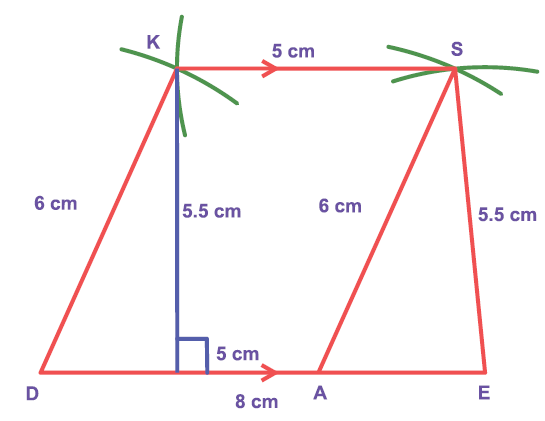
Steps:
1. Draw a line segment DE = 8cm.
2. Mark the point A on DE such that DA = 5 cm.
3. With A and E as centres, draw arcs of radii 6 cm and 5.5 cm respectively. Let them cut at S. Join AS and ES.
4. With D and S as centres, draw arcs of radii 6 cm and 5 cm respectively. Let them cut at K. Join DK and KS.
5. DESK is the required trapezium.
Calculation of area:
Area of the trapezium DESK = \(\frac { 1 }{ 2 } \) x h x (a + b) sq. units
= \(\frac { 1 }{ 2 } \) x 5.5 x (8 + 5) = 35.75 sq. cm
8.
Given:
DE = 7 cm, EA = 6.5 cm ㄥEDN = 1000 and ㄥDEA = 700 and \(\overset { \_ \_ }{ DE } \) || \(\overset { \_ \_ }{ NA} \)
.png)
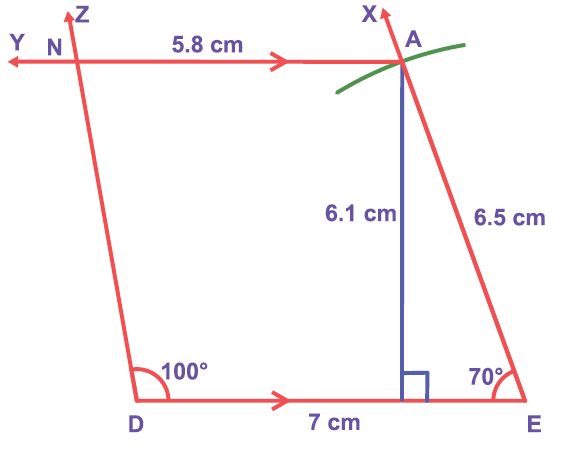
Steps:
1. Draw a line segment DE = 7cm.
2. Construct an angle ㄥDEX = 700 at E.
3. With E as centre draw an arc of radius 6.5cm cutting EX at A.
4. Draw AY parallel to DE.
5. Construct an angle ㄥEDZ = 1000 at D cutting AY at N.
6. DEAN is the required trapezium.
Calculation of area:
Area of the trapezium DEAN = \(\frac { 1 }{ 2 } \) x h x (a+b) sq. units
= \(\frac { 1 }{ 2 } \) x 6.1 x (7 + 5.8) = 39.04 sq. units
9.
Given:
CA = 9 cm, ㄥCAR = 700 AR = 6 cm, and CD = 7 cm and \(\overset { \_ }{ CA } \) || \(\overset { \_ }{ DR } \)
.png)
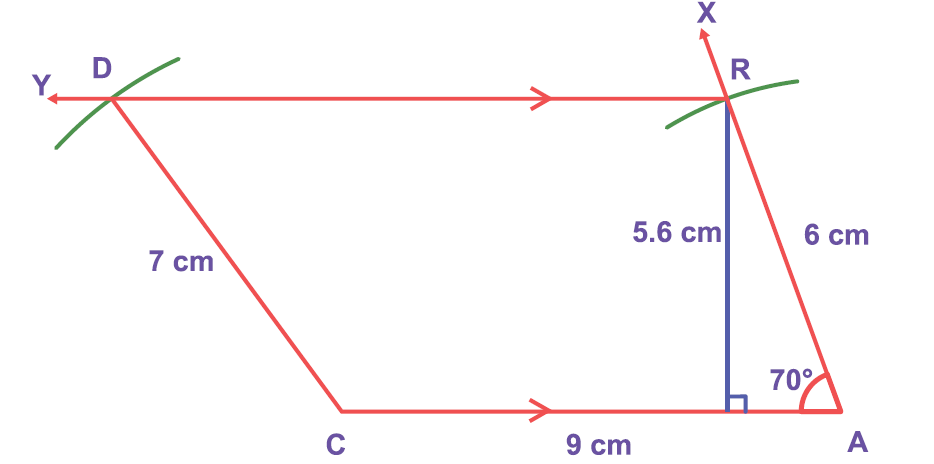
Steps:
1. Draw a line segment CA = 9 cm.
2. Construct an angle ㄥCAX = 700 at A.
3. With A as centre, draw an arc of radius 6 cm cutting AX at R.
4. Draw RY parallel to CA.
5. With C as centre, draw an arc of radius 7 cm cutting RY at D.
6. Join CD. CARD is the required trapezium.
Calculation of area:
Area of the trapezium CARD = \(\frac { 1 }{ 2 } \) x h x(a + b) sq.units
= \(\frac { 1 }{ 2 } \) x 5.6 x (9 + 11) = 56 sq. cm
10.
Given:
BO = 7cm, OA = 6cm, BA = 10cm,
TA = 6 cm and \(\overset { - }{ BO } \) || \(\overset { - }{ TA } \)
.png)
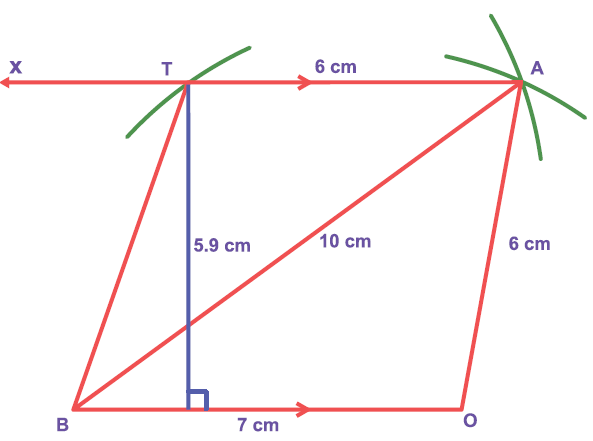
Steps:
1. Draw a line segment BO = 7 cm.
2. With B and O as centres, draw arcs of radii 10cm and 6cm respectively and let them cut at A.
3. Join BA and OA.
4. Draw AX parallel to BO
5. With A as centre, draw an arc of radius 6cm cutting AX at T.
6. Join BT. BOAT is the required trapezium.
Calculation of area:
Area of the trapezium BOAT = \(\frac { 1 }{ 2 } \) x h x (a+b) sq units
= \(\frac { 1 }{ 2 } \) x 5.9 x (7+6) = 38.35 sq. cm
11.
Let the marked price be Rs x.
Now, x + \(\frac { 18x }{ 100 } \) = 10502
\(\frac { 118x }{ 100 } \) = 10502
∴ Marked price, x = Rs. 8900.
GST at 18% = 8900 x \(\frac { 18 }{ 100 } \)
= Rs. 10502 – Rs. 8900
= Rs.1602
12.
Let the marked price of an article be Rs. 100.
First discount of 25% = 100 x \(\frac { 25 }{ 100 } \)= Rs. 25
∴ Price aft er fi rst discount = 100 − 25 = Rs. 75.
Second discount of 20% = 75 ×\(\frac { 20 }{ 100 } \) = Rs. 25.
∴ Price aft er second discount = 75 − 15 = Rs. 60.
Net selling price = Rs. 60.
∴ Single discount equivalent to two given successive discounts = (100-60)% = 40%.
13.
Marked price = Rs. 550 and Discount = 8%
∴ Discount = \(\frac { 8 }{ 100 } \)x 550 = Rs. 44
∴ Selling Price = Marked price – Discount
= Rs. 550 − 44
= Rs. 506
∴ The selling price of the tube light is Rs. 506
14.
Total C.P of the car
= C.P + Overhead Expenses
= 24000 + 15000 +8500
= Rs. 263500
S.P = Rs. 258230
As S.P < C.P , there is a loss.
∴ Loss % = \(\left( \frac { loss }{ C.P } \times 100 \right) %\)%
= \(\left( \frac { 263500-258230 }{ 263500 } \times 100 \right) %\)%
= \(\left( \frac { 5270 }{ 263500 } \times 100 \right) %\)%
= 2%
∴ Loss percentage = 2%
15.
S.P of the bicycle = Rs. 4275
Loss = 5%
∴ C.P =\(\frac { 100 }{ 100-loss% } \times S.P\)
= \(\frac { 100 }{ 95 } \times 4275\)
= Rs. 4500
Now,
C.P = Rs. 4500 and the desired profi t = 5%
∴ Desired S.P = \(\frac { 100+gain% }{ 100 } \times C.P\)
=\(\frac { 100+5 }{ 100 } \times 4500\)
= 105 x 45
= Rs. 4725
Hence, the desired selling price is Rs. 4725.

8th Standard Syllabus & Materials
8th Standard
TN 8th Tamil இயல் 3 - கல்வி கரையில - பாடறிந்து ஒழுகுதல் Important Questions And Answers Study Material - QB365 Set A
NEW8th Standard
TN 8th Tamil இயல் 3-கல்வி கரையில - பல்துறைக் கல்வி Important Questions And Answers Study Material - QB365 Set A
NEW8th Standard
TN 8th Tamil இயல் 3-கல்வி கரையில - புத்தியைத் தீட்டு Important Questions And Answers Study Material - QB365 Set A
NEW8th Standard
TN 8th Tamil இயல் 2 - ஈடில்லா இயற்கை - தமிழர் மருத்துவம் ( நேர்காணல்) Important Questions And Answers Study Material - QB365 Set A



Tamilnadu Stateboard 8th Standard Subjects
Tamilnadu Stateboard Standards




