
 100% FREE ACCESS
8th Standard Syllabus & Materials
8th Standard
TN 8th Tamil இயல் 3 - கல்வி கரையில - வினைமுற்று Important Questions And Answers Study Material - QB365 Set A
NEW8th Standard
TN 8th Tamil இயல் 2 - ஈடில்லா இயற்கை - மயங்கொலிகள் Important Questions And Answers Study Material - QB365 Set A
NEW8th Standard
TN 8th Tamil இயல் 2 - ஈடில்லா இயற்கை -பட்டமரம் Important Questions And Answers Study Material - QB365 Set A
NEW8th Standard
TN 8th Tamil இயல் 2 - ஈடில்லா இயற்கை - இயற்கையை போற்றுவோம் Important Questions And Answers Study Material - QB365 Set A
NEW8th Standard
TN 8th Tamil இயல் 1 - தமிழ் இன்பம் - ஆழிக்கு இணை Important Questions And Answers Study Material - QB365 Set A
NEW8th Standard
TN 8th Tamil இயல் 2-ஈடில்லா இயற்கை - திருக்குறள் Important Questions And Answers Study Material - QB365 Set A

Published on: 13/05/2022
QB365 provides detailed and simple solution for every book back questions in class 8 Maths subject.It will helps to get more idea about question pattern in every book back questions with solution.
latest Book back QuestionsDownload Tamil Nadu 8th Standard Maths question papers, model tests, one-mark questions, important questions, and public exam papers in PDF format. Free study materials and answer keys for TN State Board students.
Questions + Answers key
Take MCQ Maths Test1.
Draw a pie diagram to represent the following data, which shows the expenditure of paddy cultivation in 2 acres of land.
| Particulars | Seeds | Ploughing | Wages | Fertilizer | Harvest | Others |
| Expenses (Rs) | 2000 | 6000 | 10000 | 7000 | 8000 | 3000 |
Also,
1. Find the percentage of the head in which he had spent more?
2. What percentage of money was spent for seeds?
2.
XYZ is a triangle and G is its centroid. If GP = 2.5 cm, GY = 6 cm and ZR = 12 cm, find XP, QY and GR.

3.
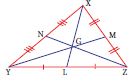
In the figure G is the centroid of the triangle XYZ.
(i) If GL = 2.5 cm, find the length XL.
(ii) If YM = 9.3 cm, find the length GM.
4.
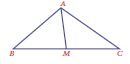
In the figure, ABC is a triangle and AM is one of its medians. If BM = 3.5 cm, find the length of the side BC.
5.
A and B can do a piece of work in 12 days and 9 days respectively. They work on alternate days starting with A on the first day. In how many days will the work be completed?
6.
A works 3 times as fast as B and is able to complete a task in 24 days less than the days taken by B. Find the time in which they can complete the work together.
7.
6 women or 8 men can construct a room in 86 days. How long will it take for 7 women and 5 men to do the same type of room?
8.
If 48 men working 7 hours a day can do a work in 24 days, then in how many days will 28 men working 8 hours a day can complete the same work?
9.
A mat of length 180 m is made by 15 women in 12 days. How long will it take for 32 women to make a mat of length 512 m?

10.
Find the cube root of 27000.
11.
Is 400 a perfect cube?
12.
Find the least number by which 250 is to be multiplied (or) divided so that the resulting number is a perfect square. Also, find the square root in that case
13.
Find the square root of 324 by prime factorisation
14.
Examine if (8, 15, 17) is a Pythagorean triplet
15.
Find the sum of the odd natural numbers 1 + 3 + 5 + 7 + ... ... ... + 99.
1.
| Particulars | Expenses | Central angle |
| Seeds | 2000 | \(\cfrac { 2000 }{ 36000 } \times { 360 }^{ 0 }={ 20 }^{ 0 }\) |
| Plough | 6000 | \(\cfrac { 6000 }{ 36000 } \times { 360 }^{ 0 }={ 60 }^{ 0 }\) |
| Coolie | 10000 | \(\cfrac { 10000 }{ 36000 } \times { 360 }^{ 0 }={ 100 }^{ 0 }\) |
| Fertilizer | 7000 | \(\cfrac { 7000 }{ 36000 } \times { 360 }^{ 0 }={ 70 }^{ 0 }\) |
| Harvesting | 8000 | \(\cfrac { 8000 }{ 36000 } \times { 360 }^{ 0 }={ 80 }^{ 0 }\) |
| Others | 3000 | \(\cfrac { 3000 }{ 36000 } \times { 36 }0^{ 0 }={ 30 }^{ 0 }\) |
| Total | 36000 | 360° |
Expenditure of paddy cultivation in 2 acres.
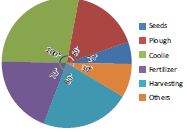
1. He spent more for wages Rs.10,000. Converting into percentage, We have
\(Wages=\cfrac { 10000 }{ 36000 } \times 100\%\)
2. He spent Rs. 2000 for seeds. Converting into percentage,We have
\(\\ Seeds=\cfrac { 2000 }{ 36000 } \times 100\%=5.55\%\)
2.
Centroid G divides each median in the ratio 2:1
ஃ XG = 2GP ⇒ XG = 2(2.5) = 5 cm and XP = XG + GP = 5 + 2.5 = 7.5 cm.
Similarly, GY = 2GQ ⇒ 6 = 2GQ ⇒ GQ = 3 cm and QY = 3 + 6 = 9 cm.
Now, ZR = 12 cm ⇒ GR + GZ = 12 cm ⇒ GR + 2GR = 12 cm ⇒ GR = 4 cm
3.
(i) Since G is the centroid, XG : GL = 2 : 1 which gives XG : 2.5 = 2 : 1.
Therefore, we get 1 x (XG) = 2 x (2.5) ⇒ XG = 5 cm.
Hence, length XL = XG + GL = 5 + 2.5 = 7.5 cm.
(ii) If YG is of 2 parts then GM will be 1 part. (Why?)
This means YM has 3 parts.
3 parts is 9.3 cm long. So GM (made of 1 part) must be 9.3 ÷ 3 = 3.1 cm.
4.
AM is median ⇒ M is the midpoint of BC.
Given that, BM = 3.5 cm, hence BC = twice the length BM = 2 x 3.5 cm = 7 cm.
5.
Since they work on alternate days, let us consider a period of two days.
In the period of 2 days, work done by A and B = \(\cfrac { 1 }{ 12 } +\cfrac { 1 }{ 9 } =\cfrac { 7 }{ 36 } \)
If we consider 5 such time periods for the fraction \(\cfrac { 7 }{ 36 } \) (we consider 5 periods because
7 goes 5 times completely in 36),
work done by A and B in 5\(\times\)2(=10)days = \(5\times \cfrac { 7 }{ 36 } =\cfrac { 35 }{ 36 } \)
Therefore, the remaining work = \(1-\cfrac { 35 }{ 36 } =\cfrac { 1 }{ 36 } \)
This is done by A (why?) in \(\cfrac { 1 }{ 36 } \times 12=\cfrac { 1 }{ 3 } daysB\)
So, the total time taken = \(10days+\cfrac { 1 }{ 3 } days=10\cfrac { 1 }{ 3 } days\)
6.
If B does the work in 3 days, then A will do it in 1 day. That is, the difference is 2 days.
Here, given that the difference between A and B in completing the work is 24 days. Therefore,
A will take \(\cfrac { 24 }{ 2 } =12\) days and B will take 3 x 12 = 36 days to complete the work separately.
Hence, the time taken by A and B together to complete the work =\(\cfrac { ab }{ a+b } days\)
= \(\cfrac { 12\times 36 }{ 12+36 } =\cfrac { 12\times 36 }{ 48 } =9days\)
7.
Person days Method:
Here, let M and W denote a men and a women respectively.
Given that,\(6W=8M\Rightarrow 1W=\cfrac { 8 }{ 6 } M=\cfrac { 4 }{ 3 } M\)
Now,\(7W+5M=7\times \cfrac { 4 }{ 3 } M+5M=\cfrac { 43M }{ 3 } \)
If 8M can construct the room in 86 days, then \(\cfrac { 43M }{ 3 } \) can construct the same type of room in \(8M\times 86\div \cfrac { 43M }{ 3 } =8M\times 86\times \cfrac { 3 }{ 43M } =48days\)
Formula Method:
Required time to construct the room = \(\cfrac { xyp }{ xb+ya } \)
= \(\cfrac { 6\times 8\times 86 }{ 6\times 5+8\times 7 } =\cfrac { 6\times 8\times 86 }{ 30+56 } =\cfrac { 6\times 8\times 86 }{ 86 } =48days\)
(or)
Required time to construct the room = \(\cfrac { p }{ \frac { a }{ x } +\frac { b }{ y } } \)
= \(\cfrac { 86 }{ \frac { 7 }{ 6 } +\frac { 5 }{ 8 } } =\cfrac { 86\times 48 }{ 86 } =48days\)
8.
Multiplicative Factor Method:
| Men | Hours | Days |
| \(l\begin{matrix} 48 \\ 28 \end{matrix}\) | \(\begin{matrix} 7 \\ 8 \end{matrix}l\) | \(l\begin{matrix} 24 \\ x \end{matrix}l\) |
Step 1:
Here, less men means more days. So, it is an inverse variation.
ஃ Th e multiplying factor is \(\cfrac { 48 }{ 28 } \) .
Step 2:
Also, more hours means less days. So, it is an inverse variation.
ஃ The multiplying factor is \(\cfrac { 7 }{ 8 } \) .
Step 3:
\(\therefore x=24\times \cfrac { 48 }{ 28 } \times \cfrac { 7 }{ 8 } =36days\)
Formula Method:
Here, P1= 48, D1= 24, H1 = 7 and W1 = 1(why?)
P2 = 28,D2 = x,H2 = 8 and W2 = 1(why?)
Using the formula,\(\cfrac { { P }_{ 1 }\times { D }_{ 1 }\times { H }_{ 1 } }{ { W }_{ 1 } } =\cfrac { { P }_{ 2 }\times { D }_{ 2 }\times { H }_{ 2 } }{ { W }_{ 2 } } \)
We have,\(\cfrac { 48\times 24\times 7 }{ 1 } =\cfrac { 28\times \times \times 8 }{ 1 } \)
\(\Rightarrow x=\cfrac { 48\times 24\times 7 }{ 28\times 8 } =36days\)
9.
Proportion Method:
| Length (Work) | Women | Days |
| \({ D }_{ 512 }^{ 180 }\) | \(_{ 32 }^{ 15 }{ l }\) | \({ D }_{ x }^{ 12 }l\) |
Here, the unknown is the days (x). It is to be compared with the length and the women.
Step 1:
Here, more length means more days. So, it is a direct proportion.
∴ The proportion is 180 : 512 :: 12 : x ➝1
Step 2:
Also, more women means less days. So, it is an inverse proportion
∴The proportion is 32 : 15 :: 12 : x➝2
Step 3:
Combining 1 and 2
\(\begin{matrix} 180:512 \\ 32:15 \end{matrix}\} ::12:x\)
We know that the product of the extremes = the product of the means

So,\(180\times 32\times x=512\times 12\times 15\Rightarrow x\cfrac { 512\times 12\times 15 }{ 180\times 32 } =16days\)
Here, the unknown is the days (x). It is to be compared with the length and the women
Step 1:
Here, more length means more days. So, it is a direct proportion.
ஃ The multiplying factor is \(\cfrac { 512 }{ 180 } \) (take the reciprocal).
Step 2:
Also, more women means less days. So, it is an inverse proportion.
ஃ The multiplying factor is \(\cfrac { 15 }{ 32 } \) (no change)
Step 3:
\(\therefore x=12\times \cfrac { 512 }{ 180 } \times \cfrac { 15 }{ 32 } =16\ days\)
Formula Method:
Here, P1 = 15,D1 = 12 and W1 = 180
P2 = 32,D2 = x and W2 = 512
Using the formula,\(\cfrac { { P }_{ 1 }\times { D }_{ 1 } }{ { W }_{ 1 } } =\cfrac { { P }_{ 2 }\times { D }_{ 2 } }{ { W }_{ 2 } } \)
We have,\(\cfrac { 15\times 12 }{ 180 } =\cfrac { 32\times x }{ 512 } \)
\(\Rightarrow 1=\cfrac { 32\times x }{ 512 } \Rightarrow x=\cfrac { 512 }{ 32 } =16days\)
Remark: Students may answer in any of the three given methods dealt here.
10.
By prime factorisation, we have 27000 = 2 x 2 x 2 x 3 x 3 x 3 x 5 x 5 x 5
\(\therefore \sqrt [ 3 ]{ 2700 } =2\times 3\times 5=30\)
11.
By prime factorization, we have \(400=\underbrace { 2\times 2\times 2 } \times 2\times 5\times \)
There is only one triplet. To make further triplets, we will need two more 2’s and one more 5.
Therefore, 400 is not a perfect cube.
12.
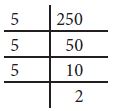
We find 250 = 5 x 5 x 5 x 2
= 52 x 5 x 2
Here, the prime factors 5 and 2 do not have pairs.
Therefore, we can either divide 250 by 10 (5 x 2) or multiply 250 by 10.
(i) If we multiply 250 by 10, we get 2500 = 52 × 5 × 2 × 5 × 2 and therefore the square root for 2500 would be 5 x 5 x 2 = 50.
(ii) If we divide 250 by 10 we get 25 and in that case we get \(\sqrt { 25 } =\sqrt { { 5 }^{ 2 } } =5\)
13.
First, resolve the given number into prime factors. Group the identical factors in pairs and then take one from them to find the square root.
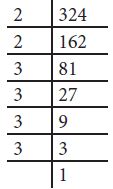
Now, 324 = 2 x 2 x 3 x 3 x 3 x 3
= 22 x 32 x 3
= (2 x 3 x 3)2
\(\therefore \sqrt { 324 } =\sqrt { \left( 2\times 2\times 3 \right) ^{ 2 } } \)
= 2 x 3 x 3
= 18
14.
We have, 82 = 8 × 8 = 64, 152 = 15 × 15 = 225 and 172 = 17 × 17 = 289
We find, 82 + 152 = 64 + 225 = 289 = 172
Thus, 82 + 152 = 172
∴ (8, 15, 17) is a Pythagorean triplet
15.
Solution:
Here, there are 50 odd numbers from 1 to 99.
The sum of the fi rst n consecutive odd natural numbers = n2
The sum of the fi rst 50 consecutive odd natural numbers = 502
= 50 × 50 = 2500

8th Standard Syllabus & Materials
8th Standard
TN 8th Tamil இயல் 3 - கல்வி கரையில - பாடறிந்து ஒழுகுதல் Important Questions And Answers Study Material - QB365 Set A
NEW8th Standard
TN 8th Tamil இயல் 3-கல்வி கரையில - பல்துறைக் கல்வி Important Questions And Answers Study Material - QB365 Set A
NEW8th Standard
TN 8th Tamil இயல் 3-கல்வி கரையில - புத்தியைத் தீட்டு Important Questions And Answers Study Material - QB365 Set A
NEW8th Standard
TN 8th Tamil இயல் 2 - ஈடில்லா இயற்கை - தமிழர் மருத்துவம் ( நேர்காணல்) Important Questions And Answers Study Material - QB365 Set A



Tamilnadu Stateboard 8th Standard Subjects
Tamilnadu Stateboard Standards




