
 100% FREE ACCESS
8th Standard Syllabus & Materials
8th Standard
TN 8th Tamil இயல் 3 - கல்வி கரையில - வினைமுற்று Important Questions And Answers Study Material - QB365 Set A
NEW8th Standard
TN 8th Tamil இயல் 2 - ஈடில்லா இயற்கை - மயங்கொலிகள் Important Questions And Answers Study Material - QB365 Set A
NEW8th Standard
TN 8th Tamil இயல் 2 - ஈடில்லா இயற்கை -பட்டமரம் Important Questions And Answers Study Material - QB365 Set A
NEW8th Standard
TN 8th Tamil இயல் 2 - ஈடில்லா இயற்கை - இயற்கையை போற்றுவோம் Important Questions And Answers Study Material - QB365 Set A
NEW8th Standard
TN 8th Tamil இயல் 1 - தமிழ் இன்பம் - ஆழிக்கு இணை Important Questions And Answers Study Material - QB365 Set A
NEW8th Standard
TN 8th Tamil இயல் 2-ஈடில்லா இயற்கை - திருக்குறள் Important Questions And Answers Study Material - QB365 Set A

Published on: 16/06/2021
QB365 provides detailed and simple solution for every Book back Questions in class 8 Science Subject. It will helps to get more idea about question pattern in every book back questions with solution.
Download Tamil Nadu 8th Standard Science question papers, model tests, one-mark questions, important questions, and public exam papers in PDF format. Free study materials and answer keys for TN State Board students.
Questions + Answers key
Take MCQ Science Test1.
Explain the mechanism of breathing.
2.
Lists out the different types of metabolism with an example.
3.
Differentiate between inhalation and exhalation.
4.
Explain Osmosis with an example.
5.
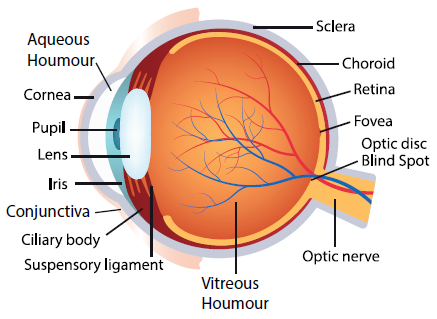
Draw the structure of human eye and label its parts.
1.
Inspiration (Inhalation)
► The process of taking air into the lungs is called inspiration,
► During inspiration, the sternum is pushed up and outward and the diaphragm is pulled down
► This increases the volume of the thoracic cavity the pressure decreases.
► The air outside the body flows into the lungs.
► Here the exchange of gases takes place between the air and blood.
Expiration (Exhalation)
► The process of expelling air from the lungs is called expiration or exhalation.
► Upon exhalation, the lungs recoil to force the air out of the lungs
► The intercostal muscles relax, returning the chest wall to its original position.
► During exhalation, the diaphragm also relaxes, moving higher into the thoracic cavity.
► This increases the pressure within the thoracic cavity relative to the environment.
► Air rushes out of the lungs due to the pressure gradient.
► This movement of air out of the lungs is a passive event.
Exchange of gases in the Alveoli:
► The content of oxygen in the inhaled air in alveoli is more than the blood flowing through the capillaries
► So, the oxygen moves into the blood by simple diffusion.
► Haemoglobin in the blood combines with oxygen to form oxyhaemoglobin.
► The blood carrying oxygen reaches the heart through blood vessels.
► The heart pumps it to all the tissue in the body.
► The tissue releases carbon-dioxide which is carried back to alveoli by the blood.
► Carbon dioxide diffuses from the blood to the air in the alveoli and it sent out of the body when the air is exhaled.
2.
Metabolism is the sum total of the biochemical reactions which involves in release and utilisation of energy or energy exchange within the organisms.
It is divided into two types.
i) Anabolism
ii) Catabolism
i) Anabolism (Constructive metabolism):
► It is all about building and storing
► It supports the growth of new cells the maintenance of body tissues and the storage of energy for use in the future.
► During anabolism, small molecules are changed into larger more complex molecules of carbohydrate, protein and fat.
Eg: Glucose → Glycogen and other sugars.
Amino acids → Enzymes, hormones and proteins.
ii) Catabolism (Destructive metabolism
► It produces the energy required for all activity in the cells.
► In this process, cells breakdown large molecules (mostly carbohydrates and fats) to release energy
► This energy release provides fuel for anabolism, heats the body and enables the muscles to contract and the body to move.
► As complex chemical units are broken down into more simple substances, the waste products released in the catabolism are removed from the body through the skin, kidneys, lungs and intestines.
Eg: Carbohydrates → Glucose
Glucose → CO2 water and heat.
3.
| S.No | Inhalation | Exhalation |
|---|---|---|
| 1. | The muscles of the diaphragm | The muscles of the diaphram relax. |
| 2. | The diaphram goes downward. | The diaphram goes upwards |
| 3. | The ribs move upwards and outwards. | The ribs move downwards. |
| 4. | The volume of thoracic cavity increases. | the volume of thoracic cavity decreases. |
| 5. | air enteres the lungs through the nose | Air goes out of the lungs through the nose. |
4.
(i) Osmosis is the movement of solvent particles across a semipermeable membrane from a dilute solution into a concentrated solution.
(ii) The solvent moves to dilute the concentrated solution and equalize the concentration on both sides of the membrane.
(iii) The movement of liquids in and out cells is dependent on the concentration of the solution surrounding it.
(iv) There are three types of situations in which this could vary.
i) Isotonic
Here the concentration of external and internal solutions of the organism are the same.
eg: When red blood cells are in an isotonic solution it will retain its disc shape because the flow of water in and out the cell is at the same rate.
ii) Hypotonic:
Here the external solution concentration is less compared to the concentration of the inner solution of an organism. In this case water will rush into the organism.
eg: When red blood cells are in hypotonic solution, the cell swells and haemolysis occurs.
iii) Hypertonic:
Here the external solution concentration is greater than the concentration of the inner solution of an organism. In this case the water will rush out of the organism.
eg: When red blood cells are in a hypertonic solution, it will result in crenation of blood cell.
5.

8th Standard Syllabus & Materials
8th Standard
TN 8th Tamil இயல் 3 - கல்வி கரையில - பாடறிந்து ஒழுகுதல் Important Questions And Answers Study Material - QB365 Set A
NEW8th Standard
TN 8th Tamil இயல் 3-கல்வி கரையில - பல்துறைக் கல்வி Important Questions And Answers Study Material - QB365 Set A
NEW8th Standard
TN 8th Tamil இயல் 3-கல்வி கரையில - புத்தியைத் தீட்டு Important Questions And Answers Study Material - QB365 Set A
NEW8th Standard
TN 8th Tamil இயல் 2 - ஈடில்லா இயற்கை - தமிழர் மருத்துவம் ( நேர்காணல்) Important Questions And Answers Study Material - QB365 Set A



Tamilnadu Stateboard 8th Standard Subjects
Tamilnadu Stateboard Standards




