
 100% FREE ACCESS
8th Standard Syllabus & Materials
8th Standard
TN 8th Tamil இயல் 3 - கல்வி கரையில - வினைமுற்று Important Questions And Answers Study Material - QB365 Set A
NEW8th Standard
TN 8th Tamil இயல் 2 - ஈடில்லா இயற்கை - மயங்கொலிகள் Important Questions And Answers Study Material - QB365 Set A
NEW8th Standard
TN 8th Tamil இயல் 2 - ஈடில்லா இயற்கை -பட்டமரம் Important Questions And Answers Study Material - QB365 Set A
NEW8th Standard
TN 8th Tamil இயல் 2 - ஈடில்லா இயற்கை - இயற்கையை போற்றுவோம் Important Questions And Answers Study Material - QB365 Set A
NEW8th Standard
TN 8th Tamil இயல் 1 - தமிழ் இன்பம் - ஆழிக்கு இணை Important Questions And Answers Study Material - QB365 Set A
NEW8th Standard
TN 8th Tamil இயல் 2-ஈடில்லா இயற்கை - திருக்குறள் Important Questions And Answers Study Material - QB365 Set A

Published on: 13/05/2022
QB365 provides detailed and simple solution for every book back questions in class 8 Social Science subject.It will helps to get more idea about question pattern in every book back questions with solution.
latest Book back QuestionsDownload Tamil Nadu 8th Standard Social Science question papers, model tests, one-mark questions, important questions, and public exam papers in PDF format. Free study materials and answer keys for TN State Board students.
Questions + Answers key
Take MCQ Social Science Test
1.
Write the functions of the private sector?
2.
What is the importance of the public sector?
3.
Write briefly explain the history of the public sector?
4.
Describe Jurisdiction of the Supreme Court.
5.
Write about the role of the judiciary.
6.
Describe the structure and administration of the Indian Army.
7.
Describe the Cadastral map and its importance.
8.
Name the physical divisions of Africa and explain any one.
9.
Explain the Geographical factors which affect the location of industries?
10.
Give a detailed account of the Impact of reform movement?
11.
Trace the role of women in the freedom struggle.
12.
Tabulate tips for avoiding driver fatigue.
13.
To whom does the Universal Declaration of Human Rights apply? Why is it important to you?
14.
Elaborately discuss the effects water pollution.
15.
Define earthquake and list out its effects.
16.
Discuss the problems of urbanisation.
17.
What are the different types of migration? Explain.
18.
How does the flagship programme of SSA achieve Universal Elementary Education?
19.
What are the difference between savings and investment?
20.
What are the functions of Money? and explain it.
21.
Explain the run-off and its types.
22.
List out the weather elements and associated measuring instruments.
23.
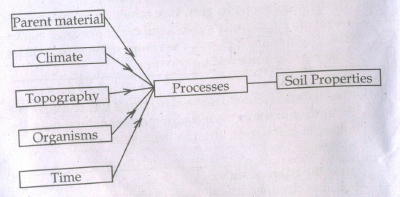
Explain the process of soil formation.
24.
Apart from the exploiting through taxes, how did the British further exploit the land?
25.
How did the fall of Constantinople affect the European nations?
1.
i) The main function of private sector is to create innovation and modernization.
ii) The profit motive drives them to invent, innovate new techniques of production and manage the productive activities in a scientific manner.
iii) Develop and maintain infrastructure and services.
iv) Promote and expand existing businesses.
v) Promote human capital development, to help vulnerable groups especially to participate in the labour market and encourage community development by promoting community business and co-operatives, local exchange system and informal credit etc.
vi) Promote small, micro and medium enterprises (SMME) through supply side measures and demand side measures and attract investment in the city.
vii) The most dominant sector of India, ie, agriculture and other allied activities like dairying, animal hunbandry, poultry etc. is totally under the control of the private sector.
viii) Thus private sector is playing an important role in managing the entire agricultural sector and thereby providing the entire food supply to the millions
ix) Producing various consumer goods organisation is also under the control of the private sector.
2.
Public sector plays a major role in the development of any economy. It has following importance
(i) Public Sector and Capital Formation:
The role of public sector in collecting saving and investing them during the planning period has been very important.
(ii) Economic Development :
Economic development mainly depends upon industrial development,
Heavy & basic industries like iron & steel, shipping, mining, etc are required for supplying raw materials to small industries.
(iii) Balanced Regional Developmemt:
Public Sector undertakings have located their plants in backward parts of the country.
These areas lacked basic industrial and civic facilities like electricity, water supply township and manpower.
Public enterprises have developed these facilities thereby bringing about complete transformation in the socio-economic life of the people in these regions.
(iv) Employment Generation :
Public sector has created millions of jobs to tackle the unemployment problem in the country.
The number of persons employed during the year 2011 was 150 lakh.
(v) Export Promotion and Foreign Exchange Earnings:
Some public enterprises have done much to promote India's export.
The State Trading Corporation like other organisations have done very well in export promotion
(vi) Protection to sick Industries :
Public Sector, to prevent sick unit closing down, takes over their responsibility & prevent many people from getting unemployed not only this but it prevents unnecessary looking of capital, land, building, machinery, etc.
(vii) Import Substitution :
Some public sector enterprises were started specifically to produce goods which were formerly imported and thus to save foreign exchange.
The Oil and Natural Gas Commission like other organisations have saved foreign exchange by way of import substitution.
3.
i) When India achieved independence in 1947, it was primarily an agricultural country with a weak industrial base.
ii) There were only eighteen Indian Ordnance Factories in the country which the British had established.
iii) Building upon the Bombay Plan (1940), which noted the requirement of government intervention and regulation, the first Industrial Policy Resolution announced in 1948 laid down broad contours of the strategy of industrial development.
iv) Subsequently, the Planning Commission was formed by a cabinet resolution in March 1950 and the Industrial Act was enacted in 1951.
v) Prime Minister Jawaharlal Nehru promoted an economic policy based on import substitution industrialisation and advocated a mixed economic system.
vi) He believed that the establishment of basic and heavy industry was fundamental to the development and modernisation of the Indian economy.
vii) India's second five year plan (1956 - 60) and the Industrial Policy Resolution of 1956 emphasised the development of Public Sector enterprises.
viii) Nehru's vision was carried forward by Dr. V. Krishnamurthy.
ix) Indian Statistician Prof. P.C. Mahalanobis was instrumental to its formulation, which was subsequently termed the Friedman Mahalanobis model.
4.
a. Original Jurisdlction : The Supreme Court can hear dispute for the first time in that court only. It is mainly concerned disputes between the Union and one or more states and between two or more states.
b. Appellate Jurisdiction: It can hear appeals against the decisions made by the High Court on the granting of certificate by the High Court.
c. Advisory Jurisdiction: The Court can report to the President its opinion about a question of the public importance referred to it by the President.
d. Writs Jurisdiction: The Writs are issued by the Supreme Court under Article 32 and by the High Courts under Article 226 of the Constitution ofIndia.
e. Court of Record: It maintains records of the court proceedings and its decisions are finding upon the lower courts.
f. Special Powers: It supervises the functioning ofthe lower courts.
5.
Role of Judiciary can be classified as,
i) Dispute Resolution:
The Judicial System provides a mechanis for resolving disputes between
i) Citizen
ii) Citizens and the government
iii) Two state governments
iv) The centre and the state governments
ii) Judicial Review:
The Judicial has the power to declare a law unconsititutional if it believes that the law passed by the Parliament is violating the basic structure of the constitution.
iii) Upholding the law and Enforcing Fundamental Rights:
Every citizen of India can approach the Supreme Court or High Court if they believe that their fundamental rights have been violated.
6.
i) The Indian Army is the land-based branch and it is the largest volunteer army in the world.
ii) It is commanded by the Chief Of Army Staff (COAS), who is a four-star general.
iii) The primary mission of the Indian Army is to ensure national security, national unity, defending the nation from external aggression, internal threats and maintaining peace and security within its borders.
iv) It conducts humanitarian rescue operations during natural disaster and calamities.
v) The Indian Army has a regimental system.
vi) It is operationally and geographically divided into seven commands.
7.
i) A cadastral map refers to a map that shows the boundaries and ownership of land within a specified area.
ii) These maps are sometimes known as plans.
iii) As they are on large scale, they show full details of the boundaries and buildings.
iv) They are useful for local administration such as the city survey, taxation, management of estates and to define property in legal documents.
v) Usually these maps are maintained by the government and they are a matter of public record.
Importance of Cadastral Maps : Cadastral surveys document the boundaries of land ownership, by the production of documents,' diagrams, sketches, plans (flats in USA), charts and maps. They were originally used to ensure reliable facts for land valuation and taxation.
8.
Africa consists of mixture of land forms such as mountains, plateaus and plains. The following are the 8 major physical divisions of Africa. Madagaskar is the major island of Africa.
1) Sahara
2) East African highlands
3) Sahel
4) Swahili Coast
5) Savanna
6) The Congo Basin or Zaire Basin
7) The Great rift valley and the Great lakes of Africa
8) Southern Africa
SAHEL:
i) Sahel means border or margin. Sahel is a semi-arid tropical Savanna region.
ii) It lies between the Sahara Desert in the north and Savanna grasslapd in the south.
iii) It stretches east-west for a distance of 4000 km and covers an area of 3.0 million sq km.
iv) It is largely a semi-arid belt of barren, sandy and rocky land.
v) This region marks the physical and cultural transition between the more fertile tropical regions to the south and desert in the north.
9.
Geographical Factors:
1. Raw Material:
(i) Bulky goods and weight losing materials cannot be transported for long distances.
(ii) Therefore, industries like iron and steel and sugar industries are located near the place of availability of iron ore and sugar cane respectively.
(iii) Steel Plant in Salem is located near Kanjamalai, where iron ore is available. Similarly, Sugar industries are located near the sugarcane growing areas.
2. Power:
(i) Power is base and essential to run the entire industry.
(ii) Power is mostly generated from the conventional sources like coal, mineral oil, and water.
(iii) So, anyone of these sources must be located near the industries to fulfil its power requirement.
3. Labour:
(i) Availability of cheap and skilled labour is another important requirement for labour intensive industries (e.g., Tea industry).
4. Transport:
(i) It is needed for transporting raw materials to the industries and also for sending the finished products to the market.
(ii) Availability of easy transportation always influences the location of an industry.
(iii) So, the junction points of waterways, roadways and railways become active centres of industrial activity.
5. Storage and Warehousing:
(i) The finished goods should reach the market at the end of the process of manufacturing.
(ii) Hence, such finished products should be stored at suitable storage or warehouse till the goods are taken to the market.
6. Topography:
(i) The site that is selected for the establishment of an industry must be flat.
(ii) So, it can be well served by different modes of transport.
7. Climate:
(i) Climate of the area selected for an industry is also one of the important factors oflocation of industries.
(ii) Moreover, there are certain industries which require a specific climate. Example: Cool- humid climate is ideal for cotton textile industry. As Coimbatore and Tiruppur have such type of climate, many cotton textile industries are located in this zone.
8. Water Resources:
(i) Many industries are established near rivers, canals, and lakes for this reason.
(ii) Iron and steel industries, textile industries and chemical industries require plenty of water, for their proper functioning.
10.
(i) Significant advances were made in the field of emancipation of women.
(ii) It created of national awakening among the masses.
(iii) It created the feeling of sacrifice, service and rationalism.
(iv) The practice of sati and infanticide was made illegal.
(v) It permitted widow remarriage.
(vi) It abolished Devadasi System
(vii) It raised the age of child marriage.
11.
1. In the early anti-colonial struggle women played major roles in various capacities.
2. Velunachiyar of Sivaganga fought violently against the British and restored her rule in Sivaganga.
3. Begum Hazrat Mahal, Rani Lakshmi Bhai of Jhansi led an armed revolt of 1857 against the British.
4. In the freedom struggle thousands of women came out of their homes, boycotted foreign goods, marched in processions, defined laws, received lathi charges and courted jails.
5. Their participation in the struggle added a new dimension of mass character.
12.
i) Driver should be given intermittent rest while driving long distance.
ii) When night duty is allotted, we should ensure that adequate sleep time is given for the driver.
iii) For long trips, additional spare driver should be made available.
iv) Proper refreshment, should be provided to the driver to avoid fatigue.
13.
i) The Universal Declaration of Human Rights is applicable to all including me.
ii) It is important to me because:
iii) It prevents from exploiting me from any form of torture.
iv) It gives me protection from any violation of human rights.
v) It gives me a sense of safety.
14.
Water pollution is any chemical, physical or biological change in the quality of water. It has a harmful effect in human and aquatic life.
In India, water pollution has been taking place on a large scale and since a long period. Both surface and groundwater bodies are polluted to a great extent.
The major causes of water pollution are
i) Urbanisation
ii) Industrial effluents
iii) Sewages
iv) Agricultural runoff and improper agricultural practices
v) Seawater intrusion
vi) Solid wastes
Water pollution mainly affects the water based ecosystem. It also disrupts the natural food chain.
15.
Earthquake is a violent tremor in the earth's crust, sending out a series of shock waves in all directions from its place of origin.
Effects of Earthquake
The primary effects of earthquakes are ground shaking, ground rupture, landslides, Tsunamis and leakage of gas (liquefaction).
Secondary effect
Fire is probably the single most important secondary effect of earthquakes.
16.
Problems of urbanisation
a) Housing and Slums
b) Over Crowding
c) Water supply, Drainage and Sanitation
d) Transportation and Traffic
e) Pollution
a) Housing and Slums
There is a lack of space for housing and a marked reduction in the quality of housing in the urban areas due to increase in population Rapid rate of urbanisation results the development of slums
b) Over Crowding:
Over crowding leads to unhealthy environment in the urban areas. If also the cause of many diseases and riots.
c) Water supply, Drainage and Sanitation:
No city has found the clock water supply in the world. Drainage situation is equally bad.
d) Transporation and Traffic
i) Absence of planned and adequate arrangements for traffic and transport is another probleem in urban centres.
ii) The increasing number of two wheelers and cars make the tratfic problem worse
e) Pollution:
i) Towns and cities are the major polluters of environment.
ii) Industries in and around the urban centres polltrtes. The atmosphere with smoke and toxic gases
17.
Types of migration based on
a) The movement associated with administrative limits.
b) The willingness of the migrants for migration
c) The duration of stay of migrants in the place of destination,
a) Based on the movement associated with administrative limits.
Internal migration
The movement of people within a country is known as Internal migration. It is classified into four categoris on the basis of the place of origin and destination of migrants.
i) Rural to Urban Migration
ii) Urban to Urban Migration
iii) Rural to Rural Migration
iv) Urban to Rural Migration
International migration
Migration that occurs across the national boundaries are known as international migration.
b) Based on the Willingness of the migrants for migration
i) Voluntary migration
ii) Involuntary or forced migration
c) Based on the duration of stay of migrants in the place of destination,
Short term migration
The migration stay outside only for a short duration before returning to the place of origin.
Long term Migration
It is a kind of migration in which the migrants stay outside at least for a few years
Seasonal Migration
Usually a group of people migrates from their native places during a particular season and returns after end of that season
18.
1. The Sarva Shiksha Abhiyan is the Government of India's flagship programme that was launched in 2000-01 to achieve Universal Elementary Education,
2. SSA is new the primary vehicle for implementing the provisions of the Right of Children to Free and Compulsory Education Act (2009)
3. Right to Education provides free and compulsory education to all the children from the age of 6 to 14 years.
4. The SSA initiates a variety of innovation and activities related to schools
5. Some important activities include providing the Mid - Day Meals and stipends for students, the setting up of School Management Committees and provision of teaching-learning materials for classrooms
19.
| Basis of comparison | Savings | Investments |
| Meaning | Savings represent that part of the person's income which is not used for comparison. | Investment refers to the process of investing funds in capital asset, with a view to generate returns. |
| Purpose | Savings are made a fulfill short term or urgent requirements. | Investment is made to provide returns and help in capital formation. |
| Risk | Low or negligible | Very high |
| Returns | No or less | Comparatively high |
| Liquidity | Highly liquid | Less liquid |
20.
Fonctions of money
i) Primary or main function.
ii) Secondary and Contingent function.
Primary functions:
i) Money is used to buy the goods and services.
ii) All the values are expressed in terms of money. So, money is used as a tool to value.
Secondary functions:
i) Money helps the future payment also
ii) The introduction of money has helped to save it for future as it is not perishable.
iii) Money makes the exchange of goods to distant places as well as abroad possible
iv) It was felt necessary to transfer purchasing power from one place to another.
21.
(i) Runoff is the water that is pulled by gravity across land's surface. It replenishes ground water and surface water.
Runoff is also a major contributor to the erosion which carves out canyons, gorges and related landforms.
The run off may be classified into following three types
i) Surface runoff
(i) It is the portion of rainfall, which enters the stream immediately after rainfall.
(ii) It occurs when the rainfall is longer, heavier and exceeds the rate of infiltration.
(iii) In this condition, the excess water makes a head over the ground surface, which tends to move from one place to another following land gradient and is known as overland flow.
ii) Sub-surface runoff
(i) The water that has entered the subsoil and moves laterally without joining the water-table to the streams, rivers or oceans is known as sub-surface runoff.
(ii) The sub-surface runoff is usually referred as inter flow.
iii) Base flow
(i) It is a flow of underground water from a saturated ground water zone to a water channel.
(ii) It usually appears at a downstream location where the channel elevation is lower than the ground water table.
(iii) Ground water provides the stream flow during dry periods of small or no precipitation.
22.
| Elements of Weather | Measuring instruments | |
| 1. | Temperature | Thermometer, Stevenson screen and minimum and maximum Thermometer. |
| 2. | Rainfall | Rain gauge |
| 3. | Air Pressure | Aneroid Barometer |
| 4. | Humidity | Hydrometer |
| 5. | Wind |
23.
(i) Soil is a mixture of organic matter, mineral, gases, liquids and organisms that together support life. Soil minerals form the basis of soil. It forms on surface of the earth. It is known as skin of earth.
(ii) Soils are produced form rocks through the processes of weathering and soil erosion.
(iii) Water, wind, temperature change, gravity, chemical interaction, living organisms and pressure differences all help break down parent material.
(iv) It leads to the formation of loose material
(v) In course of time they further break down into fine particles.
(vi) This process release the minerals locked in the rock fragments.
(vii) Later on the vegetative cover which develops in that region forms humus content in the soil. This way the soil gets matured gradually.
24.
1. The poor peasants are exploited by Zamindars, Money lenders and Lawyers.
2. Indian cottage industries are destroyed by the import of British goods.
3. The old agricultural methods are wiped out due to new agricultural strategies.
4. The Zamindars exploited the labour of peaseants.
5. The lands are hijacked through money lenders by using the ignorance of people.
6. Indigo planters compelled the tenant farmers to grow indigo at terms highly disadvantageous to the farmers.
7. The tenant farmers was forced to sell it cheap to the planter.
8. Farmers expelled from the land often claim that fake reasons are failed to pay rent.
9. Hijacked the land and sale it lease.
25.
1) The fall of constantinople is an important landmark in the history of the world.
2) As far as trade was concerned, Constantinople was located at a vantage point through which the trade betwwwn east and west was carried on.
3) In 1453 Constantinople was captured by the Turks. They blocked the route to the East by the eastern Mediterranean.
4) They levied heavy taxes on the goods which passed through constantinople.
5) The European traders were also disturbed by the Turks.
6) As a result of this the Europeans were not prepared to lose the trade with golden East as they could not get things like spices which they liked most. It forced the Europeans to discover new sea routes to the East.

8th Standard Syllabus & Materials
8th Standard
TN 8th Tamil இயல் 3 - கல்வி கரையில - பாடறிந்து ஒழுகுதல் Important Questions And Answers Study Material - QB365 Set A
NEW8th Standard
TN 8th Tamil இயல் 3-கல்வி கரையில - பல்துறைக் கல்வி Important Questions And Answers Study Material - QB365 Set A
NEW8th Standard
TN 8th Tamil இயல் 3-கல்வி கரையில - புத்தியைத் தீட்டு Important Questions And Answers Study Material - QB365 Set A
NEW8th Standard
TN 8th Tamil இயல் 2 - ஈடில்லா இயற்கை - தமிழர் மருத்துவம் ( நேர்காணல்) Important Questions And Answers Study Material - QB365 Set A



Tamilnadu Stateboard 8th Standard Subjects
Tamilnadu Stateboard Standards



