
 100% FREE ACCESS
8th Standard Syllabus & Materials
8th Standard
TN 8th Tamil இயல் 3 - கல்வி கரையில - வினைமுற்று Important Questions And Answers Study Material - QB365 Set A
NEW8th Standard
TN 8th Tamil இயல் 2 - ஈடில்லா இயற்கை - மயங்கொலிகள் Important Questions And Answers Study Material - QB365 Set A
NEW8th Standard
TN 8th Tamil இயல் 2 - ஈடில்லா இயற்கை -பட்டமரம் Important Questions And Answers Study Material - QB365 Set A
NEW8th Standard
TN 8th Tamil இயல் 2 - ஈடில்லா இயற்கை - இயற்கையை போற்றுவோம் Important Questions And Answers Study Material - QB365 Set A
NEW8th Standard
TN 8th Tamil இயல் 1 - தமிழ் இன்பம் - ஆழிக்கு இணை Important Questions And Answers Study Material - QB365 Set A
NEW8th Standard
TN 8th Tamil இயல் 2-ஈடில்லா இயற்கை - திருக்குறள் Important Questions And Answers Study Material - QB365 Set A

Published on: 29/06/2019
8th Standard New Syllabus Chapter One Creative Question
Download Tamil Nadu 8th Standard Maths question papers, model tests, one-mark questions, important questions, and public exam papers in PDF format. Free study materials and answer keys for TN State Board students.
Questions + Answers key
Take MCQ Maths Test1.
One roll of ribbon is \(18\frac { 3 }{ 4 } \) m long. Sankari has four full rolls and one – third of a roll. How many meters of ribbon does Sankari have in total?
2.
The product of two rational numbers is \(\frac { -2 }{ 3 } \) If one number is \(\frac { 3 }{ 7 } \) find the other.
3.
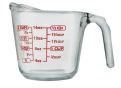
Mangalam buys a water jug of capacity \(3\frac { 4 }{ 5 } \) litres. If she buys another jug which is \(2\frac { 2 }{ 3 } \) times as large as the smaller jug, how many liters can the larger one hold?
4.
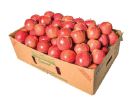
If \(\frac { 3 }{ 4 } \) of a box of apples weighs 3 kg and 225 gm, how much does a full box of apples weight?
5.
Draw the number line and represent the following rational numbers on it.
\(\frac { 15 }{ -4 } \)
6.
Draw the number line and represent the following rational numbers on it.
\(\frac { -17 }{ -5 } \)
7.
List five rational numbers between
0.25 and 0.35
8.
List five rational numbers between
\(\frac { -1 }{ 2 } \) and \(\frac { 3 }{ 5 } \)
9.
List five rational numbers between
–2 and 0
10.
\(\left( 1-\frac { 1 }{ 2 } \right) \times \left( \frac { 1 }{ 2 } -\frac { 1 }{ 4 } \right) \div \left( \frac { 3 }{ 4 } -\frac { 1 }{ 2 } \right) \)=
\(\frac { 1 }{ 2 } \)
\(\frac { 3 }{ 4 } \)
\(\frac { 1 }{ 4 } \)
\(\frac { -1 }{ 2 } \)
11.
\(\frac { 1 }{ 2 } -\left( \frac { 3 }{ 4 } -\frac { 5 }{ 6 } \right) \neq \left( \frac { 1 }{ 2 } -\frac { 3 }{ 4 } \right) -\frac { 5 }{ 6 } \) illustrates that subtraction does not satisfy the ________ property for rational numbers.
commutative
closure
distributive
associative
12.
\(\frac { 3 }{ 4 } \div \left( \frac { 5 }{ 8 } +\frac { 1 }{ 2 } \right) \) =
\(\frac { 13 }{ 10 } \)
\(\frac { 2 }{ 3 } \)
\(\frac { 3 }{ 2 } \)
\(\frac { 5 }{ 8 } \)
13.
Which of the following pairs is equivalent?
\(\frac { -20 }{ 12 } ,\frac { 5 }{ 3 } \)
\(\frac { 16 }{ -30 } ,\frac { -8 }{ 15 } \)
\(\frac { -18 }{ 36 } ,\frac { -20 }{ 44 } \)
\(\frac { 7 }{ -5 } ,\frac { -5 }{ 7 } \)
14.
The rational number (numbers) which has (have) additive inverse is (are)
7
\(\frac { -5 }{ 7 } \)
0
all of these
15.
The sum of the digits of the denominator in the simplest form of \(\frac { 112 }{ 528 } \)
4
5
6
7
16.
The multiplicative inverse of -1 is ________.
17.
If \(x\times \frac { -55 }{ 63 } =\frac { -55 }{ 63 } \times x=1\) then x is called the _______________ of \(\frac { 55 }{ 63 } \)
18.
If distributive property is true for \(\left( \frac { 3 }{ 5 } \times \frac { -4 }{ 9 } \right) +\left( x\times \frac { 15 }{ 17 } \right) =\frac { 3 }{ 5 } \times (y+z)\) then x, y, z are ________ , ________ and ________.
19.
If -3 x \(\frac { -6 }{ 11 } \) = \(\frac { -6 }{ 11 } \times x\) is _______________
20.
The product of two negative rational numbers is a positive rational number.
1.
Number of metres of ribbon Sankari has in total
= \(18\frac { 3 }{ 4 } \times 4\frac { 1 }{ 3 } \)
= \(\frac { 75 }{ 4 } \times \frac { 13 }{ 3 } =\frac { 325 }{ 4 } =81\frac { 1 }{ 4 } m\)
2.
Let the other number be x
Given, \(\frac { 3 }{ 7 } x=\frac { -2 }{ 3 } \)
Multiplying by the reciprocal of \(\frac { 3 }{ 7 } \) that is, \(\frac { 7 }{ 3 } \)
\(\Rightarrow \frac { 7 }{ 3 } \times \frac { 3 }{ 7 } \times x=\frac { 7 }{ 3 } \times \frac { -2 }{ 3 } \)
\(\Rightarrow x=\frac { -14 }{ 9 } \)
3.
Capacity of the small water jug = 3\(\frac{4}{5}\)litres.
Capacity of the big jug = 2\(\frac{2}{3}\) times the small one.
\(2\frac { 2 }{ 3 } \times 3\frac { 4 }{ 5 } =\frac { 8 }{ 3 } \times \frac { 19 }{ 5 } =\frac { 152 }{ 15 } \)
= \(10\frac { 2 }{ 5 } \) litres
Capacity of the large jug = \(10\frac { 2 }{ 5 } \) litres
4.
Let the total weight of a box of apple = x kg.
Weight of \(\frac{3}{4}\) of a box apples = 3 kg 225 gm.
= 3.225 kg
\(\frac{3}{4}\times\)x = 3225
x = \(\frac{3.225\times 4}{3}kg\)
= 1..075 x 4 kg
= 4.3 kg
= 4 kg 300 gm
Weight of the box of apples = 4 kg 300 gm
5.
\(\frac { 15 }{ -4 } =-3\frac { 3 }{ 4 } \)
\(\frac { 15 }{ -4 } \) lies between -3 and - 4.

6.
\(\frac { -17 }{ -5 } =3\frac { 2 }{ 5 } \)
\(\frac { -17 }{ -5 }\) lies between 3 and 4

7.
0.25 and 0.35
\(0.25=\frac { 0.25\times 100 }{ 1\times 100 } =\frac { 25 }{ 100 } \)
\(0.35=\frac { 0.35\times 100 }{ 1\times 100 } =\frac { 35 }{ 100 } \)
∴ Five rational numbers between 0.25\((=\frac { 25 }{ 100 } )\) and 0.35 \((=\frac { 35 }{ 100 } )\) are \(\frac { 26 }{ 100 } ,\frac { 27 }{ 100 } ,\frac { 30 }{ 100 } ,\frac { 32 }{ 100 } ,\frac { 33 }{ 100 } \)
8.
\(\frac{-1}{2}\) and \(\frac{3}{5}\)
LCM of 2 and 5 = 2 x 5 = 10
\(-\frac { 1 }{ 2 } =\frac { -1\times 5 }{ 2\times 5 } =\frac { -5 }{ 10 } \)
\(\frac { 3 }{ 5 } =\frac { 3\times 2 }{ 5\times 2 } =\frac { 6 }{ 10 } \)
∴ Five rational numbers between \(-\frac { 1 }{ 2 } (=\frac { -5 }{ 10 } )\) and \(\frac{3}{5}\) \(\\ \\ \\ (=\frac { 6 }{ 10 } )\) are \(\frac { -3 }{ 10 } ,\frac { -1, }{ 10 } ,0,\frac { 1 }{ 10 } ,\frac { 2 }{ 10 } ,\frac { 5 }{ 10 } \)
9.
-2 and 0
i,e. \(\frac{-2}{1}\) and \(\frac{0}{1}\)
\(\frac { -2 }{ 1 } =\frac { -2\times 10 }{ 1\times 10 } =\frac { -20 }{ 10 } \)
\(\frac { 0 }{ 1 } =\frac { 0\times 10 }{ 1\times 10 } =\frac { 0 }{ 10 } \)
∴ Five rational numbers between \(\frac{-20}{10}\) ( = -2) and \(\frac{0}{10}\)( = 0)are
\(\frac { -20 }{ 10 } ,\frac { -19 }{ 10 } ,\frac { -18 }{ 10 } ,\frac { -7 }{ 10 } ,\frac { -6 }{ 10 } ,\frac { -5 }{ 10 } ,\frac { 0 }{ 10 } (=0)\)
10.
(b)
\(\frac { 3 }{ 4 } \)
11.
(d)
associative
12.
(b)
\(\frac { 2 }{ 3 } \)
13.
(b)
\(\frac { 16 }{ -30 } ,\frac { -8 }{ 15 } \)
14.
(d)
all of these
15.
(c)
6
16.
()
-1
17.
()
Multiplicative Inverse
18.
()
\(\frac { 3 }{ 5 } \), \(\frac { -4 }{ 9 } \) and \(\frac { 15 }{ 17 } \)
19.
()
-3
20.
(a)

8th Standard Syllabus & Materials
8th Standard
TN 8th Tamil இயல் 3 - கல்வி கரையில - பாடறிந்து ஒழுகுதல் Important Questions And Answers Study Material - QB365 Set A
NEW8th Standard
TN 8th Tamil இயல் 3-கல்வி கரையில - பல்துறைக் கல்வி Important Questions And Answers Study Material - QB365 Set A
NEW8th Standard
TN 8th Tamil இயல் 3-கல்வி கரையில - புத்தியைத் தீட்டு Important Questions And Answers Study Material - QB365 Set A
NEW8th Standard
TN 8th Tamil இயல் 2 - ஈடில்லா இயற்கை - தமிழர் மருத்துவம் ( நேர்காணல்) Important Questions And Answers Study Material - QB365 Set A



Tamilnadu Stateboard 8th Standard Subjects
Tamilnadu Stateboard Standards




