
 100% FREE ACCESS
8th Standard Syllabus & Materials
8th Standard
TN 8th Tamil இயல் 3 - கல்வி கரையில - வினைமுற்று Important Questions And Answers Study Material - QB365 Set A
NEW8th Standard
TN 8th Tamil இயல் 2 - ஈடில்லா இயற்கை - மயங்கொலிகள் Important Questions And Answers Study Material - QB365 Set A
NEW8th Standard
TN 8th Tamil இயல் 2 - ஈடில்லா இயற்கை -பட்டமரம் Important Questions And Answers Study Material - QB365 Set A
NEW8th Standard
TN 8th Tamil இயல் 2 - ஈடில்லா இயற்கை - இயற்கையை போற்றுவோம் Important Questions And Answers Study Material - QB365 Set A
NEW8th Standard
TN 8th Tamil இயல் 1 - தமிழ் இன்பம் - ஆழிக்கு இணை Important Questions And Answers Study Material - QB365 Set A
NEW8th Standard
TN 8th Tamil இயல் 2-ஈடில்லா இயற்கை - திருக்குறள் Important Questions And Answers Study Material - QB365 Set A

Published on: 25/09/2019
HIS - From trade to territory
Download Tamil Nadu 8th Standard Social Science question papers, model tests, one-mark questions, important questions, and public exam papers in PDF format. Free study materials and answer keys for TN State Board students.
Questions + Answers key
Take MCQ Social Science Test
1.
The battle which made Fupleix to recall to paris.
Battle of Adayar
Battle of wandiwash
Battle of Arcot
Battle of Ambus
2.
Who was the first Indian state to join the subsidiary Alliance?
Awadh
Hyderabad
Udaipur
Gwalior
3.
Who was the British Governor General during Third Anglo-Mysore War?
Robert Clive
Warren Hastings
Lord Cornwallis
Lord Wellesley
4.
The Treaty of Pondichery brought the _______ Carnatic war to an end.
First
Second
Third
None
5.
The ruler of Bengal in 1757 was ________.
Shuja-ud-daulah
Siraj – ud – daulah
Mir kasim
Tipu Sultan
6.
The idea of competition for recruitment was introduced first by the ______1883.
7.
The outbreak of the _______ years war in europe led to the third carnatic war.
8.
Tippu Sultan was finally defeated at the hands of _________.
9.
The main cause for the Second Carnatic war was _________.
10.
The Treaty of Alinagar was signed in _________.
11.
The battle of wandiwash came to an end by the treaty of pondicherry.
12.
Wellesley stared jury system in Bengal.
13.
The Police system was created by Lord Cornwallis.
14.
The outbreak of the Austrian war of succession in Europe was led to Second Carnatic War in India.
15.
After the death of Alivardi Khan, Siraj-ud-daulah ascended the throne of Bengal.
16.
Name the states signed into Subsidiary Alliance.
17.
Bring out the results of the Third Maratha War.
18.
Mention the causes for the Battle of Buxar.
19.
Write a short note on Black Hole Tragedy.
20.
What are the factors for the success of the british? Factors for the sccess of the british.
21.
How did Lord Wellesley expand the British power in India?
22.
Write an essay on second Carnatic war.
23.
1. Plassy
2. Buxar
3. Purandhar
4. Arcot
5. Wandiwash
24.
Mention the places which were annexed by Dalhousie by applying the Doctrine of Lapse policy.
25.
write about the treaty of Aix-la-chapelle.
1.
(c)
Battle of Arcot
2.
(b)
Hyderabad
3.
(c)
Lord Cornwallis
4.
(b)
Second
5.
(b)
Siraj – ud – daulah
6.
()
Charter Act
7.
()
seven
8.
()
Lord Wellesly
9.
()
issue of succession
10.
()
1757
11.
(b)
12.
(b)
13.
(a)
14.
(b)
15.
(a)
16.
1. Hyderabad
2. Awadh
3. Indore
4. Udaipur and Jodhpur
5. Tanjore
6. Peshwa
7. Gwalior
8. Jaipur
9. Bhonsle
17.
1. The Maratha confederacy was dissolved and Peshwaship was abolished. Most of the territory of Peshwa Baji Rao II was annexed and became part of the Bombay Presidency.
2. The defeat of the Bhonsle and Holkar also resulted in the acquisition of the Maratha kingdoms of Nagpur and Indore by the British.
3. BajiRao II, the last Peshwa of Maratha was given an annual pension of 8 lakh rupees
18.
1. Mir Jafar ascended the throne after the Battle of Plassey and failed to accept the demand of British
2. Mir Jafar the Nawab of Bengal however fell into arrears and was forced to abdicate in favour of his son in law, Mir Qasim.
3. Mir Qasim soon revolted as he was angry with the British for misusing the destakes (free duty passes).
4. However, having been defeated by the British, he fled to Awadh, where he formed a confederacy with Shuja-ud-daulah and ShahAlam.
19.
1. There was a small dungeon room in the Fort William in Calcutta, where troops of the Nawab of Bengal Siraj-ud-daulah, held 146 British Prisoners of war for one night.
2. Next day morning, when the door was opened 123 of the prisoners were found dead because of suffocation.
20.
1. The French were the most serious rivals to the English in India.
2. The English were successful in establishing their supremacy in India
3. The following were the causes for the success of the English in India.
4. The English had good financial position.
5. The Government in England rendered adequate support to the English East India Company.
6. The English had good trade facilities.
7. The English had a strong and superior naval power.
8. There was good understanding between the English Generals.
9. Development of textile was another cause.
10. There was scientific division of labour.
11. Economic prosperity and skilful diplomacy of the British.
12. The Indian merchants felt insecure.
13. The inequality and ignorance of the Indian kings.
21.
1. Lord Wellesley introduced the system of Subsidiary Alliance to bring the princely states under the control of the British
2. It was the most effective instrument for the expansion of the British territory and political influence in India.
3. The princely state was called the protected state and the British came to be referred as the paramount power
4. It was the duty of the British to safeguard the state from external aggression and to help its ruler in maintaining internal peace.
Main features:
1. An Indian ruler entering into this alliance with the British had to dissolve his own armed forces and accept British Forces.
2. A British Resident would stay in his capital. "Towards the maintenance charges of the army, he should make annual payments or cede some territory permanently to the Company. All the non- English European officials should be turned out of his state.
3. The native ruler should deal with foreign states only through the English Company.
4. The British would undertake to defend the state from internal trouble as well as external attack.
Merits for the British:
1. The British Company maintained a large army at the expense of the Indian rulers, All Frenehmen in the service of native rulers were dismissed, and the danger of French revival was completely eliminated.
2. The British Company began to control the foreign policy of the Princely States. Wellesley's diplomacy made the British the paramount power in India.
3. He transformed the British Empire in India into the British empire of India.
22.
1. The main cause of this war was the issue of succession in Carnatic and Hyderabad.
2. Anwaruddin Khan and Chanda Sahib were the two claimants to the throne of Carnatic, whereas Nasir Jang and Muzaffar Jang were claimants to the throne of Hyderabad.
3. The French supported Chanda Sahib and Muzaffar Jang, while the British supported the other claimants with the objective of keeping their interest and influence in the entire Deccan region.
Wars: Battle of Ambur (1749)
1. Dupleix, Chanda Sahib and Muzaffar Jang formed a grand alliance and defeated and killed Anwar-ud-din Khan, the Nawab of Carnatic, on 3 August 1749 in the Battle of Ambur.
2. Chanda Sahib became the Nawab of Carnatic and rewarded the French with the grant of 80 villages around Pondicherry.
3. In the Deccan, too, the French defeated and killed Nasir Jang and made Muzaffar Jang as the Nizam. The French received the Northern Circar.
Battle of Arcot (1751):
1. Dupleix sent forces to besiege the Fort of Trichy where Muhammad Ali had taken shelter in 1751.
2. Chanda Sahib also joined the French, Robert Clive attacked Arent and defeated the French at Arni and Kaveripak.
3. Muhammad Ali was made the Nawab of Arcot under British protection.
Treaty of Pondicerry:
1. According to it, both the powers agreed not to interfere in the internal affairs of the native states.
2. They were to retain their old positions. New forts should not be built by either power.
3. The treaty made the British stronger. The French were still very powerful in Hyderabad.
4. However the predominant position of the French in the Deccan peninsula was definitely undermined in this war.
23.
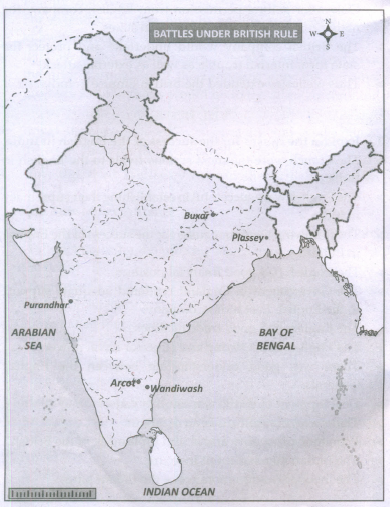
24.
1) Satara
2) Jaipur
3) Sambalpur
4) Baghat
5) Udaipur
6) Jhansi and Nagpur
25.
i) Treaty of Aix-la-chapelle stopped the war and brought the Austrian war of succession to an end.
ii) Under the terms of this treaty, madras was returned back to the english and french, in turn, got their territors in North America.

8th Standard Syllabus & Materials
8th Standard
TN 8th Tamil இயல் 3 - கல்வி கரையில - பாடறிந்து ஒழுகுதல் Important Questions And Answers Study Material - QB365 Set A
NEW8th Standard
TN 8th Tamil இயல் 3-கல்வி கரையில - பல்துறைக் கல்வி Important Questions And Answers Study Material - QB365 Set A
NEW8th Standard
TN 8th Tamil இயல் 3-கல்வி கரையில - புத்தியைத் தீட்டு Important Questions And Answers Study Material - QB365 Set A
NEW8th Standard
TN 8th Tamil இயல் 2 - ஈடில்லா இயற்கை - தமிழர் மருத்துவம் ( நேர்காணல்) Important Questions And Answers Study Material - QB365 Set A



Tamilnadu Stateboard 8th Standard Subjects
Tamilnadu Stateboard Standards



