
 100% FREE ACCESS
8th Standard Syllabus & Materials
8th Standard
TN 8th Tamil இயல் 3 - கல்வி கரையில - வினைமுற்று Important Questions And Answers Study Material - QB365 Set A
NEW8th Standard
TN 8th Tamil இயல் 2 - ஈடில்லா இயற்கை - மயங்கொலிகள் Important Questions And Answers Study Material - QB365 Set A
NEW8th Standard
TN 8th Tamil இயல் 2 - ஈடில்லா இயற்கை -பட்டமரம் Important Questions And Answers Study Material - QB365 Set A
NEW8th Standard
TN 8th Tamil இயல் 2 - ஈடில்லா இயற்கை - இயற்கையை போற்றுவோம் Important Questions And Answers Study Material - QB365 Set A
NEW8th Standard
TN 8th Tamil இயல் 1 - தமிழ் இன்பம் - ஆழிக்கு இணை Important Questions And Answers Study Material - QB365 Set A
NEW8th Standard
TN 8th Tamil இயல் 2-ஈடில்லா இயற்கை - திருக்குறள் Important Questions And Answers Study Material - QB365 Set A

Published on: 04/02/2020
8th Standard Social Science Important Questions
Download Tamil Nadu 8th Standard Social Science question papers, model tests, one-mark questions, important questions, and public exam papers in PDF format. Free study materials and answer keys for TN State Board students.
Questions + Answers key
Take MCQ Social Science Test
1.
Overtaking when approaching a bend is
permissible
not permissible
permissible with care
our wish
2.
What are the causes for the road accidents?
Over Speeding
Drunken Driving
Distraction to Drivers
All of these
3.
Who can be appointed as the chairperson of the National Human Rights Commission?
Retired judge of high court
Any retired Chief Justice of the Supreme Court.
Any person appointed by the president
Retired Chief Judge of any court.
4.
The UNO declared 1979 as the International year of _________.
Girl Child
Children
women
none
5.
After the Second World War _______ has taken several measures to protect the human rights.
UNO
Supreme Court
International Court of Justice
none
6.
Which one of the following describes India as a secular state?
Fundamental Rights
Fundamental Duty
Directive Principles of State Policy
Preamble of the Constitution
7.
The Preamble of the Constitution was amended in
1951
1976
1974
1967
8.
Tsunami in Indian Ocean took place in the year _________.
1990
2004
2005
2008
9.
The main reason for the development of urbanisation in pre-historic period was _____
Production of food grains
Domestication of cattle
Fishing
hunting
10.
People move from _______ to _______ mainly in search of better jobs
Rural to Urban
Urban to Rural
Hills to plains
Plains to hills
11.
The oldest industry in India was _________ industry.
Textile
Steel
Electrical
Fertilizers
12.
Which of the following activities of the people will not come under handy craft?
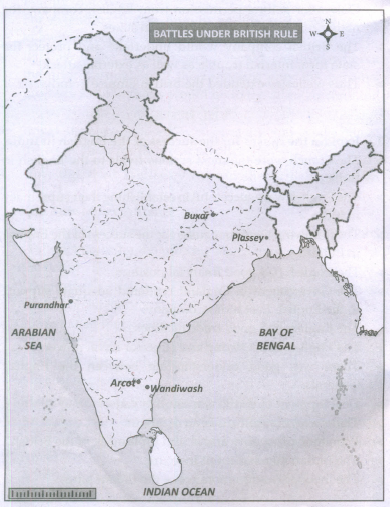
Carving statues out of stone
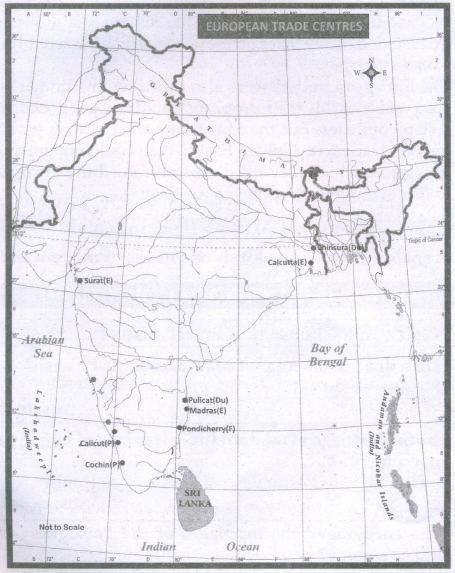
Making bangles with glass
Weaving silk sarees
Smelting of iron
13.
When did the UNESCO declare Takshashila as world heritage site?
1970
1975
1980
1985
14.
The word 'Veda' is derived from _________.
Sanskrit
Latin
Prakrit
Pali
15.
According to _________ Amendment of our constitution, a set of fundamental duties are prescribed for all citizens.
55
46
44
42
16.
Laws for the state is made by
state governor
the president
chief minister
members of assembly
17.
Some of the water remains underground and is called.
Salt water
Biological water
Swamp water
None of these
18.
Out of fresh water, about _____ is available as ground water.
0.6%
0.01%
0.04%
2.2%
19.
The treaty which was made in the year 1792.
Mysore treaty
Malakar treaty
Madras treaty
Carnatic treaty
20.
Who had acted as the agent of the Government for the collection of revenue from the cultivators.
Kings
Princes
Zamindars
Landlords
21.
This soil is not suitable for agriculture
Alluial Soil
Desert Soil
Black Soil
Laterite Soil
22.
_________ was the most important and prosperous french settlement in india
Surat
Masulipatnam
pondicherry
Mahe
23.
Who encouraged the marriages of the potuguese with indian women?
Nine de cunha
Vasco da gama
Almida
Albuqerque
24.
When did the calendar of madras records publish?
1916
1917
1949
1935
25.
Who is responsible for the collection and publication of monetary and financial information?
Finance commission
Finance Ministry
Reserve Bank of India
Auditor and Comptroller General of India
26.
Pick out the incorrect one: Investment can be made in different vehicle.
Stock
bonds
Mutual fund
Pay tax
27.
The age of retirement of the Judges of the High Court is
62
64
65
58
28.
The State Council Minsters is headed by
The Governor
Chief Minister
Speaker
Home Minister
29.
The evaporation of water from the leaves of plants is called
Transpiration
Condensation
Water vapour
Precipitation
30.
The percentage of fresh water on the earth is
71
97
2.8
0.6
31.
Earth's atmosphere contains about __________ percentage of nitrogen and oxygen.
78% and 21%
22% and 1%
21% and 0.97%
10% and 20%
32.
World soil day is observed on
15th August
12th January
15th October
5th December
33.
Velu Nachiyar was a queen of
Nagalapuram
Sivagiri
Sivagangai
Virupachi
34.
Veera Pandiya Kattabomman was hanged at
Panchalamkurichi
Sivagangai
Tiruppathur
Kayathar
35.
The Indigo revolt was led by whom?
Mahatma Gandhi
Keshab Chandra Roy
Digambar Biswas and Bishnu Biswas
Sardar Vallabhbhai Patel
36.
Which system was called by different names like Jagirdari, Malguzari and Biswedari etc.?
Mahalwari
Ryotwari
Zamindari
None of these
37.
When did Hyder Ali crown on the throne of Mysore?
1756
1761
1763
1764
38.
Which among the following treaty was signed after Battle of Buxar?
Treaty of Allahabad
Treaty of Carnatic
Treaty of Alinagar
Treaty of Paris
39.
Tranqueber on the Tamilnadu coast was a trade centre of the _______.
The Portuguese
The British
The French
The Danish
40.
Who laid the foundation of Portuguese power in India?
Vasco da Gama
Bartholomew Diaz
Alfonso de Albuquerque
Almeida
41.
Draw traffic lights signals and indicates the meaning.
42.
Name the five primary categories of Human Rights.
43.
What are the characteristic features of a secular state?
44.
List out the major flood prone areas of our country.
45.
Write a brief note on hazardous wastes.
46.
What is Urbanisation?
47.
Define “Migration”.
48.
Write about the drain theory.
49.
Expand SSA and RMSA.
50.
Mention the education centres flourished in Cholas period?
51.
Define Money.
52.
Give any three suggestions to reduce global warming.
1. ______________.
2. ______________.
3. ______________.
53.
What is the Barter System?
54.
Name the types of citizens?
55.
How is the Chief Minister appointed?
56.
Write a short note on surface run-off.
57.
Describe about the composition of soil.
58.
What was the immediate cause of the Revolt of 1857?
59.
Mention the role of Vallabhai Patel in Bardoli Satyagraha.
60.
What were the salient features of the Ryotwari system?
61.
Mention the causes for the Battle of Buxar.
62.
What were the benefits derived by the English after the Battle of Plassey?
63.
Name the important factories established by the Dutch in India.
64.
Give a short note on Archives?
65.
Tabulate tips for avoiding driver fatigue.
66.
Explain the factors contributed for road accidents.
67.
To whom does the Universal Declaration of Human Rights apply? Why is it important to you?
68.
Distinguish between Human rights and Civil rights.
69.
Why we need secular education?
70.
What are the different types of migration? Explain.
71.
How do handicraft products differ from machine made products?
72.
How does the flagship programme of SSA achieve Universal Elementary Education?
73.
Explain the recent forms of money.
74.
Explain the five ways of acquiring citizenship.
75.
Explain the election to the assembly.
76.
Explain about Infiltration and Percolation.
77.
Explain the causes for the success of the English in India
78.
Write a paragraph about Velu Nachiyar.
79.
Write the effects of low and high humidity over Human beings.
80.
Difference between M-Sand and River Sand.
81.
How did the french establish their trading centres in india?
82.
Explain the events that led to conflict between Dheeran Chinnamalai and the british.
83.
Apart from the exploiting through taxes, how did the British further exploit the land?
84.
Write a paragraph about the Moplah Rebellion?
85.
Give an account of the Fourth Anglo Mysore war.
86.
How did the Portuguese establish their trading centres in India?
87.
1. Plassy
2. Buxar
3. Purandhar
4. Arcot
5. Wandiwash
88.
On the river map of India, mark the following trading centres of the Europeans.
1) Calicut
2) Cochin
3) Madras
4) Pondicherry
5) Surat
6) Chinsura
7) Pulicat
8) Calcutta
89.
Write a paragraph about the education under the British rule?
90.
What are the different Investment vehicles?
91.
Write about Global Citizenship.
92.
What is the qualification of a judge of the high court?
93.
Write about the formation of sleet?
94.
Write a short note on condensation?
95.
Mention the places which were annexed by Dalhousie by applying the Doctrine of Lapse policy.
96.
Which were the places, the revolt of 1857 spread quickly?
97.
What are the different name of permanent settlement?
98.
What is Specific humidity?
99.
Define Petrology.
100.
write a short note on Ananda Rangam.
101.
Define ‘weather’.
102.
Earthquake and Tsunami.
1.
(c)
permissible with care
2.
(d)
All of these
3.
(d)
Retired Chief Judge of any court.
4.
(b)
Children
5.
(a)
UNO
6.
(c)
Directive Principles of State Policy
7.
(b)
1976
8.
(b)
2004
9.
(a)
Production of food grains
10.
(a)
Rural to Urban
11.
(a)
Textile
12.
(d)
Smelting of iron
13.
(c)
1980
14.
(a)
Sanskrit
15.
(d)
42
16.
(d)
members of assembly
17.
(d)
None of these
18.
(a)
0.6%
19.
(d)
Carnatic treaty
20.
(c)
Zamindars
21.
(b)
Desert Soil
22.
(c)
pondicherry
23.
(a)
Nine de cunha
24.
(b)
1917
25.
(c)
Reserve Bank of India
26.
(d)
Pay tax
27.
(a)
62
28.
(b)
Chief Minister
29.
(a)
Transpiration
30.
(c)
2.8
31.
(a)
78% and 21%
32.
(d)
5th December
33.
(c)
Sivagangai
34.
(d)
Kayathar
35.
(c)
Digambar Biswas and Bishnu Biswas
36.
(c)
Zamindari
37.
(b)
1761
38.
(a)
Treaty of Allahabad
39.
(d)
The Danish
40.
(c)
Alfonso de Albuquerque
41.
Red : Stop behind the stop line
Yellow : Stop Do not start until green shows.
Green : Go If the way is clear.
42.
i) Civil Rights
ii) Social Rights
iii) Cultural Rights
iv) Political Rights
v) Economic Rights
43.
Principle of Liberty: The state permits the practice of any religion.
Principle of Equality: The state does not give preference to any religion over another.
Principle of Neutrality: The state remains neutral in religious matter.
44.
North Northeast one : Gangetic plains covering the states of Punjab Haryana, Uttar Pradesh, North Bihar, West Bengal and Brahmaputra valley are the major flood prone areas of our country.
Other Regions : Coastal Andhra Pradesh, Odisha and Southern Gujarat
45.
The waste that may or tend to cause adverse health effects on the ecosystem and human beings are called hazardous wastes
Ex. Pesticides, waste oil, nuclear power plants.
46.
Urbanisation refers to the process in which there is an increase in the proportion of population living in towns and cities.
47.
Migration is defined as the permanent semi permanent change of residence of an individual or group of people over a significant distance.
48.
Dadabai Naoroji was the first to acknowledge that the poverty of the Indian people was due to the British exploitation of India's resources and the drain of India's wealth to Britain.
49.
SSA - The Sarva Shiksha Abhiyan
RMSA - The Rastriya Madhyamik Shiksha Abhiyan.
50.
1. Rajaraja Chaturvedimangalam was the famous seat of a Vedic college.
2. At Tirubuvanai a Vedic College flourished.
3. The Tiruvidaikkalai inscription mentions a library.
4. Tiruvaduthurai inscription of Viravajendra refers to a medical school.
51.
i) Money is defined by its functions
ii) Anything is money which is used as money.
iii) Money is what money does.
52.
(i) Reduce tropical deforestation and its associated global warming emissions. Plant more frees
(ii) Reduce waste by choosing reusable products instead of disposables. Recycle paper plastic, glass and aluminium cans.
(iii) Expand the use of renewable energy and transform our energy system to one that is cleaner and less dependent on coal and other fossil fuels
(iv) Increase vehicle fuel efficiency and support other solutions that reduce U.S oil use.
(v) Build a clean energy economy by investing in efficient energy technologies, industries and approaches.
(vi) Use energy-efficient lights, heating, ventilation, A.C. set them to energy conservation levels.
53.
i) A barter system is exchanging goods for goods without the use of money in the primitive stage.
ii) It is an old method of exchange.
iii) This system has been used for centuries and long before money was invented.
54.
i) Natural Citizens: They are the citizens by birth
ii) Naturalised citizens: They are the one who acquires citizenship.
55.
i) The Governor appoints the leader of the majority party in the State Legislative Assembly as the Chief Minister
ii) The Chief Minister is the head of the State council of Ministers.
iii) The Chief Minister remains in office as long as he gets support of the majority members of the Legislative Assembly
iv) The maximum period of his post is 5 years.
56.
i) Surface run off is the portion of rainfall, which enters the stream immediately after the rainfall.
ii) It occurs when the rainfall is longer, heavier and exceeds the rate of infiltration.
iii) In this condition the excess water makes a head over the ground surface, which tends to move from one place to another following land gradient and is known as overland flow.
iv) When the overland flow joins the streams, channels or oceans, it is termed as surface runoff or surface flow.
57.
1. The basic components of soil are mineral, organic matter, water and air.
2. It consists of about 45% mineral, 5% organic matter, 25% of water and 25% of air.
3. It is only a generalized fact.
4. The composition of soil varies from place to place and time time.
58.
1. The immediate cause was the introduction of new Enfield rifles in the army
2. The top of the cartridge of this rifle was to be removed by the mouth before loading it in the rifle.
3. The carridge were greased by fat of the pig and the cow.
4. The Indian sepoys believed that the British were deliberately attempting to spoil their religion. So the soldiers were determined to refuse their service and revolted.
59.
i) In 1928 the government increased land revence by 30 percent and the peasants of Bardoli (Gujarat) started their protect and under the leadership of Sardar Vallabhai Patel.
ii) The Peasants refused to pay tax at the enhanced rate and started no tax campaign from 12 February 1928. In this campaign, many women also participated.
60.
Revenue settlement was done directly with the ryots. Measurement of field and an estimate of produce was calculated. Government fixed the demand at 45 to 55 percent of the produce.
61.
1. Mir Jafar ascended the throne after the Battle of Plassey and failed to accept the demand of British
2. Mir Jafar the Nawab of Bengal however fell into arrears and was forced to abdicate in favour of his son in law, Mir Qasim.
3. Mir Qasim soon revolted as he was angry with the British for misusing the destakes (free duty passes).
4. However, having been defeated by the British, he fled to Awadh, where he formed a confederacy with Shuja-ud-daulah and ShahAlam.
62.
1. The company gained a huge amount of wealth from the treasury of Bengal and used it to strengthen its military force.
2. The beginning of the British political sway over India may be traced from the Battle of Plassey.
3. It was the most decisive battle that marked the initiation of British rule in India for the next two centuries.
63.
1. Pulicat
2. Surat
3. Chinsura
4. Kasim bazar
5. Patna
6. Nagapatnam
7. Balasore
8. Cochin
64.
1. Archives is the place where historical documents are preserved.
2. The National Archives of india is located in New Delhi.
3. It has main source of information for understanding past administrative machinery as well as a guide to the present and future generations related to all matters.
4. It contains authentic evidence for knowing the political, social, economic, cultural and scientific life and activities of the people of India.
65.
i) Driver should be given intermittent rest while driving long distance.
ii) When night duty is allotted, we should ensure that adequate sleep time is given for the driver.
iii) For long trips, additional spare driver should be made available.
iv) Proper refreshment, should be provided to the driver to avoid fatigue.
66.
Over Speeding : Most of the fatal accidents occur due to over speeding. Increase in speed multiplies the risk of accident and severity of injury during an accident
Drunken Driving : Consumption of alcohol reduces concentration. It hampers vision due to dizziness.
Distraction to Drivers : The Major distraction now a days is talking on mobile phones while driving. The act of talking on phone occupies a major portion of the brain's function and the smaller part handles the driving skills. Some other distractions are inattentive or lost in thought (daydreaming), adjusting mirrors while driving, stereo in vehicle, animals on road, banners and billboards, etc.
Red Light Jumping : The main motive behind red light jumping is saving time.
Avoiding Safety Gears : Use of seat belt in four wheelers and helmets for two wheelers have been brought under law. These two things reduce the severity of injury during accidents.
67.
i) The Universal Declaration of Human Rights is applicable to all including me.
ii) It is important to me because:
iii) It prevents from exploiting me from any form of torture.
iv) It gives me protection from any violation of human rights.
v) It gives me a sense of safety.
68.
| Human Rights | Civil Rights |
| Human rights belong to every one, everywhere, regardless of nationality, sexuality, gender, race, religion or age |
Civil rights are those rights that. one enjoys by virtue of citizenship in a particular nation or state. |
| Human rights are considered universal to all human beings and universal in all countries. |
Civil rights vary greatly from country to the country's or government to government. It is related to the constitution. |
| No nation may rightfully deprive human rights to an individual | Different nations can grant or deny different civil rights and liberties |
| Human rights are basic rights inferent with birth. | Civil rights are creation of the society |
69.
i) To remove narrow mindedness and make dynamic and enlightened view.
ii) To develop moral and humanistic outlook.
iii) To train the youth to be good citizen.
iv) To strengthen democratic values like liberty, equality and fraternity and co-operative living
v) To give wider vision towards life.
vi) To develop an attitude of appreciation and understanding of others point of view.
vii) To develop the spirit of love, tolerance, co-operation, equality and sympathy.
viii) To synthesise materialism and spiritualism.
70.
Types of migration based on
a) The movement associated with administrative limits.
b) The willingness of the migrants for migration
c) The duration of stay of migrants in the place of destination,
a) Based on the movement associated with administrative limits.
Internal migration
The movement of people within a country is known as Internal migration. It is classified into four categoris on the basis of the place of origin and destination of migrants.
i) Rural to Urban Migration
ii) Urban to Urban Migration
iii) Rural to Rural Migration
iv) Urban to Rural Migration
International migration
Migration that occurs across the national boundaries are known as international migration.
b) Based on the Willingness of the migrants for migration
i) Voluntary migration
ii) Involuntary or forced migration
c) Based on the duration of stay of migrants in the place of destination,
Short term migration
The migration stay outside only for a short duration before returning to the place of origin.
Long term Migration
It is a kind of migration in which the migrants stay outside at least for a few years
Seasonal Migration
Usually a group of people migrates from their native places during a particular season and returns after end of that season
71.
1. Handicraft products are manmade items. It is commonly referred to as handmade crafts.
2. In this process, skilled people create different types of items from goods and convert them into decorative pieces out of paper clay, wood rock, stone and cheap tools.
3. These are prepared solely by hands and do not involve the use of any machinery.
4. Many rural people still earn their livelihood from their creative pieces of art.
5. But some products can be made quickly by machines in which there is no need for man's effort
6. The biggest advantage of machine made is that it is faster. Machine made goods are cheaper.
72.
1. The Sarva Shiksha Abhiyan is the Government of India's flagship programme that was launched in 2000-01 to achieve Universal Elementary Education,
2. SSA is new the primary vehicle for implementing the provisions of the Right of Children to Free and Compulsory Education Act (2009)
3. Right to Education provides free and compulsory education to all the children from the age of 6 to 14 years.
4. The SSA initiates a variety of innovation and activities related to schools
5. Some important activities include providing the Mid - Day Meals and stipends for students, the setting up of School Management Committees and provision of teaching-learning materials for classrooms
73.
1. Plastic money: The latest type of money is plastic money in the form of credit cards and debit cards.
They aim for cashless transactions
2.E-Money: Electronic money is money which exists in banking computer systems and is available for transactions through electronic system.
3. Online Banking (Net banking): Online banking also known as interest banking is an electronic payment system that enables customers of a bank or other financial institutions to conduct a range of financial transactions through website.
4.E-Banking: E-Banking, also known as national electronic funds transfer (NEFT), simply the use of electronic means to transfer funds directly from one account to another rather than by cheque or cash.
74.
The citizenship act of 1955 prescribes five ways of acquiring citizenship. they are by birth, descent, registration, naturalization, and incorporation of territory.
By Birth:
i) A person born in India on or after 26th January 1950 but before 1st July 1987 is a citizen of India by birth irrespective of the nationality of the parents.
ii) A person born in India on or after 1st July 1987 is considered as a citizen of India only is either of his parents is a citizen of India at the time of his birth.
those born in India on or after 3rd December 2004 are considered citizen of India or one of whose parents is a citizen of India and the other is not a migrant at the time of their birth.
By Descent:
i) A person born outside India on or after 26th January 1950 but before 10th December 1992 is a citizen of India by descent if his father was a citizen of India at the time of his birth.
ii) From 3rd December 2004 onwards, a person born outside India shall not be a citizen of India by descent, unless his birth is registered at an Indian consulate within one year of the date of birth.
By Registration:
i) A person of India origin who is ordinarily resident in any country or place outside undivided India.
ii) A person who is married to a citizen of India and is ordinarily resident in India for seven years before making an application for registration.
By Naturalisation: The central government may on an application grant a certificate of Naturalisation to any person.
i) If he is not a citizen of any country where citizens of India are prevented from becoming subjects or citizens of that country.
ii) He has either resided in India or been in the service of a govt in India or throughout the period of twelve months.
iii) He is a good character and has adequate knowledge of a language specified in the eighth schedule to the constitution.
By Incorporation of territory:
If any foreign territory becomes a part of India, the government of India specified the person who among the people of the territory shall be the citizen of India. Such persons become the citizen of India from the notified date.
75.
i) Different political parties compete in the election to the legislative assembly.
ii) The candidate is that person who contests for the election and asks the people to vote for him.
iii) A person has to be at least 25 years old to contest for election to the legislative assembly.
iv) One person can stand for election in more than one constituency at the same time
v) Even if the person does not belong to any political party, he can contest election: such candidate is called an independent candidate.
vi) The members of legislative assembly are elected directly by the people
vii) According to the constitution, a legislative assembly cannot have more than 500 members and not less than 60 members.
viii) The members of the legislative assembly are elected for a term of five years.
ix) But the governor can dissolve the house before the expiry of its term and can call for a fresh election.
76.
Infiltration:
(i) Water entering the soil at the surface of ground is termed as infiltration.
(ii) Infiltration allows the soil temporarily to store water making it available for plants use and organisms in the soil.
(iii) Infiltration is an important process where rainwater soaks into the ground, through the soil and underlying rock layers.
(iv) Some of this water ultimately returns to the surface through springs or low spots down hills.
(v) The terms infiltration and percolation are often used interchangeably. Percolation.
(vi) It is the downward movement of infiltrated water through soil and rock layers.
(vii) Percolation moves the infiltrated water through the soil profile and rock layer, which leads to the formation of ground water or become a part of sub-surface runoff process.
(viii) Generally, the percolation process represents the flow of water from unsaturated zone to the saturated zone.
77.
1) Greater naval power
2) Development of textile
3) Scientific division of labour
4) Economic prosperity and skillful diplomacy of the british
5) Feelings of insecurity among the indian merchants
6) The inequality and ignorance of the indian kings
78.
i) Velu Nachiyar was a queen of Sivagangai she was married to Muthu Vaduganathar, the Raja of Sivagangai.
ii) As Muthu Vaduganathar was killed in Kalaiyar Koil battle by the British troops, Velu Nachiyar escaped with her daughter vellachi Nachiyar and lived under the protection of Gopala Nayaker at Virupachi near Dindigul
iii) During this period she organised on army and employed her intelligent agents to find where the British stored their communication.
iv) She recaptured Sivagangai and was again crowned as queen with the help of Marudhu brothers.
v) She was the first queen to fight against the British colonial power in India.
vi) She is known by Tamil as Veeramangai and also known as 'Jhansi Rani' of south India.
79.
Low humidity:
(1) Eyes become dry and irritated, skin gets Haky and itchy and the low humidity inflames and dries out the mucous membrane lening the respiratory tract.
(2) As a result, the risk of cold, flu, and other infections is substantially increases.
High humidity:
If you have a chronic lung condtions such as asthma, you may struggle even more with changing weather condtion.
80.
| M-Sand | River | |
| 1. | Manufactured is a factory | Naturally available on river Banks. |
| 2. | Angular and has a rougher texture | Smoother texture with better shape. |
| 3. | Angular aggregates demand more water. | Demands less water |
| 4. | Less (or) No moisture content | More moiisture content. |
| 5. | Less damage to the environment | Harmful to the environment. |
81.
1) France was the last europen country to come india as traders.
2) The french east india company was formed in 1664 by colbert, a minister of king louis XIV.
3) In 1667, a french expedition came to india under francois caron.
4) Caron founded the first french factory in india at surat.
5) In 1667, a Marcara founded secound french factory at masulipatnam by securing a patent from the sultan of golkonda.
6) In 1673, the settlement of pondicherry was founded by maetin, under a grant from the ruler of Bijapur.
7) Pondicherry became the most important and prosperous french settlement in india.
8) A fort known as st. Louis was built by francois martin in pondicherry.
9) In 1673, the french established a township at chandranagore, near calcutta.
10) The french company established factories in different parts of india, such mahe, Karaikal, Balasore and Qasim Bazar.
11) The vision of the french power in india was further reinforced by governor joseph francois in 1742.
82.
1. Dheeran Chinnamalai was a Palayakkarar of konge country who fought the British East India Company
2. The kongu country was formed a part of the Nayak Kingdom of Madurai.
3. But its had been annexed by the Wodayars of Madurai
4. After the fall of the Wodayars, these territories along with Mysore were controlled by the Sultan of Mysore
5. After the Third and fourth Mysore wars the entire kongu region passed in to the hands of the English
6. Dheeran Chinnamalai was trained by French military in modern warfare. He was along the side of Tippu Sultan to fight against British and got Victories.
7. After Tippu Sultan's death, Chinnamalaisettled down and constructed a fort.
8. He sought the help of Marathas and Maruthu Pandiyar to attack the British at coimbatore in 1800
9. British forces managed to stop the armies of the allies and hence Chinnamalai was forced to attack coimbatore on his own. His army was also defeated.
10. Chinnamalai engaged in guerrilla warfare and defeated the British in battle at Cauvery, Odantlai and Archalur
11. During the final battle, Chinnamalai was betrayed by his cook Nallapan and was hanged in Sankagiri fort in 1805.
83.
1. The poor peasants are exploited by Zamindars, Money lenders and Lawyers.
2. Indian cottage industries are destroyed by the import of British goods.
3. The old agricultural methods are wiped out due to new agricultural strategies.
4. The Zamindars exploited the labour of peaseants.
5. The lands are hijacked through money lenders by using the ignorance of people.
6. Indigo planters compelled the tenant farmers to grow indigo at terms highly disadvantageous to the farmers.
7. The tenant farmers was forced to sell it cheap to the planter.
8. Farmers expelled from the land often claim that fake reasons are failed to pay rent.
9. Hijacked the land and sale it lease.
84.
Cause:
The Muslim Moplah (or Moplah) peasants of Malabar (Kerala) was suppressed and exploited by the Hindu zamindars (Jenmis) and British government. This was the main cause of this revolt.
Malabar conference:
The Moplah peasants got momentum from the Malabar District Conference, held in April 1920. This conference supported the tenants cause, and demanded legislations for regulating landlord-tenant relations.
Rebellion:
In 1921, the Moplah tenants rebelled against the oppressive zamindars. In the initial phase of the rebellion, the Moplah peasants attacked the police stations, public offices, communications and houses of oppressive landlords and moneylenders.
Impacts:
The government ruthlessly suppressed the Moplah rebellion. As a result of government intervention, 2337 Moplah rebels were killed. 1650 were wounded and more than 45,000 captured as prisoners.
85.
Causes:
1. Tipu sought alliance with foreign powers against the English and sent ambassadors to Arabia, Turkey, Afghanistan and the French.
2. Tipu was in correspondence with Napoleon who invaded Egypt at that time.
3. The French officers came to Srirangapatnam where they founded a Jacobin Club and planted the Tree of Liberty
Course of war
1. Wellesley declared war against Tipu in 1799. The war was short and decisive. As planned the Bombay army under General Stuart invaded Mysore from the west.
2. The Madras army, which was led by the Governor-General's brother Arthur Wellesley, forced.
3. Tipu to retreat to his capital Srirangapatnam. On 4th May 1799 Srirangapatnam was captured.
4. Tipu fought bravely and was killed finally. Thus ended the fourth Mysore War and the whole of Mysore lay prostrate before the British.
Mysore after war:
1. The English occupied Kanara, Wynad, Coimbatore, Darapuram and Srirangapattinam. Krishna
2. Raja Odayar of the former Hindu royal family was brought to the throne.
3. Tipu's family was sent to the fort of Vellore.
86.
Vasco da Gama:
(i) Vasco da Gama came to India in 1501 with 20 ships and founded a trading centre at Cannanore.
(ii) Then he established factories at Calicut and Cochin
Francisco de Almeida:
(i) In 1505, Francisco de Almeida was the first Governor for the Portuguese possessions in India.
(ii) He had the aim of developing the naval power of the Portuguese in India.
(iii) He followed the policy was known as the "Blue Water Policy".
(iv) He defeated the combined Muslim fleet in a naval battle near Diu.
Alfonso de Albuquerque:
(i) The real founder of the Portuguese power in India was Alfonso de Albuquerque.
(ii) He captured Goa from the Sultan of Bijapur in November 1510.
(iii) He established the Portuguese authority over Ormuz in Persian Gulf in 1515.
Nino de Cunha:
(i) Nino de Cunha moved capital from Cochin to Goa in 1530. In 1534, he acquired Bassein from Bahadur Shah of Gujarat
(ii) In 1537, he occupied Diu. Later, they wrested Daman from the local chiefs of Gujarat.
(iii) In 1548, they occupied Salsette.
(iv) Thus during the 16th century, Portuguese succeeded in capturing Goa, Daman, Diu, Salsette, Bassein, Chaul and Bombay on the western coast.
(v) He succeeded in acquiring Hooghly on the Bengal coast and San Thome on the Madras coast.
87.
88.
89.
Histroy of Education in British rule can be divided into four periods.
I. from the early days of British rule upto 1813
II. period from 1813-1853
III. period from 1854 - 1920 and
IV period from 1921 - 1947
I. From the early days of British rule upto 1813
1. During its early days, the East India Company followed a policy of indifference and non interference towards education.
2. The Company's charter was renewed in 1813, which compelled the company to assume responsibility for the education of Indian though on a very limited scale.
3.Besides missionaries, non-missionaries like Raja Ram Mohan Roy of Bengal, Pachyappar of Madras W. Fraxer of Delhi contributed to the cause of education,
II. Period from 1813 - 1853
1. The second period was also marked by great educational controversies concerning the issues of educational policy, medium of instrution and method of spreading education.
2. These controversies were partially set at rest by Macaulay's Minutes of 1835
3. Higher Eduation was de-orientalised, encouraging English education for the upper classes.
III. Period from 1854-1920
1. The Third phase of British - influenced education may be called the period of an All India Educational policy.
2. It commenced with Charles Wood's Despatch in 1854.
3. It was the first declaration of British Education policy for educating the masses at all levels
IV. Period from 1921 - 1947
1. The fourth phase may be called the period of provincial autonomy.
2. After the second World War, a very important plan for educational development, known as the Sergeant Report (1944) was prepared.
3. This blueprint had a powerful influence on contemporary education, both in thought as well as in practice.
90.
The different Investment vehicles are
i) Stock
ii) Mutual Funds
iii) Insurance
iv) Bond
v) Commodity Futures
vi) Annuities
vii) Deposit account or any other securities or assets
91.
i) Global citizenship is an idea that everyone no matter where they live is a part of a worldwide community rather than as the citizen of a particular nation or a place
ii) All people have rights and civic responsibilities
iii) It is fundamental in enabling young people to access and participate in shaping modern society.
92.
i) He must be a citizen of India
ii) He must have at least ten years experience as head of the judicial office in the territory of India.
iii) He must have at least ten years of experience as an advocate in one or more high courts.
93.
Sometimes rain drops fall through a layer of air below OOC, the freezing point of water. As they fall, the rain drops freeze into solid particles of ice. So, the mixture of water droplets and ice particles would fall on the earth surface.
94.
(i) It refers to the process in which the gaseous form of water changes into liquid form.
(ii) Condensation generally occurs in the atmosphere when warm air rises, cools and loses its capacity to hold water vapour.
95.
1) Satara
2) Jaipur
3) Sambalpur
4) Baghat
5) Udaipur
6) Jhansi and Nagpur
96.
Lucknow, Jhansi, Khanpur, Bareily, Bihar, Faizabad and many other places in north India.
97.
i) Zamindari
ii) Jagirdari
iii) Maliguzari
iv) Biswedari
98.
(1) The ratio of the water vapour content of the mixture to the total air content on a mass basis.
(2) It is expressed in grams of vapour per kilograms of air.
99.
(1) Petrology is a branch of geology which deals with the study of rocks.
(2) Petrology is derived from the Greek word petrus refers to rock an "Losos" refer to study.
100.
i) Ananda Rangam is a name to conjure with in the annals of tamil history.
ii) He was a transalator in pondicherry to assist french trade in india.
iii) He recorded the events from 1736 to 1760 that took place in french india.
101.
1. Weather is the day today conditions of the atmosphere at any place as regards sunshine, temperature, cloud cover, Wind fog condition, air pressure, humidity, precipitation and such other elements.
2. It refers to short periods like a day, a week, a month or a little longer.
3. Weather changes from time to time in a day and one period to the other in a year.
4. The weather is cool in winter and hot in summer.
102.
| Earthquake | Tsunami |
| Earthquake is a violent tremorin the earth's crust. | Huge ocean waves caused by an earthquake, landslide or volcanic eruption. |
| It is identified on the basis of scientific inputs relating to seismicity | It is generally noticed in the coastal regions. |

8th Standard Syllabus & Materials
8th Standard
TN 8th Tamil இயல் 3 - கல்வி கரையில - பாடறிந்து ஒழுகுதல் Important Questions And Answers Study Material - QB365 Set A
NEW8th Standard
TN 8th Tamil இயல் 3-கல்வி கரையில - பல்துறைக் கல்வி Important Questions And Answers Study Material - QB365 Set A
NEW8th Standard
TN 8th Tamil இயல் 3-கல்வி கரையில - புத்தியைத் தீட்டு Important Questions And Answers Study Material - QB365 Set A
NEW8th Standard
TN 8th Tamil இயல் 2 - ஈடில்லா இயற்கை - தமிழர் மருத்துவம் ( நேர்காணல்) Important Questions And Answers Study Material - QB365 Set A



Tamilnadu Stateboard 8th Standard Subjects
Tamilnadu Stateboard Standards



