
 100% FREE ACCESS
8th Standard Syllabus & Materials
8th Standard
TN 8th Tamil இயல் 3 - கல்வி கரையில - வினைமுற்று Important Questions And Answers Study Material - QB365 Set A
NEW8th Standard
TN 8th Tamil இயல் 2 - ஈடில்லா இயற்கை - மயங்கொலிகள் Important Questions And Answers Study Material - QB365 Set A
NEW8th Standard
TN 8th Tamil இயல் 2 - ஈடில்லா இயற்கை -பட்டமரம் Important Questions And Answers Study Material - QB365 Set A
NEW8th Standard
TN 8th Tamil இயல் 2 - ஈடில்லா இயற்கை - இயற்கையை போற்றுவோம் Important Questions And Answers Study Material - QB365 Set A
NEW8th Standard
TN 8th Tamil இயல் 1 - தமிழ் இன்பம் - ஆழிக்கு இணை Important Questions And Answers Study Material - QB365 Set A
NEW8th Standard
TN 8th Tamil இயல் 2-ஈடில்லா இயற்கை - திருக்குறள் Important Questions And Answers Study Material - QB365 Set A

Published on: 19/08/2019
Download Tamil Nadu 8th Standard Social Science question papers, model tests, one-mark questions, important questions, and public exam papers in PDF format. Free study materials and answer keys for TN State Board students.
Questions + Answers key
Take MCQ Social Science Test
1.
The top layer of soil is called as
organic layer or humas
topsoil
subsoil
bedrock
2.
The Palayakkarar system was instituted in
1519
1520
1529
1530
3.
The Indigo revolt was led by whom?
Mahatma Gandhi
Keshab Chandra Roy
Digambar Biswas and Bishnu Biswas
Sardar Vallabhbhai Patel
4.
The Battle of Plassey was fought in _______.
1757
1764
1765
1775
5.
The first fort constructed by the British in India was ________.
Fort St. William
Fort St.George
Agra fort
Fort St. David
6.
______ is what money does.
7.
________ of a state enjoy full civil and political rights.
8.
There are _________ phases in the water cycle.
9.
The “skin of earth” is _________.
10.
National Archives of India (NAI) is located in ________.
11.
Black money
12.
Radar
13.
Kanpur
14.
Ryotwari System
15.
The British
16.
The sub-surface runoff is usually referred as interflow.
17.
The Punjab land alienation Act was passed in 1918.
18.
The Police system was created by Lord Cornwallis.
19.
Ananda Rangam was a translator served under British.
20.
Give any three suggestions to reduce global warming.
1. ______________.
2. ______________.
3. ______________.
21.
What is meant by Black Money?
22.
The word Money is derived from?
23.
Name the types of citizens?
24.
How is the Chief Minister appointed?
25.
Mention the causes for the Battle of Buxar.
26.
Name the important factories established by the Dutch in India.
27.
What are the disadvantages of barter system?
28.
Classify and explain the rocks.
29.
How did the Portuguese establish their trading centres in India?
30.
On the river map of India, mark the following trading centres of the Europeans.
1) Calicut
2) Cochin
3) Madras
4) Pondicherry
5) Surat
6) Chinsura
7) Pulicat
8) Calcutta
31.
Define ‘weather’.
1.
(a)
organic layer or humas
2.
(c)
1529
3.
(c)
Digambar Biswas and Bishnu Biswas
4.
(a)
1757
5.
(b)
Fort St.George
6.
()
Money
7.
()
The citizens
8.
()
Three Precipitation
9.
()
soil
10.
()
New Delhi
11.
Tax evaders
12.
Locating and Tracking Storms
13.
Nana Saheb
14.
Madras
15.
1600
16.
(a)
17.
(b)
18.
(a)
19.
(b)
20.
(i) Reduce tropical deforestation and its associated global warming emissions. Plant more frees
(ii) Reduce waste by choosing reusable products instead of disposables. Recycle paper plastic, glass and aluminium cans.
(iii) Expand the use of renewable energy and transform our energy system to one that is cleaner and less dependent on coal and other fossil fuels
(iv) Increase vehicle fuel efficiency and support other solutions that reduce U.S oil use.
(v) Build a clean energy economy by investing in efficient energy technologies, industries and approaches.
(vi) Use energy-efficient lights, heating, ventilation, A.C. set them to energy conservation levels.
21.
i) Black money is money earned through any illegal activity controlled by court regulations.
ii) The.moneywhich is not paid to the government
22.
The word money is derived from the Roman word "Moneta Juno".
23.
i) Natural Citizens: They are the citizens by birth
ii) Naturalised citizens: They are the one who acquires citizenship.
24.
i) The Governor appoints the leader of the majority party in the State Legislative Assembly as the Chief Minister
ii) The Chief Minister is the head of the State council of Ministers.
iii) The Chief Minister remains in office as long as he gets support of the majority members of the Legislative Assembly
iv) The maximum period of his post is 5 years.
25.
1. Mir Jafar ascended the throne after the Battle of Plassey and failed to accept the demand of British
2. Mir Jafar the Nawab of Bengal however fell into arrears and was forced to abdicate in favour of his son in law, Mir Qasim.
3. Mir Qasim soon revolted as he was angry with the British for misusing the destakes (free duty passes).
4. However, having been defeated by the British, he fled to Awadh, where he formed a confederacy with Shuja-ud-daulah and ShahAlam.
26.
1. Pulicat
2. Surat
3. Chinsura
4. Kasim bazar
5. Patna
6. Nagapatnam
7. Balasore
8. Cochin
27.
A barter system is an old method of exchange. This system has been used for centuries and long before money was invented. People exchanged services and goods in return.
Disadvantages:
i) Lack of double coincidence of wants.
ii) Common measure of value.
iii) Indivisibility of commodities.
iv) difficulties of storing wealth.
28.
According to the mode of formation the rocks are classified into three as follows
1. Igneous Rocks
2. Sedimentary Rocks
3. Metamorphic Rocks
Igneous Rocks:
1. The igneous rocks are formed by the solidification of molten magma.
2. These rocks are also called as the 'Primary Rocks' or 'Parent Rocks' as all other rocks are formed from these rocks.
3. Igneous rocks are of two types. They are
Extrusive Igneous Rocks.
Intrusive Igneous Rocks.
Sedimentary Rocks:
1. The sedimentary rocks are formed by the sediments derived and deposited by various agents.
2.Due to high temperature and pressure, the undistrubed sediments of long period cements to form sedimentary rocks.
3. These rocks consist of many layers which were formed by the sediments deposited at different periods. As it consists of many strata, it is also known as 'stratified rocks.
4. The three types of sedimentary rocks are
i) Organic Sedimentary Rocks
ii) Mechanical Sedimentary Rocks
iii) Chemical Sedimentary rocks
Metamorphic Rocks:
When Igneous and sedimentary rocks are subjected to high temperature and pressure, the original rocks get altered to form a new kind of rock called metamorphic rocks.
Metamorphism is of two types
1. Thermal Metamorphism
2. Dynamic Metamorphism
29.
Vasco da Gama:
(i) Vasco da Gama came to India in 1501 with 20 ships and founded a trading centre at Cannanore.
(ii) Then he established factories at Calicut and Cochin
Francisco de Almeida:
(i) In 1505, Francisco de Almeida was the first Governor for the Portuguese possessions in India.
(ii) He had the aim of developing the naval power of the Portuguese in India.
(iii) He followed the policy was known as the "Blue Water Policy".
(iv) He defeated the combined Muslim fleet in a naval battle near Diu.
Alfonso de Albuquerque:
(i) The real founder of the Portuguese power in India was Alfonso de Albuquerque.
(ii) He captured Goa from the Sultan of Bijapur in November 1510.
(iii) He established the Portuguese authority over Ormuz in Persian Gulf in 1515.
Nino de Cunha:
(i) Nino de Cunha moved capital from Cochin to Goa in 1530. In 1534, he acquired Bassein from Bahadur Shah of Gujarat
(ii) In 1537, he occupied Diu. Later, they wrested Daman from the local chiefs of Gujarat.
(iii) In 1548, they occupied Salsette.
(iv) Thus during the 16th century, Portuguese succeeded in capturing Goa, Daman, Diu, Salsette, Bassein, Chaul and Bombay on the western coast.
(v) He succeeded in acquiring Hooghly on the Bengal coast and San Thome on the Madras coast.
30.
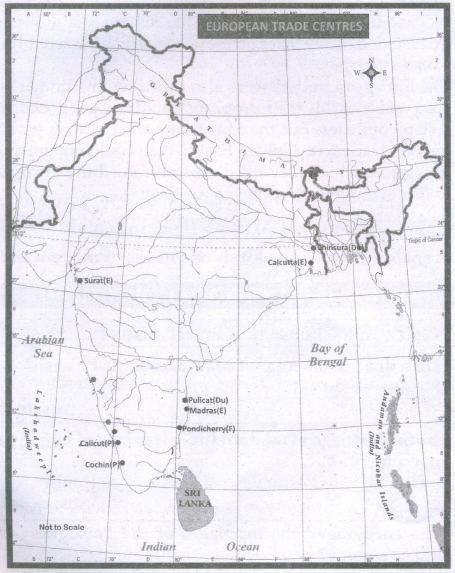
31.
1. Weather is the day today conditions of the atmosphere at any place as regards sunshine, temperature, cloud cover, Wind fog condition, air pressure, humidity, precipitation and such other elements.
2. It refers to short periods like a day, a week, a month or a little longer.
3. Weather changes from time to time in a day and one period to the other in a year.
4. The weather is cool in winter and hot in summer.

8th Standard Syllabus & Materials
8th Standard
TN 8th Tamil இயல் 3 - கல்வி கரையில - பாடறிந்து ஒழுகுதல் Important Questions And Answers Study Material - QB365 Set A
NEW8th Standard
TN 8th Tamil இயல் 3-கல்வி கரையில - பல்துறைக் கல்வி Important Questions And Answers Study Material - QB365 Set A
NEW8th Standard
TN 8th Tamil இயல் 3-கல்வி கரையில - புத்தியைத் தீட்டு Important Questions And Answers Study Material - QB365 Set A
NEW8th Standard
TN 8th Tamil இயல் 2 - ஈடில்லா இயற்கை - தமிழர் மருத்துவம் ( நேர்காணல்) Important Questions And Answers Study Material - QB365 Set A



Tamilnadu Stateboard 8th Standard Subjects
Tamilnadu Stateboard Standards



