
 100% FREE ACCESS
6th Standard CBSE Syllabus & Materials
6th Standard CBSE
CBSE 6th Social Science The Value of Work - New Sample Question Papers Study Material - QB365 Set A
NEW6th Standard CBSE
CBSE 6th Social Science Family and Community - New Sample Question Papers Study Material - QB365 Set A
NEW6th Standard CBSE
CBSE 6th Social Science India's Cultural Roots - New Sample Question Papers Study Material - QB365 Set A
NEW6th Standard CBSE
CBSE 6th Social Science India,That is Bharat - New Sample Question Papers Study Material - QB365 Set A
NEW6th Standard CBSE
CBSE 6th Social Science Timeline and sources of history - New Sample Question Papers Study Material - QB365 Set A
NEW6th Standard CBSE
CBSE 6th Social Science Oceans and Continents - New Sample Question Papers Study Material - QB365 Set A

Published on: 01/08/2018
From the chapter Building, Paintings and Books, some of the important questions are covered in this question paper.
Students, subscribe and get plenty of question paper with answer key. For subscription please click here.
Download CBSE Class 6th Standard CBSE Social Science question papers, sample papers, important questions, and previous year solved papers in PDF format. Get free study materials, NCERT solutions, and exam preparation resources for Class 6th Standard CBSE Social Science
Questions + Answers key
Take MCQ Social Science Test
1.
Discuss the two Sanskrit epics of India?
2.
Discuss the story of Tamil epic, the Silappadikaram.
3.
Discuss the small box placed at the centre of the stupa.
4.
List some steps that can be taken to make buildings and monuments accessible to differently abled people.
5.
What were manuscripts in early India made out of?
6.
_________________were written in simple Sanskrit verse,and were meant to be heard by everybody.
7.
___________________describes the story of the daughter of Kovalan and Madhavi.
8.
The king of the ________________worked out a plan to save his followers.
9.
________________is recognised as the author of the Sanskrit Ramayana
10.
_______________was a great astronomer.
11.
What is the theme of the Ramayana?
12.
What is the garbhagriha?
13.
The iron pillar at Mehrauli belonged to which dynasty?
14.
What was the shikhara?
15.
When was the iron pillar made?
16.
Answer the questions based on picture given below:
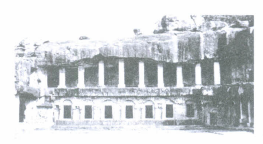
(i) Where is the Jaina monastery in the picture situated?
(ii) What were the rooms of the building used for?
17.
Discuss the salient features of the earliest Hindu temples.
18.
How were stupas and temples built?
19.
Paper was invented in China about 1700 years ago.
20.
From Baghdad, papermaking spread to Europe, Africa and Asia.
21.
Aryabhata found a way of calculating the circumference of a circle.
22.
The Mahabharata is compiled by Valmiki.
23.
The Mahabharata is included in the Bhagavad Gita.
24.
Zero is a special symbol which was invented by
India
Arabs
Japan
Europe
25.
The technique of making paper was first introduced in which of the following countries?
Korea
Japan
India
China
26.
Who was Aryabhata?
A politician
An astronomer
A teacher
A writer
27.
Who among the following persons composed Silappadikaram?
Banbhatta
Kalidasa
Ilango
None of these
28.
Iron pillar is located in which of the following cities?
New Delhi
Sarnath
Ajmer
Bulandshahar
1.
The two Sanskrit epics of the India are the Mahabharata and the Ramayana. Both the epics are familiar to us.
The Mahabharata is about a war fought between the Kauravas and Pandavas, who were cousins. The Mahabharata is supposed to have been compiled by Vyasa. The Bhagavad Gita is a part of the Mahabharata.
The Ramayana is about Rama who had to fight with Ravana to get her wife Sita back from him.
He won and returned to Ayodhya, the capital city of Kosala, after his victory. Valmiki is recognised as the author of the Sanskrit Ramayana.
2.
The famous Tamil epic, the Silappadikaram was composed by IIango around 1800 years ago. It is the story of a merchant named Kovalan, Who lived in puhar and fell in love with a courtesan named Madhavi, neglecting his wife Kannagi.
Later, he and Kannagi left Puhar and went to Madurai, where he was wrongly accused of theft by the court jeweller of the Pandya king. The king sentenced Kovalan to death.
Kannagi, who still loved him, was full of grief and anger at this injustice and destroyed the entire city of Madurai.
3.
The small box placed at the center of the stupa contained bodily remains such as teeth, bone or ashes of the Buddha or his followers, or things they used, as well as precious stones and coins.
This box is known as a relic casket. It was covered with earth. Later, a layer of mud brick was added on top.
And then, the dome like structure was sometimes kings. covered with carved stone slabs.
4.
The steps that are to be taken to make buildings and monuments accessible to differently abled people are:
(i) Construction of a ramp.
(ii) Railing can be placed on the side walls of the staircase.
(iii) The steps can be renovated so that people may not fall on the slippery ground.
(iv) Slop-way should be made for the use of wheelchairs.
(v) Separate entry with sufficient light should be made for them.
5.
The manuscripts were usually written off by hand on palm leaf or bark of a tree known as the birch in early India.
6.
()
The Puranas
7.
()
Manimekala
8.
()
monkeys
9.
()
Valmiki
10.
()
Aryabhata
11.
()
The Ramayana is about Rama, a prince of Kosala, who was sent into exile. His wife Sita was abducted by the king of Lanka, named Ravana and Rama had to fight a battle to get her back.
12.
()
Some of the earliest Hindu temples had a room where the image of the chief deity was placed, and this room was known as the garbhagriha.
13.
()
The iron pillar at Mehrauli belonged to the Gupta dynasty because there is an inscription on the pillar mentioning a ruler named Chandra who probably belonged to the Gupta dynasty.
14.
()
It was a tower built on the top of the garbhagriha to mark this out as a sacred place.
15.
()
It was made about 1500 years ago.
16.
(i)The Jaina monastery in the picture is situated In Odisha.
(ii)Jaina monks lived and meditated In these rooms.
17.
The earliest Hindu temples were built 2000-1500 years ago. Deities such as Vishnu, Shiva and Durga were worshipped in these temples.
The most important part of the temple was the room known as the garbhagriha, where image of the chief deity was placed. It was here that priests performed religious rituals and devotees offered worship to the deity.
The garbhagriha had a tower, known as the Shikhara which was built on top of the garbhagriha. It is marked as the sacred place. Building shikharas required careful planning. Most temples also had a space known as the mandapa. It was a hall where people could assemble. Some of the finest stone temples were built in Mahabalipuram and Aihole about 1400-1500 years ago.
18.
The stupas and temples were built through the following steps:
(i) Good quality stone had to be found, quarried and transported to the place that was often carefully chosen for the new buildings.
(ii) The rough blocks of stones were shaped and carved into pillars, and panels for walls, floors and ceilings.
(iii) They were often placed in precisely the right position.
(iv) Devotees brought gifts, which were used to decorate the buildings.
(v) Merchants, farmers, garland makers, perfumers, smiths and hundreds of men and women also paid for decorations and their names were inscribed on pillars, railings and walls.
19.
(b)
20.
(a)
21.
(a)
22.
(b)
23.
(b)
24.
(a)
India
25.
(d)
China
26.
(b)
An astronomer
27.
(c)
Ilango
28.
(a)
New Delhi

6th Standard CBSE Syllabus & Materials
6th Standard CBSE
CBSE 6th Social Science Locating Places on the Earth - New Sample Question Papers Study Material - QB365 Set A
NEW6th Standard CBSE
CBSE 6th Science A Journey Through States of Water - New Sample Question Papers Study Material - QB365 Set A
NEW6th Standard CBSE
CBSE 6th Science Temperature and its Measurement - New Sample Question Papers Study Material - QB365 Set A
NEW6th Standard CBSE
CBSE 6th Science Materials Around Us - New Sample Question Papers Study Material - QB365 Set A



CBSE 6th Standard CBSE Subjects
CBSE Standards




