
 100% FREE ACCESS
6th Standard CBSE Syllabus & Materials
6th Standard CBSE
CBSE 6th Social Science The Value of Work - New Sample Question Papers Study Material - QB365 Set A
NEW6th Standard CBSE
CBSE 6th Social Science Family and Community - New Sample Question Papers Study Material - QB365 Set A
NEW6th Standard CBSE
CBSE 6th Social Science India's Cultural Roots - New Sample Question Papers Study Material - QB365 Set A
NEW6th Standard CBSE
CBSE 6th Social Science India,That is Bharat - New Sample Question Papers Study Material - QB365 Set A
NEW6th Standard CBSE
CBSE 6th Social Science Timeline and sources of history - New Sample Question Papers Study Material - QB365 Set A
NEW6th Standard CBSE
CBSE 6th Social Science Oceans and Continents - New Sample Question Papers Study Material - QB365 Set A

Published on: 04/11/2019
Download CBSE Class 6th Standard CBSE Mathematics question papers, sample papers, important questions, and previous year solved papers in PDF format. Get free study materials, NCERT solutions, and exam preparation resources for Class 6th Standard CBSE Mathematics
Questions + Answers key
Take MCQ Mathematics Test
1.
An aeroplane covers a distance of 5000 km in 5 hours. How much distance will it cover in 2 hours?
1000 km
2000 km
3000 km
4000 km
2.
The weight of 50 books is 10 kg. The weight of 25 books is
5 kg
8 kg
6 kg
4 kg
3.
A car requires 5 litres of petrol to cover 80 km. How many litres of petrol are required to cover 32 km?
1
2
3
4
4.
The monthly salary of Hari Kishan is Rs. 80000. The monthly salary of Manish is Rs. 40000. How many times of the salary of Manish is the salary of Hari Kishan?
2 times
4 times
3 times
8 times.
5.
The HCF of 8 and 12 is
1
2
3
4
6.
The greatest common factor of 75, 60 and 210 is
1
3
5
15
7.
200 is divisible by
8
3
6
11
8.
10 paise =
0.1 rupee
0.01 rupee
0.001 rupee
0.0001 rupee
9.
0.625 =
\(\cfrac { 1 }{ 8 } \)
\(\cfrac { 2 }{ 8 } \)
\(\cfrac { 3 }{ 8 } \)
\(\cfrac { 5 }{ 8 } \)
10.
0.005 =
\(\cfrac { 1 }{ 2 } \)
\(\cfrac { 1 }{ 20 } \)
\(\cfrac { 1 }{ 200 } \)
\(\cfrac { 1 }{ 2000 } \)
11.
\(12+\cfrac { 2 }{ 10 } +\cfrac { 4 }{ 1000 } =\)
12.204
12.024
12.402
12.240.
12.
\(\cfrac { 2 }{ 10 } +\cfrac { 3 }{ 100 } +\cfrac { 4 }{ 1000 } \)
0.234
2.34
23.4
234.
13.
\(\cfrac { 3 }{ 5 } =\)
0.6
0.006
0.0006
0.06.
14.
Solve: r+ 5 = 5
0
1
5
-5
15.
Solve:\(\frac { 1 }{ 2 } \)+5=7
1
2
3
4
16.
Solve: m - 2 = 3
2
3
5
1
17.
The expression for '- p divided by 2' is
\(-\frac { p }{ 2 } \)
-2p
p-2
-p-2
18.
Which of the following is an expression with numbers only?
x+1
2x
1-x
3
19.
The side of a square is I. Its perimeter is
3l
2l
4l
6l.
20.
The rule, which gives the number of matchsticks required to make the matchstick pattern V, is
2n
3n
4n
5n
21.
Observe the following bar graph and answer the related questions:
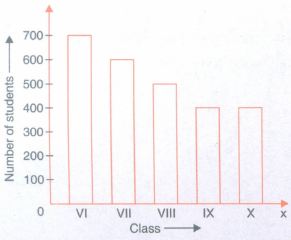
What is the difference between the maximum and the minimum number of students?
100
200
300
400
22.
Observe the following bar graph and answer the related questions:
In which class is the number of students 500?
VIII
VII
IX
X
23.
Which of the following letters has vertical line of symmetry?
R
C
B
T
24.
Observe the following table and answer the related questions:
| Blood groups | Number of students |
|---|---|
| A | 9 |
| B | 6 |
| O | 12 |
| AB | 3 |
| Total | 30 |
The ratio of the frequencies of blood groups AB and B is
1 : 2
1 : 3
2 : 3
3 : 4
25.
Observe the following table and answer the related questions:
| Blood groups | Number of students |
|---|---|
| A | 9 |
| B | 6 |
| O | 12 |
| AB | 3 |
| Total | 30 |
The difference between maximum and minimum frequency is
3
6
9
12
26.
Observe the following table and answer the related questions:
| Blood groups | Number of students |
|---|---|
| A | 9 |
| B | 6 |
| O | 12 |
| AB | 3 |
| Total | 30 |
Which blood group is the most common?
A
B
O
AB
27.
The area of the figure in (sq. unit)
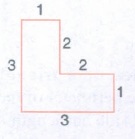 is
is
1
5
4
6
28.
The area of a square of side 1 cm is
1 cm2
4 cm2
9 cm2
16 cm2
29.
How many lines of symmetry does a regular hexagon have?
1
3
4
6
30.
How many lines of symmetry does the figure have?
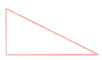
0
1
2
Countless
31.
How many lines of symmetry does the figure have?
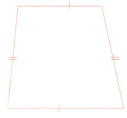
1
2
3
no line of symmetry
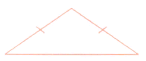
32.
How many lines of symmetry does the figure have?
1
2
3
4
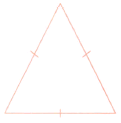
33.
How many lines of symmetry does the figure have?
1
2
3
4
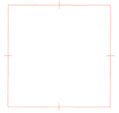
34.
How many lines of symmetry does the figure have?
1
2
3
4
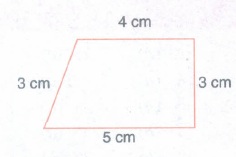
35.
The perimeter of the figure
15 cm
30 cm
7.5 cm
20 cm
36.
The perimeter of the figure
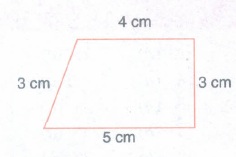
12 cm
7 cm
6 cm
24 cm
37.
An athlete takes 10 rounds of a rectangular park, 40 m long and 30 m wide. Find the total distance covered by him.
1400 m
700 m
70 m
2800 m
38.
\(?+\frac { 2 }{ 7 } =\frac { 5 }{ 7 } \)
\(\frac { 1 }{ 7 } \)
\(\frac { 2 }{ 7 } \)
\(\frac { 3 }{ 7 } \)
\(\frac { 4 }{ 7 } \)
39.
\(\frac { 8 }{ 5 } -?=\frac { 7 }{ 15 } \)
\(\frac { 1 }{ 15 } \)
\(\frac { 2 }{ 15 } \)
\(\frac { 4 }{ 15 } \)
\(\frac { 7 }{ 15 } \)
40.
Apala types 50 pages of a book containing 100 pages. Meenu typed 25 pages of the same book. Who typed more fraction of pages of the book?
Apala
Meenu
Neither (a) or (b)
cannot say
41.
(-1)-2-(-3)=
0
1
2
3
42.
(-1)+?=0
+1
-1
0
none of these.
43.
(-4)+(+3)=?
-1
1
0
+2
44.
Manish multiplied 100 by 89 instead of multiplying by 79. How much was his answer greater than the correct answer?
100
1000
10000
None of these
45.
The preceding number of the number 6 is
2
3
4
5
46.
The succeeding number of the number - 4 is
-1
-2
-3
-4
47.
1 million = how many hundred thousand?
10
100
1
None of these
48.
1 million = how many lakh?
10
100
1000
10000
49.
Which of the following numbers comes just before 1000?
999
1001
990
909
50.
The number of faces of the shape
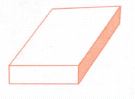
is
2
4
3
6
51.
The number of vertices of the shape
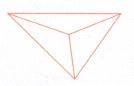
is
1
2
3
4
52.
The number of faces of the shape
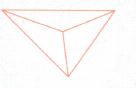
is
1
2
3
4
53.
Take two digits, 0 and 1. Make the smallest 4-digit number using both the digits equal number of times
1001
1010
1100
None of these
54.
The smallest 4-digit number that can be made using the digits 5, 3, 6, 4 without repetition is
3546
3564
3456
3465
55.
The shape
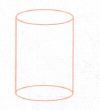
is of
cone
cylinder
cuboid
sphere
56.
How many angles are there in a quadrilateral?
1
2
3
4
57.
How many angles are there in a triangle?
1
2
3
4
58.
How many sides are there in a triangle?
1
2
3
4
59.
How many vertices are there in the following figure?
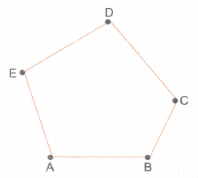
5
3
2
4
60.
Through what angle measure does the hour hand of a clock turn through, when it goes from 5 to 8?
90°
180°
360°
none of these
61.
Through what angle measure does the hour hand of a clock turn through, when it goes from 3 to 9?
90°
360°180° none of these
180°
none of these
62.
The angle measure for one-fourth revolution is
90°
360°
180°
none of these.
63.
Which of the following numbers can be shown as square?
11
12
13
16
64.
'3+ 5 = 5 + 3' The above is known as
closure property
commutativity of addition
commutativity of multiplication
none of these.
65.
1 \(\div\) 0 =
1
0
2
Not defined
66.
Find 27 \(\div\) (9 \(\div\) 3 ).
3
6
9
27.
67.
The smallest whole number is
0
1
-1
None of these
68.
The difference between the successor and the predecessor of a number is
1
2
-1
-2
69.
The difference between the predecessor of a number and the number itself is
1
-1
2
-2
70.
The natural number that has no predecessor in natural numbers is
1
10
100
1000.
71.
Mathematics textbook for Class VI has 320 pages. The chapter 'Symmetry' runs from page 261 to page 272. The ratio of the number of pages of this chapter to the total number of pages of the book is
11 : 320
3: 40
3: 80
272 : 320
72.
Draw any line segment AB. Take any point C on it. Through C, draw a perpendicular to AB, which of the following figure satisfies the above condition?
.png)
.png)
.png)
.png)
73.
Draw any line segment \(\bar{PQ}\). Take any point R not on it. Through R, draw a perpendicular to \(\bar{PQ}\). Which of the following figure satisfy the above condition?
.png)
.png)
.png)
None of these
74.
In the given figure, point B lies
.png)
interior
exterior
both (a) and (b)
None of these
75.
Which of the following angles can be drawn with the help of a compass?
20°
40°
60°
80
76.
Perpendicular bisector of a line segment
is perpendicular to it
divides it into two equal parts
Both (a) and (b) are true
None of the above
77.
Two lines are perpendicular, if they intersect each other at
acute angle
right angle
obtuse angle
None of these
78.
The instrument to draw a circle is
ruler
protractor
divider
compasses
79.
The instrument to measure an angle is a
ruler
protractor
divider
compasses
80.
\(19+\frac { 5 }{ 10 } +\frac { 7 }{ 100 } \) in decimal form is written as
19.75
19.057
19.705
19.57
81.
Which of the following decimals is the smallest?
0.37
1.52
0.087
0.105
82.
If \(\frac{3}{4}\) is equivalent to , then \(\frac{x}{24}\)the value of x is
15
20
16
18
83.
The fraction which is not equal to \(\frac{4}{5}\) is
\(\frac{40}{50}\)
\(\frac{12}{15}\)
\(\frac{16}{20}\)
\(\frac{9}{15}\)
84.
In the following figures, the figure that is not symmetric with respect to any line is


85.
If the number 7254 *98 is divisible by 22, the digit at * is
1
2
6
0
86.
Length and breadth of a rectangular sheet of paper are 20 cm and 10 cm, respectively. A rectangular piece is cut from the sheet as shown in figure. Which of the following statements is correct for the remaining sheet?

Perimeter remains same but area changes
Area remains same, but perimeter Changes
Both area and perimeter are changing
Both area and perimeter remain the same
87.
The perimeter of a rectangle, whose sides are 1m 30 cm and 70 cm, is
20 m
4 m
0.2 m
2 m 30 cm
88.
Following figures are formed by joining six unit squares. Which figure has the smallest perimeter?
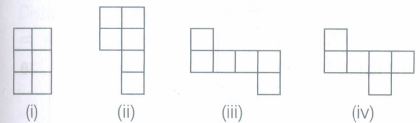
(ii)
(iii)
(iv)
(i)
89.
Which of the following represents 6\(\times\)x?
6x
\(\frac{x}{6}\)
6+x
6-x
90.
The marks obtained by 10 students in Science test are given below:
53, 36, 95, 73, 62, 42, 25, 78, 75, 62
Answer the following questions that are related to the given data.
How many students got the same marks?
3
4
2
None of these
91.
The marks obtained by 10 students in Science test are given below:
53, 36, 95, 73, 62, 42, 25, 78, 75, 62
Answer the following questions that are related to the given data.
The minimum marks obtained by any student is
42
36
25
73
92.
The marks obtained by 10 students in Science test are given below:
53, 36, 95, 73, 62, 42, 25, 78, 75, 62
Answer the following questions that are related to the given data.
The maximum marks obtained by any student is
60
95
78
25
93.
If a bicycle wheel has 48 spokes, then the angle between a pair of two consecutive spokes is
\(\left( 5\frac { 1 }{ 2 } \right) ^{ 0 }\).
\(\left( 7\frac { 1 }{ 2 } \right) ^{ 0 }\).
\(\left( \frac { 2 }{ 11 } \right) ^{ 0 }\).
\(\left( \frac { 2 }{ 15 } \right) ^{ 0 }\).
94.
The successor of the predecessor of -20 is
-20
-10
-19
-21
95.
Which of the following shows the maximum rise in temperature?
0°C to 10°C
-4°C to 8°C
-15°C to -8°C
-70C to 0°C
96.
The integer '5 units to the right of 0 on the number line' is
+ 5
-5
+4
-4
97.
Which of the following roman symbol is never repeated?
I
V
X
C
98.
In Indian system of numeration, the number 58695376 is written as
58,69,53,76
58,695,376
5,86,95,376
586,95,376
99.
The number of angles in the given figure are
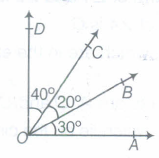
3
4
5
6
100.
Which of the following numbers is divisible by 3?
2592
5493
39583
1.
\(\frac { 5000 }{ 5 } \times 2\) = 2000
2.
\(\frac { 10 }{ 50 } \times 25\) = 5
3.
\(\frac { 5 }{ 80 } \times 32=2\)
4.
80000=2x40000
5.
(d)
4
6.
(d)
15
7.
(a)
8
8.
(a)
0.1 rupee
9.
(d)
\(\cfrac { 5 }{ 8 } \)
10.
(c)
\(\cfrac { 1 }{ 200 } \)
11.
(a)
12.204
12.
(a)
0.234
13.
(a)
0.6
14.
(a)
0
15.
(d)
4
16.
(c)
5
17.
(a)
\(-\frac { p }{ 2 } \)
18.
(d)
3
19.
(c)
4l
20.
(a)
2n
21.
(c)
300
22.
(a)
VIII
23.
(d)
T
24.
(a)
1 : 2
25.
(c)
9
26.
(c)
O
27.
Area=2x1+2x1+1x1=5
28.
Area = 1 x 1 = 1 cm2
29.
(d)
6
30.
(a)
0
31.
(d)
no line of symmetry
32.
(a)
1
33.
(c)
3
34.
(d)
4
35.
Perimeter = 4 + 3 + 5 + 3 = 15 cm
36.
Perimeter = 4 + 3 + 3 + 2 = 12 cm
37.
Total distance covered = 10 x 2 x (40 + 30) = 1400 m
38.
(c)
\(\frac { 3 }{ 7 } \)
39.
(a)
\(\frac { 1 }{ 15 } \)
40.
(a)
Apala
41.
(a)
0
42.
(a)
+1
43.
(a)
-1
44.
100 x 89 = 8900
100 x 79 = 7900
8900 - 7900 = 1000
45.
(d)
5
46.
(c)
-3
47.
(a)
10
48.
(a)
10
49.
(a)
999
50.
(d)
6
51.
(d)
4
52.
(d)
4
53.
(a)
1001
54.
(c)
3456
55.
(b)
cylinder
56.
(d)
4
57.
(c)
3
58.
(c)
3
59.
(a)
5
60.
61.
(c)
180°
62.
63.
(d)
16
64.
(b)
commutativity of addition
65.
(d)
Not defined
66.
(c)
9
67.
(a)
0
68.
(b)
2
69.
(a)
1
70.
71.
(c)
3: 80
72.
(a)
73.
(a)
74.
(a)
interior
75.
(c)
60°
76.
(c)
Both (a) and (b) are true
77.
(b)
right angle
78.
(d)
compasses
79.
(b)
protractor
80.
(d)
19.57
81.
(c)
0.087
82.
(d)
18
83.
(d)
\(\frac{9}{15}\)
84.
(b)
85.
(c)
6
86.
(a)
Perimeter remains same but area changes
87.
(b)
4 m
88.
(d)
(i)
89.
(a)
6x
90.
(c)
2
91.
(c)
25
92.
(b)
95
93.
(b)
\(\left( 7\frac { 1 }{ 2 } \right) ^{ 0 }\).
94.
Given, integer is -20
Precedessor of -20 = -20 - 1 = -21
Successor of -21 = -21 + 1 = -20
95.
0°C to 10°C = +10° C -4° C to 8° C = +12°C (max.)
-15°C to -8°C = +7°C -7°C to 0°C = +7°C
96.
5 units to the right of 0 is +5.

97.
(b)
V
98.
(b)
58,695,376
99.
(d)
6
100.
(a)
2592

6th Standard CBSE Syllabus & Materials
6th Standard CBSE
CBSE 6th Social Science Locating Places on the Earth - New Sample Question Papers Study Material - QB365 Set A
NEW6th Standard CBSE
CBSE 6th Science A Journey Through States of Water - New Sample Question Papers Study Material - QB365 Set A
NEW6th Standard CBSE
CBSE 6th Science Temperature and its Measurement - New Sample Question Papers Study Material - QB365 Set A
NEW6th Standard CBSE
CBSE 6th Science Materials Around Us - New Sample Question Papers Study Material - QB365 Set A



CBSE 6th Standard CBSE Subjects
CBSE Standards




