
 100% FREE ACCESS
6th Standard CBSE Syllabus & Materials
6th Standard CBSE
CBSE 6th Social Science The Value of Work - New Sample Question Papers Study Material - QB365 Set A
NEW6th Standard CBSE
CBSE 6th Social Science Family and Community - New Sample Question Papers Study Material - QB365 Set A
NEW6th Standard CBSE
CBSE 6th Social Science India's Cultural Roots - New Sample Question Papers Study Material - QB365 Set A
NEW6th Standard CBSE
CBSE 6th Social Science India,That is Bharat - New Sample Question Papers Study Material - QB365 Set A
NEW6th Standard CBSE
CBSE 6th Social Science Timeline and sources of history - New Sample Question Papers Study Material - QB365 Set A
NEW6th Standard CBSE
CBSE 6th Social Science Oceans and Continents - New Sample Question Papers Study Material - QB365 Set A

Published on: 04/11/2019
Download CBSE Class 6th Standard CBSE Science question papers, sample papers, important questions, and previous year solved papers in PDF format. Get free study materials, NCERT solutions, and exam preparation resources for Class 6th Standard CBSE Science
Questions + Answers key
Take MCQ Science Test
1.
Separation of kerosene oil and water is done by
Decantation
Filtration
Condensation
Crystallisation
2.
A saturated solution can dissolve more of a substance on
Cooling
Heating
Condensing
Evaporating
3.
Corn is separated from husk by the process of
Sieving
Winnowing
Churning
Handpicking
4.
Separating the insoluble suspended solids of various sizes from a liquid is called
Filtration
Crystallization
Evaporation
Condensation
5.
The process of increasing the rate of sedimentation in a suspension by adding some chemical is
Filtration
Crystallisation
Loading
Condensation
6.
The place where living beings live is called their ______________
Adaptation
Habitat
Habit
Movement
7.
Shadows are
Always smaller than the opaque body
Always bigger than the opaque body
Remains the same size as opaque body
Can be smaller or bigger than the opaque body.
8.
Luminous objects are objects
Which get their light from other objects
Which emit their own light
Which do not emit any light
Which absorb light
9.
The shadow is the dark outline of
An Object
A Source of light
A Screen
An Image
10.
A dark patch formed by an opaque body placed in the path of light is called
Image
Object
Shadow
Screen
11.
This takes place from smooth polished surface when a beam of light falls on it
Reflection
Absorption
Refraction
Radiation
12.
The other name for ovary is_______
Stamen
Pistil
Carpel
Stigma
13.
The plants which have branches at the base are______________
Herbs
Shrubs
Creepers
Trees
14.
___________is a device used by pilots and navigators used to find the direction.
barometer
thermometer
magnetic compass
none
15.
The North end of the freely suspended magnet points towards__________?
Geographical North
Geographical South
Geographical East
Geographical West
16.
__________is an insulator.
Metal
acid
Rubber
Salt solution
17.
A material which allows the electricity to pass through it is ________.
conductor
Insulator
Transistor
None of these
18.
An electric bulb has ____________terminals.
3
4
1
2
19.
Vitamins and minerals are
protective food
body building food
energy giving food
none of these
20.
_______helps to maintain a constant body temperature in our body.
water
roughage
vitamins
energy giving food
21.
The bones of the skull are interlocked with each other by their senated margins called________.
Synovial membrane
cartilages
sutures
tendons
22.
The joints between the gum and teeth are_______
Fixed joints
synovial joints
cartilaginous joints
perfect joints
23.
The number of bones in the neck of a giraffe is____________.
70
50
7
10
24.
There are more than _________ muscles in our body.
350
300
360
325
25.
A Skeletal System consists of__________.
Bones and muscles
muscles and nerves
bones and nerves
Bones and cartilages
26.
At birth our body is made up of ----------- bones.
206
305
200
300
27.
In the cactus plant, food is prepared by which of the following?
Stem
Leaf
Root
Both (a) and (b)
28.
Magnets are used in
refrigerator doors
credit cards
door bells
All of these
29.
Which of the following is a confirmatory evidence of a pure magnet?
Attraction
Repulsion
None of these
Both of these
30.
For making a magnet, we shall rub a magnet on an iron piece in
One direction
Both directions
Random manner
None of these
31.
This is the only natural fibre obtained from an insect:
Nylon
Silk
Wool
Jute
32.
Coir fabric is obtained from:
Coconut plant
Cotton
Sheep hairs
Cocoon of silkworm
33.
Cotton bolls are which part of the plant?
Flower
Fruit
Stem
Root
34.
A synthetic fibre is:
Cotton
Rayon
Wool
Fur
35.
The space between particles is maximum in
Solids
Liquids
Gases
Both solids and liquids
36.
Which of the following materials is not soluble in water?
Salt
Sand
Sugar
Honey
37.
Which of the following materials is hard?
Butter
Pastry
Iron nail
Sponge
38.
Select a transparent substance:
Metal
Polished wood
Mirror
Glass
39.
A garbage collector separated items mentioned below in the garbage into red, green and blue containers for their transfer to landfill, composting pit, and recycling unit respectively.
Items:
(i) Plastic bags
(ii) Newspapers and journals
(ill)Screw and nuts
(iv)Vegetable peels
(v) Metal chips
(vi) Eggshells
Which items were transferred to which bin?
| RED | GREEN | BLUE |
| (i) and (iv) | (ii) and (iii) | (v) and (vi) |
| RED | GREEN | BLUE |
| (i) and (iii) | (ii) and (iv) | (iv)and (vi) |
| RED | GREEN | BLUE |
| (i), (iii)and (v) | (iv) and (vi) | (ii) only |
| RED | GREEN | BLUE |
| (i) and (v) | (ii) and (iv) | (iii)only |
40.
The method of preparing compost with the help of earthworms is called:
composting
vermicomposting
manuring
decomposing
41.
Which of the following is a non-biodegradable waste?
Broken glass
Plastic container
Wrapper of tea, coffee
All of these
42.
The bones at joints are held together by:
Cartilage
Ligaments
Muscles
Tendons
43.
A material which does not allow the electricity to pass through it is known as__________
Conductor
Electric cell
Insulator
None of these
44.
Which gas in the atmosphere is essential for respiration
Carbon dioxide
Oxygen
Argon
Nitrogen
45.
Oxygen and carbon dioxide are replaced in nature through:
Photosynthesis
Respiration
Both (a) and (b)
None of these
46.
Which of these is not true for combustion?
Oxygen is formed
CO2 is formed
Oxygen is used up
Nitrogen does not change
47.
When a candle is lighted, which one of the following changes is not reversible?
Melting of solid wax
Wax vapour burns into flame
Liquid wax changes into vapours
All of the above
48.
What kind of change occurs in the eruption of a volcano
Physical change
Sudden change
Irreversible chang
All of these
49.
Rolling of chapati and baking of chapati are the changes that:
Can be reversed
Can not be reversed
Can be reversed and can not be reversed respectively
Can not be reversed and can be reversed respectively.
50.
Salt can be separated from its solution (salt dissolved in water), because:
Mixing of salt in water is a change that can be reversed by heating and melting of salt
Mixing of salt in water is a change that can not be reversed
Mixing of salt in water is a permanent change
Mixing of salt in water is a change that can be reversed by evaporation
51.
Which of the following changes can not be reversed?
Hardening of cement
Freezing of ice cream
Opening a door
Melting of chocolate
52.
Which one of the following food item does not provide dietary fibre?
Whole grains
Whole pulses
Fruits and vegetables
Milk
53.
About 97% of the water on the earth is
salt water
pure water
polluted water
drinking water
54.
Which of the following is a climber?
Potato
Grape
Both of these
None of these
55.
Flood means:
Excess of water
Scarcity of water
Food and milk
Spilling of milk
56.
Evaporation of water from the soil surface is due to heat from
Sun
Earth
Moon
Fire
57.
Objects that emit or give out their own light are called:
Non-luminous objects
Opaque objects
Luminous objects
Translucent objects
58.
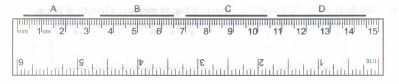
Four pieces of wooden sticks A, B, C and D are placed along the length of 30 cm long scale as shown in Fig. Which one of them is 3.4 cm in length.
A
B
C
D
59.
A means of transport along water routes is :
Boat
Train
Bicycle
Bus
60.
Which of the following is not a combination of two motions?
Movement of bicycle
Movement of a player on ground
Motion of a ball on ground
Rotation of earth.
61.
One decametre is equal to
10cm
10mm
10m
10km
62.
Both seeds and leaves of this plant are edible. Which plant is this?
Potato
Cabbage
Radish
Mustard
63.
Which part/parts of the banana plant is/are edible?
Fruit
Fruit and stem
Fruit and leaves
Fruit, stem and leaves
64.
Which of the following living organisms uses sunlight to make its food?
Cat
Frog
Snake
Coconut tree
65.
Which among the following is an autotroph?
Green plant
Lion
Cow
Mushroom
66.
Some materials present in waste can rot. This rotting is carried out by
microbes
insects
ants
Amoeba
67.
Out of these, which one is a non-biodegradable waste?
Paper
Faecal matter
Aluminium foil
Cotton
68.
A freely suspended magnet always points in the
upside down
East-West direction
North-South direction
Any direction by chance
69.
Which among the following in the given options is an example of a magnetic substance?
Cobalt
Nickel
Iron
All of these
70.
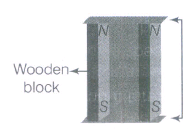
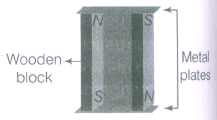
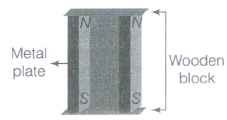
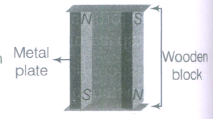
The arrangement to store two magnets is shown by figures (a), (b), (c) and (d) in figure. Which one of them is the correct arrangement?
71.
Our body is
a bad conductor of electricity
sometimes a good conductor and sometimes a bad conductor
a good conductor of electricity
None of the above
72.
Wind does not help in the movement of which of the following?
Firki
Weather cock
ceiling fan
Sailing yacht
73.
Mountaineers carry oxygen cylinders with them because
there is no oxygen on high mountains
there is deficiency of oxygen on mountains at higher altitude
oxygen is used for cooking
oxygen keeps them warm at low temperature
74.
Which of the following components of air is present in the largest amount in the atmosphere?
Nitrogen
Oxygen
Water vapour
Carbon dioxide
75.
Usha took a lump of dry soil in a glass and added water to it till it was completely immersed. She observed bubbles coming out. The bubbles cointain
water vapour
only oxygen gas
air
None of these
76.
Nitrogen is needed by the plants to make
fats
carbohydrates
proteins
minerals
77.
Which of the following constitute the biotic components of the environment?
Plants and animals
Soil and minerals
Air and water
Sunlight and temperature
78.
Following are some features of plants.
(I) They lose a lot of water through transpiration.
(ii) Their leaves are always broad and flat.
(iii) They lose very little water through transpiration.
(iv) Their roots grow very deep into the soil.
Which of the combination of given features are typical of desert plants?
(i) and (ii)
(ii) and (iv)
(ii) and (iii)
(iii) and (iv)
79.
Choose the incorrect pair.
Cactus - desert
Germs - air
Water lily - sea
Frog - pond
80.
Two students while sitting across a table looked down onto its top surface. They noticed that they could see their own and each other's image. The table top is likely to be made of
unpolished wood
red stone
glass sheet
wood top covered with cloth
81.
Which one of the following is the characteristics of birds?
Strong muscles
Light bones
Hollow bones
All of these
82.
Potable water is
ocean water
groundwater at selected places
river water
ponds water
83.
Transpiration is a process in which plants
receive water from soil
absorb water vapour from air
prepare food from water
release water in the form of water vapour
84.
You are provided three scales A, B and C as shown in figure to measure a length of 10 cm.
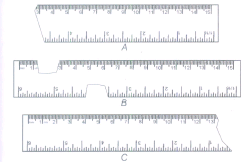
For the correct measurement of the length, you will use the scale
only A
only B
only C
Any of the three scales
85.
Which of the following statements is not true?
Materials are grouped for convenience
Materials are grouped to study their properties
Materials are grouped for fun
Materials are grouped according to their uses
86.
Which pair of substances among the following would float in a tumbler half-filled with water?
Cotton thread, thermocol
Feather, plastic ball
Pin, oil drops
Rubber band, coin
87.
While doing an activity in class, the teacher asked Paheli to handover a translucent material. Which among the following materials will Paheli pick and give her teacher?
Glass tumbler
Mirror
Muslin cloth
Aluminium foil
88.
An iron nail is kept in each of the following liquids. In which case would it lose its shine and appear dull?
Mustard oil
Soft drink
Coconut oil
Kerosene
89.
Which of the following is not the primary function of stem?
Conduction of water
Photosynthesis
Formation of branches
Bears flowers and fruits
90.
The buds at the tip of the stem or its branches are called
axillary buds
nodal buds
apical buds
growing buds
91.
Which part of the jute plant is used for getting jute fibre?
Flower
Stem
Fruit
Leaf
92.
While lighting a candle, Paheli observed the following changes.
(i) Wax was melting.
(ii) Candle was burning.
(iii) Size of the candle was reducing.
(iv) Melted wax was getting solidified.
Of the above, the changes that can be reversed are
(i) and (ii)
(ii) and (iii)
(iii) and (iv)
(i) and (iv)
93.
Which of the following changes cannot be reversed?
Hardening of cement
Freezing of ice cream
Opening a door
Melting of chocolate
94.
Pick the change that can be reversed from the following.
Cutting of trees
Melting of ghee
Burning of candle
Blooming of flower
95.
Minerals and vitamins present in food are
protective
energy giving
body building
roughage
96.
Which one of the following food items does not provide dietary fibre?
Whole grains
Whole pulses
Fruits and vegetables
Milk
97.
Given below is a list of edible plants
(i) Banana
(ii) Pumpkin
(iii) Lady's finger
(iv) Brinjal
Which pair of plants has two or more edible parts?
(i) and (ii)
(ii) and (iii)
(iii) and (iv)
(i) and (iv)
98.
The part of a banana plant not used as food is
flower
fruit
stem
root
99.
From the given options, choose a food obtained from animals.
Sugar
Honey
Jaggery
Jam
100.
Given below are the names of some animals.
(i) Goat
(ii) Human beings
(iii) Cockroach
(iv) Eagle
Which of the above animals form a pair of omnivores?
(i) and (ii)
(ii) and (iii)
(iii) and (iv)
(ii) and (iv)
1.
(a)
Decantation
2.
(b)
Heating
3.
(b)
Winnowing
4.
(a)
Filtration
5.
(c)
Loading
6.
(b)
Habitat
7.
(d)
Can be smaller or bigger than the opaque body.
8.
(b)
Which emit their own light
9.
(a)
An Object
10.
(c)
Shadow
11.
(a)
Reflection
12.
(c)
Carpel
13.
(b)
Shrubs
14.
(c)
magnetic compass
15.
(a)
Geographical North
16.
(c)
Rubber
17.
(a)
conductor
18.
(d)
2
19.
(a)
protective food
20.
(a)
water
21.
(c)
sutures
22.
(a)
Fixed joints
23.
(c)
7
24.
(a)
350
25.
(d)
Bones and cartilages
26.
(d)
300
27.
(a)
Stem
28.
(d)
All of these
29.
(b)
Repulsion
30.
(a)
One direction
31.
(b)
Silk
32.
(a)
Coconut plant
33.
(b)
Fruit
34.
(b)
Rayon
35.
(c)
Gases
36.
(b)
Sand
37.
(c)
Iron nail
38.
(d)
Glass
39.
(c)
| RED | GREEN | BLUE |
| (i), (iii)and (v) | (iv) and (vi) | (ii) only |
40.
(b)
vermicomposting
41.
(d)
All of these
42.
43.
(c)
Insulator
44.
(b)
Oxygen
45.
(c)
Both (a) and (b)
46.
(a)
Oxygen is formed
47.
(b)
Wax vapour burns into flame
48.
(d)
All of these
49.
(c)
Can be reversed and can not be reversed respectively
50.
(d)
Mixing of salt in water is a change that can be reversed by evaporation
51.
52.
(d)
Milk
53.
(a)
salt water
54.
55.
(a)
Excess of water
56.
(a)
Sun
57.
(c)
Luminous objects
58.
(c)
C
59.
(a)
Boat
60.
(b)
Movement of a player on ground
61.
(c)
10m
62.
(d)
Mustard
63.
(d)
Fruit, stem and leaves
64.
(d)
Coconut tree
65.
(a)
Green plant
66.
(a)
microbes
67.
(c)
Aluminium foil
68.
(c)
North-South direction
69.
(d)
All of these
70.
(b)
71.
(c)
a good conductor of electricity
72.
(c)
ceiling fan
73.
(b)
there is deficiency of oxygen on mountains at higher altitude
74.
(a)
Nitrogen
75.
(c)
air
76.
(c)
proteins
77.
(a)
Plants and animals
78.
(d)
(iii) and (iv)
79.
(c)
Water lily - sea
80.
(c)
glass sheet
81.
(d)
All of these
82.
(b)
groundwater at selected places
83.
(d)
release water in the form of water vapour
84.
(d)
Any of the three scales
85.
(c)
Materials are grouped for fun
86.
(b)
Feather, plastic ball
87.
(c)
Muslin cloth
88.
(b)
Soft drink
89.
(b)
Photosynthesis
90.
(c)
apical buds
91.
(b)
Stem
92.
(d)
(i) and (iv)
93.
(a)
Hardening of cement
94.
(b)
Melting of ghee
95.
(a)
protective
96.
(d)
Milk
97.
(a)
(i) and (ii)
98.
(d)
root
99.
(b)
Honey
100.
(b)
(ii) and (iii)

6th Standard CBSE Syllabus & Materials
6th Standard CBSE
CBSE 6th Social Science Locating Places on the Earth - New Sample Question Papers Study Material - QB365 Set A
NEW6th Standard CBSE
CBSE 6th Science A Journey Through States of Water - New Sample Question Papers Study Material - QB365 Set A
NEW6th Standard CBSE
CBSE 6th Science Temperature and its Measurement - New Sample Question Papers Study Material - QB365 Set A
NEW6th Standard CBSE
CBSE 6th Science Materials Around Us - New Sample Question Papers Study Material - QB365 Set A



CBSE 6th Standard CBSE Subjects
CBSE Standards




