
 100% FREE ACCESS
6th Standard CBSE Syllabus & Materials
6th Standard CBSE
CBSE 6th Social Science The Value of Work - New Sample Question Papers Study Material - QB365 Set A
NEW6th Standard CBSE
CBSE 6th Social Science Family and Community - New Sample Question Papers Study Material - QB365 Set A
NEW6th Standard CBSE
CBSE 6th Social Science India's Cultural Roots - New Sample Question Papers Study Material - QB365 Set A
NEW6th Standard CBSE
CBSE 6th Social Science India,That is Bharat - New Sample Question Papers Study Material - QB365 Set A
NEW6th Standard CBSE
CBSE 6th Social Science Timeline and sources of history - New Sample Question Papers Study Material - QB365 Set A
NEW6th Standard CBSE
CBSE 6th Social Science Oceans and Continents - New Sample Question Papers Study Material - QB365 Set A

Published on: 31/10/2019
Download CBSE Class 6th Standard CBSE Social Science question papers, sample papers, important questions, and previous year solved papers in PDF format. Get free study materials, NCERT solutions, and exam preparation resources for Class 6th Standard CBSE Social Science
Questions + Answers key
Take MCQ Social Science Test
1.
Compare the livelihood challenges faced by rural and urban women.
2.
Distinguish between Eastern Coastal Plains and Western Coastal Plains.
3.
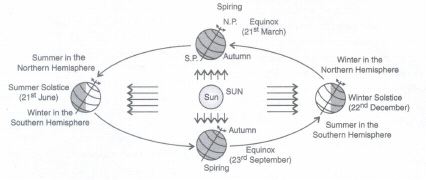
Diagrammatically show Equinox, Summer and Winter Solstices.
4.
What is the importance of public opinion? Name the agencies which are helpful in the formation of public opinion.
5.
Why is the city of Arikamedu historically important?
6.
Who are Jains? State some features of their lives.
7.
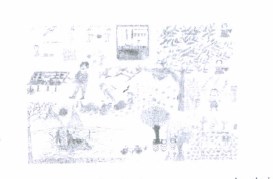
(i) Describe the works that you see people doing in the above picture.
(ii) Identify the different types of work that are related to farming and those that are not. List these in a table.
(iii) In your notebook draw some pictures of work that you have seen people do in rural areas and write a few sentences that describe the work.
8.
See the picture and answer the following questions.
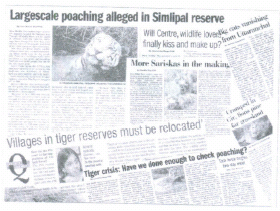
(i) Why do poachers kill tigers? What will happen if tigers vanish from our forests? Have you ever visited any tiger reserve or a zoo where tigers are kept?
9.
The rotation of the Earth is responsible for causing day and night. Explain with the proper example?
10.
Why were the earlier cities mostly developed over the banks of river?
1.
Challenges faced by rural women:
(i) Poor resource base and resource quality (small or no agricultural land and water).
(ii) Illiteracy and lack of skill.
(iii) Lack of awareness on different government schemes and programmes.
(iv) Lack of knowledge of disasters.
Challenges faced by urban women:
(i) Lack of employment and irregular jobs.
(ii) Lack of job security and low wages.
(iii)Lack of sufficient and timely credit support system for petty trades.
(iv) Fear of eviction by police and civic bodies.
(v) Congested and hazardous working conditions
2.
| S.No. | Eastern Coastal Plains | Western Coastal Plains |
| (i) | They are broad | They are narrow |
| (ii) | They are directed by a number of rivers | They have two main rivers. |
| (iii) | The rivers form deltas | The rivers form estuaries |
| (iv) | They lie between the Bay of Bengal and Eastern Ghats | They lie between the Arabian Sea and Western Ghats |
3.
4.
(i) Public opinion contributes a lot to the development of social life. It does not allow the government to be absolute.
(ii) The views, interests and aspirations of the people constitute the core of a democratic system.
(iii) Public opinion ensures democratic communications.
(iv) The following agencies are helpful in the formation of public opinion press, radio, television, cinema, political parties and elections.
(v) Mass media plays a crucial role in reflecting public opinion.
(vi) Freedom of expression can be exerted by all classes of people, whether rich or poor through these agencies.
5.
(i) Between 2200 and 1900 years ago, Arikamedu was a coastal settlement where ships unloaded goods from distant lands.
(ii) A massive brick structure, which may have been a warehouse was found at the site.
(iii) Other findings include pottery from the Mediterranean region, such as amphorae (tall double-handled jars that contained liquids such as wine or oil) and stamped red-glazed pottery, known as Arretine Ware which was named after a city in Italy.
(iv) Roman lamps, glassware and gems have also been found at the site.
(v) Small tanks have been found that were probably dyeing vats, used to dye cloth.
6.
The followers of Mahavira are known as Jains.
Some of the features of the Jains are :
(i) They had to lead very simple lives, begging for food.
(ii) They have to be absolutely honest and are especially asked not to steal.
(iii) They have to observe celibacy.
(iv) Men had to give up everything, including their clothes.
7.
(i)The works that people are doing:
(a) Hawker
(b) Fishing
(c) Labourers carrying goods
(d) Labourers working in the fields
(e) Plucking fruits and vegetables
(f) Shopkeeper
Works related to farming are:
(a) Labourers working in the fields
(b) Plucking fruits and vegetables
Works not related to farming are:
(a) Hawker
(b) Fishing
(c) Labourers carrying goods
(d) Mansions
(e) Shopkeeper
8.
Poachers kill tigers for their fur, bones, whiskers and other body parts. All species big or small have to play their role in maintaining the ecosystem. If tigers will vanish from our forests, this will disturb the whole ecosystem. Yes, I have visited Gir forest in Gujarat.
9.
The Earth rotates from West to East on its axis. The Earth takes about 24 hours to complete one rotation around its axis. The period of rotation is known as the earthday. The spherical shape of the Earth allows only one half of the Earth to receive sunlight at a time.
The portion facing the sun experiences day, while the other half away from the sun experiences night. It is because of the rotation of the Earth that allows day and night following each other regularly.
10.
It is evident from the past that the earlier cities were mostly developed over the banks of river because of the following reasons:
(i) Thousand years ago, people lived along the banks of the Narmada river.
(ii) About 4700 years ago, some of the earliest cities flourished on the banks of river Indus and its tributaries.
(iii) Along the banks of the rivers, the necessary conditions for the living of human beings exist.
(iv) The necessities of living such as water, forest are easily available which fulfil the basic needs of the people.
(v) At that time, waterways were the most important means of transportation and communication.

6th Standard CBSE Syllabus & Materials
6th Standard CBSE
CBSE 6th Social Science Locating Places on the Earth - New Sample Question Papers Study Material - QB365 Set A
NEW6th Standard CBSE
CBSE 6th Science A Journey Through States of Water - New Sample Question Papers Study Material - QB365 Set A
NEW6th Standard CBSE
CBSE 6th Science Temperature and its Measurement - New Sample Question Papers Study Material - QB365 Set A
NEW6th Standard CBSE
CBSE 6th Science Materials Around Us - New Sample Question Papers Study Material - QB365 Set A



CBSE 6th Standard CBSE Subjects
CBSE Standards




