
 100% FREE ACCESS
6th Standard CBSE Syllabus & Materials
6th Standard CBSE
CBSE 6th Social Science The Value of Work - New Sample Question Papers Study Material - QB365 Set A
NEW6th Standard CBSE
CBSE 6th Social Science Family and Community - New Sample Question Papers Study Material - QB365 Set A
NEW6th Standard CBSE
CBSE 6th Social Science India's Cultural Roots - New Sample Question Papers Study Material - QB365 Set A
NEW6th Standard CBSE
CBSE 6th Social Science India,That is Bharat - New Sample Question Papers Study Material - QB365 Set A
NEW6th Standard CBSE
CBSE 6th Social Science Timeline and sources of history - New Sample Question Papers Study Material - QB365 Set A
NEW6th Standard CBSE
CBSE 6th Social Science Oceans and Continents - New Sample Question Papers Study Material - QB365 Set A

Published on: 10/09/2019
Maps
Download CBSE Class 6th Standard CBSE Social Science question papers, sample papers, important questions, and previous year solved papers in PDF format. Get free study materials, NCERT solutions, and exam preparation resources for Class 6th Standard CBSE Social Science
Questions + Answers key
Take MCQ Social Science Test
1.
Following colours are used to show what purpose, Blue, Brown, Yellow
2.
What do you mean by intermediate directions and cardinal points?
3.
Compass is helpful in finding out main directions Explain.
4.
Which map provides detailed information?
5.
Distinguish between a map and a plan.
6.
'PS' is a symbol of
post office
post and telegraph office
police station
None of these
7.
Green colour is used for showing
mountains
rivers
plants
plains
8.
Scale is compulsory for
globe
a map
a sketch
a symbol
9.
What does 'N' with arrow show?
Direction of North
Direction of South
Direction of East
Direction of West
10.
Maps showing distribution of forests are
physical maps
thematic maps
political maps
11.
What is the North line?
12.
What is an atlas?
13.
What are the general colours used in making maps?
14.
What is a physical map?
15.
Name the types of map?
16.
In the following diagram, which arrow indicates the East North direction.
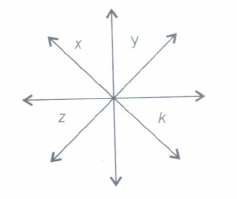
17.
Differentiate between sketch and plan.
18.
Define maps and its various types?
19.
The collection of maps is called Atlas.
20.
Political maps show natural feature of the earth.
21.
Large scale maps give more information than small scale map.
22.
There are five intermediate directions.
23.
A globe is used to study earth as a whole.
24.
A __________ is use to show large areas like continents and oceans.
25.
Maps are more informative than ____________.
26.
In a sketch map __________ is not needed.
27.
NE stands for ___________.
28.
The symbol for police station is ____________.
1.
The colours are used to indicate various geographical features:
(i) Blue For showing water bodies.
(ii) Brown For showing mountains.
(iii) Yellow For showing plateau.
2.
Intermediate directions North-East (NE), South-East (SE), South-West (SW) and North-West (NW) directions are called intermediate directions.
Cardinal directions The four major directions are called cardinal points, which are North, South, East and West.
3.
Compass is an instrument that is used to find out main directions. The magnetic needle of the compass always points towards North-South direction and after knowing North, other directions can be identified easily.
4.
Thematic map provides detailed information.
5.
| Map | Plan |
|---|---|
| Map is drawing of a particular area | A plan is a drawing of a small area on a large scale. |
| Map is drawn on a small scale generally. | A plan is drawn on a large scale. |
| Maps contain Important geographical information. | A plan contains detailed information of small area or location. |
6.
(c)
police station
7.
(d)
plains
8.
(b)
a map
9.
(a)
Direction of North
10.
(b)
thematic maps
11.
()
The arrow showing North direction on the map is called the North line.
12.
()
An atlas is a collection of maps.
13.
()
Green, yellow, brown and blue are the colours used in making maps.
14.
()
A physical map is a drawing of natural features of the earth. Physical maps are also called relief maps.
15.
()
The types of map are physical, political and thematic.
16.
x
17.
The differences between sketch and plan are as follows:
Sketch It is a drawing based on memory and spot observation and not to scale. Sometimes, a rough sketch is required for an area to tell, where a particular area is located with respect to other places. Suppose you want to go to your friend's house and you don't know the way, then your friend may make a rough sketch to show the way to his house. Such a rough drawing is called a sketch map.
Plan: Plan of an area consists of details about length and breadth of a particular location. A plan is a drawing of small area on a large scale or in other words, a drawing drawn to scale is called plan.
18.
A map is a representation or drawing of the earth's surface or a part of its area drawn on a flat surface according to a scale. There are different types of maps.
Some of them are as follows:
(i) Physical maps Maps showing natural features of the earth such as mountains, plateaus, plains, rivers, oceans etc are called physical or relief maps.
(ii) Political maps Maps showing cities, towns, villages and different countries and states of the world with their boundaries are called political maps.
(iii) Thematic maps Maps with specific information like road maps, rainfall maps, maps showing distribution of forests, industries etc are known as thematic maps.
19.
(a)
20.
(b)
21.
(a)
22.
(b)
23.
(a)
24.
()
map
25.
()
globe
26.
()
plan
27.
()
North-East
28.
()
PS

6th Standard CBSE Syllabus & Materials
6th Standard CBSE
CBSE 6th Social Science Locating Places on the Earth - New Sample Question Papers Study Material - QB365 Set A
NEW6th Standard CBSE
CBSE 6th Science A Journey Through States of Water - New Sample Question Papers Study Material - QB365 Set A
NEW6th Standard CBSE
CBSE 6th Science Temperature and its Measurement - New Sample Question Papers Study Material - QB365 Set A
NEW6th Standard CBSE
CBSE 6th Science Materials Around Us - New Sample Question Papers Study Material - QB365 Set A



CBSE 6th Standard CBSE Subjects
CBSE Standards




