
 100% FREE ACCESS
6th Standard CBSE Syllabus & Materials
6th Standard CBSE
CBSE 6th Social Science The Value of Work - New Sample Question Papers Study Material - QB365 Set A
NEW6th Standard CBSE
CBSE 6th Social Science Family and Community - New Sample Question Papers Study Material - QB365 Set A
NEW6th Standard CBSE
CBSE 6th Social Science India's Cultural Roots - New Sample Question Papers Study Material - QB365 Set A
NEW6th Standard CBSE
CBSE 6th Social Science India,That is Bharat - New Sample Question Papers Study Material - QB365 Set A
NEW6th Standard CBSE
CBSE 6th Social Science Timeline and sources of history - New Sample Question Papers Study Material - QB365 Set A
NEW6th Standard CBSE
CBSE 6th Social Science Oceans and Continents - New Sample Question Papers Study Material - QB365 Set A

Published on: 20/09/2019
On the Trail of the Earliest People
Download CBSE Class 6th Standard CBSE Social Science question papers, sample papers, important questions, and previous year solved papers in PDF format. Get free study materials, NCERT solutions, and exam preparation resources for Class 6th Standard CBSE Social Science
Questions + Answers key
Take MCQ Social Science Test
1.
This is a rock and cave shelter of Bhimbetka in the Deccan Plateau. Answer the following questions related to the cave shelter:
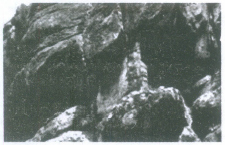
(i) What are habitation sites?
(ii) Why did people use these cave shelters as habitation sites?
(iii) In which mountain range are these rock and cave shelters found ?
(iv) Which valley is close to these rock shelters ?
2.
Mention the archaeological sources which tell us about man's life in the early period.
3.
Why was it difficult to hunt animals and gather plant produce in the early times?
4.
Did division of labour exist during the prehistoric times?
5.
Which skills helped the early man to obtain mastery over his environment?
6.
List two tasks that are performed by both men and women at present. List another two that are performed only by women and two that are performed only by men. Compare your list with that of any two of your classmates. Do you notice any similarities/differences in your lists ?
7.
If you had a natural pebble like ones, what would you use it for?
8.
Can you think of any other reason?
9.
Can you think of a term for the second type of sites?
10.
The earliest people: why were they on the move?
11.
When people couldn't travel from one place to another, did they spend their entire lives wherever they were born?
12.
How did the hunter-gatherers make the tools?
13.
Why it was difficult for hunter-gatherers to collect food?
14.
Why did the hunter-gatherers travel from place to place? In what ways are these similar to/different from the reasons for which we travel today?
15.
Where do we find ostriches today?
1.
(i) Habitation sites were the places where people lived. For example, rock and cave shelters.
(ii) People choose these natural caves for habitation because they provided protection from rain, sun and wind.
(iii) These rock and cave shelters are found in the Vindhyas.
(iv) These rock shelters are close to the Narmada valley.
2.
Archeological sources such as tools, caves and rock paintings tell us about the eating habits of early man, materials used by him during that time and the activities performed:
(i) Tools: The earliest tools were made of stone, bone and wood. They were used to cut meat and bones, scrape barks from trees, for hunting, for stitching clothes, etc.
(ii) Caves: People lived in caves and rock shelters as they provided them with shelter from the rain, heat and wind.
(iii) Rock paintings: The early man made paintings in the caves and rock shelters. These paintings were drawn with great accuracy and skill.
3.
The early man faced a lot of problems while hunting animals and gathering plant produce. Some of them are as follows :
(i) Many of the animals that were hunted were strong and ran faster than man. To hunt these animals or catch fish and birds, the early man had to be alert and swift.
(ii) To collect plant produce, complete knowledge of plants was essential. The early man had to have the basic knowledge about which plants or parts of plants were edible and which were poisonous.
(iii) They were required to find out about the seasons when the fruits would ripen.
4.
The early man was a hunter and a gatherer. He also made stone tools and painted on cave walls. Till now, it is not really known about the division of labour as it existed during those times. However, there are at least two presumptions:
(i) It is presumed that both men and women might have done many tasks together.
(ii) At the same time, it is also possible that women did some tasks, while others were done only by men.
Moreover, different parts of the sub-continent must have followed different practices.
5.
The human brain helped to distinguish between edible and non-edible plants, waste land, crop land and forest land. Thus, the early man obtained mastery over his environment.
6.
(i) Both men and women work in the police department.
(ii) Both men and women work as pilots, doctors and engineers.
(iii) Both men and women work in the offices as clerks, managers.
(iv) Both men and women work in media.
Men:
(i) Truck Drivers.
(ii) Mostly men row the boats or are captain of the ships.
Women:
(i) Nursing.
(ii) Mid-wife.
7.
The natural pebbles can be used to play games like (girls play the game gittas). The boys also play games (e.g., a group of boys keep dropping pebbles at different places and another group of boys keep trying to find them). The natural pebbles can be used to decorate the flower pots.
8.
These paintings were done on ceremonial occasions. They were made of special rituals performed by hunters before they went in search of prey.
9.
The second type of sites were habitation-cumfactory sites where a large number of tools were found.
10.
The earliest people moved another place in search of food following their animals in search of different kinds of plants and in search of water during the dry season.
11.
These people couldn't go to far-off places, but they moved Significant distances in search of food to sustain their living.
12.
Archaeologists have found some of the things hunter-gatherers made and used. People made and used tools of stone, wood and bone, of which stone tools have survived best.
13.
It was difficult for hunter-gatherers to collect food as:
(i) As there were several animals that ran faster than human beings and they were stronger also.
(ii) People do not know about the edible part of the plant.
14.
(I) The hunter-gatherers travelled from one place to another in search of food.
(ii) Sometimes they followed the animals who were also moving from place to place in search of their foods. For example, smaller prey, grass and leaves etc.
(iii) The hunter-gatherers often moved from season to season in search of different seasonal plants.
(iv) Sometimes they moved in search of enough sources of water for their survival. The movement of hunter-gatherers were totally based on their basic needs, mainly food and water. This is quite different from the reasons for which we travel today. Now we generally travel for official responsibility, exploring the new lands or personal reasons. We are not travelling in search of food. But poor sections of our society are often migrating in search of their livelihood, which can be described as in search of food also.
15.
Now-a-days, in India, it has been rarest, but in the African countries we can find them.

6th Standard CBSE Syllabus & Materials
6th Standard CBSE
CBSE 6th Social Science Locating Places on the Earth - New Sample Question Papers Study Material - QB365 Set A
NEW6th Standard CBSE
CBSE 6th Science A Journey Through States of Water - New Sample Question Papers Study Material - QB365 Set A
NEW6th Standard CBSE
CBSE 6th Science Temperature and its Measurement - New Sample Question Papers Study Material - QB365 Set A
NEW6th Standard CBSE
CBSE 6th Science Materials Around Us - New Sample Question Papers Study Material - QB365 Set A



CBSE 6th Standard CBSE Subjects
CBSE Standards




