
 100% FREE ACCESS
8th Standard CBSE Syllabus & Materials
8th Standard CBSE
CBSE 8th Social Science Theme D - Factors of Production - New Model Questions Papers Study Material - QB365 Set A
NEW8th Standard CBSE
CBSE 8th Social Science Theme C - Universal Franchise and India's Electoral System - New Model Questions Papers Study Material - QB365 Set A
NEW8th Standard CBSE
CBSE 8th Social Science Theme B - The Rise of the Marathas - New Model Questions Papers Study Material - QB365 Set A
NEW8th Standard CBSE
CBSE 8th Social Science Theme B - Reshaping India's Political Map - New Model Questions Papers Study Material - QB365 Set A
NEW8th Standard CBSE
CBSE 8th Social Science Theme A - Natural Resources and Their Use - New Model Questions Papers Study Material - QB365 Set A
NEW8th Standard CBSE
CBSE 8th Science Keeping Time with Skies - New Model Questions Papers Study Material - QB365 Set A

Published on: 05/03/2019
Ruling the Countryside Important Questions
Download CBSE Class 8th Standard CBSE Social Science question papers, sample papers, important questions, and previous year solved papers in PDF format. Get free study materials, NCERT solutions, and exam preparation resources for Class 8th Standard CBSE Social Science
Questions + Answers key
Take MCQ Social Science Test
1.
By the late 18th century, Company was trying to expand the cultivation of :
(A) Opium
(B) Indigo
(C) Cotton
(D) Tea
A, B
B, C
C, D
A, C
2.
Who was the Governor of Madras in 1819 to 1826?
Thomas Munro
William Bentinck
Thomas Disilva
Warren Hastings
3.
Who was William Morris?
A famous actor
A famous cricketer
A famous poet and artist
A famous scientist
4.
Why was there great demand for Indian indigo in foreign market?
5.
How did H.T. Colebrook describe the condition of the under tenants of Bengal?
6.
Look into the history of either tea or coffee plantation in India. See how the life of workers in these plantations was similar to or different from that of workers in indigo plantations.
7.
Imagine you are a witness giving evidence before the Indigo Commission. WS Seton Karr asks you "On what condition will ryots grow indigo?" What will your answer be?
8.
What caution the Company had to take after it became the Diwan?
9.
Read the source given and answer the questions: Hadji Mulla, an indigo cultivator of Chandpore, Thana Hardi, was interviewed by the members of the Indigo Commission on Tuesday, 5 June 1860. This is what he said in answer to some of the questions:
W. S. Seton Karr, President of the Indigo Commission: Are you now willing to sow indigo; and if not, on what fresh terms would you be willing to do it?
Hadji Mulla: I am not willing to sow, and I don't know that any fresh terms would satisfy me.
Mr. Sale: Would you not be willing to sow at a rupee a bundle?
Hadji Mulla: No, I would not; rather than sowing indigo I will go to another country; I would rather beg than sow indigo.
(i) Why was Indigo commission set up?
(ii) Who was held responsible for the plight of the peasants by the Commission?
(iii) What were the revelations of the Indigo Commission?
10.
What were the problems with the Permanent Settlement of Bengal after it was introduced in 1793?
11.
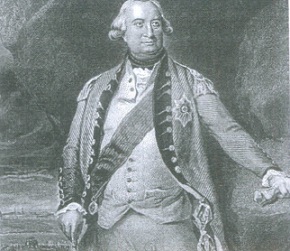
(i) Who is shown in the above picture?
(ii) Which post did he hold?
(iii) Which system was introduced when he held that post?
12.
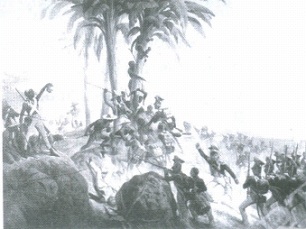
(i) What is shown in the picture?
(ii) Where did French planters produce indigo?
(iii) What did the African slaves do when they rose in rebellion in 1791?
(iv) What is the other name of this rebellion?
(v) When did France abolish slavery? What was its consequences?
13.
What methods did the Company adopt to expand the area under indigo cultivation?
14.
The strongmen maintained by the planters
15.
Mahal
16.
Where do indigo plants grow? Who used it and for what purpose?
17.
When was Ryotwari system of land tenure introduced?
18.
What are commercial crops?
19.
When did the Mahalwari system come into existence?
20.
The French began cultivating Indigo in _____
1.
(a)
A, B
2.
(a)
Thomas Munro
3.
(c)
A famous poet and artist
4.
(i) The European cloth manufacturers used indigo to dye the clothes.
(ii) It produced a rich blue colour which was used for the purpose of dyeing.
(iii) Indigo plant grows only in the tropical regions and it was impossible to grow indigo in temperate climate of Europe.
5.
(i) In most of the regions of Bengal, some of the powerful ryots did not cultivate, but gave out their lands to under tenants.
(ii) They (the under tenants) were pressurized by an excessive rent in kinds and by usurious returns for cattle, seed, subsistence, advanced to them and they could never extricate themselves from debt.
(iii) They earn a scanty subsistence without the hope of bettering their situation.
6.
Life in Tea plantations of Assam:
Estate owners and Workers
(a) Wages
(b) Habitation
(c) Facilities Problems
7.
The ryots will grow indigo on the following Condition:
(i) They will pay revenue which is reasonable.
(ii) They will cultivate indigo as per their will and convenience.
(iii) They will not be forced in any manner.
(iv) They will sell their produce in open market which will bring profit to them.
8.
After becoming the Diwan of Bengal in 1765, the Company realised that it had to move with some cautions which are as follows:
(i) Firstly, being an alien power, the company needed to pacify those who had ruled the countryside in the past and enjoyed prestige and power.
(ii) Secondly, those who enjoyed local power had to be controlled. But they could not be entirely eliminated as sometimes the Company might be dependent on them to solve local problems.
9.
(i) Indigo Commission was formed to enquire into the system of Indigo production following the movement of the ryots of Bengal against the British Indigo planters in the late 1850s.
(ii) The Commission held the planters guilty and criticised them for the coercive methods they used for indigo cultivators.
(iii) The Indigo Commission held the planters guilty and revealed how the planters forced the ryots to receive loan and sign contracts for the indigo cultivation. The indigo planters deprived the ryots of just prices for their crop. The commission also confirmed that the magistrates sided with the British planters in their torturous pursuits of indigo cultivation..
10.
The Permanent Settlement of Bengal was introduced by the company officials to ensure a regular flow of income into the company's treasury. It was also assumed that the zamindars would invest in the improvement of the land. However, the zamindars did not invest any money in the improvement of the land even after benefit from the increased production of the land. The revenue fixed was very high and some zamindars found it difficult to pay the revenue and lost their zamindari rights
Zamindaris were either sold or auctioned off by the company officials. Zamindars gave out land to tenants and extracted rent from them at any cost. Tenants were undoubtedly at the receiving end of the settlement.
11.
(i) Charles Cornwallis is shown in the above picture.
(ii) He was the Governor-General of India.
(iii) Cornwallis was appointed the Governor-General of India in 1786.
His greatest achievement in India was the reorganisation of the land taxation, known as the Permanent Settlement of 1793. He granted legal ownership of their land to the zamindars. In return, they had to pay the government 90 per cent of the rent which they collected from the farmers. As per Permanent Settlement, rajas and taluqdars were recognised as zamindars. The zamindars were supposed to collect the land revenue from the peasants.
12.
(i) The Slave Revolt in St Domingue in August 1791 is shown in the above picture.
(ii) In the 18th century, French planters produced indigo and sugar in the French colony of St Domingue in the Caribbean islands.
(iii) The African slaves who worked on the plantations rose in rebellion in 1791. They killed 4000 Whites and burned and destroyed 180 sugar plantations and hundreds of coffee and indigo plantations.
(iv) The other name of the Slave Revolt is Haitian Revolt.
(v) In 1792, France abolished slavery in the French colonies.
These events led to the collapse of the indigo plantations on the Caribbean islands. By 1792, slave rebels controlled one-third of the island. The success of this slave rebellion caused the newly elected Legislative Assembly in France to grant civil and political rights to free men in the colonies.
13.
The demand for Indian indigo grew further with the industrialisation in Britain. The Company faced difficulties with the rising demand for indigo in Europe. Thus, it adopted some ways to expand the area under indigo cultivation, which are as follows:
(i) In 1788, only about 30 per cent of the indigo imported into Britain was from India. In the last decades of t 18th century, indigo cultivation in Bengal expanded rapidly. Thus, in 1810, the indigo exported from India had increased by 95 per cent.
(ii) As the indigo trade grew, commercial agents and officials of the Company began investing in indigo production.
(iii) Attracted by the prospects of high profit, many Scotsmen and Englishmen came to India for indigo business.
(iv) The Company and different banks were giving loans to those, who had no money to start the indigo plantation.
14.
()
Lathlyals
15.
()
Village
16.
()
Indigo plants grow in the tropics. Indigo was used by cloth manufacturers of Italy, France and Britain to dye clothes.
17.
()
In 1822.
18.
()
Crops which are cultivated for sale in the market are known as commercial crops.
19.
()
In 1822, the Mahalwari system came into existence.
20.
()
St. Domingue

8th Standard CBSE Syllabus & Materials
8th Standard CBSE
CBSE 8th Science Particulate Nature of Matter - New Model Questions Papers Study Material - QB365 Set A
NEW8th Standard CBSE
CBSE 8th Science Pressure, Winds, Stroms and Cyclones - New Model Questions Papers Study Material - QB365 Set A
NEW8th Standard CBSE
CBSE 8th Mathematics Quadrilaterals - New Model Questions Papers Study Material - QB365 Set A
NEW8th Standard CBSE
CBSE 8th Mathematics A story of Numbers - New Model Questions Papers Study Material - QB365 Set A



CBSE 8th Standard CBSE Subjects
CBSE Standards




