
 100% FREE ACCESS
8th Standard CBSE Syllabus & Materials
8th Standard CBSE
CBSE 8th Social Science Theme D - Factors of Production - New Model Questions Papers Study Material - QB365 Set A
NEW8th Standard CBSE
CBSE 8th Social Science Theme C - Universal Franchise and India's Electoral System - New Model Questions Papers Study Material - QB365 Set A
NEW8th Standard CBSE
CBSE 8th Social Science Theme B - The Rise of the Marathas - New Model Questions Papers Study Material - QB365 Set A
NEW8th Standard CBSE
CBSE 8th Social Science Theme B - Reshaping India's Political Map - New Model Questions Papers Study Material - QB365 Set A
NEW8th Standard CBSE
CBSE 8th Social Science Theme A - Natural Resources and Their Use - New Model Questions Papers Study Material - QB365 Set A
NEW8th Standard CBSE
CBSE 8th Science Keeping Time with Skies - New Model Questions Papers Study Material - QB365 Set A

Published on: 31/10/2019
Download CBSE Class 8th Standard CBSE Mathematics question papers, sample papers, important questions, and previous year solved papers in PDF format. Get free study materials, NCERT solutions, and exam preparation resources for Class 8th Standard CBSE Mathematics
Questions + Answers key
Take MCQ Mathematics Test
1.
Is \(\frac{2}{3}-\frac{5}{4}=\frac{5}{4}-\frac{2}{3}?\)
2.
A machine can fill 420 bottles of mineral water in 3 hours. How many bottles can be filled in 5 hours?
3.
Multiply (a2 + 2b2) and (5a - 3b)
4.
Factorise: 81a4 - 16b4
5.
One angle of a quadrilateral is 111° and the remaining three angles are equal. Find three angles.
6.
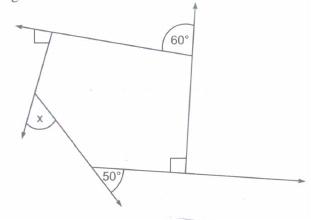
Find x in the following figure.
7.
In a parallelogram if measures of two adjacent angles are in the ratio of 4:5, find all the angles
8.
Factorise the following expressions: a4 + 2a2b2 + b4
9.
Is 243 a perfect cube?
10.
Find the value of \({ \left( \frac { 2 }{ 3 } \right) }^{ -2 }\)
11.
Name the figure shown here.
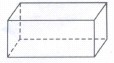
(i) How many faces does it have?
(ii) How many vertices does it have?
(iii) How many edges does it have?
12.
Name the following polyhedron.

How many faces, vertiecs and edges of this solid are there?
13.
Find the common factor x2y and -xy2.
14.
Factorise the expressions. i2 +lm +7l + 7m
15.
Express the following numbers in usual form.
4.5 x 10⁴
16.
Find the value of \(\frac { 198\times 198-102\times 102 }{ 96 } \)
17.
Find the additive inverse of \(-6\over-7\)
18.
Find the multiplicative inverse of the following \(-1\times {-2\over5}\)
19.
Using appropriate properties, find \({2\over5}\times({-3\over7})-{1\over6}\times{3\over2}+{1\over14}\times{2\over5}\)
1.
\(\frac{2}{3}-\frac{5}{4}=\frac{8-15}{12}=\frac{-7}{12}\)
\(\frac{5}{4}-\frac{2}{3}=\frac{15-8}{12}=\frac{7}{12}\)
\(\therefore \frac{-7}{12} \ne \frac{7}{12}\)
\(\therefore \frac{2}{3}-\frac{5}{4} \ne \frac{5}{4}-\frac{2}{3}\)
2.
700
3.
(a2 + 2b2) x (5a – 3b) = a2 (5a – 3b) + 2b2 x (5a – 3b)
= 5a3 – 3a2b + 10ab2 – 6b3
4.
we have 81a4 - 16b4=(9a2)2 - (4b2)2
= (9a2 + 4b2)(9a2 - 4b2)
[Using A2 - B2 = (A + B)(A - B)]
= (9a2 + 4b2)[(3a)2 - (2b)2]
= (9a2 + 4b2)[(3a + 2b)(3a - 2b)]
= (9a2 + 4b2)(3a + 2b)(3a - 2b)
5.
83o each
6.
70o
7.
80o, 100o, 80o, 100o
8.
we have a4 + 2a2b2 + b4
= (a2)2 + 2(a2)(b2) + b2)2
= (a2+b2)2 = (a2+b2)(a2 + b2)
∴ a4 + 2a2b2+b2
=(a2 + b2)2 = (a2 + b2)(a2 + b2)
9.
243 = 3 x 3 x 3 x 3 x 3
In the above factorisation 3 x 3 remains after grouping the 3’s in triplets. Therefore, 243 is not a perfect cube.
10.
\(\left(\frac{2}{3}\right)^{-2}=\frac{2^{-2}}{3^{-2}}=\frac{3^{2}}{2^{2}}=\frac{9}{4}\)
11.
Cuboid;
(i) 6
(ii) 6
(iii) 12
12.
∵ The ends (bases) of the given solid are congruent rectilinear figure each of six sides.
∴ It is a hexagonal prism.
In a hexagonal prism, we have:
The number of faces = 8
The number of edges = 18
The number of vertices = 12
13.
We have to factorise both terms
x2y = x \(\times \) x \(\times \) y
and - xy2 = -x \(\times \) y \(\times \) y
= -1 \(\times \) x \(\times \) y \(\times \) y
Common factor in both terms is x \(\times \) y.
14.
(l +7)(l + m)
15.
We have, 4.5 x 104 = 4.5 x 10000 = 45000
16.
300
17.
The negative (or additive inverse) of \({-6\over-7}(={6\over7})={-6\over7}\)
18.
we have,\(-1\times {-2\over5}={(-1)\times(-2)\over5}={2\over5}\)
\(\therefore\)The multiplicative inverse of \(-1\times {-2\over5}\)is \(5\over2\)
19.
= \(\frac { 2 }{ 5 } \times \left( \frac { -3 }{ 7 } \right) -\frac { 1 }{ 4 } +\frac { 1 }{ 14 } \times \frac { 2 }{ 5 } \)
= \(\frac { 2 }{ 5 } \times \left( \frac { -3 }{ 7 } \right) +\frac { 1 }{ 14 } \times \frac { 2 }{ 5 } -\frac { 1 }{ 4 } \) (Using commutativity)
= \(\frac { 2 }{ 5 } \left[ \frac { -3 }{ 7 } +\frac { 1 }{ 14 } \right] -\frac { 1 }{ 4 } \) (using distributivity)
= \(\frac { 2 }{ 5 } \left[ \frac { -6+1 }{ 14 } \right] -\frac { 1 }{ 4 } =\frac { 2 }{ 5 } \times \frac { -5 }{ 14 } -\frac { 1 }{ 4 } \)
= \(\frac { -1 }{ 7 } -\frac { 1 }{ 4 } =\frac { -4-7 }{ 28 } =\frac { -11 }{ 28 } \)

8th Standard CBSE Syllabus & Materials
8th Standard CBSE
CBSE 8th Science Particulate Nature of Matter - New Model Questions Papers Study Material - QB365 Set A
NEW8th Standard CBSE
CBSE 8th Science Pressure, Winds, Stroms and Cyclones - New Model Questions Papers Study Material - QB365 Set A
NEW8th Standard CBSE
CBSE 8th Mathematics Quadrilaterals - New Model Questions Papers Study Material - QB365 Set A
NEW8th Standard CBSE
CBSE 8th Mathematics A story of Numbers - New Model Questions Papers Study Material - QB365 Set A



CBSE 8th Standard CBSE Subjects
CBSE Standards




