
 100% FREE ACCESS
8th Standard CBSE Syllabus & Materials
8th Standard CBSE
CBSE 8th Social Science Theme D - Factors of Production - New Model Questions Papers Study Material - QB365 Set A
NEW8th Standard CBSE
CBSE 8th Social Science Theme C - Universal Franchise and India's Electoral System - New Model Questions Papers Study Material - QB365 Set A
NEW8th Standard CBSE
CBSE 8th Social Science Theme B - The Rise of the Marathas - New Model Questions Papers Study Material - QB365 Set A
NEW8th Standard CBSE
CBSE 8th Social Science Theme B - Reshaping India's Political Map - New Model Questions Papers Study Material - QB365 Set A
NEW8th Standard CBSE
CBSE 8th Social Science Theme A - Natural Resources and Their Use - New Model Questions Papers Study Material - QB365 Set A
NEW8th Standard CBSE
CBSE 8th Science Keeping Time with Skies - New Model Questions Papers Study Material - QB365 Set A

Published on: 29/10/2025
Download CBSE Class 8th Standard CBSE Science question papers, sample papers, important questions, and previous year solved papers in PDF format. Get free study materials, NCERT solutions, and exam preparation resources for Class 8th Standard CBSE Science
Questions + Answers key
Take MCQ Science Test
1.
'A particular term called protoplasm is used for the living content of the cell'. Who coined this term?
2.
Name the outermost layer of a cell in cat.
3.
State the difference between eukaryotes and prokaryotes.
4.
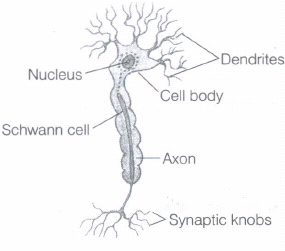
Make a sketch of the human nerve cell. What function do nerve cells perform?.
5.
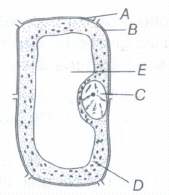
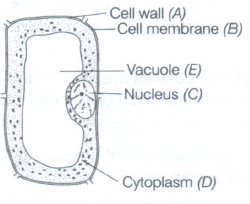
Label the parts A to E in the given figure
6.
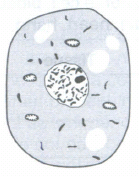
Observe the following figure given below
Answer the following questions.
(a) Does it represent a plant cell or an animal cell?
(b) Does it represent a prokaryotic cell or a eukaryotic cell?
7.
‘Cells are the basic structural units of living organisms’. Explain.
8.
The thread-like structures present in the nucleus are :
nucleolus
genes
chromosomes
ribosomes
9.
Cheek cells do not have
cell membrane
Golgi apparatus
nucleus
plastid
10.
Which of the following is not a plastid?
Chloroplast
Chromoplast
Leucoplast
Ribosome
11.
Out of the following, which animal is unicellular?
Amoeba
Paramecium
Bacteria
All of these
12.
The structural and functional unit of life called cell was discovered by
Robert Boyle
Charles Darwin
Robert Koch
Robert Hooke
13.
Green plastids containing chlorophyll are called --------
14.
All organisms are made of small parts called____________
15.
Cell was discovered in..................
16.
.............is called kitchen of the cell.
17.
...............is a unicellular aquatic animal.
18.
The basic living unit of an organism is an organ.
19.
Plastids are present in animal cells
20.
Human cell is an eukaryotic cell.
21.
Vacuoles present in animal cells are small.
22.
Plasma membrane is dead.
23.
WBC
24.
Gene
25.
Powerhouse of the cell
26.
Living material of cell
27.
Cell membrane
28.
Various components are present in cytoplasm.Name them
29.
What are the basic components of a cell?
30.
A single-celled animal
31.
Describe the various parts of a cell.
1.
JE Purkinje coined the term protoplasm.
2.
Plasma membrane is the outermost layer of cell in a cat (since, cat is an animal).
3.
Eukaryotes are organisms which contain well organised nucleus with nuclear membrane, e.g. humans.
Prokaryotes are those organisms which contain the primitive nucleus (unorganised) without nuclear membrane, e.g. bacteria, blue-green algae.
4.
Sketch of human nerve cell is shown as below
Functions of nerve Cells
The nerve cell receives and transfers messages from various body parts to brain and vice-versa and also helps in controlling and coordinating the function of different parts of the body.
5.
Given figure in question, represents a plant cell. The various parts of plant cells are labelled as follows:
6.
(a) The above diagram represents an animal cell because cell is bounded by cell membrane and cell wall is absent.
(b) The above diagram represents a eukaryotic cell as it has a well-organised nucleus and other cell organelles in it.
7.
All living organisms are made up of similar or different types of cells. A single cell is capable of performing basic functions and activities and acts as unicellular organism, e.g. Amoeba, bacteria, etc.
Group of cells performing similar function is called tissue, group of tissues that performs a specialised function form an organ which collectively form organ system. Thus, cell is the basis of all levels of organisation and is called structural and functional unit of living organisms.
8.
(b)
genes
9.
(d)
plastid
10.
(d)
Ribosome
11.
(d)
All of these
12.
(d)
Robert Hooke
13.
()
chloroplast
14.
()
organs
15.
()
1665
16.
()
Chloroplast
17.
()
Amoeba
18.
(b)
19.
(b)
20.
(a)
21.
(a)
22.
(b)
23.
()
White Blood Cell
24.
()
A unit of inheritance
25.
()
Mitochondria
26.
()
Protoplasm
27.
()
Controls the movement of materials into and out of cells
28.
()
They are mitochondria, golgi bodies, ribosomes, vacuoles etc
29.
()
The basic components of cell are :
(i) The cell membrane
(ii) Cytoplasm
(iii) Nucleus
30.
31.
Parts of the Cell: The basic components of a cell are:
(i) Cell membrane
(ii) Cytoplasm
(iii) Nucleus
(i) Cell membrane : The cytoplasm and nucleus are enclosed within the cell membrane. It is also called plasma membrane. It separates cell from another cell and from the surrounding medium. It is porous in nature and allows movement of substance or material both inward and outward.
(ii) Cytoplasm: It is the jelly like substance present in between the cell membrane and the nucleus. Various other components, or organelles of cells are present in the cytoplasm. These are mitochondria, golgi bodies, ribosomes etc. (iii)Nucleus: It is an important component of the cell. It is generally spherical and located in the centre of the cell. It is surrounded by nuclear membrane. It is porous in nature. It has a smaller spherical body called nucleolus. The nucleus contains thread like structures called chromosomes. They carry genes and help in transferring the characteristics from parents to offsprings.

8th Standard CBSE Syllabus & Materials
8th Standard CBSE
CBSE 8th Science Particulate Nature of Matter - New Model Questions Papers Study Material - QB365 Set A
NEW8th Standard CBSE
CBSE 8th Science Pressure, Winds, Stroms and Cyclones - New Model Questions Papers Study Material - QB365 Set A
NEW8th Standard CBSE
CBSE 8th Mathematics Quadrilaterals - New Model Questions Papers Study Material - QB365 Set A
NEW8th Standard CBSE
CBSE 8th Mathematics A story of Numbers - New Model Questions Papers Study Material - QB365 Set A



NCERT Books

Syllabus

Exam Pattern

Sample Question Papers

Previous year Question Papers

Important Notes

MCQ Practice test

NCERT Exemplers

Case study Questions

Image Based Questions

Passage based Questions

HOT Questions

Value Based Questions

Model Questions Papers
NCERT ( Book Back ) Questions

Assertion and Reason
Important Questions And Answers

CBSE 8th Standard CBSE Subjects
CBSE Standards


