
 100% FREE ACCESS
8th Standard CBSE Syllabus & Materials
8th Standard CBSE
CBSE 8th Social Science Theme D - Factors of Production - New Model Questions Papers Study Material - QB365 Set A
NEW8th Standard CBSE
CBSE 8th Social Science Theme C - Universal Franchise and India's Electoral System - New Model Questions Papers Study Material - QB365 Set A
NEW8th Standard CBSE
CBSE 8th Social Science Theme B - The Rise of the Marathas - New Model Questions Papers Study Material - QB365 Set A
NEW8th Standard CBSE
CBSE 8th Social Science Theme B - Reshaping India's Political Map - New Model Questions Papers Study Material - QB365 Set A
NEW8th Standard CBSE
CBSE 8th Social Science Theme A - Natural Resources and Their Use - New Model Questions Papers Study Material - QB365 Set A
NEW8th Standard CBSE
CBSE 8th Science Keeping Time with Skies - New Model Questions Papers Study Material - QB365 Set A

Published on: 29/10/2025
Download CBSE Class 8th Standard CBSE Science question papers, sample papers, important questions, and previous year solved papers in PDF format. Get free study materials, NCERT solutions, and exam preparation resources for Class 8th Standard CBSE Science
Questions + Answers key
Take MCQ Science Test
1.
What is cytoplasm?
2.
Why do kabbadi players rub their hands with soil?
3.
What is LED?
4.
Will the solution of sugar in distilled water conduct electricity?
5.
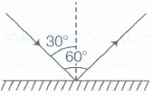
The angle between incident ray and reflected ray is 60°. What is the value of angle of incidence?
6.
Explain how can you describe vocal cords.
7.
Stages in the life cycle of silkworm are given below. Write them in sequential order.
Pupa, Egg, Silkmoth, Caterpillar
8.
A process by which young ones are formed. What is the process called as?
9.
On what observation, Robert Hooke discovered the cell?
10.
State the difference between eukaryotes and prokaryotes.
11.
An electric current can produce
heating effect
chemical effect
magnetic effect
chemical, heating and magnetic effects
12.
Friction is due to
polishing of surface
streamlining of body
interlocking of irregularities
None of the above
13.
The force of friction always
opposes motion
helps the motion
Both of these
None of the above
14.
How does the eye change in order to focus on near or distant objects?
The eye lens moves in or out
The retina moves in or out
The eye lens becomes thicker or thinner
The pupil becomes larger or smaller
15.
Which of the following is not a viviparous animal?
Rat
Lizard
Rabbit
Cat
16.
In human beings, the correct sequence of events during reproduction is
gamete formation, fertilisation, zygote formation embryo
embryo, zygote formation, fertilisation, gamete formation
fertilisation, gamete formation, embryo, zygote formation
gamete formation, fertilisation, embryo, zygote formation
17.
The loudness of sound is determined by its
amplitude of vibration
ratio of amplitude and frequency of vibration
frequency of vibration
product of amplitude and frequency of vibration
18.
Out of the following, which animal is unicellular?
Amoeba
Paramecium
Bacteria
All of these
19.
Which one of the following terms is not a part of the nucleus?
Ribosome
Chromosome
Nucleolus
Gene
20.
Sound can travel through
gases only
solids only
liquids only
solids, liquids and gases
21.
State some advantages of electroplating
22.
The bulb glows when the electric current passes through it. Explain why.
23.
Explain why sportsmen use shoes with spikes.
24.
State the laws of reflection.
25.
A simple pendulum makes 10 oscillations in 20 s. What is the time period and frequency of its oscillations?
26.
Cells consist of many organelles, yet we do not call any of these organelles as structural and functional unit of living organisms. Explain.
27.
What is the difference between noise and music? Can music become noise sometimes?
28.
Differentiate between internal fertilisation and external fertilisation.
29.
Give two differences between a zygote and a foetus.
30.
Name the factors that affect friction.
31.
How can you take care of the eyes?
32.
Explain the position and functions of nucleus in a cell
33.
Explain some examples where we have to reduce the friction.
34.
(a) A jelly-like substance is present in a cell. What is it called as? Also give its function.
(b) Give the meaning of protoplasm. Name the four elements which make up major part of protoplasm.
1.
Cytoplasm is a jelly like substance present between the cell membrane and the nucleus. Various components, or organelles are present in the cytoplasm. These are mitochondria, golgi bodies, ribosomes etc.
2.
Kabbadi players rub their hands with soil to increase the friction so that they can grip the opposite team players firmly.
3.
LED is a device or bulb which even glows at low or small current.
4.
The sugar solution in distilled water will make it a good conductor of electricity and current can easily pass through it.
5.
Since angle of incidence = angle of reflection. So, angle of incidence = 30°
6.
The two ligaments which stretch across the larynx in such a way that it leaves a narrow slit between them for the passage of air, are known as vocal cords.
7.
The stages in the life cycle of silkworm occursin following sequence:
Egg ⟶ Caterpillar ⟶ Pupa ⟶ Silkmoth
This drastic change in structure from caterpillar to silkmoth is called metamorphosis.
8.
Reproduction is the biological process of formation of young ones of their own kind by living organisms.
9.
Robert Hooke discovered cell on observation of cork slice.
10.
Eukaryotes are organisms which contain well organised nucleus with nuclear membrane, e.g. humans.
Prokaryotes are those organisms which contain the primitive nucleus (unorganised) without nuclear membrane, e.g. bacteria, blue-green algae.
11.
(d)
chemical, heating and magnetic effects
12.
(c)
interlocking of irregularities
13.
(a)
opposes motion
14.
(c)
The eye lens becomes thicker or thinner
15.
(b)
Lizard
16.
(c)
fertilisation, gamete formation, embryo, zygote formation
17.
(a)
amplitude of vibration
18.
(d)
All of these
19.
(a)
Ribosome
20.
(d)
solids, liquids and gases
21.
The advantages of electroplating are given below:
(i) It protects the metal from corrosion and rusting.
(ii) It is used to coat desired metal on other objects.
(iii) It can make more reactive metal like iron.
(iv) Coating of chromium on the metal gives luster to the objects.
22.
Due to the heating effect of current, the filament of the bulb gets heated to a high temperature and it starts glowing. However, if the current through a circuit is too weak, the filament does not get heated sufficiently and it does not glow.
23.
Sportsmen use shoes with spikes in order to avoid getting slip in the field. The spikes in the shoes increase the friction, so he/she can run on the ground easily.
24.
There are two laws of reflection as below:
(i) The angle of incidence is equal to the angle of reflection.
(ii) Incident ray reflected ray and the normal drawn at the point of incidence to the reflecting surface, all lie in the same plane.
25.
Given, number of oscillations = 10
Time taken = 20 s
As, we know that the number of oscillations per second is frequency.
\(\therefore frequency=\frac { Number\ of\ oscillations }{ Time\ taken } =\frac { 10 }{ 20 } =0.5Hz\\ \therefore time\ period=\frac { 1 }{ Frequency } =\frac { 1 }{ 0.5 } =2s\)
26.
The cell organelles like mitochondria, Golgi complex, ribosomes, nucleus, etc carry out specific functions in a cell but they function only when present inside a living cell. They cannot act as independent units. Therefore, we do not call, cell organelles as the structural and functional units of living organisms.
27.
| Noise | Music |
| It is unpleasant sound | It is pleasant sound |
| It leads to noise pollution | No such pollution takes place |
| It is hazardous to health | It is good for health |
| No special instruments are required to produce noise | Special instruments are required to play music |
Yes, music becomes noise sometimes, when it crosses the bearable range of sound for the ears.
28.
Difference between internal fertilisation and external fertilisation are
| Internal fertilisation | External fertilisation |
| It is the fertilisation that takes place inside the female body. | It is the fertilisation that takes place outside the female body, generally in water. |
| Sperms are released in female body. | Sperms and ova are released in water outside the female body. |
| It is common in terrestrial animals, e.q. humans, cats, dogs, etc. | It is very common in aquatic animals, e.q. frogs fishes, etc. |
29.
Difference between a zygote and a foetus is
| Zygote | Foetus |
| It is formed by the fusion of male and female gamete. | It is formed by the developing embryo. |
| It is made up of single cell. | It is made up of many cells, in which all the body parts can be identified. |
30.
Factors affecting friction:
(i) It depends on the nature of surfaces in contact.
(ii) It is more between rough surfaces and less between smooth surfaces.
(iii) It depends on how hard the two surfaces press together.
(iv) It is independent of the area of contact.
31.
Care of the eyes: It is necessary to take proper care of eyes. Few suggestions are as follows:
(i) If advised, use suitable spectacles.
(ii) Too little or too much light is bad for eyes. Insufficient light causes eye strain and headaches.
(iii) Do not look at the sun or a powerful light directly.
(iv) Never rub your eyes. If particles of dust go into your eyeswash your eyeswith cleanwater.
(v) Always read at the normal distance for vision. Do not read by bringing the book too close to your eyes or keeping it too far.
32.
Nucleus is the most important component of the living cell. It is round or spherical in shape and situated in the centre of the cell. Nucleus is separated from cytoplasm by a membrane called nuclear membrane. This membrane is porous and allows the movement of materials between the cytoplasm and inner side of the nucleus. There is a small and spherical body in the nucleus. It is called nucleolus. Nucleus contains thread-like structures called chromosomes. These carry genes and help in inheritance or transfer of characters from the parents to the offspring. Nucleus also acts as a control centre of the activities of the cell.
33.
When a fine powder sprinkled on the carrom board and a few drops of oil are poured on the hinges of a door, the door moves smoothly. A cycJe or a motor mechanic some times uses grease between the moving parts of the cycle. In all the above cases, our try was to reduce friction in order to increase efficiency.
Also, interlocking of irregularities is avoided to a great extent due to which the movement becomes smooth. The substances which reduce friction are called lubricants. In some machines, it may not be advisable to use oil as lubricant. There is an air cushion between the moving parts, that is used to reduce friction.
34.
(a) Cytoplasm is the transparent, jelly-like substance that makes up most of the inside of a cell. It is present between the cell membrane and nucleus.
Various structures such as the nucleus, mitochondria are present in it. These are called organelles. Salts, proteins, sugars and other substances are dissolved in this fluid.
Function Most of the chemical reactions which keep the cell alive take place in the cytoplasm.
(b) The nucleus and the cytoplasm together make up the protoplasm which is called the living substance of the cell.
The main constituent elements of protoplasm are carbon, hydrogen, oxygen and nitrogen

8th Standard CBSE Syllabus & Materials
8th Standard CBSE
CBSE 8th Science Particulate Nature of Matter - New Model Questions Papers Study Material - QB365 Set A
NEW8th Standard CBSE
CBSE 8th Science Pressure, Winds, Stroms and Cyclones - New Model Questions Papers Study Material - QB365 Set A
NEW8th Standard CBSE
CBSE 8th Mathematics Quadrilaterals - New Model Questions Papers Study Material - QB365 Set A
NEW8th Standard CBSE
CBSE 8th Mathematics A story of Numbers - New Model Questions Papers Study Material - QB365 Set A



NCERT Books

Syllabus

Exam Pattern

Sample Question Papers

Previous year Question Papers

Important Notes

MCQ Practice test

NCERT Exemplers

Case study Questions

Image Based Questions

Passage based Questions

HOT Questions

Value Based Questions

Model Questions Papers
NCERT ( Book Back ) Questions

Assertion and Reason
Important Questions And Answers

CBSE 8th Standard CBSE Subjects
CBSE Standards


