
 100% FREE ACCESS
8th Standard CBSE Syllabus & Materials
8th Standard CBSE
CBSE 8th Social Science Theme D - Factors of Production - New Model Questions Papers Study Material - QB365 Set A
NEW8th Standard CBSE
CBSE 8th Social Science Theme C - Universal Franchise and India's Electoral System - New Model Questions Papers Study Material - QB365 Set A
NEW8th Standard CBSE
CBSE 8th Social Science Theme B - The Rise of the Marathas - New Model Questions Papers Study Material - QB365 Set A
NEW8th Standard CBSE
CBSE 8th Social Science Theme B - Reshaping India's Political Map - New Model Questions Papers Study Material - QB365 Set A
NEW8th Standard CBSE
CBSE 8th Social Science Theme A - Natural Resources and Their Use - New Model Questions Papers Study Material - QB365 Set A
NEW8th Standard CBSE
CBSE 8th Science Keeping Time with Skies - New Model Questions Papers Study Material - QB365 Set A

Published on: 29/10/2025
Download CBSE Class 8th Standard CBSE Science question papers, sample papers, important questions, and previous year solved papers in PDF format. Get free study materials, NCERT solutions, and exam preparation resources for Class 8th Standard CBSE Science
Questions + Answers key
Take MCQ Science Test
1.
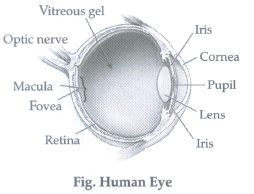
Write the structure and function of human eye.
2.
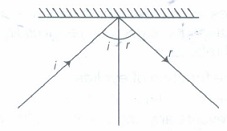
State in brief about angle of incidence and angle of reflection.
3.
Two mirrors meet at right angles. A ray of light is incident on one at an angle of 30° as shown in figure. Draw the reflected ray from the second mirror.
.jpg)
4.
How many images of a candle will be formed, if it is placed between two parallel plane mirrors separated by 40 cm?
5.
What is the angle of incidence of a ray if the reflected ray is at an angle of 90° to the incident ray?
6.
Write difference between regular and irregular reflection.
7.
Write two laws of reflection.
8.
Can the reflected rays be further reflected if incident on another mirror?
9.
When a parallel beam of light hits an uneven surface, then predict the nature of reflected beam.
10.
White light is a combination of which colours?
11.
Black objects appear black. Why?
12.
Do we see all objects due to reflected light?
13.
Imagine that parallel rays are incident on an irregular surface. Are the rays reflected from this surface parallel to each other?
14.
If we throw the light on the mirror along the normal. Explain the statement along with a reason.
15.
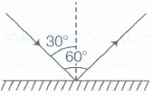
The angle between incident ray and reflected ray is 60°. What is the value of angle of incidence?
16.
State the size of image formed by a plane mirror.
17.
How many times is a ray of light reflected by two plane mirrors placed parallel and facing each other?
18.
A man stands 10m in front of a large plane mirror. So, how far must he walk before he is 5 m away from his image?
19.
There is a mistake in each of the following ray diagrams given as figure (a), (b), and (c). Make the necessary correction(s).
.jpg)
1.
Human eye: The eye has a roughly spherical shape. The outer coat of eye is white. Its transparent front part is called cornea. Behind cornea a dark muscular structure is situated called iris. There is a small opening called the pupil. The size of the pupil is controlled by the iris. The iris controls the amount of light entering into the eye. The lens focuses light on the back of the eye, on a layer called retina. The retina contains several nerve cells. They transmit impulses to the brain through the optic nerve and hence, image is formed.
2.
i) Angle of incidence is an angle formed between the incident ray and the normal.
ii) The angle formed between the reflected ray and the normal is called angle of reflection.
iii) It forms the image of an object at retina.
3.
The diagram will be as follows:
.jpg)
4.
Infinite number of images will be formed due to multiple reflections of light.
5.
We know that, the angle of incidence is equal to the angle of reflection and the reflected ray is at an angle of 90° to the incident ray.
\(\therefore\ \angle i=\angle r=45^o\)
6.
Difference between regular and irregular reflection:
| S.No | Regular | Irregular |
|---|---|---|
| (i) | It takes place on a smooth and shining surface. | It takes place on rough surface. |
| (ii) | All rays are parallel after reflection. | Reflected rays are in different directions. |
7.
The two laws of reflection:
(i)The incident ray, reflected ray and normal lie in the same plane.
(ii)Angle of incidence is always equal to angle of reflection.
8.
Yes.
9.
When light hits an uneven surface, there are many angles of incidence. Hence, the parallel beam of light rays will be reflected off the surface at different angles.
10.
White light can be formed by mixing the primary colours red, green and blue.
11.
Black objects appear black because they absorb all the colours, no light is reflected.
12.
Yes, nearly everything we see around us due to reflected light, e.q. moon receives light from the sun and reflects it.
13.
No, the reflected rays from irregular surface are in different directions.
14.
If we throw the light on the mirror along the normal, the light ray will be reflected back in opposite direction.
15.
Since angle of incidence = angle of reflection. So, angle of incidence = 30°
16.
The size of image formed by a plane mirror is same as that of the object in front of the mirror.
17.
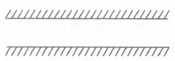
The ray is reflected infinite times between the two plane mirrors placed parallel to each other.
18.
As per the given information point 'O' initial position of the man and I initial position of the image of the man can be show with the help of a figure.
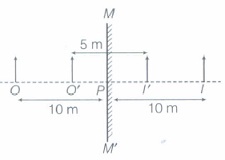
Point O' final position of the man and I' final position of the image of the man. From the figure,
O'P + PI' = 5m [O'P = PI']
\(\Rightarrow\) O'P+ O'P = 5m
\(\Rightarrow\) O'P = 2.5m
Distance walked by the man = OP - O'P
= 10 - 2.5
= 7.5m.
19.
The correct diagrams are as below:
.jpg)

8th Standard CBSE Syllabus & Materials
8th Standard CBSE
CBSE 8th Science Particulate Nature of Matter - New Model Questions Papers Study Material - QB365 Set A
NEW8th Standard CBSE
CBSE 8th Science Pressure, Winds, Stroms and Cyclones - New Model Questions Papers Study Material - QB365 Set A
NEW8th Standard CBSE
CBSE 8th Mathematics Quadrilaterals - New Model Questions Papers Study Material - QB365 Set A
NEW8th Standard CBSE
CBSE 8th Mathematics A story of Numbers - New Model Questions Papers Study Material - QB365 Set A



NCERT Books

Syllabus

Exam Pattern

Sample Question Papers

Previous year Question Papers

Important Notes

MCQ Practice test

NCERT Exemplers

Case study Questions

Image Based Questions

Passage based Questions

HOT Questions

Value Based Questions

Model Questions Papers
NCERT ( Book Back ) Questions

Assertion and Reason
Important Questions And Answers

CBSE 8th Standard CBSE Subjects
CBSE Standards


