
 100% FREE ACCESS
8th Standard CBSE Syllabus & Materials
8th Standard CBSE
CBSE 8th Social Science Theme D - Factors of Production - New Model Questions Papers Study Material - QB365 Set A
NEW8th Standard CBSE
CBSE 8th Social Science Theme C - Universal Franchise and India's Electoral System - New Model Questions Papers Study Material - QB365 Set A
NEW8th Standard CBSE
CBSE 8th Social Science Theme B - The Rise of the Marathas - New Model Questions Papers Study Material - QB365 Set A
NEW8th Standard CBSE
CBSE 8th Social Science Theme B - Reshaping India's Political Map - New Model Questions Papers Study Material - QB365 Set A
NEW8th Standard CBSE
CBSE 8th Social Science Theme A - Natural Resources and Their Use - New Model Questions Papers Study Material - QB365 Set A
NEW8th Standard CBSE
CBSE 8th Science Keeping Time with Skies - New Model Questions Papers Study Material - QB365 Set A

Published on: 29/10/2025
Download CBSE Class 8th Standard CBSE Science question papers, sample papers, important questions, and previous year solved papers in PDF format. Get free study materials, NCERT solutions, and exam preparation resources for Class 8th Standard CBSE Science
Questions + Answers key
Take MCQ Science Test
1.
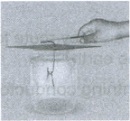
The aluminium strips in an electroscope as shown in figure are replaced by plastic strips and a charged body is brought in contact with the metal clip. What will happen?
2.
Mention the name of the two states of motion:
3.
If a metal coin is dropped on hard floor, it produces a ringing sound. What is this property of metals known as?
4.
Out of kerosene oil or wood, which has higher ignition temperature?
5.
If a person is a pisciculturist, what does he do?
6.
The most important function of cell membrane is that it :
controls the entry and exit of materials from cells
controls only the entry of materials into cells
controls only the exit of materials from cells
allows entry and exit of materials without any control
7.
Air is a mixture of various gases. One of the gas is 21% part of the air and is essential for the survival of human beings. This gas is
nitrogen
oxygen
ozone
argon
8.
The change in seasons on the earth occurs because
the distance between the earth and the sun is not constant
the axis of rotation of the earth is parellel to the plane of its orbit
the axis of rotation of the Earth is perpendicular to the plane of its orbit
the axis of rotation of the Earth is tilted with respect to the plane of its orbit
9.
Which among the following hormones controls calcium metabolism in our body?
Insulin
parathorme
Thyroxine
Adrenaline
10.
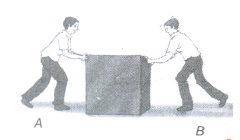
In figure, two boys A and B are shown applying force on a block. If the block moves towards the right, which one of the following statements is correct?
Magnitude of force applied by A is greater than that of B
Magnitude of force applied by A is smaller than that of B
Net force on the block is towards A
Magnitudeof force applied by A isequalto that of B
11.
A characteristic of sound that depends on the amplitude is
pitch
speed
quality
loudness
12.
The movement of the earth's plates causes
cyclones
lightning
earthquake
thunderstorms
13.
Metals are generally hard. Which of the following metals is an exception and can be cut with a knife?
Iron
Sodium
Gold
Magnesium
14.
Exhaustible natural resources are
unlimited in quantity
not dependent on nature
limited in quantity
not exhausted by human activities
15.
The term used for the process of separation of grains from chaff is
sieving
winnowing
threshing
hand picking
16.
List various constituents of petroleum and their uses.
17.
A poisonous gas P is produced by incomplete combustion of fuels such as coal. This gas interferes with Q of blood and reduces its capacity to carry gas R. Instead, it combines itself with Q forming S. What are P, Q, R, S?
18.
While travelling on a rickshaw, you might have experienced that if the seat cover is very smooth, you tend to slip when brakes are applied suddenly. Explain.
19.
What is the term used for chemical secretions of endocrine glands responsible for changes taking place in the body?
20.
Name the disease-causing microorganism of the following
(a) swine flu
(b) rust of wheat
(c) anthrax
21.
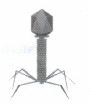
Identify the organism given below. Where does it reproduce?
22.
Static friction is ________ than the sliding friction.
23.
_________ is a group of stars arranged in a definite pattern.
24.
Nitrogen fixation occurs during ___________.
25.
A most common weedicide is..........
26.
Sex chromosomes
27.
Rock shelters
28.
Copper
29.
Structural unit of organism
30.
Pasteurisation
31.
Water is one of our most precious commodities and no life can survive without it. It has been predicted that water scarcity will become the subjects of 'Wars' in the near future. Write any two ways in which water is getting polluted. Write any two measures to stop water pollution at your level.
32.
What are contact and non-contact forces? Explain briefly with suitable examples.
33.
Explain the use of Bacteria, Fungi and Algae.
34.
Mention the property of vibrations which determine the pitch of the sound. Briefly explain along with some examples.
35.
Rohit while gardening observed many beautiful flowering plants. He got attracted by the brightly coloured flowers and their beautiful appearance. He was curious to know about the variation of colours in flowers and asked her biology teacher about it. Teacher told her about the plastids found in plant cells.
(a) A particular plastid is responsible for the variation in colours of flowers. Which is it?
(b) Name the plastids known as kitchen of the cell.
(c) Are all plastids coloured?
(d) Will we be able to observe plastid in an animal cell?
(e) Identify values shown by Rohit.
36.
The substance A is a fossil fuel. It occurs deep below the earth's crust in certain areas. Another fossil fuel B is found above the substance A. When A is subjected to a process C, a number of different products (fractions) are collected at different temperature ranges which have different uses. A special grade of product D obtained in this process is used as aviation fuel in jet aeroplanes. The product D is also used in stoves, lamps, etc
Now give the answer of the following questions.
(a) What are the substances, A and B?
(b) Write the physical states of substances A and B.
(c) What is the process C called?
(d) Name the product D.
37.
Sound makes eardrum vibrate.
38.
Potable water is translucent.
39.
External fertilisation can occur both in water and on land.
40.
Ball bearing is a device which converts static friction into sliding friction.
41.
PVC is thermosetting plastic.
42.
Where is image formed in human eye?
43.
Name few alternative fuels to reduce pollution
44.
What do you mean by metamorphosis?
45.
What is vibration?
46.
A scale to check the power of an earthquake.
47.
Name a solution which should be added to make onion peel slide.
48.
Name the biosphere reserve where the plants and animals are found similar to the upper Himalayan peaks.
49.
What is the versatility about melamine?
50.
What is the process of loosening and turning of the soil called?
1.
If aluminium strips are replaced by plastic strips, we cannot predict whether the object is charged or not.
2.
There are two states of motion:
(i) State of rest
(ii) State of motion.
3.
The property of metals to produce ringing sound is called sonority.
4.
Wood has higher ignition temperature than kerosene oil.
5.
If the person is a pisciculturist does the breeding, hatching and rearing of fishes.
6.
(a)
controls the entry and exit of materials from cells
7.
(b)
oxygen
8.
(a)
the distance between the earth and the sun is not constant
9.
(b)
parathorme
10.
(a)
Magnitude of force applied by A is greater than that of B
11.
(d)
loudness
12.
(c)
earthquake
13.
(b)
Sodium
14.
(c)
limited in quantity
15.
(c)
threshing
16.
Various constituents of petroleum and their uses:
(i) LPG: Fuel for home and industry.
(ii) Petrol: Motor fuel, aviation fuel, solvent for dry cleaning.
(iii) Kerosene: Fuel for stoves, lamps and for jet aircraft.
(iv) Diesel: Fuel for heavy motor vehicles and electric generators.
(v) Lubricating Oil: Lubrication
(vi) Paraffin wax: Ointments, candles, Vaseline etc.
(vii) Bitumen: Paints and road surfacing.
17.
P is carbon monoxide, Q is haemoglobin R is oxygen and S is carboxyhaemoglobin.
18.
If the seat cover of rickshaw is very smooth, then the friction between our body and the seat is very small. Therefore, when the brakes are applied, we tend to slip.
19.
Hormone is the term used for secretions of endocrine glands responsible for changes taking place in the body.
20.
(a) Virus
(b) Fungi
(c) Bacteria.
21.
()
Virus. It reproduces in the host cell.
22.
()
greater
23.
()
Constellation
24.
()
lightning
25.
()
2,4-D
26.
()
X and Y
27.
()
Satpura National Park
28.
()
Electric wire.
29.
()
Cel
30.
()
L Pasteur
31.
Water is an important and precious resource. Nowadays it is polluted with many harmful substances such as sewage, toxic chemicals, silt etc. which get mixed with water. Many industries discharge harmful chemicals into rivers and streams. To avoid these situations many compulsory rules must be obeyed as various physical and chemical processes in the sewage treatment plants must be done before discharging sewage into the water bodies. At our individual level we should consciously save water and do not waste it. Reuse and Recycle should be our Mantra.
32.
Forces can be of two types:
(i) Contact forces.
(ii) Non-contact forces.
(i) Contact forces : The forces that come into play when two objects come in contact with each other.
(a) Muscular force: The force which is exerted due to action of muscles is known as the muscular force. e.g., running, bending, walking etc.
(b) Frictional Force: The force responsible for changing the state of motion of an object. Equal and opposite forces are being exerted on an object when its surface comes in contact with other surface. e.g., a car or scooter comes to rest.
(ii) Non-contact forces: The forces that can be exerted from a distance without establishing a contact are called the non-contact forces.
(a) Magnetic forces : Force exerted by a magnet on another magnet or magnetic substances like iron is called magnetic force. e.g., Car sticking to an electromagnet.
(b) Electrostatic force : Force exerted by a charged body on another charged body or uncharged body is called electrostatic force. e.g., If we rub a comb with hair and bring it near some small bits of paper it attracts the bits of paper towards itself. This is electrostatic force.
(c) Force of gravity : The earth pulls every object towards its centre. The force exerted by the earth is called the force of gravity.
33.
Uses of Bacteria:
(i) They are used to increase soil fertility by fixing nitrogen.
(ii) Some bacteria are used to produce antibiotics.
(iii) Lactobacillus bacterium converts milk into curd.
(iv) Some bacteria help in many functions of our body.
Uses of Fungi:
(i) Yeasts are used to prepare alcohol and vinegar by fermentation.
(ii) Mushrooms are eaten as food.
(iii) Penicillin is an antibiotic formed by a fungus called Penicillium.
Uses of Algae:
(i) Algae are used to make jellies.
(ii) Chlorella is used to obtain proteins.
(iii) Silicafrom diatoms are used in toothpastes.
34.
The property which determines the shrillness or pitch of a sound is the frequency. So, if the frequency of vibration is higher, then we can say that the sound has a higher pitch. If the frequency of vibration is lower, we say that the sound has a lower pitch.
e.g. the drum vibrates with a low frequency. Thus, it produces a low pitched sound. Besides this, a whistle has a high frequency produces a sound of higher pitch. A bird makes a high pitched sound while a lion makes a low pitched roar. However, the roar of a lion is very loud while the sound of bird is quite feeble.
35.
(a) Chromoplasts are the coloured plastids (except green) that give fruit and flower their colour.
(b) Chloroplasts are known as 'kitchen of the cell
(c) No, all plastids are not coloured. Leucoplasts are the colourless plastids.
(d) No, we will not see plastids in an animal cell as it is devoid of plastids.
(e) Rohit is inquisitive, attentive and has love and care towards nature
36.
(a) A is petroleum and B is natural gas.
(b) A is thick liquid while B is gas.
(c) C is called fractional distillation
(d) D is kerosene.
37.
(a)
38.
(b)
39.
(b)
40.
(b)
41.
(b)
42.
()
Image is formed on retina in human eye.
43.
()
CNG and LPG
44.
()
The change from larva to an adult is called metamorphosis
45.
()
The to and fro motion of an object is called vibration.
46.
()
Richter scale
47.
()
Methylene blue
48.
()
Pachmarhi Biosphere Reserve.
49.
()
It resists fire and can tolerate heat better than plastic.
50.
()
Tilling or ploughing

8th Standard CBSE Syllabus & Materials
8th Standard CBSE
CBSE 8th Science Particulate Nature of Matter - New Model Questions Papers Study Material - QB365 Set A
NEW8th Standard CBSE
CBSE 8th Science Pressure, Winds, Stroms and Cyclones - New Model Questions Papers Study Material - QB365 Set A
NEW8th Standard CBSE
CBSE 8th Mathematics Quadrilaterals - New Model Questions Papers Study Material - QB365 Set A
NEW8th Standard CBSE
CBSE 8th Mathematics A story of Numbers - New Model Questions Papers Study Material - QB365 Set A



NCERT Books

Syllabus

Exam Pattern

Sample Question Papers

Previous year Question Papers

Important Notes

MCQ Practice test

NCERT Exemplers

Case study Questions

Image Based Questions

Passage based Questions

HOT Questions

Value Based Questions

Model Questions Papers
NCERT ( Book Back ) Questions

Assertion and Reason
Important Questions And Answers

CBSE 8th Standard CBSE Subjects
CBSE Standards


