
 100% FREE ACCESS
8th Standard CBSE Syllabus & Materials
8th Standard CBSE
CBSE 8th Social Science Theme D - Factors of Production - New Model Questions Papers Study Material - QB365 Set A
NEW8th Standard CBSE
CBSE 8th Social Science Theme C - Universal Franchise and India's Electoral System - New Model Questions Papers Study Material - QB365 Set A
NEW8th Standard CBSE
CBSE 8th Social Science Theme B - The Rise of the Marathas - New Model Questions Papers Study Material - QB365 Set A
NEW8th Standard CBSE
CBSE 8th Social Science Theme B - Reshaping India's Political Map - New Model Questions Papers Study Material - QB365 Set A
NEW8th Standard CBSE
CBSE 8th Social Science Theme A - Natural Resources and Their Use - New Model Questions Papers Study Material - QB365 Set A
NEW8th Standard CBSE
CBSE 8th Science Keeping Time with Skies - New Model Questions Papers Study Material - QB365 Set A

Published on: 29/10/2025
Download CBSE Class 8th Standard CBSE Science question papers, sample papers, important questions, and previous year solved papers in PDF format. Get free study materials, NCERT solutions, and exam preparation resources for Class 8th Standard CBSE Science
Questions + Answers key
Take MCQ Science Test
1.
How do micro-organisms survive under adverse conditions?
2.
Who discovered the first antibiotic? Name any two antibiotics.
3.
We add a little curd to warm milk to set curd for the next day. Why?
4.
Look at the diagram of four living things below
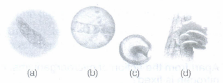
Fill in the table below with only the appropriate items:
A, B, C, D, Plants, Animals, Fungi, Microorganisms.
5.
Name the process in yeast that converts sugars into alcohol.
6.
How do vaccines work?
7.
Boojho wants to know what is pasteurization.
8.
Packed milk bought from the market does not get spoiled. Justify with appropriate reason
9.
Maya's mother has the following items in the kitchen
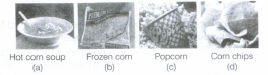
In which food item will the bacteria start multiplying in two days?
10.
Ankur's mother told him to wash his hands with soap before eating because his hands might have bacteria. Ankur did not believe her because he could not see anything on his hands. Why couldn't Ankur see the bacteria on his hands? State how bacteria can be harmful to humans.
11.
Write a short note on. Useful micro-organisms.
12.
Observe the figure and answer the following questions.
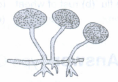
(a) Name the microorganism and the group to which it belongs.
(b) Name the food item on which the organism grows.
(c) Does it grow well in dry or in moist conditions?
(d) Is it safe to eat infected bread?
13.
During biology class, teacher was telling about microbes and how they are useful to humans. Hearing this, Jasmine got confused as she knew the TB caused to her uncle is due to a microbe. She asked his teacher about it. The teacher appreciated her for question and explained the whole class.
(a) What are microbes?
(b) How are microbes helpful to humans?
(c) Name one microbe
(i) used in household products.
(ii) used in antibiotics.
(d) Mention two diseases other than TB caused by microbes.
(e) Identify the values shown by Jasmine.
14.
Which is the plant disease caused by microorganisms?
Measles
Small pox
Citrus Canker
Polio
15.
This micro-organism is used for the large-scale production of alcohol, wine and acetic acid:
amoeba
paramecium
chlamydomonas
yeast
16.
Paheli dug two pits, A and B, in her garden. In pit A, she put a polythene bag packet with some agricultural waste. In pit B, she dumped the same kind of waste but without packing it in a polythene bag. She then covered both the pits with soil. What did she observe after a month?
Waste in pit A degraded faster than that in pit B
Waste in pit B degraded faster than that in pit A
Waste in both pits degraded almost equally
Waste in both pits did not degrade at all
17.
Pathogenic microorganisms present in host cells are killed by medicines called
pain killer
antibodies
antibiotics
vaccines
18.
Spirogyra is
an algae
a fungi
a bacteria
a Protozoa
19.
What are pathogens?
20.
_______________ is a dangerous human and cattle disease caused by a bacterium.
21.
The atmospheric nitrogen remains constant through ______________
22.
Jams, jellies and squashes are preserved by adding salt.
23.
Alexander Fleming
1.
Under unfavourable conditions of temperature and water, they generally form a hard and tough covering called cyst. This protects them. When favourable conditions come, they emerge from their shell, multiply and go through their life cycle.
2.
Alexander Fleming discovered first antibiotic penicillin. Two other common antibiotics are streptomycin and tetracycline.
3.
Curd contains several microorganisms. Of these, the bacterium, Lactobacillus promotes the formation of curd. It multiplies in milk and converts it into curd.
4.
| Group | Living things (A, B, C, D) |
| Microorganisms | A B |
| Fungi | C, D |
5.
Fermentation is the process by which yeast converts sugars into alcohol.
6.
The body produce antibodies when a disease carrying microbe enters in it. The body also retains memory of this encounter to fight the microbe if it enters again. A vaccine consists of dead or weakened microbes which when introduced in a healthy body, produce suitable antibodies to fight and kill themselves. These antibodies remain in the body to protect it from disease causing microbes thus develop immunity.
7.
The milk is heated to 70°C for 15 seconds and then suddenly chilled and stored. By doing so, it prevents the growth of microbes. This process was discovered by Louis Pasteur. It is called Pasteurization.
8.
The milk that comes in packets does not get spoiled because it is pasteurised. Pasteurised milk can be consumed without boiling as it is free from harmful microbes. The milk was heated to about 700 C for 15-30 second and then cooled suddenly and finally packed. By doing so, the growth of microbes was prevented. This process is called pasteurisation.
9.
The ideal conditions for bacteria to multiply are moisture, food and warmth. (b) is kept under cold temperature which prevents decomposing. (c) and (d) are under normal temperature but not as moist as (a). So, only (a) has the most suitable conditions for bacteria to multiply.
10.
Bacteria are too small, cannot be seen with the naked eye. It can be seen only with a microscope.That's why Ankur could not see the bacteria on his hands. Bacteria can cause various diseases like dysentry, typhoid, cholera, etc.
11.
Useful micro-organisms:
(i) Friendly micro-organisms: They are used for various purposes. They are used in making curd (Lactobacillus bacteria) and bread. They are ingredients of Idli, Dhoklas and Bhaturas.
(ii) Commercial uses: Micro-organisms are used for the large scale production of alcohol and wine. Yeast is grown on natural sugars present in grains such as barley, wheat, rice, fruit juices for this purpose.
(iii) Medicinal uses: A very useful medicine group 'antibiotics' is prepared from micro-organisms. Commonly-used antibiotics are formed by fungi and bacteria. Vaccine also protects us from microbes.
(iv) Increasing soil fertility: Some bacteria and bluegreen algae are able to fixnitrogen from atmosphere and form nitrogen compounds which increase the soil fertility.
(v) Decomposers: They decompose the dead organic substances into their constituents and clean the environment.
12.
(a) Microorganism is bread mould (Rhizopus) and the group is fungi.
(b) Organism grows on moist and stale bread.
(c) It grows well in moist condition.
(d) No, the fungus spoils the bread by producing poisonous substances (toxins).
13.
(a) Organisms that cannot be seen with eyes alone are called microbes.
(b) Microbes are useful to humans in many ways. They help in the production of curd, cheese, in cleaning the environment, etc.
(c) (i) Lactobacillus bacteria.
(ii) Penicillium
(d) Diseases caused by microbes are polio, malaria, etc.
(e) Jasmine is attentive, intelligent and curious.
14.
(c)
Citrus Canker
15.
(d)
yeast
16.
(b)
Waste in pit B degraded faster than that in pit A
17.
(c)
antibiotics
18.
(a)
an algae
19.
()
Disease causing micro-organisms are called pathogens.
20.
()
anthrax.
21.
()
nitrogen cycle
22.
(b)
23.
()
Antibiotics

8th Standard CBSE Syllabus & Materials
8th Standard CBSE
CBSE 8th Science Particulate Nature of Matter - New Model Questions Papers Study Material - QB365 Set A
NEW8th Standard CBSE
CBSE 8th Science Pressure, Winds, Stroms and Cyclones - New Model Questions Papers Study Material - QB365 Set A
NEW8th Standard CBSE
CBSE 8th Mathematics Quadrilaterals - New Model Questions Papers Study Material - QB365 Set A
NEW8th Standard CBSE
CBSE 8th Mathematics A story of Numbers - New Model Questions Papers Study Material - QB365 Set A



NCERT Books

Syllabus

Exam Pattern

Sample Question Papers

Previous year Question Papers

Important Notes

MCQ Practice test

NCERT Exemplers

Case study Questions

Image Based Questions

Passage based Questions

HOT Questions

Value Based Questions

Model Questions Papers
NCERT ( Book Back ) Questions

Assertion and Reason
Important Questions And Answers

CBSE 8th Standard CBSE Subjects
CBSE Standards


