
 100% FREE ACCESS
8th Standard CBSE Syllabus & Materials
8th Standard CBSE
CBSE 8th Social Science Theme D - Factors of Production - New Model Questions Papers Study Material - QB365 Set A
NEW8th Standard CBSE
CBSE 8th Social Science Theme C - Universal Franchise and India's Electoral System - New Model Questions Papers Study Material - QB365 Set A
NEW8th Standard CBSE
CBSE 8th Social Science Theme B - The Rise of the Marathas - New Model Questions Papers Study Material - QB365 Set A
NEW8th Standard CBSE
CBSE 8th Social Science Theme B - Reshaping India's Political Map - New Model Questions Papers Study Material - QB365 Set A
NEW8th Standard CBSE
CBSE 8th Social Science Theme A - Natural Resources and Their Use - New Model Questions Papers Study Material - QB365 Set A
NEW8th Standard CBSE
CBSE 8th Science Keeping Time with Skies - New Model Questions Papers Study Material - QB365 Set A

Published on: 29/10/2025
Download CBSE Class 8th Standard CBSE Science question papers, sample papers, important questions, and previous year solved papers in PDF format. Get free study materials, NCERT solutions, and exam preparation resources for Class 8th Standard CBSE Science
Questions + Answers key
Take MCQ Science Test
1.
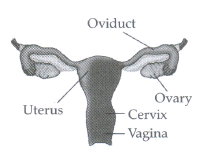
Draw a labelled diagram of female reproductive organs.
2.
Observe the figure given and answer the questions that follow.
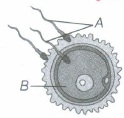
(a) Label A and B.
(b) Identify the process.
(c) What happens during the process and what is formed?
3.
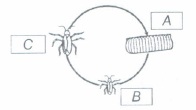
Name the different stages of the cockroach.
4.
Explain the following terms. Zygote, larva, placenta and foetus.
5.
What is metamorphosis? Give examples.
6.
Draw a well labelled diagram of human sperm
7.
What IS IVF?
8.
What do you understand by the term gestation?
9.
Give the other name of oviducts.
10.
Explain the term parthenogenesis.
11.
Name the male sex hormone.
12.
Name a unicellular and multicellular animal which can reproduce by asexual methods.
13.
(a) Give the term used for the fusion of gametes.
(b) Name the type of fertilisation in humans
(c) Where does it mainly occur?
(d) Fertilisation in humans takes place'ln female. How?
14.
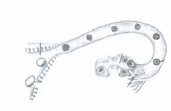
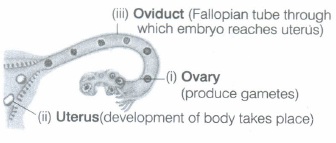
After observing figure above, answer the following.
(a) Read the following statements and label them in the figure.
(i) The part which produces female gametes.
(ii) The part where development of the baby takes place.
(iii) The part through which the developing embryo passes to reach the uterus.
(b) Explain the future development of the embryo that would take place after it gets embedded in the uterus.
15.
The production of an exact copy of an animal by asexual reproduction is known as
budding
mating
cloning
hatching
16.
In human beings, after fertilisation, the structure which gets embedded in the wall of uterus is
ovum
embryo
foetus
zygote
17.
Tadpole is the larva of
fish
frog
mosquito
butterfly
18.
Animals exhibiting external fertilisation produce a large number of gametes. Pick the appropriate reason from the following.
The animals are small in size and want to produce more offsprings
Food is available in plenty in water
To ensure better chance of fertilisation
Water promotes production of large number of gametes
19.
Which is not oviparous animals?
Hen
Frog
Butterfly
Dog
20.
In humans, the development of fertilised egg takes place in the
ovary
testis
oviduct
uterus
21.
The multicellular organism which reproduces by budding is
Amoeba
Yeast
Paramecium
Hydra
22.
Which of the following is not a viviparous animal?
Rat
Lizard
Rabbit
Cat
23.
Sperms are produced in ______
24.
An animal having both male and female reproductive organs is called ______
25.
What is cloning?
26.
What is foetus?
27.
What is embryo?
28.
What is the function of tail in a sperm
29.
What is meant by ovulation?
30.
Define fertilization
1.
2.
(a) A-sperm, B-ovum (egg).
(b) The process is fertilisation.
(c) During the process, the sperm nucleus fuses with the egg nucleus to form the zygote.
3.
In the given figure,
A- Egg case B - Nymph C - Adult cockroach
4.
Zygote Single celled structure formed by the fusion of male and female gamete.
Larva The active form that emerges from the eggs.
Placenta The specialised tissue that attaches the developing foetus to the uterine wall and provides it nourishment, etc.
Foetus The multicellular structure formed after the repeated cell divisions in the zygote.
5.
The process of transformation of larva into an adult through drastic changes is called metamorphosis, e.g. development of caterpillar or pupa into silkworm and development of tadpole into frog.
6.
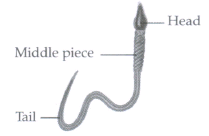
7.
IVF is In-vitro fertilization. In such cases doctor collects freshly released egg and sperms and keeps them together for a few hours for fertilization. When fertilization occurs, the zygote is formed and allowed to develop for about a week and then, it is placed in the mother's uterus. Babies produced through this technique are called test-tube babies.
8.
The period between fertilisation and childbirth is called gestation.
9.
Fallopian tubes is the other name of oviducts.
10.
The phenomenon by which female gametes produce off spring without fertilisation is called parthenogenesis.
11.
The male sex hormone is testosterone.
12.
Hydra (multicellular) and Amoeba (unicellular) are two animals which can reproduce by asexual methods.
13.
(a) Fertilisation is the term used for the fusion of a male gamete (sperm) and a female gamete (ovum or egg) to form a zygote during sexual reproduction.
(b) Internal fertilisation takes place in humans.
(c) Fertilisation mainly occurs in the Fallopian tube.
14.
(a) The parts in the figure are labelled below:
(b) The embryo continues to develop after it gets embedded in the uterus. It divides and differentiates into three germ layers which give rise to different body parts such as hands, legs, head, eyes, ears, etc. This stage where all the body parts are distinct and easily identified in developing embryo is called foetus. After completion of development of foetus, mother gives birth to baby.
15.
(c)
cloning
16.
(b)
embryo
17.
(b)
frog
18.
(c)
To ensure better chance of fertilisation
19.
(d)
Dog
20.
(c)
oviduct
21.
(d)
Hydra
22.
(b)
Lizard
23.
()
testes
24.
()
bisexual
25.
()
Cloning is the production of an exact copy of a cell, any other living part or a complete organism
26.
()
The stage of embryo in which all the body parts can be identified is called a foetus
27.
()
When zygote after repeated division starts to form group of different tissues and organs, it is called embryo.
28.
()
The tail of sperm helps it to swim to reach the egg
29.
()
Release of ovum from ovary is called ovulation
30.
()
The fusion of ovum and sperm is called fertilization

8th Standard CBSE Syllabus & Materials
8th Standard CBSE
CBSE 8th Science Particulate Nature of Matter - New Model Questions Papers Study Material - QB365 Set A
NEW8th Standard CBSE
CBSE 8th Science Pressure, Winds, Stroms and Cyclones - New Model Questions Papers Study Material - QB365 Set A
NEW8th Standard CBSE
CBSE 8th Mathematics Quadrilaterals - New Model Questions Papers Study Material - QB365 Set A
NEW8th Standard CBSE
CBSE 8th Mathematics A story of Numbers - New Model Questions Papers Study Material - QB365 Set A



NCERT Books

Syllabus

Exam Pattern

Sample Question Papers

Previous year Question Papers

Important Notes

MCQ Practice test

NCERT Exemplers

Case study Questions

Image Based Questions

Passage based Questions

HOT Questions

Value Based Questions

Model Questions Papers
NCERT ( Book Back ) Questions

Assertion and Reason
Important Questions And Answers

CBSE 8th Standard CBSE Subjects
CBSE Standards


