
 100% FREE ACCESS
8th Standard CBSE Syllabus & Materials
8th Standard CBSE
CBSE 8th Social Science Theme D - Factors of Production - New Model Questions Papers Study Material - QB365 Set A
NEW8th Standard CBSE
CBSE 8th Social Science Theme C - Universal Franchise and India's Electoral System - New Model Questions Papers Study Material - QB365 Set A
NEW8th Standard CBSE
CBSE 8th Social Science Theme B - The Rise of the Marathas - New Model Questions Papers Study Material - QB365 Set A
NEW8th Standard CBSE
CBSE 8th Social Science Theme B - Reshaping India's Political Map - New Model Questions Papers Study Material - QB365 Set A
NEW8th Standard CBSE
CBSE 8th Social Science Theme A - Natural Resources and Their Use - New Model Questions Papers Study Material - QB365 Set A
NEW8th Standard CBSE
CBSE 8th Science Keeping Time with Skies - New Model Questions Papers Study Material - QB365 Set A

Published on: 29/10/2025
Download CBSE Class 8th Standard CBSE Science question papers, sample papers, important questions, and previous year solved papers in PDF format. Get free study materials, NCERT solutions, and exam preparation resources for Class 8th Standard CBSE Science
Questions + Answers key
Take MCQ Science Test
1.
Pitch of sound is determined by its
frequency
speed
amplitude
loudness
2.
Frequency is expressed in
hertz
metre
Newton
joule
3.
Vibrations in a body produce
sound
pressure
density
current
4.
Unwanted sounds are called
noise
music
Both (a) and (b)
None of these
5.
Which of the following statements are correct?
(i) Sound is produced by vibrations.
(ii) Sound requires a medium for propagation.
(iii) Light and sound both require a medium for propagation.
(iv) Sound travels slower than light
(i) and (ii)
(i), (ii) and (iii)
(ii), (iii) and (iv)
(i), (ii) and (iv)
6.
The loudness of sound depends on
its amplitude
its time period
its frequency
its speed
7.
The hearing range of human ear is
20 Hz to 20 kHz
less than 20 Hz
more than 20 kHz
20 Hz to 25,000 Hz
8.
A list of mediums is given below
(i) Wood
(ii) Water
(iii) Air
(iv) Vacuum
In which of these mediums can sound travel?
(i) and (ii)
(i), (ii) and (iii)
(iii) and (iv)
(ii), (iii) and (iv)
9.
Voice of which of the following is likely to have minimum frequency?
Baby girl
Baby boy
A man
A woman
10.
Sound can travel through
gases only
solids only
liquids only
solids, liquids and gases
11.
Nobody can hear sounds of frequencies higher than 20,000 Hz.
12.
Sound makes eardrum vibrate.
13.
Man cannot hear the sound of bats.
14.
The frequency is expressed in metre (m).
15.
Sound cannot travel in vacuum
16.
The other name of human voice box is............
17.
Sound is produced by...............objects.
18.
Shrillness of a sound is determined by the..........of vibration
19.
The unit of frequency is..........
20.
Time taken by an object to complete one oscillation is called..........
21.
Lightning and thunder take place in the sky at the same time and at the same distance from us. Lightning is seen earlier and thunder is heard later. Can you explain why?
22.
What is the difference between noise and music? Can music become noise sometimes?
23.
Name two musical instruments which produce sound by vibrating strings.
24.
Does any part of our body vibrate when we speak? Name the part.
25.
Hertz
26.
Eardrum
27.
Audible
28.
Pleasant sound
29.
Ultrasonic waves
30.
How can noise pollution be controlled?
31.
Puzzle:
Across:
1. A complete frequency.
2. Unit of frequency.
3. A thin stretched membrane in the ear.
4. Pleasant sound
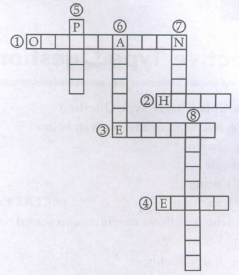
Down:
5. Frequency determines it
6. Hearing range
7. Unpleasant sound
8. More than 20,000 Hz range
32.
Sketch larynx and explain its function in your own words
33.
What is the hearing range of human ears?
34.
On which factor does loudness of sound depend?
35.
Which animal can hear sounds of frequencies higher than 20,000 Hz?
36.
What is the other name of voice box?
37.
Define sound.
1.
(a)
frequency
2.
(a)
hertz
3.
(a)
sound
4.
(a)
noise
5.
(d)
(i), (ii) and (iv)
6.
(a)
its amplitude
7.
(a)
20 Hz to 20 kHz
8.
(b)
(i), (ii) and (iii)
9.
(c)
A man
10.
(d)
solids, liquids and gases
11.
(b)
12.
(a)
13.
(a)
14.
(b)
15.
(a)
16.
()
larynx
17.
()
vibrating
18.
()
frequency
19.
()
hertz
20.
()
time period
21.
Lightning is seen earlier than the sound of thunder because light travels faster than sound. Hence, it reaches us before the sound does.
22.
| Noise | Music |
| It is unpleasant sound | It is pleasant sound |
| It leads to noise pollution | No such pollution takes place |
| It is hazardous to health | It is good for health |
| No special instruments are required to produce noise | Special instruments are required to play music |
Yes, music becomes noise sometimes, when it crosses the bearable range of sound for the ears.
23.
Guitar and sitar are the two musical instrumenls which produce the sound by vibrating string.
24.
Yes, while speaking the part which vibrates is called vocal cords. It is below the throat and creates vibrations while speaking.
25.
()
Unit of frequency
26.
()
Voce box on this
27.
()
20 Hz to 20,000 Hz
28.
()
Music
29.
()
More than 20 kHz
30.
Presence of excessive noise in the surrounding may cause noise pollution, which is harmful to human health. Here are some measures to limit noise pollution:
(i) Noise producing industries should be set up away from residential areas.
(ii) Silencing devices must be installed in aircraft engines, transport vehicles, industrial machines and heavy appliances.
(iii)Use of automobile horn should be minimized.
(iv) TVand music system should be run at low volumes.
(v) Trees must be planted along the sides of the roads and around buildings to cut down the sounds reaching the residents
31.
Across:
1. Oscillation
2. Hertz
3. Eardrum
4. Music
Down:
5. Pitch
6. Audible
7. Noise
8. Ultrasonic
32.
In humans, the sound is produced by the voice box or the larynx. Put your fingers on the throat and find a hard bump that seems to move when you swallow. This part of the body is known as the voice box. Belowit is the windpipe. Two vocal cords, are stretched across the voice box or larynx in such a way that it leaves a narrow slit between them for the passage of air
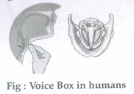
When the lungs force air through the slit, the vocal cords vibrate, producing sound. Muscles attached to the vocal cords may make the cords tight or loose. When the vocal cords are tight and thin, the type or quality of voice is different from that when these are loose and thick.
33.
()
Hearing range of human ears is 20 Hz to 20,000 Hz
34.
()
The loudness of sound depends on the amplitude.
35.
()
Dogs, cats
36.
()
Larynx
37.
()
Sound is a type of energy that makes us hear.

8th Standard CBSE Syllabus & Materials
8th Standard CBSE
CBSE 8th Science Particulate Nature of Matter - New Model Questions Papers Study Material - QB365 Set A
NEW8th Standard CBSE
CBSE 8th Science Pressure, Winds, Stroms and Cyclones - New Model Questions Papers Study Material - QB365 Set A
NEW8th Standard CBSE
CBSE 8th Mathematics Quadrilaterals - New Model Questions Papers Study Material - QB365 Set A
NEW8th Standard CBSE
CBSE 8th Mathematics A story of Numbers - New Model Questions Papers Study Material - QB365 Set A



NCERT Books

Syllabus

Exam Pattern

Sample Question Papers

Previous year Question Papers

Important Notes

MCQ Practice test

NCERT Exemplers

Case study Questions

Image Based Questions

Passage based Questions

HOT Questions

Value Based Questions

Model Questions Papers
NCERT ( Book Back ) Questions

Assertion and Reason
Important Questions And Answers

CBSE 8th Standard CBSE Subjects
CBSE Standards


