
 100% FREE ACCESS
8th Standard CBSE Syllabus & Materials
8th Standard CBSE
CBSE 8th Social Science Theme D - Factors of Production - New Model Questions Papers Study Material - QB365 Set A
NEW8th Standard CBSE
CBSE 8th Social Science Theme C - Universal Franchise and India's Electoral System - New Model Questions Papers Study Material - QB365 Set A
NEW8th Standard CBSE
CBSE 8th Social Science Theme B - The Rise of the Marathas - New Model Questions Papers Study Material - QB365 Set A
NEW8th Standard CBSE
CBSE 8th Social Science Theme B - Reshaping India's Political Map - New Model Questions Papers Study Material - QB365 Set A
NEW8th Standard CBSE
CBSE 8th Social Science Theme A - Natural Resources and Their Use - New Model Questions Papers Study Material - QB365 Set A
NEW8th Standard CBSE
CBSE 8th Science Keeping Time with Skies - New Model Questions Papers Study Material - QB365 Set A

Published on: 29/10/2025
Download CBSE Class 8th Standard CBSE Science question papers, sample papers, important questions, and previous year solved papers in PDF format. Get free study materials, NCERT solutions, and exam preparation resources for Class 8th Standard CBSE Science
Questions + Answers key
Take MCQ Science Test
1.
Unpleasant sounds are called ______
2.
The soles of our shoes get worn out after a period of time. It is due to ___________
3.
Sprinkling of powder on the carrom board ________ friction.
4.
As we go high on the mountain, the __________ decreases.
5.
Time taken to complete one oscillation is called..........
6.
The North pole of a magnet _________ the North pole of another magnet.
7.
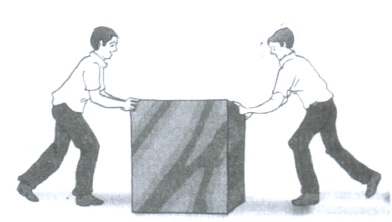
Figure shows two boys applying force on a box. If the magnitude of the force applied by each is equal, will the box experience any force of friction?
8.
What is ultrasound?
9.
An astronaut travels from the earth to the moon, how do its weight and mass change?
10.
Mention the SI unit of pressure
11.
Give an ill effect of noise pollution
12.
How do whales and dolphins hear the sound?
13.
Puzzle:
Across:
1. A complete frequency.
2. Unit of frequency.
3. A thin stretched membrane in the ear.
4. Pleasant sound
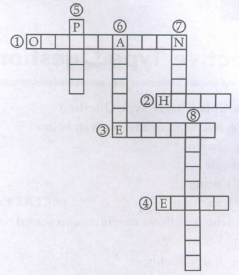
Down:
5. Frequency determines it
6. Hearing range
7. Unpleasant sound
8. More than 20,000 Hz range
14.
Explain in detail how sound travel slower than light.
15.
Hertz
16.
Lubricants
17.
Force of gravity
18.
Ultrasonic waves
19.
Heat is produced due to friction.
20.
A bird makes a high-pitched sound whereas a lion makes a low pitched roar.
21.
Liquids and gases do not exert pressure on the walls of the container.
22.
Sound makes eardrum vibrate.
23.
Friction enables vehicles to move on the ground.
24.
A force can never stop a moving object.
25.
Can we reduce friction to zero?
26.
Name two contact forces.
27.
Friction is called a necessary evil. Why?
28.
Which part of the following objects vibrates and sound is produced?
(i) Ringing of a sound bell
(ii) Buzzing of insects
(iii) Bursting of balloon
(iv) Brushing of table
(v) Playing a sitar
(vi) Dholak
(vii) flute
29.
Describe each effect of the force given below with one example.
(i) Make an object move from rest.
(ii) May change the speed of an object.
(iii) May bring about a change in the shape of an object Ans.
30.
Define frictional force.
1.
()
Noise
2.
()
friction
3.
()
reduces
4.
()
pressure
5.
()
time period
6.
()
repels
7.
No, the force applied by both boys is equal. So, net force will be zero and hence friction force will not come into play.
8.
Ultrasound refers to sound that has a frequency above the audible range (20,000 Hz) of the human ear.
9.
Mass of an object remains constant at all the places, so mass of astronaut will not change. Weight of an object depends upon the gravity, at the moon gravity is lesser than earth, so weight of astronaut will decrease.
10.
SI unit of pressure is N / m2 or pascal.
11.
Temporary deafness is an ill effect of noise pollution.
12.
Through water as a liquid medium, both whales and dolphins hear the sound.
13.
Across:
1. Oscillation
2. Hertz
3. Eardrum
4. Music
Down:
5. Pitch
6. Audible
7. Noise
8. Ultrasonic
14.
As we know that the speed of sound in air is about 340 m/s and the speed of light in air is 300,000,000 m/s. It means that sound travels at a slow speed while light travels much faster than sound.
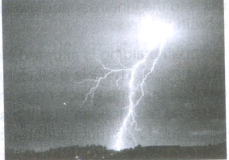
So, though sound may take a few seconds to travel a distance of a few hundred metres, light will take practically negligible time to reach a distance of even a few kilometres. e.g. in the rainy season, the flash of lightning is observed first and the sound of thunder is heard a little later (though both are produced at the same time in clouds) (see figure). It is because of the very high speed of light that we see the flash of lightning first and it is due to comparatively low speed of sound that the thunder is heard a little later.
15.
()
Unit of frequency
16.
()
Oil and grease
17.
()
Non-contact force
18.
()
More than 20 kHz
19.
(a)
20.
(a)
21.
(b)
22.
(a)
23.
(a)
24.
(b)
25.
()
No, because no surface is perfectly smooth
26.
()
Muscular, frictional force
27.
Friction is called a necessary evil because we cannot do anything without friction and it also shows effects. No movement would come to an end without friction. No body would rest without friction. We cannot write with pen or pencil if there is no friction. If an object starts moving, it would never stop if there was no friction. It is also necessary for grip and bringing movements to rest.
28.
(i) Vibration of metal surface
(ii) Flapping of wings
(iii) Air vibrates to produce sound.
(iv) Vibrations of membrane
(v) Vibrations of strings
(vi) Stretched membrane
(vii) Air column
29.
Effect of the force in given situations:
(i) While taking a penalty kick in football the player applies a force on the ball. Before being hit, the ball was at rest and so its speed was zero. It indicates that an object can move from rest with effect of force.
(ii) A car is moving on the road at a slow speed. Applying force on the accelerator will increase the speed of the car.
(iii)Take lump of dough in a plate. Make chapatis from that dough by rolling roller and putting pressure on it. It changes the shape by force.
30.
The force responsible for wearing out tyres of motor vehicle is force of friction.

8th Standard CBSE Syllabus & Materials
8th Standard CBSE
CBSE 8th Science Particulate Nature of Matter - New Model Questions Papers Study Material - QB365 Set A
NEW8th Standard CBSE
CBSE 8th Science Pressure, Winds, Stroms and Cyclones - New Model Questions Papers Study Material - QB365 Set A
NEW8th Standard CBSE
CBSE 8th Mathematics Quadrilaterals - New Model Questions Papers Study Material - QB365 Set A
NEW8th Standard CBSE
CBSE 8th Mathematics A story of Numbers - New Model Questions Papers Study Material - QB365 Set A



NCERT Books

Syllabus

Exam Pattern

Sample Question Papers

Previous year Question Papers

Important Notes

MCQ Practice test

NCERT Exemplers

Case study Questions

Image Based Questions

Passage based Questions

HOT Questions

Value Based Questions

Model Questions Papers
NCERT ( Book Back ) Questions

Assertion and Reason
Important Questions And Answers

CBSE 8th Standard CBSE Subjects
CBSE Standards


