
 100% FREE ACCESS
8th Standard CBSE Syllabus & Materials
8th Standard CBSE
CBSE 8th Social Science Theme D - Factors of Production - New Model Questions Papers Study Material - QB365 Set A
NEW8th Standard CBSE
CBSE 8th Social Science Theme C - Universal Franchise and India's Electoral System - New Model Questions Papers Study Material - QB365 Set A
NEW8th Standard CBSE
CBSE 8th Social Science Theme B - The Rise of the Marathas - New Model Questions Papers Study Material - QB365 Set A
NEW8th Standard CBSE
CBSE 8th Social Science Theme B - Reshaping India's Political Map - New Model Questions Papers Study Material - QB365 Set A
NEW8th Standard CBSE
CBSE 8th Social Science Theme A - Natural Resources and Their Use - New Model Questions Papers Study Material - QB365 Set A
NEW8th Standard CBSE
CBSE 8th Science Keeping Time with Skies - New Model Questions Papers Study Material - QB365 Set A

Published on: 29/10/2025
Download CBSE Class 8th Standard CBSE Science question papers, sample papers, important questions, and previous year solved papers in PDF format. Get free study materials, NCERT solutions, and exam preparation resources for Class 8th Standard CBSE Science
Questions + Answers key
Take MCQ Science Test
1.
Discuss all the physical properties of metals
2.
One day Reeta went to a jeweller's shop with her mother. Her mother gave an old jewellery to the goldsmith to polish. Next day, when they brought the jewellery back, they found that there was a slight loss in its weight. Can you suggest a reason for the loss in weight?
3.
Some properties are listed in the following table. Distinguish between metals and non-metals on the basis of these properties.
| Properties | Metals | Non-metals |
| (a) Appearance | ||
| (b) Hardness | ||
| (c) Malleability | ||
| (d) Ductility | ||
| (e) Heat conduction | ||
| (f) Conduction of electricity |
4.
Explain why the following are made of thermosetting plastics.
(a) Saucepan handles
(b) Electric plugs/switches/plug boards.
5.
Explain the difference between thermoplastic and thermosetting plastics.
6.
What are petrochemicals?
7.
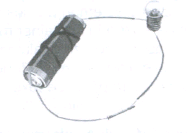
Given in figure you find that the bulb glows when an iron nail is placed between two ends of wire. Complete the following sentences on the basis of this fact.
(a)......... is a metal.
(b) Metals are good.......... of electricity.
8.
A substance was burnt in air. The white residue obtained was added to water. This water solution turned red litmus into blue. State whether the substance is a metal or a non-metal.
9.
Why are bells made of metals?
10.
A purple coloured non-metal forms a brown solution in alcohol which is applied on wounds as an antiseptic. Name the non-metal.
11.
Ductility is the property of metals. What do you mean by ductility?
12.
Why is it not advisable to burn plastic and synthetic fabrics?
13.
As a responsible citizen, we should remember the 4R principle. Can you tell what do 4Rs stand for?
14.
Name the man-made fibre which is prepared from natural materials
15.
Some metals react with bases to produce gas:
Oxygen
Nitrogen
Hydrogen
Carbon dioxide
16.
Which is not a property of plastic?
biodegradable
light
strong
durable
17.
Rayon is obtained by:
Petroleum products
fully synthetic method
chemical treatment of wood pulp
all methods
18.
The non-metal which is liquid at room temperature is
iodine
chlorine
carbon
bromine
19.
Which of the following reacts with cold water vigorously?
Carbon
Sodium
Magnesium
Sulphur
20.
Which of the following is not a metal?
Copper
Sulphur
Aluminium
Iron
21.
Which of the following statements is correct?
All metals are ductile
All non-metals are ductile
Generally, metals are ductile
Some non-metals are ductile
22.
The material which is commonly used for making kitchen containers is
PVC
acrylic
teflon
PET
23.
Which is a thermosetting plastic?
Melamine
Polythene
PVC
Nylon
24.
Polycot is obtained by mixing
nylon and wool
polyester and wool
nylon and cotton
polyester and cotton
25.
Carbon can be drawn into wires.
26.
Articles made up of metals produce ringing sound when struck hard.
27.
Generally, non-metals react with acids.
28.
Most of the plastics are biodegradable
29.
Acrylic is an artificial wool.
30.
________ are used to wrap food items.
31.
The fibres that are made by human beings, are called _______ or _______ fibres.
32.
Cellulose is made of a large number of _______.
33.
Iron is _______________ reactive than copper.
34.
Write the difference between metals and nonmetals on the basis of their physical properties.
35.
Metals are malleable and ductile. They possess such properties which make them useful for a number of purposes, e.g. in making coins, jewellery, electrical wires, etc. For different requirements, different metals are used. It depends on the nature of metals. Now give the answer of the following questions.
(a) Give two reasons why gold is used in making jewellery?
(b) If you have to select the metal among copper, aluminium and silver for the transmission of electricity, which one would you prefer and why?
(c) Between silver and copper, which is the better conductor of heat?
(d) Generally, silver foils are used for the decoration of sweets. Are they harmful for us? If yes, then in what manner?
36.
Lustre
37.
Calcium hydroxide
38.
Plastic bags
39.
Petrochemicals
1.
Physical properties of metals:
(i) Metals are good conductors of heat and electricity.
(ii) Metals are malleable and ductile.
(iii) They are lustrous and can be polished.
(iv) Generally they are solid at room temperature except mercury.
(v) Metals generally have high melting and boiling points.
2.
Gold is a metal which is washed or polished in acidic solution. During the process of polishing, some gold dissolves in acid to form oxide. This causes the loss of gold from the jewellery.
3.
| Properties | Metals | Non-metals |
| (a) Appearance | Lustrous | Non-lustrous |
| (b) Hardness | Hard except sodium and potassium | Generally soft except diamond |
| (c) Malleability | Malleable | Non-malleable |
| (d) Ductility | Ductile | Non-ductile |
| (e) Heat conduction | Good conductors | Poor conductors |
| (f) Conduction of electricity | Good conductors | Poor conductors |
4.
(a) The handles of saucepan are made up of thermosetting plastics because it is a poor (bad) conductor of heat and thus, we can hold the hot saucepan safely without getting our hands burnt.
(b) Electric plugs/switches/plug boards are made up of thermosetting plastics because it is a bad conductor of electricity and thus, protects us from electric current passing through them
5.
Differences between thermoplastics and thermosetting plastics are as follows:
| Thermoplastics | Thermosetting plastics |
| These are the plastics, which get deformed easily on heating, e.g. polythene and PVC. | These are the plastics, which when moulded once, cannot be softened by heating, e.g. bakelite and melamine |
| These are used for making toys, Combs, various types of containers,etc. | In thermosetting plastics, bakelitesare used for making electrical switches, handles of various utensils, etc. Melamine used for making floor tiles, kitchen wares and fabrics which resist fire. |
6.
All synthetic fibres are prepared by a number of processes using raw materials of petroleum origin, called petrochemicals.
7.
(a) Iron
(b) conductors
8.
The substance is a metal
9.
Metals have sonorous property. Ringing sound produce by metals is known as sonorous. So, the bells are made of metals.
10.
Iodine solution is used as an antiseptic.
11.
The property of metals by which they can be drawn into wires is called ductility.
12.
Burning of plastics and synthetic fabrics produces lots of poisonous gases causing air pollution.
13.
4Rs stand for Reduce, Reuse, Recycle and Recover.
14.
Rayon is a man-made fibre which is prepared from wood pulp (natural material).
15.
(c)
Hydrogen
16.
(a)
biodegradable
17.
(c)
chemical treatment of wood pulp
18.
(c)
carbon
19.
(b)
Sodium
20.
(b)
Sulphur
21.
(c)
Generally, metals are ductile
22.
(d)
PET
23.
(a)
Melamine
24.
(d)
polyester and cotton
25.
(b)
26.
(a)
27.
(b)
28.
(b)
29.
(a)
30.
()
Aluminium foils
31.
()
synthetic, man-made
32.
()
glucose units
33.
()
more
34.
| S.No | Metals | Non-Metals |
|---|---|---|
| 1 | Metals are good conductors of heat and electricity | Non-metals are poor conductors of heat and electricity |
| 2 | Metals are malleable and ductile. | Non-metals are neither malleable nor ductile |
| 3 | Metals are lustrous and can be polished | Non-metals are nonlustrous and cannot be polished |
| 4 | Metals are solids except mercury | Non-metals can exist in all states. |
| 5 | Metals have generally high melting and boiling points | Non-metals generally have low melting and boiling points. |
35.
(a) Firstly, gold is highly malleable and ductile. Secondly, it is not attacked by the gases of air.
(b) We prefer copper wire because it is the better electrical conductor than aluminium. However, silver is the best electrical conductor but it is very expensive.
(c) Silver is the better conductor of heat than copper.
(d) Yes, they are harmful for us because they affect throat and lungs.
36.
()
Metal
37.
()
Metallic hydroxide
38.
()
Non bio-degradable
39.
()
Petroleum origin

8th Standard CBSE Syllabus & Materials
8th Standard CBSE
CBSE 8th Science Particulate Nature of Matter - New Model Questions Papers Study Material - QB365 Set A
NEW8th Standard CBSE
CBSE 8th Science Pressure, Winds, Stroms and Cyclones - New Model Questions Papers Study Material - QB365 Set A
NEW8th Standard CBSE
CBSE 8th Mathematics Quadrilaterals - New Model Questions Papers Study Material - QB365 Set A
NEW8th Standard CBSE
CBSE 8th Mathematics A story of Numbers - New Model Questions Papers Study Material - QB365 Set A



NCERT Books

Syllabus

Exam Pattern

Sample Question Papers

Previous year Question Papers

Important Notes

MCQ Practice test

NCERT Exemplers

Case study Questions

Image Based Questions

Passage based Questions

HOT Questions

Value Based Questions

Model Questions Papers
NCERT ( Book Back ) Questions

Assertion and Reason
Important Questions And Answers

CBSE 8th Standard CBSE Subjects
CBSE Standards


