
 100% FREE ACCESS
8th Standard CBSE Syllabus & Materials
8th Standard CBSE
CBSE 8th Social Science Theme D - Factors of Production - New Model Questions Papers Study Material - QB365 Set A
NEW8th Standard CBSE
CBSE 8th Social Science Theme C - Universal Franchise and India's Electoral System - New Model Questions Papers Study Material - QB365 Set A
NEW8th Standard CBSE
CBSE 8th Social Science Theme B - The Rise of the Marathas - New Model Questions Papers Study Material - QB365 Set A
NEW8th Standard CBSE
CBSE 8th Social Science Theme B - Reshaping India's Political Map - New Model Questions Papers Study Material - QB365 Set A
NEW8th Standard CBSE
CBSE 8th Social Science Theme A - Natural Resources and Their Use - New Model Questions Papers Study Material - QB365 Set A
NEW8th Standard CBSE
CBSE 8th Science Keeping Time with Skies - New Model Questions Papers Study Material - QB365 Set A

Published on: 29/10/2025
Download CBSE Class 8th Standard CBSE Social Science question papers, sample papers, important questions, and previous year solved papers in PDF format. Get free study materials, NCERT solutions, and exam preparation resources for Class 8th Standard CBSE Social Science
Questions + Answers key
Take MCQ Social Science Test
1.
Indian constitution inherits seeds of national movement. Discuss?
2.
Write a few lines on right to equality
3.
Write few lines on Constituent Assembly
4.
Describe the main features of Indian Constitution
5.
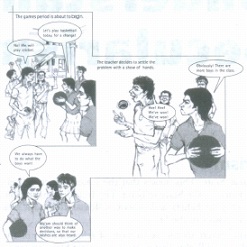
Who is in a minority in the above storyboard? In what way is this minority being dominated by the decision taken by the majority?
6.
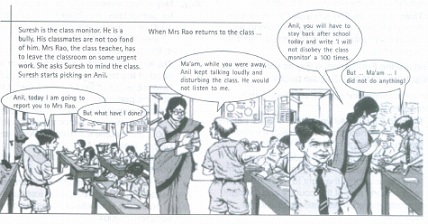
In what way is the class monitor misusing his power?
7.
Discuss about the history of Nepal.
8.
What are the Fundamental Rights given by the Constitution of India? Explain briefly.
9.
Why do we need a Constitution?
10.
What are the functions of a Constitution?
1.
There were some principles that were forged during long struggle for freedom. Constituent Assembly was giving concrete shape and form to the principles it had inherited from the nationalist movement. For decades preceding the promulgation of the Constitution, the nationalist movement had debated many questions that were relevant to the making of the constitution-the shape and form of government India should have, the values it should uphold, the inequalities it should overcome. Answers found in those debates were given their final form in the Constitution. Perhaps, the best summary of the principles that the nationalist movement brought to the Constituent Assembly is the Objectives Resolution, which encapsulated the aspirations and values behind the Constitution. Based on this resolution, our Constitution gave institutional expression to these fundamental commitments: equality, liberty, democracy, sovereignty and a cosmopolitan identity. Thus, our Constitution is not merely a maze of rules and procedures, but it is also a moral commitment to establish a government that will fulfill the many promises that the nationalist movement held before the people.
2.
According to the Indian constitution, Right to Equality means :
(i) Equality before law.
(ii) Equal protection of law
(iii) Prohibition on discrimination on ground of religion, caste, race, gender or birth.
(iv) Equal access to shops, public restaurants, bathing ghats, etc
(v) Equality of opportunity for all citizens of India in matters related to employment.
(vi) Untouchability has been abolished and practice of it will be an offence, punishable in accordance with law.
(vii) The state shall not confer any title, except military and academic distinctions.
(viii) No citizen of India will accept any title from any foreign state. So, 'right to equality' includes every aspect of human life. We can say, it is right to prohibit discrimination on ground of caste, religion, birth, gender or race. It contains a theme of egalitarian society, in which all men are equal as per law and have equal opportunity to develop their personality and potential.
3.
The Indian Constitution was drafted by the Constituent Assembly. In 1946, under the Cabinet Mission Plan, the elections for the Constituent Assembly were held. The members of the Constituent Assembly were elected by the provincial assemblies by the method of single transferable vote system of proportional representation.Seats among different provinces were allocated on the basis of population. The seats were also reserved for Muslims, Sikhs and general candidates, in proportion to their population. Out of the total membership of 389 of the Constituent Assembly, 292were to be the representatives of the provinces, 93 of the princely states and rest of four members were to come from Chief Commissioner s Areas. In the provincial elections, the Muslim league won 73 seats, Congress 208 and independents and others won 9 seats.
The first session was held on December 9, 1946. Dr. Rajendra Prasad was elected as the president. Pt. Jawaharlal Nehru introduced Objectives Resolution which was passed on January 22, 1947. It forms part of the Preamble to the constitution of India. The draft of the constitution was passed by the assembly on November 26,1949. It became effective from January 26, 1950.
4.
The main features of Indian Constitution are as follows
(i) Preamble to our Constitution: Preamble is an opening statement or introduction to a document or speech. The Preamble states the aims and objectives of our Constitution. The Preamble points out the source from which our constitution gets its authority.
(ii) Written and large Constitution: Indian Constitution is in a written form and is also large, comprising all the details.
(iii) Democratic government: A democratic government is one of the most important features of our Constitution. All adult citizens of India have the right to vote and elect their representatives. The laws made, should be for the benefit of the people.
(iv) Socialism: It means to remove inequality of income and to improve the standard of living. Its aim is to offer equal opportunity to all.
(v) Federal system: By federal system, we mean that the Constitution distributes its powers between the state and the centre. There are three lists of subjects, namely-Union List, State List and Concurrent List.The centre is made powerful than the states.
(vi) Universal Adult Franchise: Every citizen above the age of 18 years has a right to vote and he can elect his representative.
(vii) Provision of Fundamental Rights: Indian constitution guarantees certain fundamental rights to the citizens of India. These rights are essential for the welfare and progress of the citizens.
(viii) Independent judiciary: There is a provision for a free and independent judiciary in the Constitution. The executive does not control the judiciary.
5.
The girls of the class are in minority in the above storyboard. The minority has to comply with the decision taken by the majority even if they do not agree with it. In this way, the minority is always dominated by the decisions taken by the majority.
6.
Suresh the class monitor is misusing his power by acting unfairly with his classmate.
He complains against Anil to the teacher even though he had not done anything wrong. Hearing the class monitor's complain the teacher got annoyed and punished Anil.
7.
Nepal had witnessed several people's struggles for democracy. A people's struggle in Nepal in 1990 established democracy that lasted for 12 years until 2002. There was Maoist uprising in the countryside.
The King Gyanendra finally took over as the head of the government in February 2005. In November 2005, the Maoists joined other political parties to sign a 12-point agreement.
This agreement signalled to the larger public an imminent return to democracy and peace. In 2006, this people's movement for democracy began. Finally, in April 2006, the people's movement succeeded in putting an end to the powers of the King.
The King restored the Third Parliament and asked the political parties to form a government. The interim Constitution was adopted in 2007.
8.
The six fundamental rights given by the Indian Constitution are:
(i) Right to Equality All persons are equal before the law and there shall be no discrimination on the basis of religion, caste or sex etc.
(ii) Right to Freedom This includes the right to freedom of speech and expression, the right to form associations, the right to move freely and reside in any part of the country and the right to practise any profession, occupation or business.
(iii) Right against Exploitation Human trafficking, forced labour and children under 14 years of age working in hazardous occupations are prohibited.
(iv) Right to Freedom of Religion All citizens have the right to practise, profess and propagate the religion of their choice.
(v) Cultural and Educational Rights All minorities, religious or linguistic. are free to set up their own educational institutions in order to preserve and develop their culture.
(vi) Right to Constitutional Remedies A citizen can move court if he/she believes that any Fundamental Right has been violated by the state.
9.
The Constitution plays an important role in a state. It is all the more crucial in democratic societies.
Following are some of the reasons why we need a Constitution
(i) First, the Constitution states the ideals that form the basis of the kind of country its people aspire to live in. It gives a set of rules and principles that all persons residing in a country can agree upon and also shape the way in which they want their country to be governed.
(ii) Second, it determines the nature of a country's political system. It gives the guidelines that govern decision-making in the country.
(iii) Third, a Constitution is needed to protect us from ourselves. It guards against taking any decision in haste or whim that might affect the larger interest.
10.
The Constitution plays an important role in a state. It is all the more crucial in democratic societies.
Following are some of the reasons why we need a Constitution
(i) First, the Constitution states the ideals that form the basis of the kind of country its people aspire to live in. It gives a set of rules and principles that all persons residing in a country can agree upon and also shape the way in which they want their country to be governed.
(ii) Second, it determines the nature of a country's political system. It gives the guidelines that govern decision-making in the country.
(iii) Third, a Constitution is needed to protect us from ourselves. It guards against taking any decision in haste or whim that might affect the larger interest.

8th Standard CBSE Syllabus & Materials
8th Standard CBSE
CBSE 8th Science Particulate Nature of Matter - New Model Questions Papers Study Material - QB365 Set A
NEW8th Standard CBSE
CBSE 8th Science Pressure, Winds, Stroms and Cyclones - New Model Questions Papers Study Material - QB365 Set A
NEW8th Standard CBSE
CBSE 8th Mathematics Quadrilaterals - New Model Questions Papers Study Material - QB365 Set A
NEW8th Standard CBSE
CBSE 8th Mathematics A story of Numbers - New Model Questions Papers Study Material - QB365 Set A



NCERT Books

Syllabus

Exam Pattern

Sample Question Papers

Previous year Question Papers

Important Notes

MCQ Practice test

NCERT Exemplers

Case study Questions

Image Based Questions

Passage based Questions

HOT Questions

Value Based Questions

Model Questions Papers
NCERT ( Book Back ) Questions

Assertion and Reason
Important Questions And Answers

CBSE 8th Standard CBSE Subjects
CBSE Standards


