
 100% FREE ACCESS
8th Standard CBSE Syllabus & Materials
8th Standard CBSE
CBSE 8th Social Science Theme D - Factors of Production - New Model Questions Papers Study Material - QB365 Set A
NEW8th Standard CBSE
CBSE 8th Social Science Theme C - Universal Franchise and India's Electoral System - New Model Questions Papers Study Material - QB365 Set A
NEW8th Standard CBSE
CBSE 8th Social Science Theme B - The Rise of the Marathas - New Model Questions Papers Study Material - QB365 Set A
NEW8th Standard CBSE
CBSE 8th Social Science Theme B - Reshaping India's Political Map - New Model Questions Papers Study Material - QB365 Set A
NEW8th Standard CBSE
CBSE 8th Social Science Theme A - Natural Resources and Their Use - New Model Questions Papers Study Material - QB365 Set A
NEW8th Standard CBSE
CBSE 8th Science Keeping Time with Skies - New Model Questions Papers Study Material - QB365 Set A

Published on: 29/10/2025
Download CBSE Class 8th Standard CBSE Social Science question papers, sample papers, important questions, and previous year solved papers in PDF format. Get free study materials, NCERT solutions, and exam preparation resources for Class 8th Standard CBSE Social Science
Questions + Answers key
Take MCQ Social Science Test
1.
Do you think water is available in Chennai and affordable by all? Discuss.
2.
Which method of periodization was followed by most of the English historians for writing Indian history? Why was this method not suitable in context to India?
3.
What is meant by Aligarh Movement? What was its contribution?
4.
Describe the steps due to which the international market for traditional Indian textiles was eroded during the 19th century.
5.
What problems did the British face when they enacted the forest laws? How did they overcome these problems?
6.
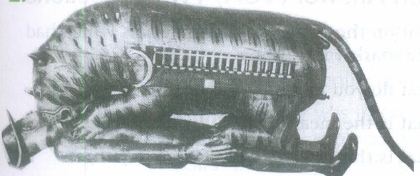
(iii) Where is the toy tiger now kept?
7.
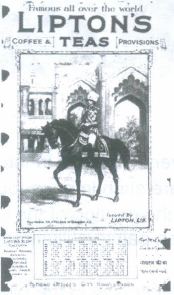
What title was he given?
8.
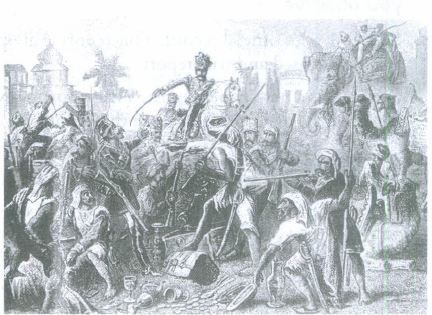
What event is shown in the picture?
9.
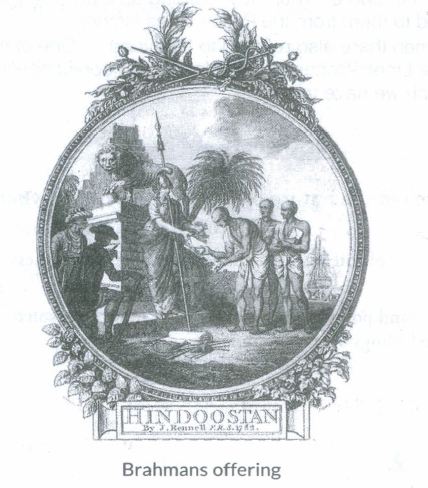
Look carefully and write a paragraph explaining how this image projects an imperial perception.
10.
Mill justified the British rule in India. Is it clear by his periodisation of history? Justify.
1.
(i)Water supply in Chennai is marked by shortages.
(ii)Municipal supply meets only about half the needs of the people of the city, on an average.
(iii) There are areas which get more water regularly than others. Those areas that are close to the storage points get more water, whereas colonies further away receive less water.
(iv) Apart from the availability of water, access to 'safe' drinking water is also available to some people and this depends on their afford ability.
(v) The burden of shortfall in water supply falls mostly on the poor.
(vi) The middle class, when faced with water shortage, are able to cope through a variety of private means such as digging bore wells, buying water from tankers and using bottled water for drinking.
2.
(i) The British historians divided Indian history into three periods, namely, ancient, medieval and modern.
(ii) This method of periodization was not suitable in context to India because this method had various limitations.
(iii) Except in Europe, we cannot find any such type of sequence and evidence to define these three ages in any other country in the world.
(iv) The Britishers came in India and rule over here without following the principles of equality, freedom, democracy, etc.
(v) In Europe, presence of these symbols denoted modern age.
3.
Sir Sayyid Ahmed Khan founded the Mohammedan Anglo-Oriental College at Aligarh in 1875 which later became Aligarh Muslim University. It was because of this, the movement started by Sayyid Ahmed Khan is known as Aligarh Movement. He started this movement in order to give respectable position to Muslims in society as they had in the past.
The contribution of the Aligarh Movement was:
(i) The Aligarh Movement emerged as a liberal, modern trend among the Muslim intelligentsia based on Mohammedan Anglo-Oriental College, Aligarh.
(ii) It awakened the Muslims and soon Aligarh became the centre for religious and cultural revival place for them.
(iii) It spread modern education among Muslims without weakening their allegiance to Islam.
(iv) Sir Sayyid condemned purdah system, polygamy, divorce system of Muslims and advocated for women's education, widow remarriage etc.
4.
The steps due to which the international market for traditional Indian textiles was eroded were:
(i) Very high duties were imposed on Indian textiles imported into Britain.
(ii) Due to this, English and European companies stopped buying Indian goods
(iii) British cotton textiles made on automatic machines were very cheap and captured European and American markets which were earlier captive markets for Indian textiles.
(iv) By the 1830s, British cotton cloth flooded Indian markets. Within another 50 years, two-thirds of cotton clothes worn by Indians were made of cloth produced in Britain.
(v) This rendered many weavers and spinners jobless.
5.
When the British enacted the forest laws, they faced these two problems:
(i) They faced a revolt from the jhum cultivators, as they had lost their livelihood. In addition, the tribals were not allowed to venture inside the forests to extract forest produce for sale.
(ii) The British Forest Department required labour to cut trees for making railway sleepers and labour to transport logs for use in shipbuilding and other needs.
The British overcame both problems together by establishing forest villages of tribals, where the jhum cultivators were allowed to cultivate small patches of land in forests on the condition that those who lived in the villages would have to provide labour to the Forest Department and look after the forests.
6.
This toy tiger was taken by the British when Tipu Sultan died defending he capital Seringapatam in 1799. The toy was then kept in the Victoria and Albert Museum in London.
7.
He was given the title Duke of Connaught.
8.
The event shown in the picture is the revolt of 1857.
9.
Shastras to Britannia, frontispiece to the first map produced by James Rennel, 1782 Renne! was asked by Robert Clive to produce maps of Hindustan. An enthusiastic supporter of British conquest of India, Renne! saw the preparation of maps as essential to the process of domination. The picture here tries to suggest that Indians
willingly gave over their ancient texts to Britannia - the symbol of British power - as if asking her to become the protector of Indian culture.
10.
In his book, 'A History of British India', James Mill divided Indian history into three periods-. Hindu, Muslim, and British. He thought that all Asian societies were at a lower level of civilisation than Europe. Mill pointed out that before the British came to India, Hindu and Muslim despots ruled India. At that time, some factors like religious intolerance, caste taboos, and superstitious practices dominated India's social life. Mill felt that only British rule could save the Indians from the darkness. Thus, he advocated the theory of expanding colonisation, i.e. the British should conquer all the territories in India to ensure enlightenment and happiness for Indians. He strongly believed that India can be capable of progress only with the help of the British. In this way, he justified the British rule in India.

8th Standard CBSE Syllabus & Materials
8th Standard CBSE
CBSE 8th Science Particulate Nature of Matter - New Model Questions Papers Study Material - QB365 Set A
NEW8th Standard CBSE
CBSE 8th Science Pressure, Winds, Stroms and Cyclones - New Model Questions Papers Study Material - QB365 Set A
NEW8th Standard CBSE
CBSE 8th Mathematics Quadrilaterals - New Model Questions Papers Study Material - QB365 Set A
NEW8th Standard CBSE
CBSE 8th Mathematics A story of Numbers - New Model Questions Papers Study Material - QB365 Set A



NCERT Books

Syllabus

Exam Pattern

Sample Question Papers

Previous year Question Papers

Important Notes

MCQ Practice test

NCERT Exemplers

Case study Questions

Image Based Questions

Passage based Questions

HOT Questions

Value Based Questions

Model Questions Papers
NCERT ( Book Back ) Questions

Assertion and Reason
Important Questions And Answers

CBSE 8th Standard CBSE Subjects
CBSE Standards


