
 100% FREE ACCESS
8th Standard CBSE Syllabus & Materials
8th Standard CBSE
CBSE 8th Social Science Theme D - Factors of Production - New Model Questions Papers Study Material - QB365 Set A
NEW8th Standard CBSE
CBSE 8th Social Science Theme C - Universal Franchise and India's Electoral System - New Model Questions Papers Study Material - QB365 Set A
NEW8th Standard CBSE
CBSE 8th Social Science Theme B - The Rise of the Marathas - New Model Questions Papers Study Material - QB365 Set A
NEW8th Standard CBSE
CBSE 8th Social Science Theme B - Reshaping India's Political Map - New Model Questions Papers Study Material - QB365 Set A
NEW8th Standard CBSE
CBSE 8th Social Science Theme A - Natural Resources and Their Use - New Model Questions Papers Study Material - QB365 Set A
NEW8th Standard CBSE
CBSE 8th Science Keeping Time with Skies - New Model Questions Papers Study Material - QB365 Set A

Published on: 29/10/2025
Download CBSE Class 8th Standard CBSE Social Science question papers, sample papers, important questions, and previous year solved papers in PDF format. Get free study materials, NCERT solutions, and exam preparation resources for Class 8th Standard CBSE Social Science
Questions + Answers key
Take MCQ Social Science Test
1.
How have powers and functions of the Central and State Governments been divided by the Constitution?
2.
Find out more about the language divisions in Pakistan that led to the creation of the new nation of Bangladesh. How did Bangladesh achieve independence from Pakistan?
3.
Discuss in your class, one advantage and one disadvantage today of the decision to keep English as a language of India
4.
India's population in 1947 was almost ----------- million.
5.
-----------were recommended seats in state legislatures as well as jobs in government administrative service.
6.
.............was of the opinion that India could not and must not become a 'Hindu Pakistan'
7.
Prime Minister Jawaharlal Nehru was also the.......minister of newly independent India.
8.
Economic planning by which both the state and the private sector played a role in the development was called a..........model
9.
Universal Adult Franchise grants right to vote to all the adult citizens
10.
In 1960 the bilingual state of Bombay was divided into two separate states
11.
Mahatma Gandhi returned to India leaving South Africa for ever in 1920
12.
In the first national election, only men were allowed to vote
13.
At independence, the majority of Indians lived in village
14.
Bhilai Steel Plant was set up with the assistance of:
England
France
Germany
USSR
15.
When was the Second Five Year Plan formulated?
1950
1948
1956
1960
16.
In 1966, the state of Punjab was divided into........
Punjab and Haryana
Punjab and Delhi
Punjab an Chandigarh
Chandigarh and Haryana
17.
The person who said, "Disruptionist tendencies had come to the fore; to check them, the nation had to be strong and united" was
Jawaharlal Nehru
Sardar Vallabhbhai Patel
Bal Gangadhar Tilak
Dr. BR Ambedkar
18.
According to Dr. BR Ambedkar, political democracy has to be accompanied by two kinds of democracy, namely economic democracy and
representative democracy
linguistic democracy
religious democracy
social democracy
19.
Write a short note on India's foreign policy.
20.
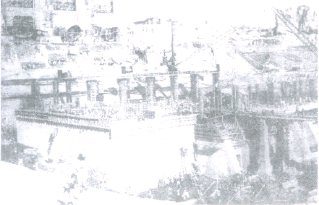
(i) At which dam is work going on in the picture
(ii) On which river is ots built?
21.
When was the Indian Constitution adopted and what were its features?
22.
Formulation of 2nd five-year-plan
23.
Prime Minister
24.
Meetings of the Constituent Assembly
25.
India wins freedom
26.
Hind Swaraj
27.
What is Union List? Explain with the help of an example
28.
What promise did the Congress make in 1920s?
29.
How many Princely States were in India at the time of partition?
30.
Who was Potti Sriramulu?
31.
Name two subjects of the State List?
32.
What was the population of India in 1947?
33.
How many people came to India after partition of India in 1947?
34.
Which leaders led the Indian delegation to the U.N.? What was their argument?
35.
Discuss one feature of the constitution
36.
Mention the challenges faced by independent India.
37.
This is a picture of Potti Sriramulu. Answer the following questions associated with him:
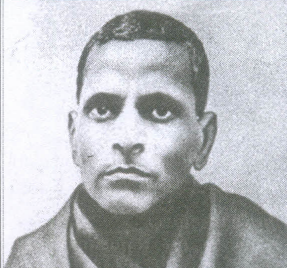
(i) Who was Potti Sriramulu? Why did he become famous?
(ii) What was his demand?
(iii) When was the Andhra State formed?
1.
The Indian Constitution gives the division of power in the form of three lists, known as Union List, State List and Concurrent List. The Union List includes subjects like taxes, defence and foreign affairs. Union List would be the exclusive responsibility of the Centre.
The State List would be taken care of principally by the states. It includes subjects like education and health. The centre and the states would have joint responsibility in case of the Concurrent List. It includes subjects like forests and agriculture
2.
After division of India in 1947 into India and Pakistan (West and East), the Urdu speaking rulers of West Pakistan kept torturing the Bengali speaking population of East Pakistan. A time came when the East Pakistani Population rose in revolt against West Pakistan. The government committed atrocities on the Bengalis and thousands of them came to India as refugees.
The Bengali population formed Mukti Vahini under the leadership of Muziburr Rehman. After a long struggle Bangladesh achieved Independence in 1971.
3.
The Constituent Assembly took the decision that while Hindi would be the official language of India, English would be used in the courts, the services and communications between one state and another.
The advantage of this decision is:
It would keep the whole of India united. The South Indian states would not separate themselves from India.
The disadvantage of this decision is :
It would hamper the development and growth of Hindi all over India.
4.
()
345
5.
()
Harijans
6.
()
Jawaharlal Nehru
7.
()
foreign
8.
()
Mixed Economy
9.
(a)
10.
(a)
11.
(b)
12.
(b)
13.
(a)
14.
(d)
USSR
15.
(c)
1956
16.
(a)
Punjab and Haryana
17.
(a)
Jawaharlal Nehru
18.
(d)
social democracy
19.
(i) India gained freedom after the Second World War.
(ii) A new international body-The United Nations was formed in 1945.
(iii) At this time, colonial empires were collapsing and many countries were attaining independence.
(iv) Prime Minister Jawaharlal Nehru, who was also the foreign minister of India, developed free India's foreign policy in this context.
(v) Non-alignment formed the bedrock of this foreign policy.
(vi) This was also the period when the cold war emerged, that is, power rivalries and conflicts between the USA and USSR emerged and both countries were creating respective military alliances.
(vii) The non-aligned movement urged the countries not to join either of the two major alliance groups.
(viii) Non aligned countries such as India played an active role in mediating between the American and Soviet Alliances.
(ix) They tried to prevent war by taking humanitarian and moral stands.
20.
(i) The work is gag on at Gandhi Sagar dam.
(ii) It is built on the Chambal river.
21.
The Indian Constitution was adopted on 26th January 1950. Main features of the Indian
constitution are:
(i) Universal Adult Franchise It adopted Universal Adult Franchise. According to this, all Indians above the age of 21 would be allowed to vote in state and national elections
(ii) Equality to all citizens It guaranteed equality before the law to all citizens, regardless of their caste or religious affiliations.
All the people of different religions would be given the same opportunities when it came to seeking jobs in government or the private sector, they have the same rights before the law.
(iii) Granting special privilege to Scheduled Castes (SC) and Scheduled Tribes (ST) It offered privileges for the poorest and most disadvantaged Indians. A certain percentage of seats in legislatures, as well as jobs in government services, are reserved for them.
(iv) Abolition of untouchability The practice of untouchability was abolished. The Hindu temples were open to all including the untouchables.
22.
()
1956
23.
()
Jawaharlal Nehru
24.
()
Held in New Delhi
25.
()
Moulana Abul Kalam Azad
26.
()
Mahatma Gandhi
27.
()
The subjects or issues relating to the whole nation are given in the Union List. Defence and taxes are a few examples.
28.
()
In 1920s, the Congress promised that after independence each linguistic group would have its own province.
29.
()
There were almost 500 Princely States in India at the time of partition
30.
()
Potti Sriramulu was a veteran Gandhian who went on a hunger strike demanding the formation of Andhra state to protect the interests of Telegu speakers.
31.
()
Two subjects of the State List are education and health.
32.
()
India's population in 1947 was almost 345 million
33.
()
After partition, 8 million refugees had come to India from Pakistan in 1947.
34.
Jawaharlal Nehru and Krishna Menon led the Indian delegation to the U.N. between 1952 and 1962.
They argued for the policy of non-alignment.
35.
One feature of the constitution was its adoption of universal adult franchise. All Indians would be allowed to vote in state and national elections
36.
The challenges faced by independent India were:
(i) Framing a new constitution for India.
(ii) Integration of states into the Indian union.
(iii) Planning for development of the nation (5-year plans).
(iv) To develop an independent foreign policy for country.
37.
(i) Potti Sriramulu was a Gandhian leader in Andhra Pradesh. He became famous because of a hunger strike.
(ii) He demanded for an independent state for Telugu speaking people.
(iii) On October 1,1953the new state of Andhra Pradesh came in to being after the demise of Potti Sriramulu.

8th Standard CBSE Syllabus & Materials
8th Standard CBSE
CBSE 8th Science Particulate Nature of Matter - New Model Questions Papers Study Material - QB365 Set A
NEW8th Standard CBSE
CBSE 8th Science Pressure, Winds, Stroms and Cyclones - New Model Questions Papers Study Material - QB365 Set A
NEW8th Standard CBSE
CBSE 8th Mathematics Quadrilaterals - New Model Questions Papers Study Material - QB365 Set A
NEW8th Standard CBSE
CBSE 8th Mathematics A story of Numbers - New Model Questions Papers Study Material - QB365 Set A



NCERT Books

Syllabus

Exam Pattern

Sample Question Papers

Previous year Question Papers

Important Notes

MCQ Practice test

NCERT Exemplers

Case study Questions

Image Based Questions

Passage based Questions

HOT Questions

Value Based Questions

Model Questions Papers
NCERT ( Book Back ) Questions

Assertion and Reason
Important Questions And Answers

CBSE 8th Standard CBSE Subjects
CBSE Standards


