
 100% FREE ACCESS
8th Standard CBSE Syllabus & Materials
8th Standard CBSE
CBSE 8th Social Science Theme D - Factors of Production - New Model Questions Papers Study Material - QB365 Set A
NEW8th Standard CBSE
CBSE 8th Social Science Theme C - Universal Franchise and India's Electoral System - New Model Questions Papers Study Material - QB365 Set A
NEW8th Standard CBSE
CBSE 8th Social Science Theme B - The Rise of the Marathas - New Model Questions Papers Study Material - QB365 Set A
NEW8th Standard CBSE
CBSE 8th Social Science Theme B - Reshaping India's Political Map - New Model Questions Papers Study Material - QB365 Set A
NEW8th Standard CBSE
CBSE 8th Social Science Theme A - Natural Resources and Their Use - New Model Questions Papers Study Material - QB365 Set A
NEW8th Standard CBSE
CBSE 8th Science Keeping Time with Skies - New Model Questions Papers Study Material - QB365 Set A

Published on: 29/10/2025
Download CBSE Class 8th Standard CBSE Social Science question papers, sample papers, important questions, and previous year solved papers in PDF format. Get free study materials, NCERT solutions, and exam preparation resources for Class 8th Standard CBSE Social Science
Questions + Answers key
Take MCQ Social Science Test
1.
Why was there great demand for Indian indigo in foreign market?
2.
Distinguish between the features of Mahalwari System and Permanent Settlement.
3.
What do you know about Ryotwari system?
4.
Who was Holt Mackenzie? What was his contribution in the field of land revenue?
5.
What were the problems with the Permanent Settlement of Bengal after it was introduced in 1793?
6.
What do you know about Peasant's Revolt?
7.
Colebrook on Bengal ryots
8.
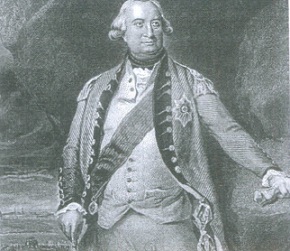
(i) Who is shown in the above picture?
(ii) Which post did he hold?
(iii) Which system was introduced when he held that post?
9.
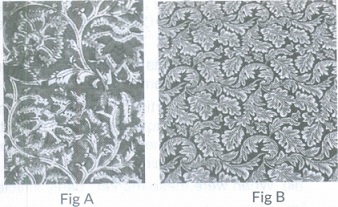
(i) Who designed and produced the floral cotton design in the pictures of Fig A and Fig B?
(ii) How was the blue in these prints produced?
(iii) What do you know about Kalamkari art?
10.
Describe different stages of the production of indigo.
1.
(i) The European cloth manufacturers used indigo to dye the clothes.
(ii) It produced a rich blue colour which was used for the purpose of dyeing.
(iii) Indigo plant grows only in the tropical regions and it was impossible to grow indigo in temperate climate of Europe.
2.
(i) The Permanent Settlement was introduced in Bengal, Bihar, Orissa, the coastal districts of Andhra Pradesh and Banaras, while the Mahalwari system was introduced in western parts of Uttar Pradesh, Punjab and Delhi.
(ii) Under Mahalwari System, a group of villages was considered as an important social institution and so it was preserved.
(iii) The collection of land revenue was fixed in the Permanent Settlement, but under the Mahalwari System, the collection of land revenue was revised periodically.
(iv) The Zamindars were responsible for collecting the land revenue from the cultivators in the Permanent Settlement Act, whereas, in Mahalwari System, the right to collect the land revenues was given to the village head.
3.
(i) Ryotwari system was a settlement made between the government and the ryots (peasants).
(ii) Under this system, the revenue was fixed for a maximum period of thirty years depending upon the fertility of the soil and value.
(iii) The government collected 50% of the net value of crops as revenue. Such a huge revenue demand was oppressive for the peasants.
4.
Holt Mackenzie was an Englishman who introduced the Mahalwari system, which came into effect in India in 1822.
The contribution of Holt Mackenzie are as follows:
(i) Mackenzie realised that the village was an important social institution in North Indian society and needed to be preserved. Collectors went from village to village, inspecting the land, measuring the fields and recording the customs and rights of different groups.
(ii) The estimated revenue of each plot within a village was added up to calculate the revenue that the whole village (mahal) had to pay.
(iii) The charge of collecting the revenue and paying it to the Company was given to the village headman, rather than the zamindar.
5.
The Permanent Settlement of Bengal was introduced by the company officials to ensure a regular flow of income into the company's treasury. It was also assumed that the zamindars would invest in the improvement of the land. However, the zamindars did not invest any money in the improvement of the land even after benefit from the increased production of the land. The revenue fixed was very high and some zamindars found it difficult to pay the revenue and lost their zamindari rights
Zamindaris were either sold or auctioned off by the company officials. Zamindars gave out land to tenants and extracted rent from them at any cost. Tenants were undoubtedly at the receiving end of the settlement.
6.
(i) The first major revolt broke out in Bengal led by Sanyasis, soon after the British conquest of Bengal.
(ii) This revolt soon spread in many areas of the eastern India.
(iii) The peasants formed a very strong army. The troop sent by company to suppress them were met with defeat. It took about 30 years to put an end to this revolt.
(iv) The Chuar Revolt of Bihar and Bengal broke out in 1796 and continued till 1816. (v) The Moplah peasants of Malabar organised 22 rebellions within the period of 18 years (from 1836 to 1854).
7.
powerful ryots did not cultivate, but instead gave out their lands to others (the under-tenants), taking from them very high rents.
In 1806, HT Colebrook described the conditions of these under-tenants in Bengal: The under-tenants, depressed by an excessive rent in kind, and by usurious returns for the cattle, seed, and subsistence, advanced to them, can never extricate themselves from debt.
In so abject a state, they cannot labour in spirit, while they earn a scanty subsistence without hope of bettering their situation.
Srikalahasti style and Machilipatnam style. 'Kalam' or pen is used for drawing of the subject in this art form.
8.
(i) Charles Cornwallis is shown in the above picture.
(ii) He was the Governor-General of India.
(iii) Cornwallis was appointed the Governor-General of India in 1786.
His greatest achievement in India was the reorganisation of the land taxation, known as the Permanent Settlement of 1793. He granted legal ownership of their land to the zamindars. In return, they had to pay the government 90 per cent of the rent which they collected from the farmers. As per Permanent Settlement, rajas and taluqdars were recognised as zamindars. The zamindars were supposed to collect the land revenue from the peasants.
9.
(i) The picture in Fig A is Kalamkari print. It was created by weavers of Andhra Pradesh in India. The picture in Fig B is a floral cotton print. It was designed and produced by William Morris, a famous poet and artist of 19th century Britain.
(ii) In both of these prints, the blue colour was produced by indigo. This indigo gave rich blue colour and was produced in India.
(iii) Kalamkari is a type of hand-painted or block-printed cotton textile, produced in parts of India. It is also produced in Iran. There are two distinctive styles of Kalamkari art in India.
10.
After harvest, the indigo plant was taken to the vats in the indigo factory. Three or four vats were needed to manufacture the dye. Each vat had a separate function.
Leaves of the indigo plant were first soaked in warm water in the fermenting vat for several hours. When the plants fermented, the liquid began to boil and bubble. Now, the rotten leaves were taken out and the liquid drained into the second vat, known as the beater vat.
The solution was continuously stirred and beaten with paddles. When the liquid gradually turned green and then blue, lime water was added to the vat. Gradually, the indigo separated out in flakes. A muddy sediment settled at the bottom of the vat and a clear liquid rose to the surface. The liquid was drained off and the sediment, i.e. the indigo pulp transferred to another vat, known as the settling vat. Then the pulp was pressed and dried for sale.

8th Standard CBSE Syllabus & Materials
8th Standard CBSE
CBSE 8th Science Particulate Nature of Matter - New Model Questions Papers Study Material - QB365 Set A
NEW8th Standard CBSE
CBSE 8th Science Pressure, Winds, Stroms and Cyclones - New Model Questions Papers Study Material - QB365 Set A
NEW8th Standard CBSE
CBSE 8th Mathematics Quadrilaterals - New Model Questions Papers Study Material - QB365 Set A
NEW8th Standard CBSE
CBSE 8th Mathematics A story of Numbers - New Model Questions Papers Study Material - QB365 Set A



NCERT Books

Syllabus

Exam Pattern

Sample Question Papers

Previous year Question Papers

Important Notes

MCQ Practice test

NCERT Exemplers

Case study Questions

Image Based Questions

Passage based Questions

HOT Questions

Value Based Questions

Model Questions Papers
NCERT ( Book Back ) Questions

Assertion and Reason
Important Questions And Answers

CBSE 8th Standard CBSE Subjects
CBSE Standards


