
 100% FREE ACCESS
8th Standard CBSE Syllabus & Materials
8th Standard CBSE
CBSE 8th Social Science Theme D - Factors of Production - New Model Questions Papers Study Material - QB365 Set A
NEW8th Standard CBSE
CBSE 8th Social Science Theme C - Universal Franchise and India's Electoral System - New Model Questions Papers Study Material - QB365 Set A
NEW8th Standard CBSE
CBSE 8th Social Science Theme B - The Rise of the Marathas - New Model Questions Papers Study Material - QB365 Set A
NEW8th Standard CBSE
CBSE 8th Social Science Theme B - Reshaping India's Political Map - New Model Questions Papers Study Material - QB365 Set A
NEW8th Standard CBSE
CBSE 8th Social Science Theme A - Natural Resources and Their Use - New Model Questions Papers Study Material - QB365 Set A
NEW8th Standard CBSE
CBSE 8th Science Keeping Time with Skies - New Model Questions Papers Study Material - QB365 Set A

Published on: 29/10/2025
Download CBSE Class 8th Standard CBSE Social Science question papers, sample papers, important questions, and previous year solved papers in PDF format. Get free study materials, NCERT solutions, and exam preparation resources for Class 8th Standard CBSE Social Science
Questions + Answers key
Take MCQ Social Science Test
1.
Find out from your parents, friends or teachers, the names of some heroes of other tribal revolts in the twentieth century. Write their story in your own words.
2.
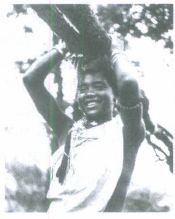
A picture of a Santhal girl carrying firewood is shown. What was the occupation of the Santhals? Why were the Santhals unhappy under the British Raj?
3.
'Blood trickles from my shoulders' The songs the Mundas sang bemoaned their misery. Alas! under [the drudgery of] forced labour Blood trickles from my shoulders Day and night the emissary from the zamindars, Annoys and irritates me, day I and night I groan Alas! This is my condition I do not have a home, where shall I get happiness Alas! The song depicts the grievances of the Mundas. Who were the Mundas and what was the aim of their movement?
4.
"In this land of the English how hard it is to live"
In the1930s Verrier Elwin visited the land of the Baigas - a tribal group in central India. He wanted to know about them - their customs and practices, their art and folklore. He recorded many songs that lamented the hard time the Baigas were having under British rule.
In this land of the English how hard it is to live. How hard it is to live. In the village sits the landlord. In the gate sits the Kotwar. In the garden sits the Patwari. In the field sits the government. In this land of the English how hard it is to live. To pay cattle tax we have to sell cow. To pay forest tax we have to sell buffalo. To pay land tax we have to sell bullock. How are we to get our food? who are the Baigas and what was their main occupation? Why did they find it difficult to live under the British?
5.
Have you ever noticed that people living in different types of societies do not share the same notion of work and time? The lives of the shifting cultivators and hunters in different regions were regulated by a calendar and division of tasks for men and women. Verrier Elwin, a British anthropologist who lived among the Baigas and Khonds of central India for many years in the 1930s and 1940s, gives us a picture of what this calendar and division of tasks was like. He writes: In Chait, women went to clearings to ... cut stalks that were already reaped; men cut large trees and go for their ritual hunt. The hunt began at full moon from the east. Traps of bamboo were used for hunting. The women gathered fruits like sago, tamarind, and mushroom. Baiga women can only gather roots or Kanda and mahua seeds. Of all the adivasis in Central India, the Baigas were known as the best hunters ... In Baisakh the firing of the forest took place, the women gathered unburnt wood to burn. Men continued to hunt, but nearer their villages. In Jeth sowing took place and hunting still went on. From Asadh to Bhadon the men worked in the fields. In Kuar the first fruits of beans were ripened and in Kartik kutki became ripe. In Aghan every crop was ready and in Pus winnowing took place. Pus was also the time for dances and marriages. In Magh, shifts were made to new bewars and hunting-gathering was the main subsistence activity. The cycle described above took place in the first year. In the second year, there was more time for hunting as only a few crops had to be sown and harvested. But since there was enough food the men lived in the bewars. It was only in the third year that the diet had to be supplemented with the forest products. Adapted from Verrier Elwin, Baiga(1939) and Elwin's unpublished 'Notes on the Khonds' (Verrier Elwin Papers, Nehru Memorial Museum, and Library). look carefully at the tasks that Baiga men and women did. Do you see any pattern? What were the differences in the types of work that they were expected to perform?
6.
How were the traders and moneylenders the major cause of the tribals' misery?
7.
What problems did the British face when they enacted the forest laws? How did they overcome these problems?
8.
Why did the British introduce land settlement in the tribes? What was the net result of this?
9.
Why did the tribals agitate under British rule?
10.
How was the cultivation traditionally practised by tribal groups carried out?
1.
Jatra Oraon: He was a tribal freedom fighter from the Chootanagpur region, who criticised alchoholism and superstitious practices among Oraons. His religious movement gave way to a "no-rent payment" campaign. He also questioned the traditional leadership of the pahans and mahtos or the village headmen. The basic idea behind his movement was that land was a gift of god and no one could interfere with the tribal rights over land. Jatra was arrested in 1814. After his release, he abandoned his leadership of the movement and joined the Non-cooperation Movement of Gandhiji.
Rani Gaidinliu: She was born in Manipur and joined the Indian freedom struggle at an early, age of 13 with Hasipau Jodonang, who was the political and social leader of Naga. He fought to drive away the British from Manipur. He was captured and hanged ley the British. After his death, Gaidinliu assumed the leadership of the movement. She, too, was arrested in 1932 and sent to jail and released only after 1947. She was honoured with Tarnrapatra and Padma Bhushan awards. Nehruji called her "Rani of the Nagas". She died on February 17, 1933.
2.
The Santhals traditionally undertook jhum cultivation and also hunting-gathering. Both these occupations were affected by the forest laws made by the British, as the Santhals were not allowed to enter the forests at will to carry out these activities. Thus, they had to seek alternative occupations, which made them unhappy.
3.
The Mundas were a tribal group inhabiting in the Chottanagpur region. They had started working on settled agriculture, with the land belonging to the clan as a whole. As the poem says, the zamindars, who were basically dikus (outsiders), had taken over their land and they were forced to work as labourers for a small sum. They saw themselves as the descendants of the original settlers of the region, fighting for their land (mulk ki larai), reminding people of the need to win back their kingdom. This was the aim of their movement.
4.
The Baigas were a tribal group inhabiting the forested areas of Central India. Their main occupation had been shifting agriculture, but they found it difficult to live under the British because of the taxes they had to pay for working on settled cultivation introduced by the British (land tax, forest tax, cattle tax etc as expressed in the poem). They had not been paying any such tax earlier.
5.
There is a pattern in the tasks that Baiga men and women did. We notice that the men did the physically harder work and work which required them to go far from home, like working in the fields and going for hunting animals Meanwhile, the Baiga women did the physically less demanding work and which kept them near their homes probably to look after their children and the home, gathering fruits for consumption and unburnt woods for fuel etc.
6.
The traders and moneylenders were the major cause of the tribals' misery as:
The tribals needed to buy some goods for their daily necessities which were not produced by them. The traders exploited them by selling them these goods at very high prices in exchange for forest produce or others goods produced by tribals. These goods were bought at very low prices by the traders for sale in other places at very high rates. In case the tribals did not have goods worth enough to exchange with traders, they borrowed cash from moneylenders at very high-interest rates, adding to the debt burden of the tribals.Both the traders and moneylenders exploited the tribal people. Thus, the tribal people believed the moneylenders and traders as evil outsiders and the cause of their misery.
7.
When the British enacted the forest laws, they faced these two problems:
(i) They faced a revolt from the jhum cultivators, as they had lost their livelihood. In addition, the tribals were not allowed to venture inside the forests to extract forest produce for sale.
(ii) The British Forest Department required labour to cut trees for making railway sleepers and labour to transport logs for use in shipbuilding and other needs.
The British overcame both problems together by establishing forest villages of tribals, where the jhum cultivators were allowed to cultivate small patches of land in forests on the condition that those who lived in the villages would have to provide labour to the Forest Department and look after the forests.
8.
As the British could not get a regularly fixed revenue for the state from shifting cultivators, they introduced land settlement in the tribes, i.e. they measured the land,defined the rights of each individual to that land and fixed the revenue demand for the state.
It proved that the tribals could effectively protest against any repression or exploitation indulged In by anybody, particularly the Britishers. The methods adopted by the tribals were unique to them.
Tribal chiefs were declared landowners, to enable them to collect revenue for the state from the others, who were declared tenants. Such peasant cultivators were also easier to control and administer than people who were always on the move.
However, this was not successful because the soil in tribal areas was dry and water limited in its availability, resulting in their not giving adequate yields. Thus, the revenue to the state also suffered.
9.
The tribals agitated under British rule because:
(i) The powers and functions of tribal chiefs were reduced to keeping their lane titles and renting out their lands only.
(ii) They lost much of their economic and administrative power over their tribes and had to pay tribute to the British.
(iii) Their method of shifting cultivation was stopped and they had to settle down at fixed places to become peasant cultivators. Besides, they had to give fixed revenue to the state.
(iv) Their gathering of forest products for use or sale was stopped, as the British declared forests as Reserved meaning that the tribals could not either live in the forests or enter them at will or take out forest produce.
10.
The tribals traditionally practiced hum cultivation, i.e. shifting cultivation. This was done on small patches of land, mostly in forests. The cultivators cut the trees to allow sunlight to reach the ground and burnt the vegetation on the land to clear it for cultivation. Then they spread the ash of the vegetation to fertilize the soil, as it contained potash. Then they scratched the soil to prepare it for cultivation. They used the axe to cut trees and the hoe to scratch soil in order to prepare the land for cultivation.
Then the seeds were scattered on the field instead of ploughing the land and sowing the seeds. Once the crop was ready and harvested, they moved to another area. A field that had been cultivated once was left fallow for several years to recover its fertility.

8th Standard CBSE Syllabus & Materials
8th Standard CBSE
CBSE 8th Science Particulate Nature of Matter - New Model Questions Papers Study Material - QB365 Set A
NEW8th Standard CBSE
CBSE 8th Science Pressure, Winds, Stroms and Cyclones - New Model Questions Papers Study Material - QB365 Set A
NEW8th Standard CBSE
CBSE 8th Mathematics Quadrilaterals - New Model Questions Papers Study Material - QB365 Set A
NEW8th Standard CBSE
CBSE 8th Mathematics A story of Numbers - New Model Questions Papers Study Material - QB365 Set A



NCERT Books

Syllabus

Exam Pattern

Sample Question Papers

Previous year Question Papers

Important Notes

MCQ Practice test

NCERT Exemplers

Case study Questions

Image Based Questions

Passage based Questions

HOT Questions

Value Based Questions

Model Questions Papers
NCERT ( Book Back ) Questions

Assertion and Reason
Important Questions And Answers

CBSE 8th Standard CBSE Subjects
CBSE Standards


