
 100% FREE ACCESS
8th Standard CBSE Syllabus & Materials
8th Standard CBSE
CBSE 8th Social Science Theme D - Factors of Production - New Model Questions Papers Study Material - QB365 Set A
NEW8th Standard CBSE
CBSE 8th Social Science Theme C - Universal Franchise and India's Electoral System - New Model Questions Papers Study Material - QB365 Set A
NEW8th Standard CBSE
CBSE 8th Social Science Theme B - The Rise of the Marathas - New Model Questions Papers Study Material - QB365 Set A
NEW8th Standard CBSE
CBSE 8th Social Science Theme B - Reshaping India's Political Map - New Model Questions Papers Study Material - QB365 Set A
NEW8th Standard CBSE
CBSE 8th Social Science Theme A - Natural Resources and Their Use - New Model Questions Papers Study Material - QB365 Set A
NEW8th Standard CBSE
CBSE 8th Science Keeping Time with Skies - New Model Questions Papers Study Material - QB365 Set A

Published on: 09/09/2019
Mineral and Power
Download CBSE Class 8th Standard CBSE Social Science question papers, sample papers, important questions, and previous year solved papers in PDF format. Get free study materials, NCERT solutions, and exam preparation resources for Class 8th Standard CBSE Social Science
Questions + Answers key
Take MCQ Social Science Test
1.
Give an account of biogas
2.
Distinguish between Metallic and non-Metallic minerals
3.
Distinguish between Ferrous minerals and Non-Ferrous minerals
4.
Distinguish between Biogas and natural gas
5.
Distinguish between Conventional and non-conventional sources of energy
6.
Cite the name of one of the gold mines of India, which is one of the deepest mines of the world?
Jharia
Raniganj
Bikaner
Kolar
7.
Which continent is the largest producer of iron?
North America
Australia
Asia
Europe
8.
Minerals are a ..... resource
renewable
mining
non-renewable
open cast
9.
Where is the largest solar plant of India located?
Rajasthan
Maharashtra
Odisha
Gujarat
10.
Which is India's oldest oil producing state?
Arunachal Pradesh
Jharkhand
Assam
Karnataka
11.
Explain why the conservation of minerals is necessary.
12.
Gold is an example of ferrous minerals
13.
Biogas plants using cattle dung are called gobar gas plants.
14.
Deep bores also known as shafts.
15.
CNG is a popular eco-friendly automobile fuel as it causes less pollution than petroleum and diesel.
16.
A green diamond is the rarest diamond
17.
Gulf of Kachchh
18.
USA
19.
France
20.
Kalpakkam
21.
Wind
22.
With the help of an atlas, on an outline map of India, mark the distribution of the following minerals: Iron, bauxite, manganese and mica.
23.
Where was the first tidal energy station built?
24.
What is the full form of CNG.
25.
Petroleum means rock oil. Explain it.
26.
Which was the first country to develop hydroelectricity?
27.
Where is the oldest rock of the world found?
1.
Organic wastes like dead plant and animal material, animal dung and kitchen waste can be converted into a gaseous fuel called biogas. The organic waste is decomposed by bacteria in biogas digesters to emit biogas.
It is a mixture of carbon dioxide and methane. Biogas is an excellent fuel for cooking and lighting. Moreover, biogas plants produce a huge amount of manure each year
2.
| Metallic minerals | Non-metallic minerals |
|---|---|
| Metallic minerals contain metal in raw form | Non-metallic minerals do not contain metals |
| They can be melted to obtain new products | They do not yield new products on melting |
| They are generally associated with igneous rocks | They are generally associated with sedimentary rocks |
| When hit, they do not get broken | When hit, they may get broken into pieces |
3.
| Ferrous minerals | Non-Ferrous minerals |
|---|---|
| The minerals having iron contents are called ferrous minerals | The minerals that do not possess iron are called non-ferrous minerals. |
| They are magnetic in nature | They are non-magnetic in nature |
| India abounds in ferrous minerals | India is deficient in non-ferrous minerals |
4.
| Biogas | Natural gas |
|---|---|
| Fuel obtained from the organic waste such as dead plant and animal material, animal dung and kitchen waste | It is found with petroleum deposits and is released when crude oil is brought to the surface. |
| It is a non-conventional source of energy | it is a conventional source of energy |
| It is mostly used in rural areas. | It is used as source of power in the urban areas |
| It is used as raw material. | It is also used as raw materials in petrochemical industries. |
5.
Differences between Conventional and non-conventional sources of energy are:
|
Conventional sources of energy |
Non-conventional sources of energy |
|---|---|
| That sources of energy which have been in use from time immortal. | That sources of energy which have generally been identified in the recent past. |
| They are exhaustible except water. | They are inexhaustible. |
| They cause pollution when used, as they emit smoke and ash | They are generally pollution free |
| Their generation and use involve huge expenditure | Less expenditure required. |
6.
(d)
Kolar
7.
(c)
Asia
8.
(c)
non-renewable
9.
(d)
Gujarat
10.
(c)
Assam
11.
Minerals are important for every country for its development. They need to be conserved due to following reasons:
1.Industry and agriculture depend upon minerals and the substances are manufactured from them. Workable minerals are in insufficient quantities.
2. We are rapidly consuming mineral resources that require millions of years to be renewed.
3. The natural rate of replenishment is very small in comparison to the present rates of consumption.
4. Mineral resources are finite and non-renewable. Mineral deposits in our country will get exhausted in the future.
5. Due to decrease in good quality and amount, they come from great depths the costs of mineral extraction is increasing.
12.
(b)
13.
(a)
14.
(a)
15.
(a)
16.
(a)
17.
()
Tidal mill farms
18.
()
The world's largest geothermal power plant producer
19.
()
The first tidal energy station
20.
()
Nuclear power plant
21.
()
Inexhaustible source of energy
22.
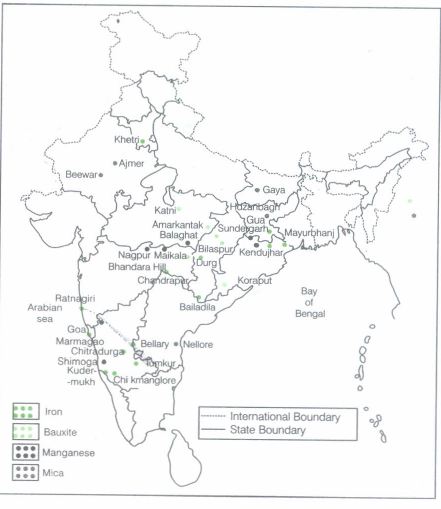
23.
()
The first tidal energy station was built in France
24.
()
The full form of CNG is Compressed Natural Gas
25.
()
The word petroleum is derived from Latin words 'petra' meaning rock, 'oleum' meaning oil. So, petroleum means rock oil.
26.
()
Norway was the first county in the world to develop hydroelectricity.
27.
()
The oldest rocks in the world are in Western Australia. They date from 4,300 million years ago only 300 million years after the earth was formed

8th Standard CBSE Syllabus & Materials
8th Standard CBSE
CBSE 8th Science Particulate Nature of Matter - New Model Questions Papers Study Material - QB365 Set A
NEW8th Standard CBSE
CBSE 8th Science Pressure, Winds, Stroms and Cyclones - New Model Questions Papers Study Material - QB365 Set A
NEW8th Standard CBSE
CBSE 8th Mathematics Quadrilaterals - New Model Questions Papers Study Material - QB365 Set A
NEW8th Standard CBSE
CBSE 8th Mathematics A story of Numbers - New Model Questions Papers Study Material - QB365 Set A



CBSE 8th Standard CBSE Subjects
CBSE Standards




