
 100% FREE ACCESS
8th Standard CBSE Syllabus & Materials
8th Standard CBSE
CBSE 8th Social Science Theme D - Factors of Production - New Model Questions Papers Study Material - QB365 Set A
NEW8th Standard CBSE
CBSE 8th Social Science Theme C - Universal Franchise and India's Electoral System - New Model Questions Papers Study Material - QB365 Set A
NEW8th Standard CBSE
CBSE 8th Social Science Theme B - The Rise of the Marathas - New Model Questions Papers Study Material - QB365 Set A
NEW8th Standard CBSE
CBSE 8th Social Science Theme B - Reshaping India's Political Map - New Model Questions Papers Study Material - QB365 Set A
NEW8th Standard CBSE
CBSE 8th Social Science Theme A - Natural Resources and Their Use - New Model Questions Papers Study Material - QB365 Set A
NEW8th Standard CBSE
CBSE 8th Science Keeping Time with Skies - New Model Questions Papers Study Material - QB365 Set A

Published on: 05/03/2019
Square and Square Roots Important Questions
Download CBSE Class 8th Standard CBSE Mathematics question papers, sample papers, important questions, and previous year solved papers in PDF format. Get free study materials, NCERT solutions, and exam preparation resources for Class 8th Standard CBSE Mathematics
Questions + Answers key
Take MCQ Mathematics Test
1.
Write the Pythagorean triplet whose one member is 13.
2.
What will be the unit digit of the squares of the following numbers?
55555
3.
How many perfect squares lie between 1 and 50?
4.
Find the square root of each of the following numbers by division method.7921
5.
Without doing any calculation, find the numbers which are surely not perfect squares.153
6.
Evaluate the following by splitting the numbers (294)2
7.
Find the unit's digit of the square of following numbers. 64293
8.
Write the square, making use of the above pattern 11111112
9.
The square of which of the following numbers would be an odd number/an even number? Why? 158
10.
A hall has a capacity of 2704 seats. If the number of rows is equal to the number of seats in each row, find the number of seats in each row.
11.
Find the least number which must be added to the numbers so as to get a perfect square. Also find the square root of the perfect square so obtained. 525
12.
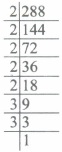
Find the smallest whole number by which 288 should be divided so as to get a perfect square. Also find the square root of the resulting number.
13.
Find the least number which must be subtracted from each of the following numbers, so as to get a perfect square. Also, find the square root of the perfect square so obtained. 825
14.
For each of the following numbers, find the smallest whole number by which it should be multiplied so as to get a perfect square number. Also, find the square root of the square number so obtained. 180
15.
Observe the following pattern and find the missing digits.
112 = 121
1012 = 10201
10012 = 1002001
1000012 = 1.............2..............1
100000012 = .......................................
16.
Complete the following crossword puzzle using the given direction.
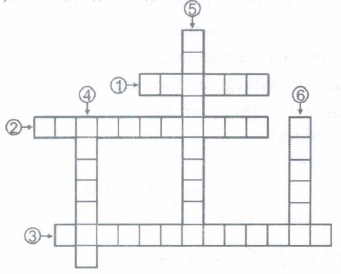
Direction:
Across:
(1) The product of number by itself two times, is called its _______
(2) If three numbers a, band c are such that a2 + b2= c2 then they are called _____ Triplets.
(3) A number is a when it is a product of the same two numbers.
Down: (4) The numbers 2n, n2-1 and n2 + 1 where n is a natural number show Pythagorean______.
(5) Finding is the inverse operation of squaring a number.
(6) A number which divides a _______ given number exactly is called a or divisor of that number.
17.
We check 256 is a perfect square or not.
18.
Find the square roots of 100 by the method of repeated subtraction.
19.
The students of class VIII of a school donated Rs.10000 in all, for Prime Minister's National Relief Fund. Each student donated as many rupees as the number of students in the class. The number of students in the class is
10
100
1000
10000
20.
The smallest number by which 54 should be multiplied so as to get a perfect square is
2
3
4
6
21.
The unit digit in the square of the number 27 is
7
2
5
9
22.
The unit digit in the square of the number 132 is
1
2
3
4
23.
How many natural numbers lie between 122 and 132?
20
22
24
26
24.
What will be the number of zeros in the square of the number 9000?
2
3
4
6
25.
Between 50 and 60, the perfect square number is
56
55
54
none.
26.
The greatest two digit-square number is
99
90
81
72
27.
If one member of a Pythagorean triplet is 2m, then other two members are
m, m2 + 1
m2 + 1, m2 - 1
m2, m2 - 1
m2 , m+1
28.
169 is the square of
11
12
13
14
29.
1000 is a perfect square.
30.
If n is an even number of digits of a square number then the number of digits in its square root are ________
31.
There are 2401 students in a school. P.T. teacher wants to stand them in such a manner that number of rows and columns are the same. Find the number of rows.
32.
Find the smallest square number which is divisible by each of the numbers 10, 9 and 4.
33.
Which of the following would end with digit 9:
1232, 772, 842, 1612, and 102.
34.
Is there a number which is equal to its cube but not equal to its squares? If yes find it.
35.
Leela invited some friends for tea on her birthday. Her mother placed some plates and some puris on a table to be served. If Leela places 4 puris in each plate 1 plate would be left empty. But if she places 3 puris in each plate 1puri would be left. Find the number of plates and number of puris on the table.
1.
When 'n' is a member of a Pythagorean
triplet, then the triplet is
n2 - 1, 2n, n2 + 1
or (132- 1), (2 x 13), (132 + 1)
or (169 - 1), (26), (169 + 1)
or 168, 26 and 170
2.
Since,S x 5 = 25
\(\therefore\) The unit digit of (55555i will be 5.
3.
4, 9,16,25,36 and 49 are six perfect squares, which lie between 1 and 50.
4.
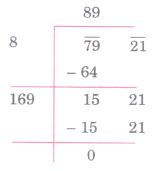
Therefore, \(\sqrt { 7921 } \)= 89
5.
We know that, the numbers end with 2, 3, 7 or 8, can never be a perfect square.
In a number 153, end digit is 3, which is one of 2, 7 or 8. So, it never be a perfect square.
6.
86436
7.
9
8.
Using the following pattern for finding the square of the given number, we get
12 = 1
112=121
1112 = 12321
11112 = 1234321
111112 = 123454321
1111112 = 12345654321
11111112 = 1234567654321
11111112 = 1234567654321
9.
158 is an even number, so its square is also even.
10.
52
11.
We have
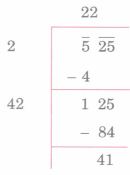
This shows that 222 < 525.
Next perfect square is 232 = 529
Hence, the number to be added is 232- 525 = 529 - 525 = 4
Therefore, the perfect square so obtained is 525 + 4 = 529
Hence, \(\sqrt { 529 } \)= 23
12.
We have 288 = 2 x 2 x 2 x 2 x 2 x 3 x3 = 22 X 22 X 2 X 32 = (2 x 2 x 3)2 X 2
\(\Rightarrow \frac { 288 }{ 2 } =\frac { (2\times 2\times 3)^{ 2 }3\times 2 }{ 2 } \)
\(\Rightarrow\)144 = (2 x 2 x 3)2
\(\Rightarrow\) \(\sqrt{144}\) = 2 x 2 x 3 = 12
Thus, 288 is to be divided by 2 to get a perfect square.
i.e., The required smallest number = 2
Also \(\sqrt{144}\) = 12.
13.
We have
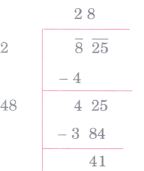
This shows that 572 is less than 3250 by 1. This means if we subtract the remainder (1) from the number, we This shows that 282 is less than 825 by 41. This means if we subtract the remainder (41) from the number, we get a perfect square. So, the required least number is 41.get a perfect square. So, the required least number is 1
Therefore, the required perfect square is 825 - 41 = 784
Hence,\(\sqrt { 784 } \)= 228
14.
Given number is 180.
By using prime factorisation, we get
180 = 2 \(\times\) 2 \(\times\)3 \(\times\)3 \(\times\) 5
It is clear that in order to get a perfect square, one more 5 is required.
So, .the given number should be multiplied by 5 to make the product a perfect square.
\(\therefore\) 180 \(\times\) 5 = 900 is a perfect square.
Now, 900 = 2 \(\times\) 2 \(\times\)3 \(\times\)3 \(\times\) 5 \(\times\)5
=(2\(\times\)3\(\times\)5)2
\(\therefore\) \(\sqrt { 900 } \)= 2 \(\times\)3 \(\times\) 5 = 30
Hence, the square root of 900 is 30.
| 2 | 180 |
| 2 | 90 |
| 3 | 45 |
| 3 | 15 |
| 5 | 5 |
| 1 |
15.
According to the first three pattern, if the first and the last digits of a given number is 1 and having n zeroes between it, then the square of that given number gives out the number whose first and last digits is 1, the middle digit is 2 and between the digits 1 and 2 and the digits 2 and 1, n zeroes digits exist.
In the number 1000012, there are four zeroes between first and last digits.
So, in the missing digits 1..................2..................1, four zeroes lie between 1 and 2 and also four zeroes lie between 2 and 1.
Hence, the required number is 10000200001.
In the number, 100000012, there are six zeroes between first and last digits.
So, the required number is 100000020000001.
16.
1.SQUARE
2.PYTHAGOREAN
3.PERFECT SQUARE
4.TRIPLET
5.SQUARE ROOT
6.FACTOR
17.
Resolving 256 into prime factors, 256 = 2 x 2 x 2 x 2 x 2 x 2 x 2 x 2
Grouping the factors in pairs in such a way that both the factors in each pair are same.
256 = 22 x 22 x 22 x 22
Here, 256 can be grouped into pairs of equal factors and no factor is left over.
| 2 | 256 |
| 2 | 128 |
| 2 | 64 |
| 2 | 32 |
| 2 | 16 |
| 2 | 8 |
| 2 | 4 |
| 2 | 2 |
| 1 |
Hence, 256 is a square number.
Again, 2 X 2 x 2 X 2 = 16
50,256 is the square of 16.
18.
To find the square roots of 100, we subtract successive odd number starting from 1 as follows:
100 - 1 = 99, 99 - 3 = 96, 96 - 5 = 91, 91 - 7 = 84
84 -9 = 75, 75 -11 =64, 64 -13 = 51,51-15 =36
36-17 = 19, 19 - 19 = 0
We observe that the number 10 reduced to zero after subtracting first 10 odd numbers.
So, 100 is a perfect square.
\(\therefore \ \sqrt { 100 } =10\)
Hence, the square root of 100 is 10.
19.
\(\sqrt{10000}=100\)
20.
54 x 6 = 324 = 182
21.
7 x 7 = 49
22.
2 x 2 = 4
23.
2 x 12 = 24
24.
Number of zeros at the end of the number 9000 = 3
∴ Number of zeros at the end of the square of the number 9000 = 2 x 3 = 6.
25.
None of 51, 52, .........., 59 is a perfect square.
26.
(c)
81
27.
(b)
m2 + 1, m2 - 1
28.
(c)
13
29.
(b)
30.
()
\(\frac{n}{2}\)
31.
()
Let the number of rows be x
So, the number of columns = x
Therefore, number of students = x × x = x2
Thus, x2 = 2401 gives x = \(\sqrt{2401}=\) 49
The number of rows = 49.
32.
()
900
33.
()
(123)2 and (77)2
34.
Let the required number be x.
Then, according to the question
x3 = x ...(1) and x2≠x ...(2)
From (1), x3 -x = 0
⇒ x(x2 - 1) = 0
⇒ x = 0, ± 1
⇒ x = 0,1,-1
If x = 0, then x2 = x.
∴ x = is inadmissible
If x = 1 then x2 = x.
∴ x = 1 is inadmissible
If x = - 1, then x2 = (- 1)2 = 1 ≠ x(= - 1)
Hence, the required number is - 1.
35.
Let the number of plates on the table be y and the number of puris be x.
Then, according to the first condition of the problem
4(y - 1) = x ...(1)
and, according to the second condition of the
problem
3y + 1= x ... (2)
From (1) and (2), we have
4(y - 1) = 3y + 1
⇒ 4y - 4 = 3y + 1
⇒ 4y - 3y = 1 + 4
⇒ y=5
Put y = 5 in (1), we get
x = 4(5) - 4 = 20 - 4 = 16
Hence, the number of plates and number of puris on the table are 5 and 16 respectively.

8th Standard CBSE Syllabus & Materials
8th Standard CBSE
CBSE 8th Science Particulate Nature of Matter - New Model Questions Papers Study Material - QB365 Set A
NEW8th Standard CBSE
CBSE 8th Science Pressure, Winds, Stroms and Cyclones - New Model Questions Papers Study Material - QB365 Set A
NEW8th Standard CBSE
CBSE 8th Mathematics Quadrilaterals - New Model Questions Papers Study Material - QB365 Set A
NEW8th Standard CBSE
CBSE 8th Mathematics A story of Numbers - New Model Questions Papers Study Material - QB365 Set A



CBSE 8th Standard CBSE Subjects
CBSE Standards




