
 100% FREE ACCESS
8th Standard CBSE Syllabus & Materials
8th Standard CBSE
CBSE 8th Social Science Theme D - Factors of Production - New Model Questions Papers Study Material - QB365 Set A
NEW8th Standard CBSE
CBSE 8th Social Science Theme C - Universal Franchise and India's Electoral System - New Model Questions Papers Study Material - QB365 Set A
NEW8th Standard CBSE
CBSE 8th Social Science Theme B - The Rise of the Marathas - New Model Questions Papers Study Material - QB365 Set A
NEW8th Standard CBSE
CBSE 8th Social Science Theme B - Reshaping India's Political Map - New Model Questions Papers Study Material - QB365 Set A
NEW8th Standard CBSE
CBSE 8th Social Science Theme A - Natural Resources and Their Use - New Model Questions Papers Study Material - QB365 Set A
NEW8th Standard CBSE
CBSE 8th Science Keeping Time with Skies - New Model Questions Papers Study Material - QB365 Set A

Published on: 05/03/2019
Important Model Question Paper - How, When and Where
Download CBSE Class 8th Standard CBSE Social Science question papers, sample papers, important questions, and previous year solved papers in PDF format. Get free study materials, NCERT solutions, and exam preparation resources for Class 8th Standard CBSE Social Science
Questions + Answers key
Take MCQ Social Science Test
1.
Answer the following questions related to picture given below:
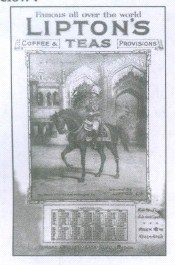
(i) What is depicted in this picture?
(ii) Why are old advertisements important to us?
(iii) What does this advertisement suggest?
2.
What are the other literary sources, except official records?
3.
What was the effect of colonisation on India?
4.
Can you think of examples of surveys in your world today? Think about how toy companies get information about what young people enjoy playing with or how the government finds out about the number of young people in school. What can a historian derive from such surveys?
5.
What is the problem with the periodisation of Indian history that James Mill offers?
6.
The last Viceroy of India was:
Lord Irwin
Lord Canning
Lord Hardinge
Lord Mountbatten
7.
Some historians have divided Indian history into:
Medieval, Modern, Colonial
Ancient, Medieval, Colonial
Ancient, Medieval, Modern
Ancient, Modern, Colonial
8.
James Rennel produced the first map of India in
1785
1782
1885
1830
9.
Read the source given and answer the questions that follow:
Newspapers provide an account of the movements in different parts of the country. Here is a report of a police strike in 1946. More than 2000 policemen in Delhi refused to take their food on Thursday morning as a protest against their low salaries and the bad quality of food supplied to them from the Police Lines kitchen. As the news spread to the other police stations, the men there also refused to take food. One of the strikers said: "The food supplied to us from the Police Lines kitchen is not fit for human consumption. Even cattle would not eat the chapattis and dal which we have to eat."
(i) Do you remember the source of this literary evidence?
(ii) To which event the above source is related?
(iii) What was the grievance of the policemen?
(iv) What is the importance of these types of literary sources?
10.
Why do we continue to associate History with a string of dates?
11.
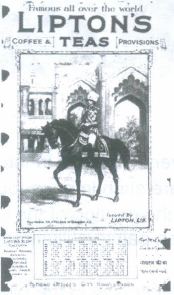
Who is seen in the picture?
12.
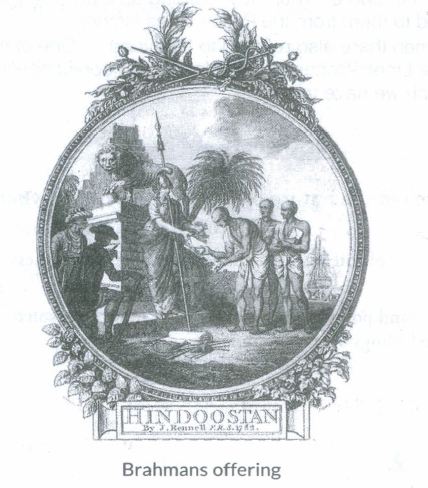
Look carefully and write a paragraph explaining how this image projects an imperial perception.
13.
Historians divided Indian history into ancient, medieval and modern. But this division too has its problems. What are these problems?
14.
History deals with changes that occur over time.
15.
When was Warren Hastings appointed as the Governor General of India?
16.
What is Imperialism?
17.
Why did manufacturing towns like Dacca decline with the rise of the Presidency cities?
18.
Suggest one of the most important sources used by historians in writing about the last 250 years of Indian history.
19.
Many historians refer the British period as ___________
20.
The symbol of British power
21.
Are official records the best sources of information?
22.
According to historians what is the meaning of the term 'Colonial'?
23.
What is Colonialism?
24.
What do you meant by the 'civilizing mission'?
25.
Where was National Archives in India located and when did it come up?
1.
(i) The third son of Queen Victoria of Britain, Prince Arthur-the Duke of Connaught, seated on horseback, is depicted in this picture.
(ii) Old advertisements are important because they help us to understand how markets were created for new products at that time, and secondly, how new tastes were popularized among the people.
(iii) The advertisement of Lipton tea created in 1922 suggested that royalty all over the world consumed this tea.
2.
Other than official records, biographies, memoirs, newspapers, autobiographies of prominent persons and records of travelers and pilgrims are other literary sources to know about the past events and history of a society.
3.
The effect of colonisation on India are as follows:
(i) The British came to our country and established their rule, subjugating local nawabs and rajas.
(ii) The British established control over the economy and society, collected revenue to meet all their expenses, bought the goods they wanted at low prices, produced crops they needed for export.
(iii) The British rule brought about the changes in values and tastes, customer and practices. It brought about the changes in the political, economic, social and cultural sphere.
4.
Today, different types of surveys are done by government and private companies. Surveys can be done on the basis of demographic changes, incomes, employment, and interests, etc. Surveys can be done by questionnaire method or interview method. Governments find out about the information of young people in the school by the records and the records of school authorities.
5.
James Mill divided Indian history into three periods-Hindu, Muslim and British. But this periodisation is not proper.
There were some problems with this periodisation as follows:
(i) It is improper to refer any period of history as 'Muslim' or 'Hindu' because a variety of faiths existed Simultaneously.
(ii) It is also not justified to characterise an age through the religion of the rulers of the time. During ancient period, all the rulers did not share the same faith.
(iii) Mill, through his periodisation suggested that only British rule could civilize India. He suggested that the British should conquer all the territories in India to ensure the enlightenment as if India was not capable of progress without British help.
6.
(d)
Lord Mountbatten
7.
(c)
Ancient, Medieval, Modern
8.
(b)
1782
9.
(i) The report was published in 'The Hindustan Times' of 22 March, 1946.
(ii) This report was about a strike by policemen against the unhealthy food provided by the government.
(iii) The grievance of policemen was that the government did not treat them well and provided unhealthy and inedible food.
(iv)These type of literary sources provide the information about those events and activities that do not find mention in official records. These types of sources inform us about condition of contemporary society and events.
10.
(i) History is a record of significant events that have occurred over a period of time or on a particular day in the past.
(ii) History is a subject which deals with past events, such as when a battle was fought, period of dynasties, when a king was crowned, birth of any religion and various other changes, etc.
(iii) History is also important to know the exact date and year of any particular event.
(iv) Hence, we continue to associate history with a string of dates, since details of any such events which have occurred in the past cannot be determined without referring to the specific dates. So, in other words, we can say that history is synonymous with dates.
11.
Prince Arthur, the third son of Queen Victoria is seen in the picture. In the background of an Indian Palace, he is seen on a horseback.
12.
Shastras to Britannia, frontispiece to the first map produced by James Rennel, 1782 Renne! was asked by Robert Clive to produce maps of Hindustan. An enthusiastic supporter of British conquest of India, Renne! saw the preparation of maps as essential to the process of domination. The picture here tries to suggest that Indians
willingly gave over their ancient texts to Britannia - the symbol of British power - as if asking her to become the protector of Indian culture.
13.
Many historians have divided Indian history into ancient, medieval and modern. This periodisation has been borrowed from the West.
According to them, a modern period was associated with the growth of science, reason, democracy, liberty, and equality. This view was accepted by the Western thinkers after the French Revolution.
Medieval period was a term used to describe a society where all these features of modern society did not exist.
If we accept this periodisation for our country, there must arise some problems. These are
We cannot justify the British Raj of India as the modern period.
At that time, people did not have equality, freedom or liberty. There was no economic growth and progress in the society.
14.
(a)
15.
()
Warren Hastings was appointed as the Governor General of India in 1773.
16.
()
It is a political system based on extension of empire by conquest of colonies.
17.
()
Manufacturing towns Like Dacca declined due to drop in demand for what they produced.
18.
()
The official records of the British administration is one of the most important sources used by historians in writing about the last 250 years of Indian history.
19.
()
colonial
20.
()
Britannia
21.
(i) No, because they provide the views of people who are in power.
(ii) They are usually biased and provide only an official view of an incident, which cannot be deemed to be right source of information with common man's point of view.
22.
During the British rule in India, people never enjoyed equality, freedom or liberty. During this period, Indian economy was exploited and channelized for the development of British economy. In history, this period of British rule has been termed as 'Colonial' by many historians.
23.
When one country establishes control upon the economy and society of another country which leads to social, political, economic and cultural changes, then this process is known as colonization.
24.
This term is used by Europeans for modernizing the people of Asia and Africa to whom they considered as belonging to inferior races.
25.
The National Archives in India came up in 1920s and it is located in Delhi

8th Standard CBSE Syllabus & Materials
8th Standard CBSE
CBSE 8th Science Particulate Nature of Matter - New Model Questions Papers Study Material - QB365 Set A
NEW8th Standard CBSE
CBSE 8th Science Pressure, Winds, Stroms and Cyclones - New Model Questions Papers Study Material - QB365 Set A
NEW8th Standard CBSE
CBSE 8th Mathematics Quadrilaterals - New Model Questions Papers Study Material - QB365 Set A
NEW8th Standard CBSE
CBSE 8th Mathematics A story of Numbers - New Model Questions Papers Study Material - QB365 Set A



CBSE 8th Standard CBSE Subjects
CBSE Standards




