
 100% FREE ACCESS
6th Standard CBSE Syllabus & Materials
6th Standard CBSE
CBSE 6th Social Science The Value of Work - New Sample Question Papers Study Material - QB365 Set A
NEW6th Standard CBSE
CBSE 6th Social Science Family and Community - New Sample Question Papers Study Material - QB365 Set A
NEW6th Standard CBSE
CBSE 6th Social Science India's Cultural Roots - New Sample Question Papers Study Material - QB365 Set A
NEW6th Standard CBSE
CBSE 6th Social Science India,That is Bharat - New Sample Question Papers Study Material - QB365 Set A
NEW6th Standard CBSE
CBSE 6th Social Science Timeline and sources of history - New Sample Question Papers Study Material - QB365 Set A
NEW6th Standard CBSE
CBSE 6th Social Science Oceans and Continents - New Sample Question Papers Study Material - QB365 Set A

Published on: 31/12/2018
Class 6 Slip Test
Download CBSE Class 6th Standard CBSE Social Science question papers, sample papers, important questions, and previous year solved papers in PDF format. Get free study materials, NCERT solutions, and exam preparation resources for Class 6th Standard CBSE Social Science
Questions + Answers key
Take MCQ Social Science Test
1.
There are almost one crore street vendors working
Rural areas
Urban areas
both (a) and (b)
None of these
2.
Buddha has referred to our actions as :
Viharas
Tanha
Karma
Vyavhara
3.
Bund is
a small boundary
a few feet
Raghu's house name.
a small agricultural field.
4.
Which of the following languages was spoken by the whites?
Afrikaans
Zulu
Spanish
Latin
5.
Which is the second largest constituent gas in atmosphere?
Nitrogen
Hydrogen
Carbon dioxide
Oxygen
6.
Elephants and one-horned rhinoceroses are found in the forest of _____________
Assam
Gujarat
Kerala
Karnataka
7.
Which of following states has less distance between school and home?
Maharashtra
Tamil Nadu
Ladakh
Kerala
8.
Roman Empire found Black Gold in
Central India
North India
South India
East India
9.
Asteroids are found between the orbits of
Saturn and Jupiter
Mars and Jupiter
The Earth and Mars
10.
Which of the following is one of the earliest village that we know about?
Burzahom
Mehrgarh
Gufkral
Hallur
11.
What is Global Warming?
12.
India is the largest democratic country where all the people have the right to speak related to the affairs of the government. Do you agree with this statement?
13.
Why were the earliest people known as skilled gatherers ?
14.
Discuss why you think Samir Do did not attend school? Do you think it would have been easy for him to attend school if he wanted to? In your opinion is it a fair situation that some children get to go to school and others don't?
15.
Why were battles fought in the Rigvedic period?
16.
Do you think that artificial satellites are important?
17.
Write any one difference between retail and wholesale.
18.
Give any two positive stereotypes on boys.
19.
What are stars?
20.
What are the agents of erosion and deposition?
21.
What does a circle of stone boulders or a single large stone standing on the ground indicate.
22.
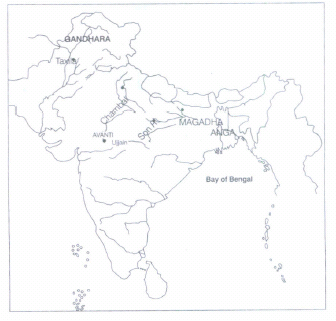
Mark the following Janapadas and Mahajanapadas on the outline map of India:
(i) Taxila (ii) Ujjain (iii) Vaishali (iv) Magadha (v) Gandhara (vi) Avanti
23.
Name the local bodies that look after the urban areas.
24.
You are travelling with your parents about 4000 years ago, from Lethal to Mohanjodaro. Describe how you would travel, what your parents might carry with them and what would you see in Mohanjodaro.
25.
"Besides voting there are other ways of participating in the process of government." Discuss how it gives us a sense of works of government.
26.
Write short notes on the following:
(i) Indian ocean (ii) Pacific ocean
(iii) Arctic ocean (iv) Antarctic ocean
27.
Discuss wildlife of India.
28.
Answers the questions based on the given picture below.
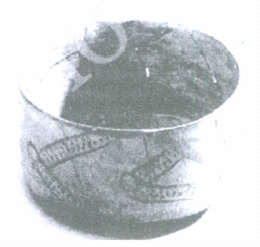
(i) From which metal these bowls were made?
(ii) When were these bowls used?
29.
Ajanta
30.
Sanskrit Ramayana
31.
Manimekalai
32.
Jatakas
33.
Mandapa
34.
He was born into the________caste, which was considered untouchable.
35.
Name the four major seasons.
36.
Apartheid means ______________ on the basis of race.
37.
Siberian Cranes arrive in ______________ and stay till early ________________
38.
________________is recognised as the author of the Sanskrit Ramayana
39.
Pune, being a big city, has a Municipal Corporation.
40.
Mt. Fujiyarna in Japan is an example of volcanic mountains
41.
Chaulkya kingdom centered around Raichur Doab
42.
Garo hills are situated in the South of India.
43.
Pots to store grain were made out of Painted Grey Ware.
1.
(b)
Urban areas
2.
(c)
Karma
3.
(a)
a small boundary
4.
(a)
Afrikaans
5.
(d)
Oxygen
6.
(a)
Assam
7.
(d)
Kerala
8.
(c)
South India
9.
(b)
Mars and Jupiter
10.
(b)
Mehrgarh
11.
The increase in the amount of CO2 leads to increase in global temperatures. This is termed as Global Warming.
12.
(i) India is a democratic country, where all the people have right to speak about the affairs of the government.
(ii) An attempt has been made in the Indian Constitution to incorporate the interests of all the religions.
(iii) Special provisions had been made for the interests of the minorities.
(iv) People are empowered to raise their voice on any issue with which they are not satisfied
13.
As the earliest people gathered food, collected roots and fruits from the forest, and also hunted animals they were called skilled gatherers.
14.
Samir Do did not attend school due to the following reasons:
(i) He had to earn his own livelihood and for his mother.
(ii) He did not have enough time to join a school.
No, I think it would have been difficult for him to attend school even if he wanted to. He would not get time to study in school while selling newspapers. He could find it difficult to pay the school fees.
In my opinion it is not a fair situation that some children go to school and others do not. Every child must go to school.
15.
Battles were fought because:
(i) Land was important for pasture and for growing hardy crops that ripened quickly, such as barley. This is why battles were fought for the land.
(ii) Some battles were also fought for water and to capture people.
(iii) Battles were fought to capture cattle also.
16.
An artificial or man-made satellite is made for the purpose to gather information about outer space and Earth's atmosphere. Some satellites are made for communication purpose and to predict weather also. It makes artificial satellites important to us.
17.
()
Wholesale involves buying goods in large quantities and selling them in large quantities usually to customers, who buy goods to resell in the retail market to the ultimate consumers.
18.
()
The two positive stereotypes of boys are: (a) Boys don't cry, and (b) Boys are good in Mathematics and Science.
19.
()
All celestial bodies which have their own heat and light are called stars.
20.
()
The agents of deposition and erosion are running water, ice and wind.
21.
()
The circle of stone boulders or a single large stone standing on the ground indicates that there are burials beneath.
22.
23.
The local bodies that look after the problems of the urban areas are:
(i) Municipal Corporations,
(ii) Municipalities, and
(ii)Town Area Committees.
(i) Municipal Corporations: These are the local governing bodies of big cities such as Delhi, Mumbai, Kolkata, Chennai, etc. The main functions of the Municipal Corporations are providing public health and sanitation, making arrangement for vaccination, supply of safe drinking water, clearing and disposal of garbage, cleaning roads, drains and public toilets.
(ii) Municipalities: Smaller towns and cities with population ranging between 20,000-5,00,000have Municipalities as the local government body.
(iii)Town Area Committees: Municipalities and Municipal Corporations carry their day-to-day work with the help of a number of committees such as the Education Committee, the Public Health Committee and the District Planning Committee.
24.
Lothal to Mohanjodaro's journey will be done on bullock carts along the dusty roads. My parents will carry food, water and clothes. In Mohanjodaro, I would see:
(i) Citadels
(ii) Big storehouses
(iii)A great tank i.e., the Great Bath
(iv) Wells
(v) Streets with covered drains
(vi) Houses of one or two storeys.
25.
Besides voting, there are other ways of participating in the process of government.
(i) People participate by taking an interest in the working of the government and by criticising it when required.
(ii) Sometimes people take out rallies and also organise signature campaign. Things that are unfair and unjust are also brought forward through rallies, dharnas, strikes etc.
(iii) Now, magazines, newspapers and TV also play a role in discussing government issues and responsibilities.
(iv) Another way for people to participate is by organising themselves into social movements that seek to challenge the government and its functioning. Members of the minority community, dalits, adivasis, women and others are often able to participate in this manner.
If we see a rally winding through the streets ot our cities and towns or villages, we should pause to find out what the rally is about, who is participating in it, and what they are protesting about.Thus, this will help to give us a sense of how our government works.
26.
(i) Indian ocean The Indian ocean is the only ocean named after a country, India. The shape of this ocean is almost triangular. It is bound by Asia in the North, in the West by Africa and in the East by Australia. (ii) Pacific ocean The Pacific ocean is the largest ocean. It is spread over one-third of the earth. The Pacific ocean is almost circular in shape. Asia, Australia, North America and South America surround it.
(iii) Arctic ocean It is connected with the Pacific ocean by a narrow stretch of shallow water called Berring strait.
The Arctic ocean is located within the Arctic Circle and surrounds the North Pole. It is bound by Northern coasts of North America and Eurasia.
(iv) Antarctic ocean The Southern ocean encircles the continent of Antarctica and extends northward to 60 degrees South latitude. Most of the time, it is covered with thick ice.
27.
Forests are home to a variety of wildlife. There are thousands of species of animals and a large variety of reptiles, amphibians, mammals, birds, insects and worms which dwell in the forest. The tiger is our national animal. It is found in various parts of the country. Gir forest in Gujarat is the home of Asiatic lions.
Elephants and one-horned rhinoceroses roam in the forests of Assam. Elephants are also found in Kerala and Karnataka. Camels and wild asses are found in the the Great Indian desert and the Rann of Kuchchh. India is equally rich in bird life. The peacock is our national bird. There are several bird sanctuaries which have been created to give birds their natural habitat.
28.
(i) Bowls are the earthern pots made out of Painted Grey Ware.
(ii) These bowls were used on special occasions, for important people, and to serve special food.
29.
()
Cave paintings
30.
()
Valmiki
31.
()
Rediscovered about a hundred years ago
32.
()
Stories told by ordinary people
33.
()
Place in temples where people could assemble
34.
()
Mahar
35.
()
The four major seasons are:
(i) Summer
(ii) Winter,
(iii) Autumn
(iv) Spring.
36.
()
Separation
37.
()
December, March
38.
()
Valmiki
39.
(a)
40.
(a)
41.
(a)
42.
(b)
43.
(b)

6th Standard CBSE Syllabus & Materials
6th Standard CBSE
CBSE 6th Social Science Locating Places on the Earth - New Sample Question Papers Study Material - QB365 Set A
NEW6th Standard CBSE
CBSE 6th Science A Journey Through States of Water - New Sample Question Papers Study Material - QB365 Set A
NEW6th Standard CBSE
CBSE 6th Science Temperature and its Measurement - New Sample Question Papers Study Material - QB365 Set A
NEW6th Standard CBSE
CBSE 6th Science Materials Around Us - New Sample Question Papers Study Material - QB365 Set A



CBSE 6th Standard CBSE Subjects
CBSE Standards




